


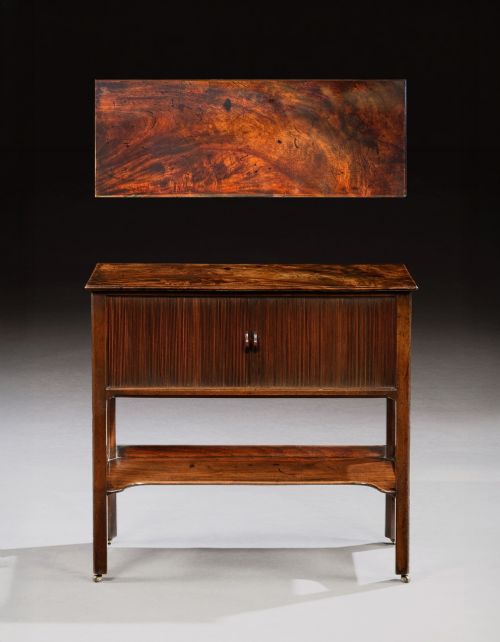
Georgian Wooden Washstand
These georgian wooden washstand pieces are practical items of period furniture that bring subtle craft and utility to a bedroom or corner space.
Georgian Wooden Washstand
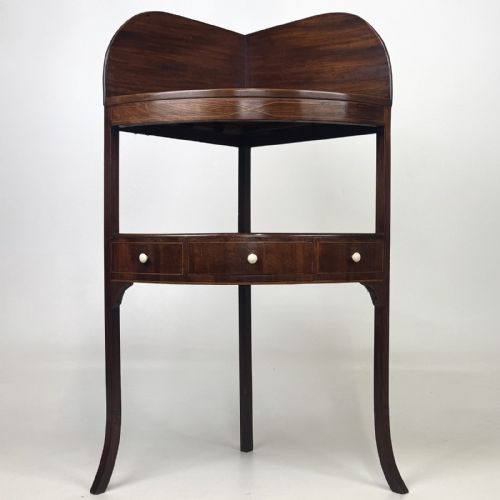
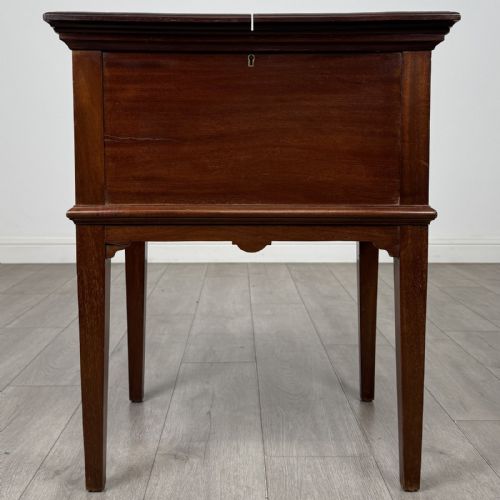
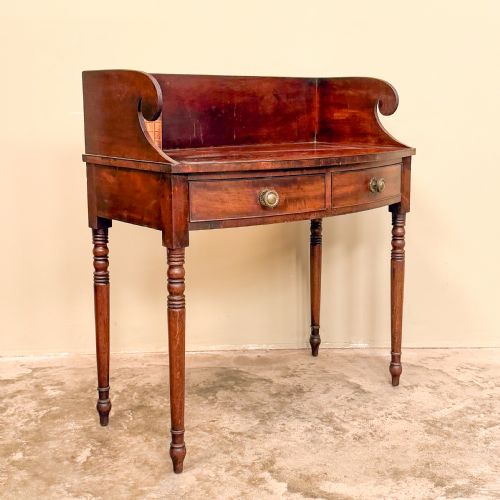
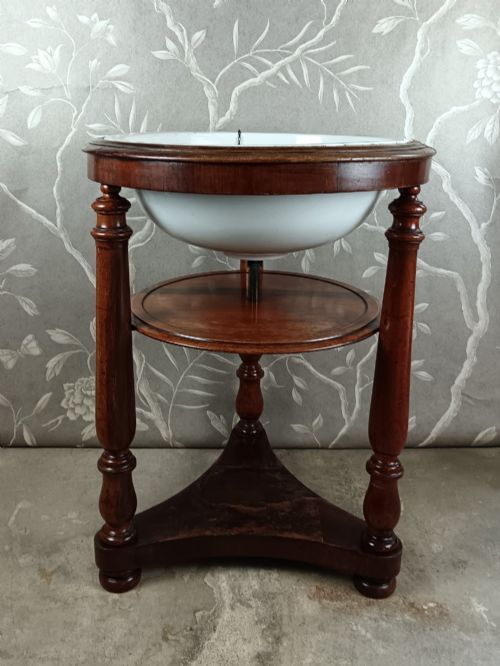
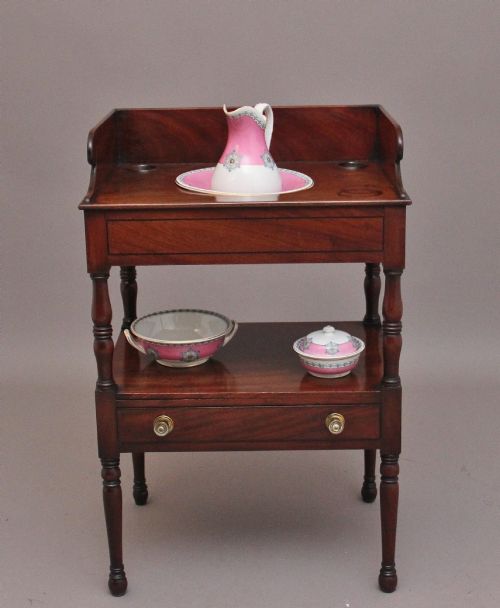
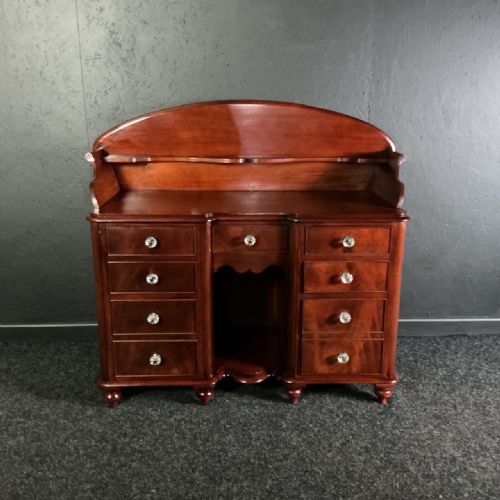
A georgian wooden washstand is a functional antique designed for personal ablutions, taking the form of corner units, square basin stands, and round campaign pieces. Buyers seeking this phrase encounter solid timbers adapted for basins, jugs, and shaving gear, often featuring clever tiered shelves or enclosed cupboards below.
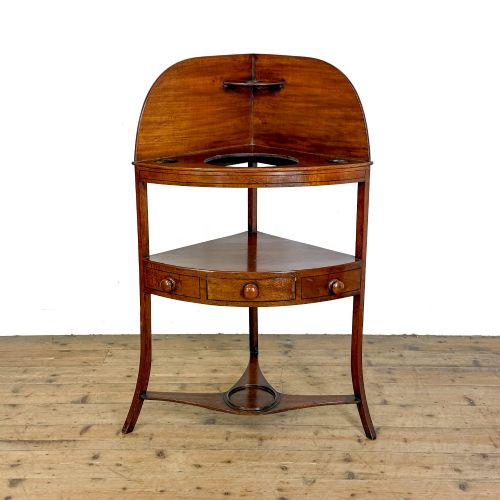
The version most commonly met on this page is the mahogany corner washstand, built to fit neatly into domestic quarters from the eighteenth and nineteenth centuries. These pieces frequently show the marks of daily use alongside fine joinery, spanning simple utilitarian designs to more refined examples with inlay.
Materials and Construction
Makers relied principally on mahogany, sometimes utilising flame veneers, boxwood inlay, and satinwood to add contrast to corners and drawer fronts. Brass fittings, glass components, and ceramic elements appear alongside the timber structure to handle the demands of water and daily grooming.
Joinery techniques prioritize stability in daily use, employing sturdy framing, dovetailed drawers, and turned supports that sustain the heavy weight of basins and pitchers.
The current selection includes specialised forms such as wig stands, pot cupboards, and campaign pieces alongside standard corner washstands.
Distinctions in Execution
Quality rests upon the selection of timber and the precision of the cabinetmaker's hand, where figured mahogany grain and crisp boxwood stringing elevate a utilitarian object into a refined piece. Finer examples maintain original brass hardware, intact internal configurations, and tight joints that reflect superior workshop practices.
Simpler pieces exhibit straightforward construction intended strictly for utility, whereas higher tiers demonstrate thoughtful proportion, balanced tiers, and integrated cabinetry designed for formal domestic interiors.
Gillows Lancaster
The Georgian Wooden Washstand Glossary
- Washstand
- A piece of furniture built to hold a basin and water jug for washing. These items often include cutouts in the top tier and lower shelves for storage.
- Campaign washstand
- A portable version designed for travel, typically featuring folding supports or compact dimensions. These items were built to be dismantled easily for military or colonial use.
- Corner washstand
- A triangular unit shaped to fit directly into the angle of a room. This form maximises floor space while providing stable support for ablutions.
- Pot cupboard
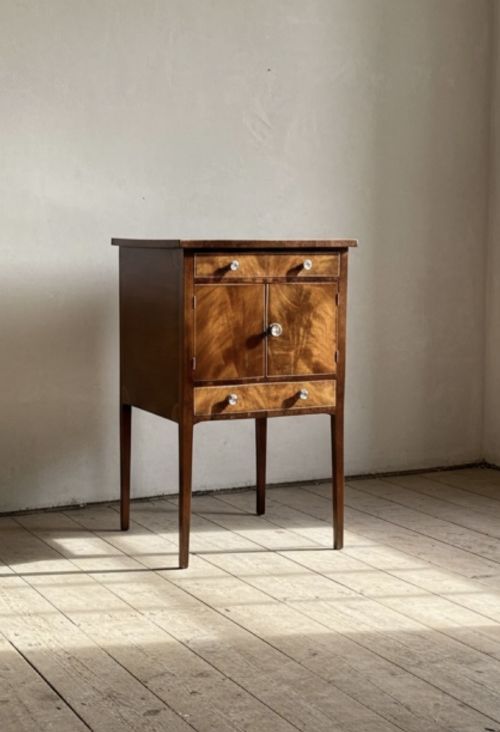
- A small bedside cabinet containing an enclosed space for a chamber pot. These items frequently accompany washstands within period bedroom suites.
- Wig stand
- A specialised small stand featuring a shaped upper section designed to hold a gentleman's wig. They share similar timber construction and turnings with standard basin stands.
Georgian Wooden Washstand: Frequently Asked Questions
What is a georgian wooden washstand?
A georgian wooden washstand is a period piece designed to hold a basin and water pitcher for morning washing before plumbed bathrooms existed.
These items were constructed in various shapes, including triangular corner units and square basin stands, to suit the bedrooms of past centuries.
How were corner washstands used?
Corner washstands were positioned in the angles of bedrooms to save floor space while providing a stable surface for personal grooming.
The lower tiers typically held soap, sponges, and water jugs, while drawers stored smaller personal items.
Are these pieces made of solid mahogany?
Most listings feature mahogany as the primary timber, utilised either as solid boards or as veneers over secondary woods.
Cabinetmakers also incorporated brass, ceramic inserts, and boxwood or satinwood inlay to add decorative contrast.
How do I date a washstand?
Dating relies on observing the structural characteristics, timber selection, and overall style associated with periods like the Georgian and Regency eras.
Subtle details in the leg turnings and drawer construction help distinguish eighteenth-century examples from nineteenth-century pieces.
Can I use a washstand today?
These pieces adapt easily to modern homes as plant stands, lamp tables, or corner display units in hallways and bedrooms.
The original basin cutouts often accommodate bowls or serve as decorative ledges for contemporary use.