


Georgian Wooden Step Stool
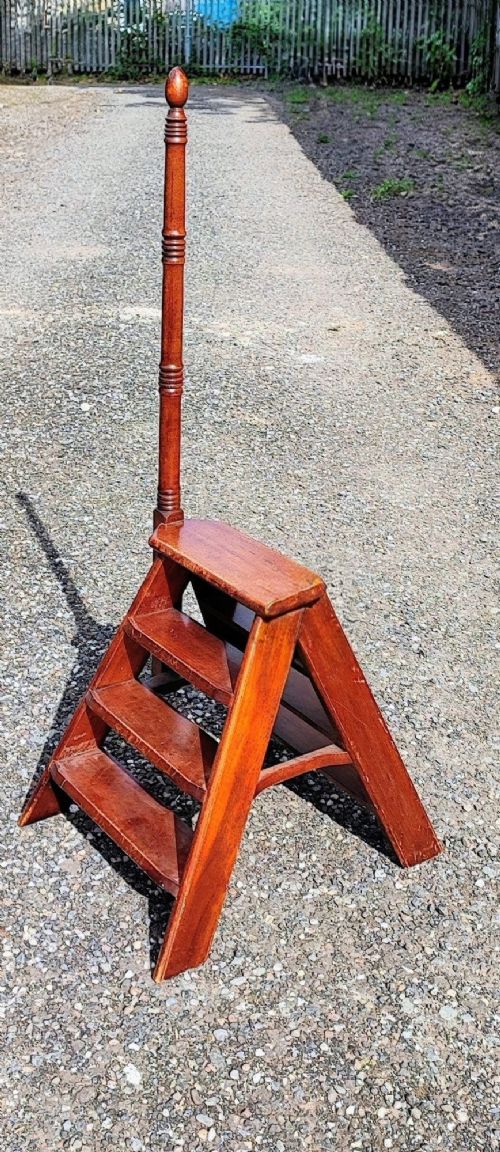
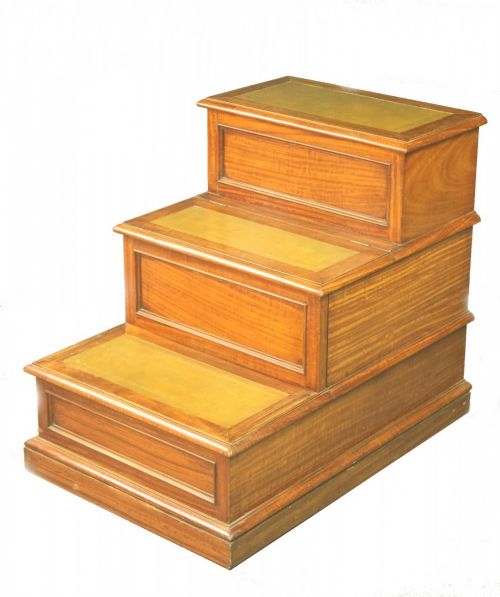
These Georgian wooden step stool examples are practical folding library steps and bed steps built to reach high shelves.
Georgian Wooden Step Stool
A georgian wooden step stool typically appears in the form of library steps or bed steps, often designed with multiple tiers for climbing. The selection spans the Georgian period, Regency era, and the nineteenth century, showing how domestic furniture evolved to serve tall rooms.
Many examples double as folding library steps armchairs or box stools, combining a seat with concealed steps beneath the lid. Timber construction dominates the forms, utilising mahogany, fruitwood, satinwood, and golden oak.
The objects originate from English workshops and range from compact bedsteps to large proportion sets suited for extensive libraries. Buyers encounter both standard tiered steps and clever mechanical folding variants.
How they were made
Cabinetmakers constructed these steps using solid timbers like mahogany, fruitwood, satinwood, and oak, frequently incorporating brass hinges and mechanisms for folding action. Some variants include leather inserts on the tread surfaces to provide grip.
The joinery relies on traditional framing techniques to support weight safely while maintaining a refined domestic appearance. Certain pieces integrate cane, fabric, or turned supports alongside polished wood.
Listings feature mahogany, satinwood, fruitwood, and golden oak timbers, alongside brass hardware and leather treads.
What varies in quality
Quality rests in the cleverness of the folding mechanism and the rigidity of the steps when deployed for weight-bearing use. Simpler box stools differ significantly from multi-tiered folding armchairs with complex pivoting frames.
The choice of secondary timbers and the precision of brass hardware distinguish ordinary domestic items from superior pieces commissioned for notable libraries. Grain selection in the mahogany or satinwood further separates standard workshop output from finer productions.
J.Jarvis
The Georgian Wooden Step Stool Glossary
- Library steps
- Portable wooden stairs designed to reach high bookshelves in domestic libraries. They often fold into cabinets or chairs.
- Bed steps
- Small sets of steps used to climb into high period beds. They frequently incorporate box compartments or leather treads.
- Box stool
- A seat with a hinged lid concealing a storage compartment or folding steps within. It serves a dual purpose in the room.
- Regency
- An English design period spanning the early nineteenth century. Furniture from this era often shows classical restraint and clean lines.
Georgian Wooden Step Stool: Frequently Asked Questions
How do folding library steps work?
These steps utilise clever brass hinges and pivoting frames that allow the upper tiers to fold neatly over one another. This mechanical design concealed the steps inside a compact footprint when not in use.
Cabinetmakers engineered these joints to bear considerable weight while operating smoothly. Users simply lift and unfold the sections to create a sturdy staircase.
What is the difference between bed steps and library steps?
Bed steps were originally built lower to help people climb into high sleeping quarters during the eighteenth and nineteenth centuries. Library steps stand taller to reach elevated bookshelves.
Both forms utilise timber construction and folding mechanisms, but library sets generally incorporate more tiers. Box variants often feature in bed steps to provide hidden storage.
Are these steps sturdy enough for daily use?
Traditional wooden steps are constructed from solid timbers like mahogany, oak, and fruitwood designed to support human weight. The structural integrity depends on the original joinery and the condition of any brass hinges.
Careful handling ensures these historic items remain functional in modern homes. Many collectors use them regularly for reaching high shelves.
How do I identify a Regency step stool?
Regency pieces reflect the classical design influences of the early nineteenth century, often featuring clean architectural lines and select mahogany veneers. Stamped maker marks, such as those by J.Jarvis, sometimes appear on these pieces.
Proportions tend to be balanced and restrained without excessive ornamentation. The hardware and timber choice help confirm the period of manufacture.