
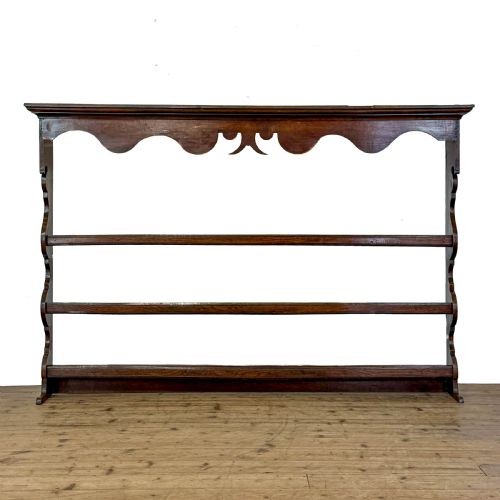
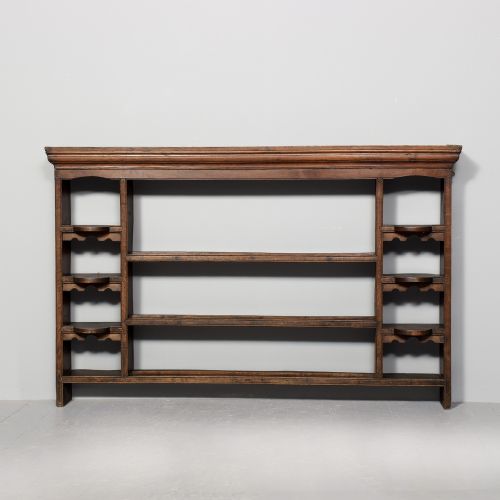


Georgian Wooden Plate Rack
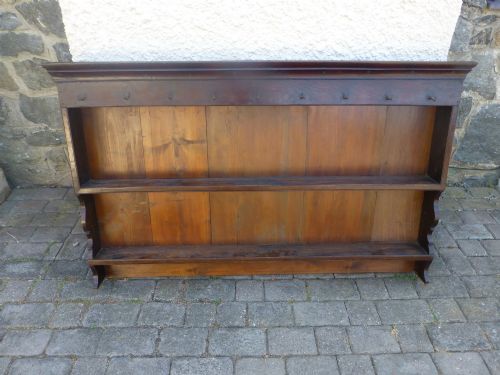
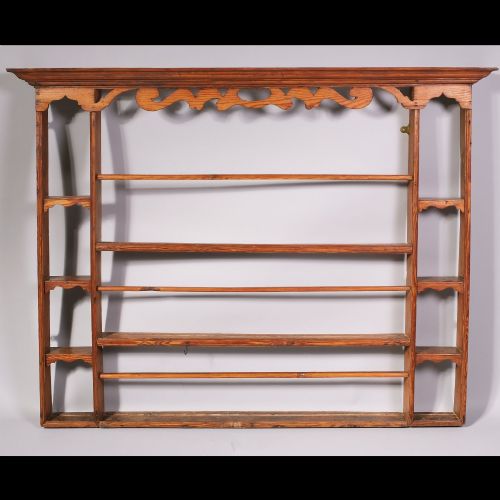
A georgian wooden plate rack is a functional wall or dresser shelving unit designed to display crockery.
Georgian Wooden Plate Rack
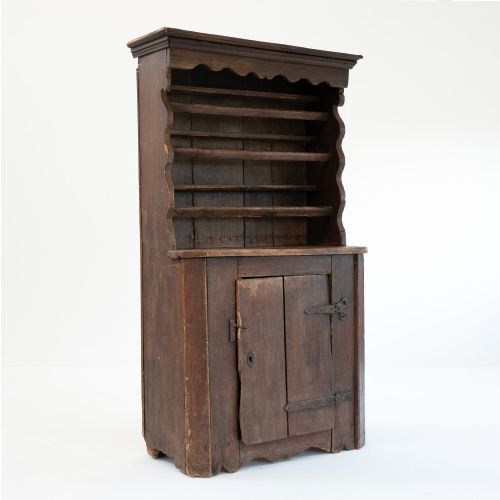
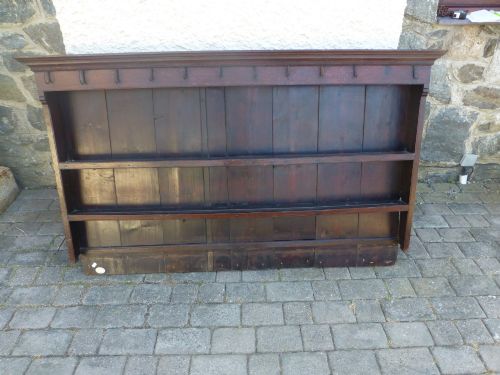
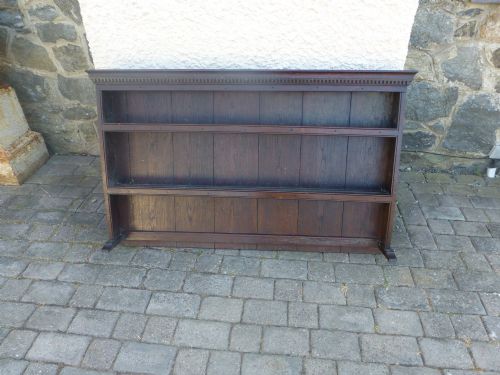
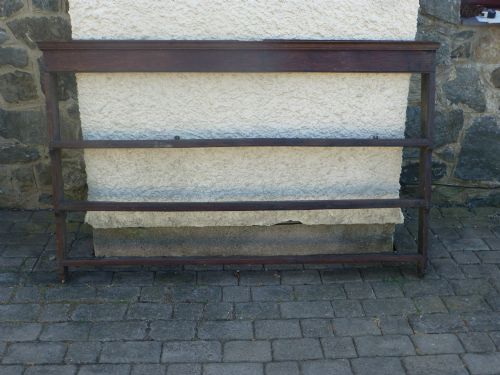
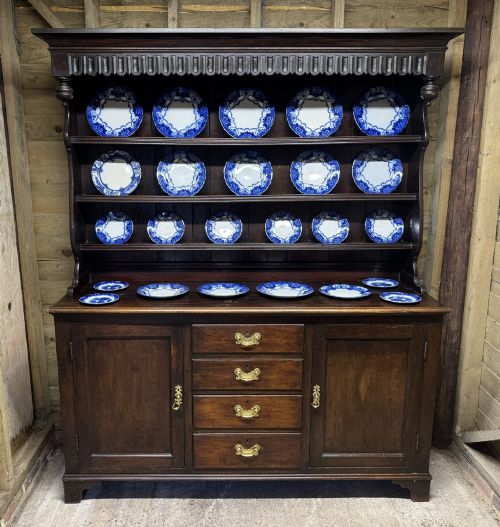
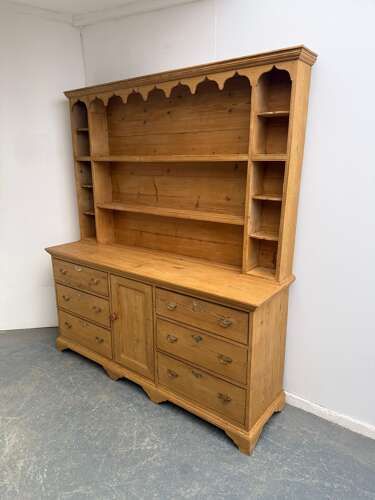
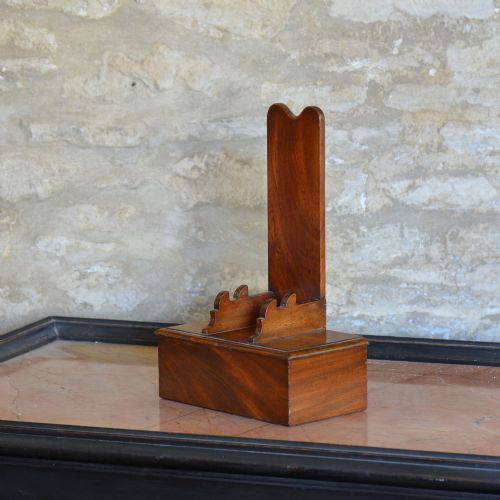
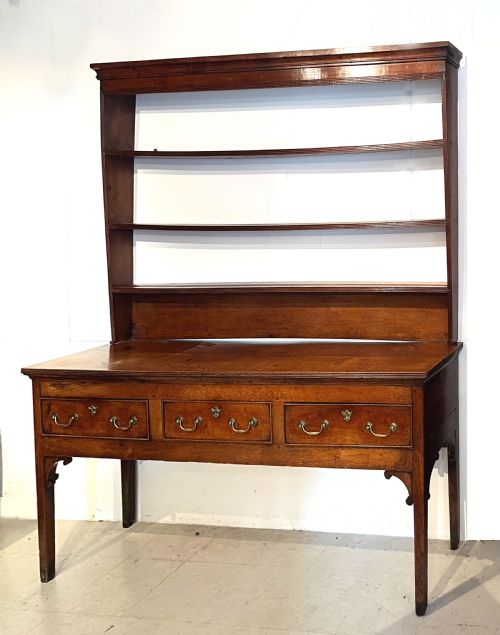
A georgian wooden plate rack is a practical furnishing designed to hold and display domestic earthenware and plates in a domestic interior. These pieces appear either as standalone wall-mounted racks or as the upper tier attached to larger country kitchen dressers.
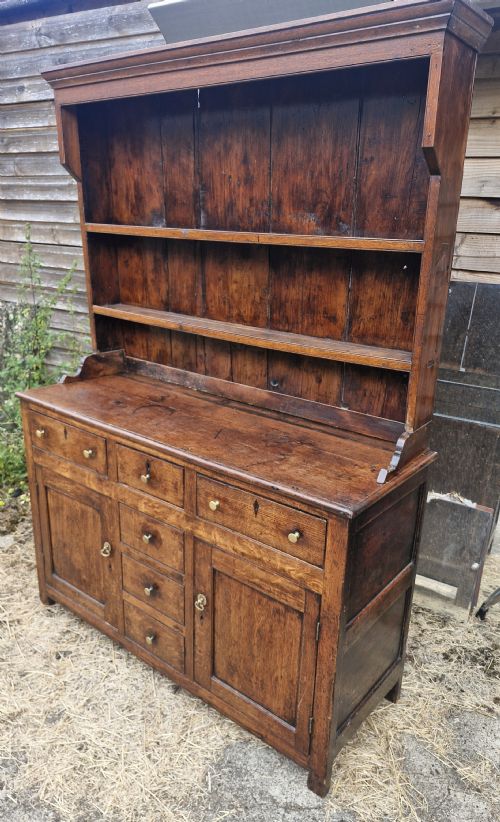
The selections here span periods from the eighteenth century through to the nineteenth century, reflecting regional English, Welsh, and Irish country traditions. Oak, pine, and elm form the primary structural timbers, often integrated into complete two-part dressers or utilised as independent display stands.
Buyers will encounter both unpainted waxed timbers and painted surfaces, sometimes incorporating architectural details such as Corinthian columns or carved elements. These variations represent the domestic requirements of period households, ranging from simple cottage interiors to more substantial country houses.
How they were made
Cabinetmakers constructed these plate racks primarily using native hardwoods and softwoods, predominantly oak, pine, and elm, supplemented by mahogany or cherrywood in specific examples. Timbers were selected for durability and joined using traditional carpentry techniques suited to daily domestic service.
Iron and brass fixings, alongside wrought iron components, provided structural reinforcement and hanging mechanisms for wall mounting. Surfaces were finished simply with wax or occasionally painted to protect the wood and suit the interior aesthetic of the period.
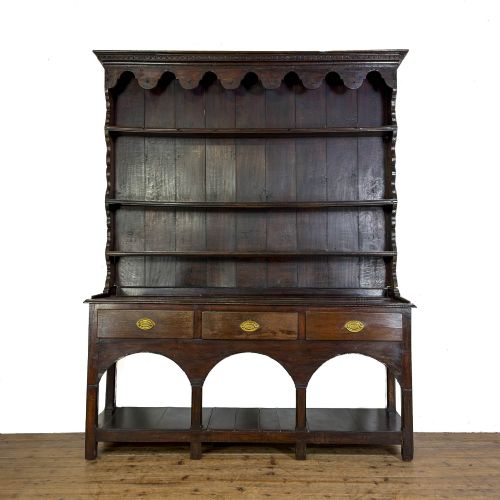
Formats range from standalone wall shelves to complete two-part Welsh dressers and modular plate stands.
What varies in quality
The standard of a georgian wooden plate rack rests on the selection of timber and the integrity of its construction. Superior examples display dense, well-figured oak or clean pine with balanced proportions and original mounting points.
Refinement in surface treatment and joinery distinguishes finer pieces from utilitarian kitchen furniture. Elements such as crisply turned supports, integrated cornice mouldings, and retained original backboards elevate the visual standing of the rack.
The Georgian Wooden Plate Rack Glossary
- Delft rack
- A wall-mounted or dresser-integrated shelving unit specifically designed for displaying delftware plates upright. These racks feature narrow ledges and wooden retaining rails to prevent crockery from slipping.
- Pot board
- A lower open shelf built into the base of a Welsh dresser, traditionally used for storing heavy pots and pans. This platform sits just above the floor between the lower legs.
- Two-part dresser
- A piece of furniture comprising a lower base cabinet with drawers or cupboards and an upper plate rack section that detaches. This modular construction facilitated movement into rural cottages.
- Corinthian column
- An ornate classical column type occasionally incorporated as a decorative stile or support on regional furniture. These architectural elements reflect the influence of grander design styles on country workshops.
- Waxed pine
- A softwood surface treatment utilising natural wax to seal and polish the grain. This finish imparts a warm lustre while preserving the texture of the pine.
Georgian Wooden Plate Rack: Frequently Asked Questions
How do I hang a wall rack safely?
Wall-mounted plate racks require secure fixing to solid masonry or internal wall studs using appropriate heavy-duty brackets. Because these racks hold heavy earthenware, weight distribution across multiple fixing points is essential.
Consult a professional joiner or installer to assess the wall structure before hanging any period timber rack.
Are plate racks part of dressers?
Many plate racks function as the upper component of a two-part Welsh dresser, resting upon a base cabinet. Other examples survive independently as wall-mounted shelving units.
Both configurations were designed for kitchen storage and display, though standalone racks were fixed directly to walls.
What wood was used?
Oak and pine are the most prevalent timbers found in these regional pieces, supplemented by elm, cherrywood, and mahogany. Oak provided structural strength for country dressers, while pine offered a lighter alternative for wall racks.
Surface treatments typically include traditional clear wax or historic painted finishes.
How do I clean period wood?
Maintain waxed surfaces using a soft cloth and natural beeswax to nourish the timber without stripping its patina. Avoid modern silicone polishes and excess moisture, which can damage historic finishes.
Gentle dusting preserves the dry, historic appearance characteristic of eighteenth and nineteenth-century country furniture.