

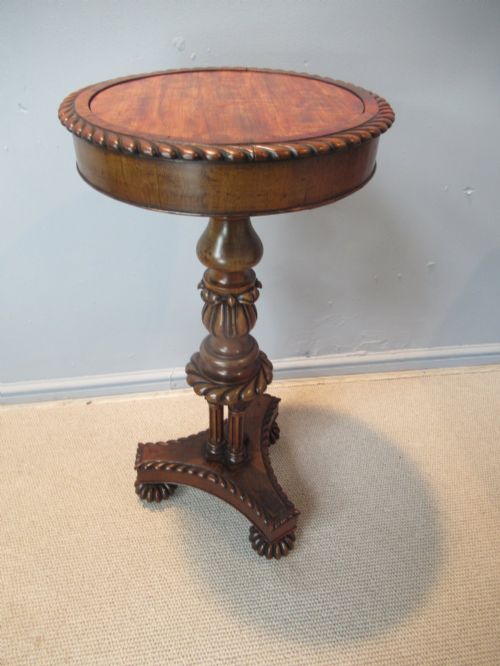


Georgian Wooden Planters
Georgian wooden planters are robust vessels of mahogany, oak, and walnut that bring natural greenery and historic character directly into a room.
Georgian Wooden Planters
Georgian wooden planters encompass a practical group of vessels originally designed for wine cooling, peat storage, and plant display. When exploring georgian wooden planters, buyers encounter forms that merge domestic utility with fine cabinet making.
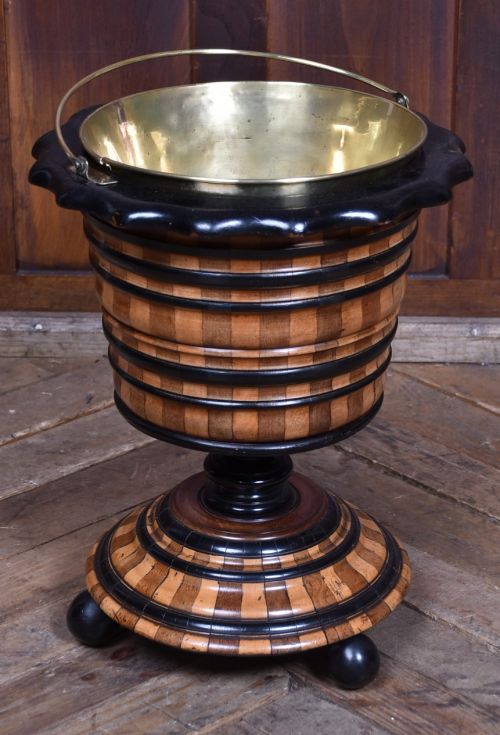
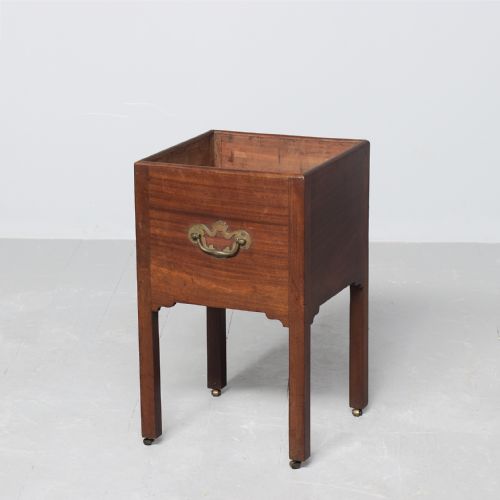
The pieces appearing on this page span the eighteenth and nineteenth centuries, alongside later revivals in the Georgian and Regency styles. Mahogany dominates the selection, frequently paired with contrasting brass bands and liners.
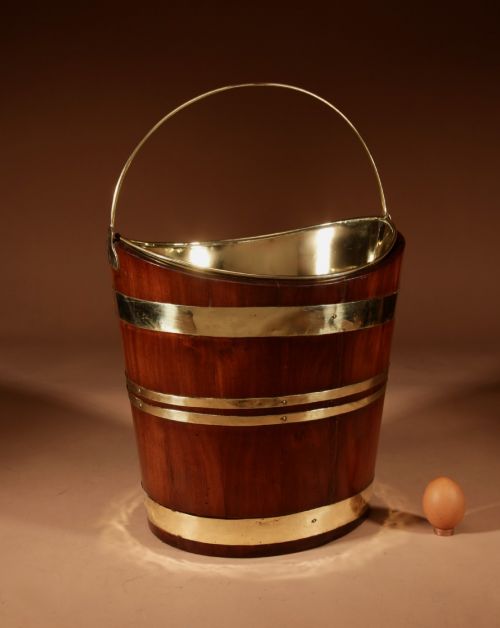
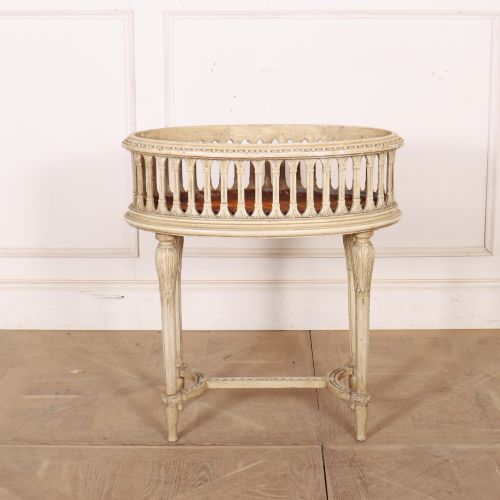
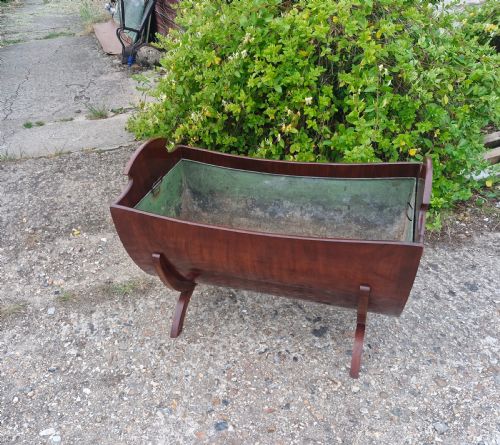
Vessels range from boat shaped schuitjes and open wine coolers to coopered buckets and dedicated jardinieres. Many items share overlapping functions, serving equally as champagne coolers, log baskets, and plant holders.
Materials and construction
Cabinet makers utilised dense hardwoods such as mahogany, walnut, and satinwood, often constructing bodies using traditional coopered staves held together by tension. Metal elements, particularly brass hoops, liners, and swing handles, provide structural reinforcement and functional contrast against the dark timber.
Several items double as coal stores or champagne coolers, proving that historic houseplants shared space with fireside fuel.
Assessing quality and craftsmanship
Quality rests upon the selection of timber and the precision of the cooperage or cabinet work. Superior examples display tight, even stave construction, rich grain figuring in the mahogany or walnut, and original metal mounts rather than later replacements.
The presence of period liners and correctly proportioned brass banding elevates a piece. Finer items exhibit crisp moulding details and sophisticated forms such as boat shapes or marquetry panels, distinguishing them from simpler utility buckets.
The Georgian Wooden Planters Glossary
- Jardiniere
- An ornamental pot or stand designed to hold growing plants or flowers. These vessels often feature protective metal liners to contain damp soil.
- Cellarette
- A lockable box or container used to store bottles of wine near the dining table. Many examples double as planters or coolers due to their watertight interiors.
- Coopered
- Made by a cooper using curved wooden staves bound together with metal hoops. This technique provides the structural strength needed for holding liquids and damp materials.
- Schuitje
- A boat shaped vessel originating from the Netherlands, frequently used as a tea stove or jardiniere. The distinctive hull profile sets these pieces apart from standard round buckets.
- Teestoof
- A traditional Dutch heating device or foot warmer that doubles in form as a small decorative container. These items often incorporate brass liners and handles.
Georgian Wooden Planters: Frequently Asked Questions
How were these wooden planters originally used?
Many of these vessels started life as wine coolers, cellarettes, or peat buckets rather than garden items. Domestic households utilised them for chilling bottles at the dining table or storing fuel near the fireplace.
Over time, collectors and interior designers adapted these deep wooden containers to house potted plants and floral displays. Their robust construction and waterproof liners made them ideal for interior greenery.
Can I use georgian wooden planters for real plants?
Most pieces feature original or replacement metal liners designed to hold moisture safely. These inserts protect the historic timber from direct contact with damp soil and water.
Buyers should inspect the interior liner condition before introducing live plants and soil. Using a secondary inner pot provides an extra layer of protection for the antique wood.
How do I distinguish a Georgian piece from a later revival?
Authentic eighteenth century pieces display the distinct patination, hand tool marks, and timber shrinkage expected of genuine age. Construction methods and wood species align closely with documented furniture of the period.
Revival pieces from the late nineteenth or early twentieth century often exhibit cleaner machine precision and standardised brass fittings. Examining the underside and interior joints helps reveal the true age of the timber.
What is the difference between a cellarette and a jardiniere?
A cellarette was built specifically to hold wine bottles securely, often featuring internal dividers or locking lids. These containers prioritized bottle storage alongside temperature control.
A jardiniere focuses entirely on plant display, typically featuring an open top and a deeper cavity for soil or potted arrangements. Despite distinct origins, both forms share similar coopered construction and brass banding.