
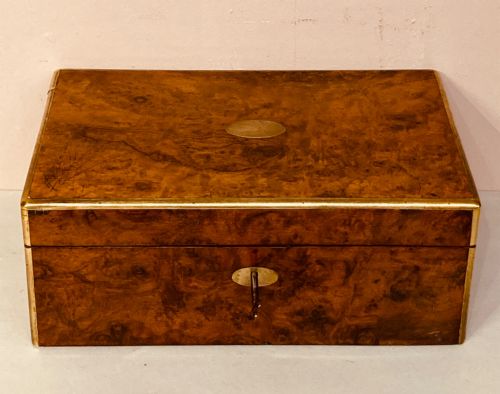
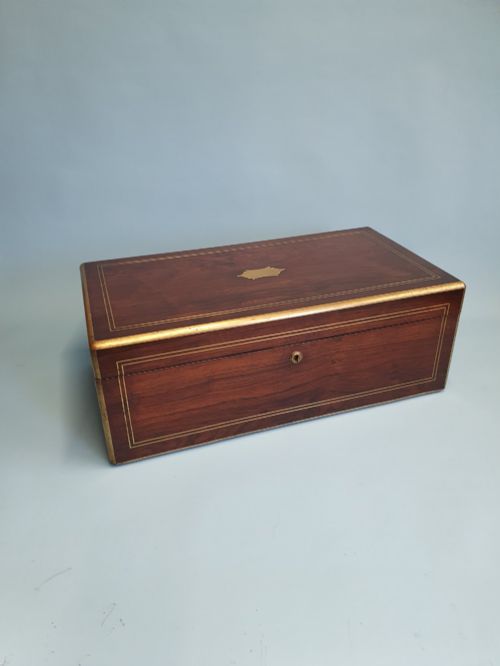

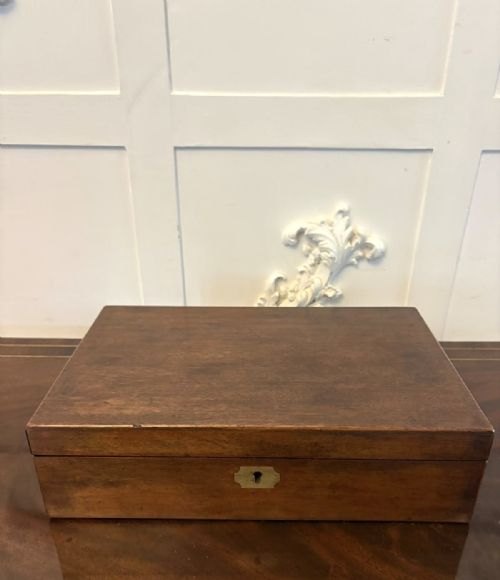


Georgian Wooden Lap Desk
A Georgian wooden lap desk offers a portable writing surface, combining rich hardwoods and brass mounts for travel and correspondence.
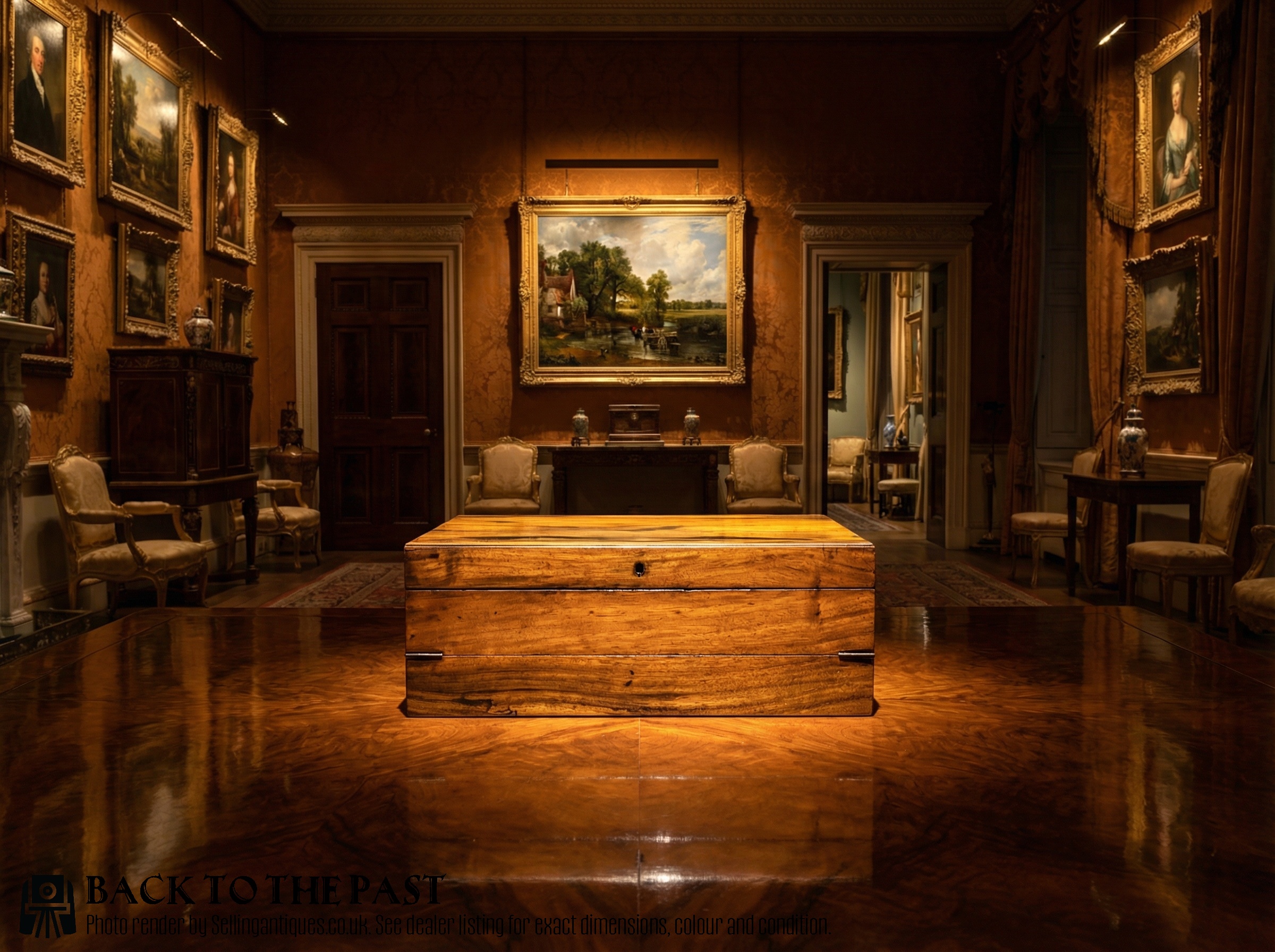
Georgian Wooden Lap Desk
A Georgian wooden lap desk functions as a portable writing slope and box, designed for correspondence and document storage during travel. These pieces emerge from the Georgian, Regency, and Victorian periods, often taking the form of writing slopes, writing boxes, and document boxes.
Mahogany and rosewood dominate the selection on this page, accompanied by walnut, burr walnut, and satinwood. Many examples incorporate brass binding, brass mounts, and secret drawers or compartments within fitted interiors.
Campaign styles and military variants appear frequently, reflecting the portable nature required by officers and travellers. Buyers encounter bi-fold writing slopes and document boxes alongside larger fitted boxes.
How they were made
Cabinet makers utilised dense hardwoods such as mahogany, rosewood, and walnut, frequently selecting figured grains and burr walnut veneers. Satinwood and ebony also provide contrast on specific boxes.
Brass corners, straps, and inlay reinforce the structural edges of campaign writing slopes designed for rigorous transport. Fitted interiors combine timber partitions, secret compartments, and leather writing surfaces.
Some boxes hide secret drawers so cunningly engineered that owners still lose their love letters inside them.
What varies in quality
Quality depends upon the choice of timber veneer, the precision of the brass inlay, and the complexity of the interior fittings. Plain mahogany boxes sit at one end, while substantial rosewood slopes with extensive brass mounts and secret drawers occupy the other.
The survival of original fitted interiors, secret compartments, and working mechanisms distinguishes finer examples. Additional decorative elements like Tunbridge ware inlay or detailed brass binding elevate specific pieces.
Austin·George Austin
The Georgian Wooden Lap Desk Glossary
- Lap desk
- A portable box opening to form a slanted writing surface with internal compartments for stationery and ink. These objects were essential for writing letters while travelling.
- Writing slope
- A hinged box that opens outward to create an inclined plane for writing. Interiors often include secret drawers and pen trays.
- Campaign style
- Furniture constructed for military use featuring brass corners and flush handles for durability during transport. These items needed to withstand frequent movement.
- Tunbridge ware
- Woodworking craftsmanship characterised by minute mosaic decoration made from differently coloured woods. This technique adorns specific Victorian boxes.
- Secret compartment
- A concealed drawer or hidden space built into a box to secure valuables and private letters. Cabinet makers designed these to open via hidden catches.
Georgian Wooden Lap Desk: Frequently Asked Questions
What is a lap desk?
A lap desk is a portable wooden box designed to hold writing materials and provide an angled surface for writing letters. They fold shut securely for transport.
Many examples feature internal compartments for inkwells, pens, and paper, alongside secret drawers for valuables.
How were they used?
Travellers, officers, and writers used these boxes on desks, tables, or their laps to write correspondence away from a stationary desk. The sloping lid provided an ergonomic writing angle.
Documents and stationery remained safely stored inside during transit, protected by sturdy timber and brass reinforcement.
How do I date a box?
Dating relies on timber choices, brass mounting styles, and construction techniques associated with periods like the Georgian, Regency, and Victorian eras. Rosewood and brass binding often point to Regency or late Georgian manufacture.
Interior layouts and specific wood veneers also help narrow down the decade of production alongside historical campaign styles.
Where were they made?
These writing boxes were produced in workshops across Britain and Ireland by skilled cabinet makers. Specific makers such as Austin operated in Dublin.
Cabinet makers utilised local and imported hardwoods to construct durable boxes suited for domestic and military use.
How do I care for the wood?
Maintenance involves keeping the timber away from direct sunlight and excessive heat sources to prevent the wood or veneer from warping. Occasional gentle cleaning preserves the polished surface.
Leather inserts and brass mounts benefit from careful dusting and minimal moisture to protect the original materials.