


Georgian Wine Storage Chest
A georgian wine storage chest is a handsome receptacle designed to hold bottles securely in the dining room.
Georgian Wine Storage Chest
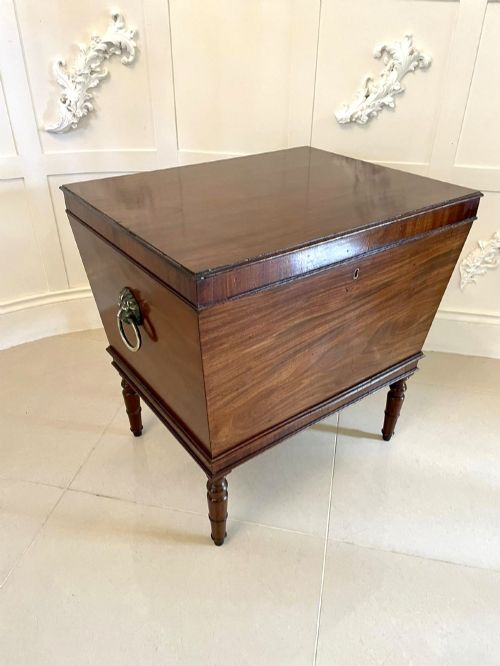
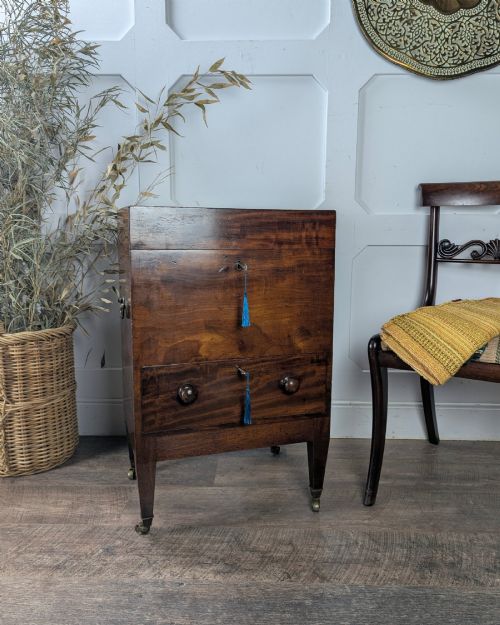
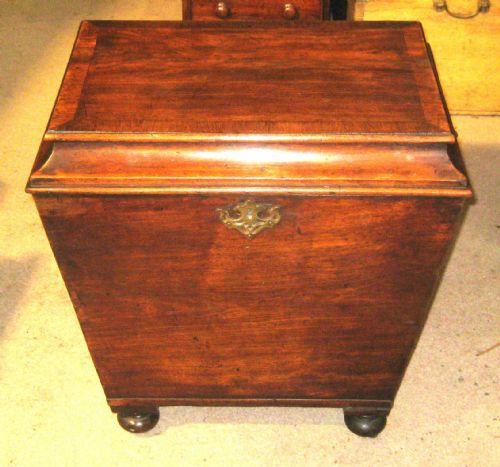
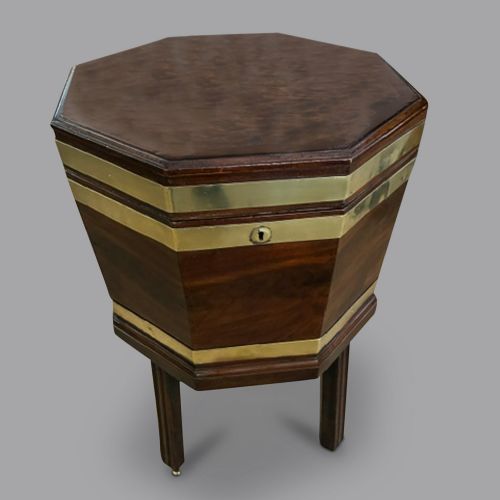
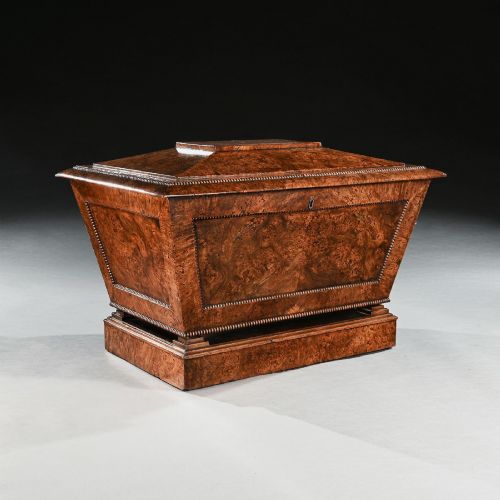
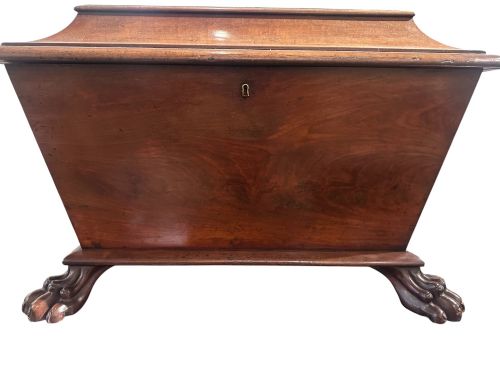
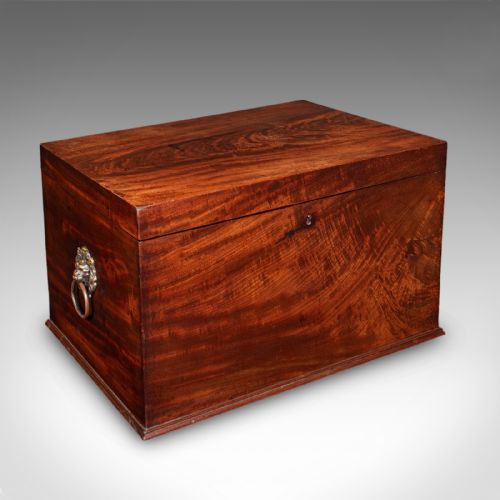
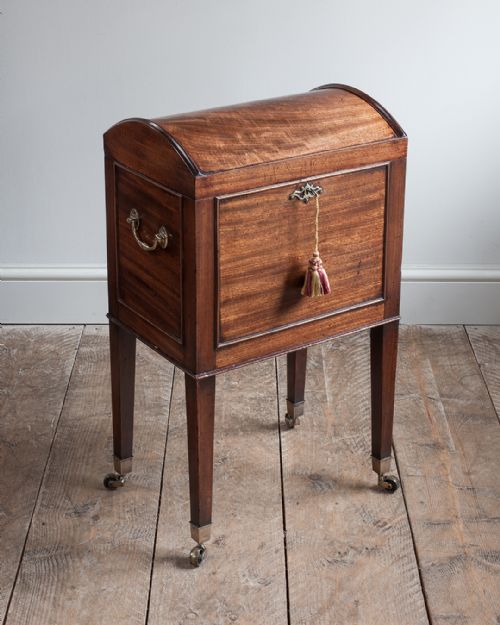
A georgian wine storage chest, frequently described as a cellarette or wine cooler, appears in forms ranging from octagonal boxes to sarcophagus shapes. These pieces date principally from the eighteenth and nineteenth centuries, spanning the Georgian, Regency, William IV, and Edwardian periods.
Mahogany is the predominant timber found in these storage chests, often enriched by flame veneers, ebonised wood, boxwood inlay, and marquetry. Alternative timbers such as pollard oak, rosewood, and burr elm also emerge across the selection.
Internal lead linings or zinc trays originally held melting ice to chill bottles, though many interiors now survive as plain wooden compartments or storage boxes.
Materials and construction
Cabinet makers utilised solid mahogany and decorative veneers applied to sturdy carcases, sometimes incorporating boxwood inlay for linear contrast. Marquetry and ebonised details further embellished specific Regency and Georgian examples.
Metal fittings such as brass carrying handles, lions' mask rings, and robust hinges served both a structural and decorative purpose. Zinc and lead linings provided durable, waterproof interiors for holding ice and bottles.
Some chests double unexpectedly as blanket boxes or fireside stores, proving that even fine wine containers appreciate a career change.
Assessing quality
Quality rests upon the selection of timber figure, such as rich flame mahogany or pollard oak, paired with crispness in carved details like fluted tops or classical feet. The integration of original brass hardware and well-fitted internal partitions elevates a piece significantly.
Proportion and form dictate the visual impact of a cellarette, separating standard utilitarian boxes from grand sarcophagus designs commissioned for formal dining rooms.
Gillingtons·Gillows of Lancaster and London·Whytock and Reid
The Georgian Wine Storage Chest Glossary
- Cellarette
- A freestanding lockable chest or box designed specifically for storing and cooling wine bottles in the dining room. They sit low to the floor, often on castors or bracket feet.
- Sarcophagus
- A distinct classical chest shape featuring a domed lid and tapered sides, popular during the Regency period for wine coolers. This monumental form draws inspiration from ancient stone tombs.
- Flame mahogany
- A highly figured veneer cut from the fork of the mahogany tree where the branch joins the trunk. It creates a distinctive feather-like flame pattern across the surface of the chest.
- Pollard oak
- Timber taken from trees that have been pollarded, producing a dense, knotty grain with rich figuring. Cabinet makers utilised this timber during the Regency era for striking decorative effect.
- Marquetry
- The art of applying pieces of veneer to a structure to form decorative patterns and pictures. It appears on select pieces alongside boxwood inlay to enhance the primary timber.
Georgian Wine Storage Chest: Frequently Asked Questions
What is a cellarette?
A cellarette is a specialised storage chest designed to hold wine bottles near the dining table.
Cabinet makers produced them in various geometric and classical shapes to match the dining furniture of the period.
How were wine coolers used?
Servants filled the metal-lined interiors with ice and water to chill wine before serving it to guests.
They also served simply as secure storage boxes for holding bottles under lock and key.
Where should I place a wine chest?
These chests work well as freestanding focal points in a dining room, hallway, or living space.
Their substantial timber tops also provide a convenient surface for displaying lamps or decorative objects.
How do I identify the period?
Cabinet proportions, timber choices, and decorative motifs indicate the era of manufacture.
Straight-lined Georgian boxes give way to bolder Regency sarcophagus forms and later Edwardian revival pieces.