
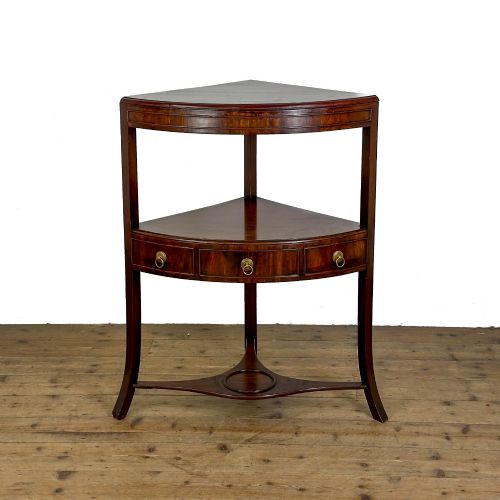
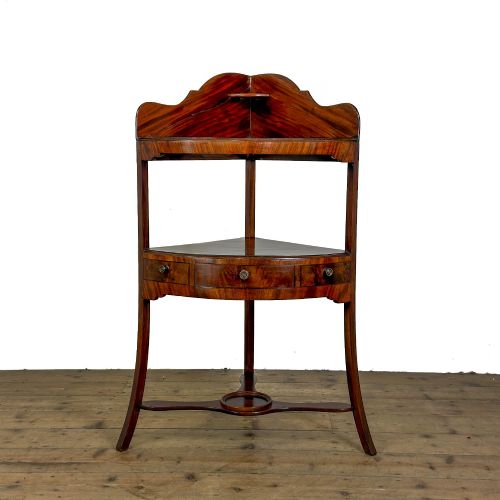
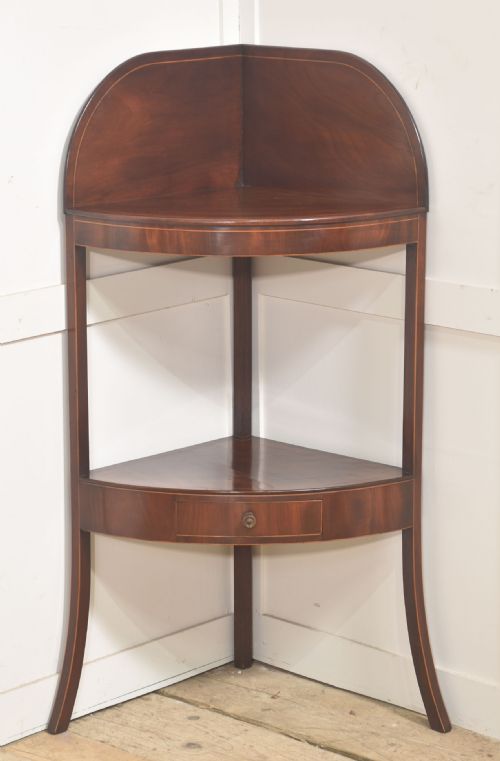


Georgian Wash Basin Table
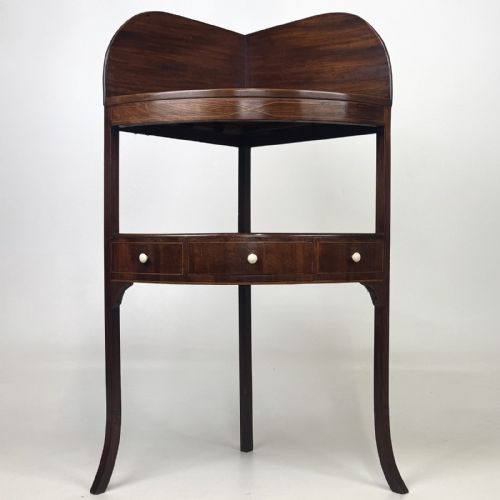
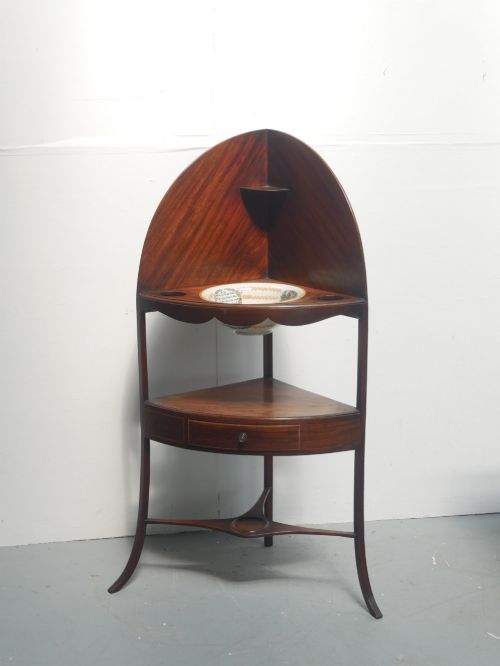
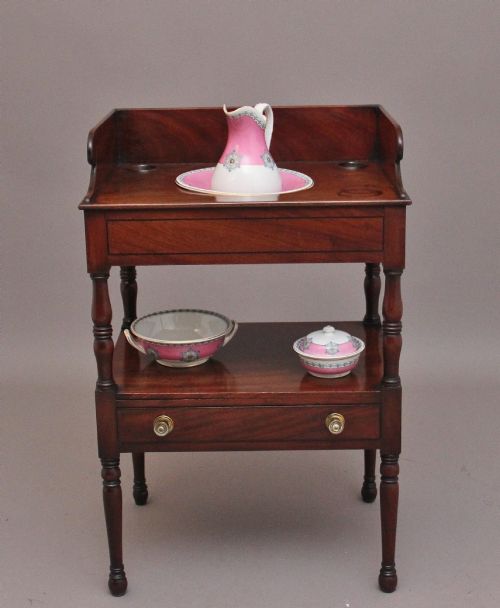
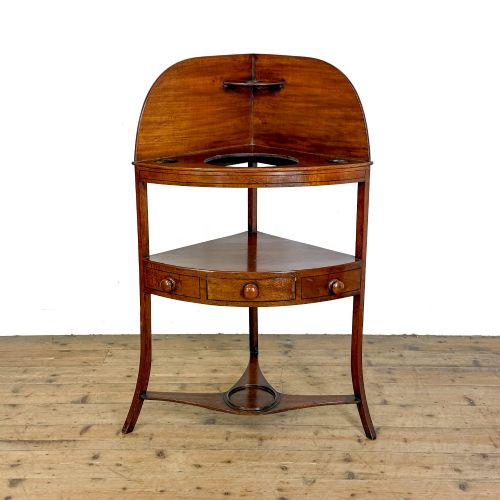
These georgian wash basin table pieces are timber washstands built to hold basins and ewers in period bedchambers.
Georgian Wash Basin Table
When searching for a georgian wash basin table, collectors encounter corner washstands shaped to fit chamber angles. The listings show forms spanning the eighteenth century, the regency era, and into the nineteenth century.
The pieces on this page are predominantly corner washstands made of mahogany. They include examples from the George III period and later Victorian interpretations.
Many variants double as occasional lamp or plant tables in modern settings. They range from simple eighteenth century designs to inlaid pieces dated around nineteen ten.
How they were made
Makers utilised solid mahogany and applied boxwood inlay for decorative contrast. Brass elements appear alongside ceramic and glass components within the recorded fittings.
Joinery techniques suited the triangular floor plan of corner washstands. Selected examples incorporate leather details alongside timber construction.
Mahogany is the dominant timber recorded across the items, frequently detailed with boxwood inlay.
What varies in quality
Quality rests upon the selection of timber and the precision of the boxwood inlay. Grain patterns in the mahogany distinguish finer examples from standard workshop production.
The integration of brass fittings and the crispness of edge moulding separate the better tables from ordinary utility pieces.
The Georgian Wash Basin Table Glossary
- George III
- A stylistic period spanning the mid to late eighteenth century and early nineteenth century. Furniture from this era often displays clean classical proportions and mahogany construction.
- Corner washstand
- A specialised table designed to fit neatly into the corner of a room. These pieces typically feature tiers or cutouts for basins and ewers.
- Boxwood inlay
- A contrasting pale wood inserted into darker timber surfaces to create decorative borders or motifs. It requires precise hand woodworking skills.
- Regency
- A design period covering the early nineteenth century. Pieces from this time draw inspiration from classical antiquity.
Georgian Wash Basin Table: Frequently Asked Questions
What was a georgian wash basin table used for?
These tables served in bedrooms for morning washing routines before plumbed bathrooms existed. They held basins, ewers, and containers for soap and water.
Today, buyers repurpose them as hallway corners, lamp tables, or plant stands while retaining the historical form.
How do I identify a George III washstand?
George III pieces display mahogany timbers and specific corner profiles designed for domestic bedchambers. Look for period proportions and traditional joinery methods.
Later Victorian versions and nineteen ten reproductions often adopt similar forms but reveal different secondary woods and wear patterns.
Are these washstands only for corners?
The pieces recorded here are corner washstands shaped with an angled back to sit against two meeting walls. This configuration maximised bedroom space in period houses.
Their triangular footprint makes them particularly useful for filling awkward corners in modern rooms.
What materials should I expect to find?
Mahogany is the primary timber across the listings, frequently accented with boxwood inlay. Some examples incorporate brass, ceramic, glass, and leather elements.
These materials reflect standard cabinet-making practices of the eighteenth and nineteenth centuries.