



Georgian Wash Basin Stand
A georgian wash basin stand offers clever domestic engineering, designed to hold a bowl and pitcher neatly in the corner or centre of a room.
Georgian Wash Basin Stand
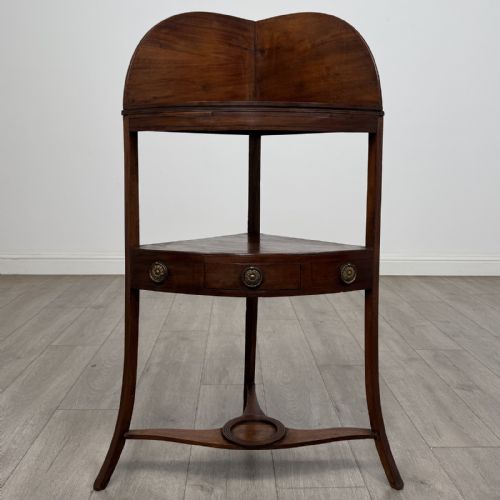
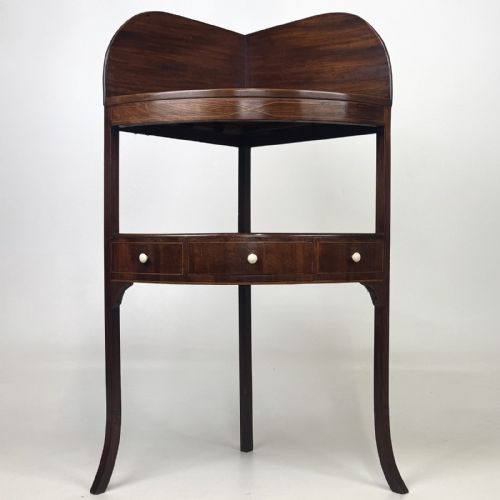
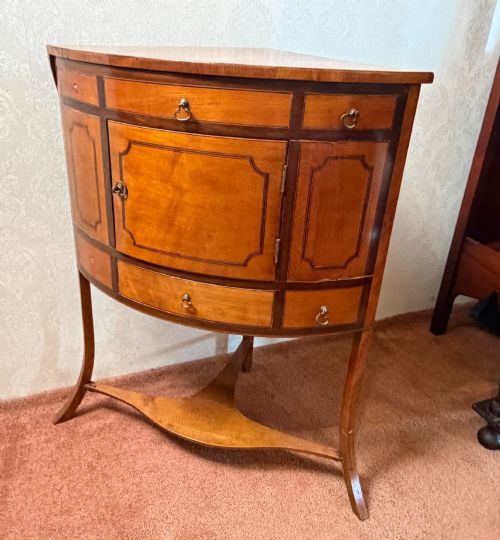
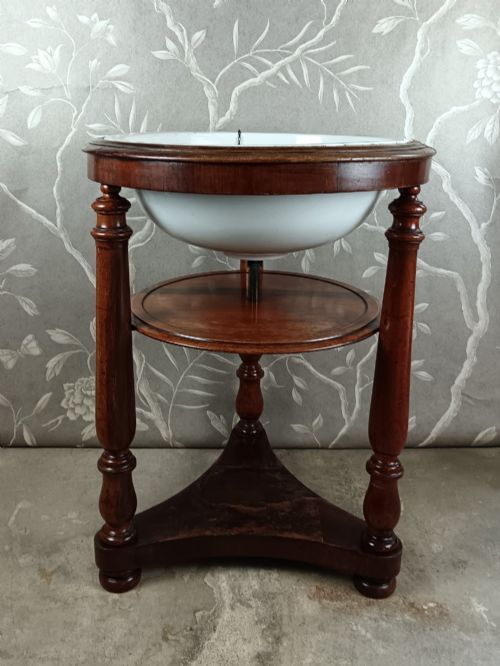
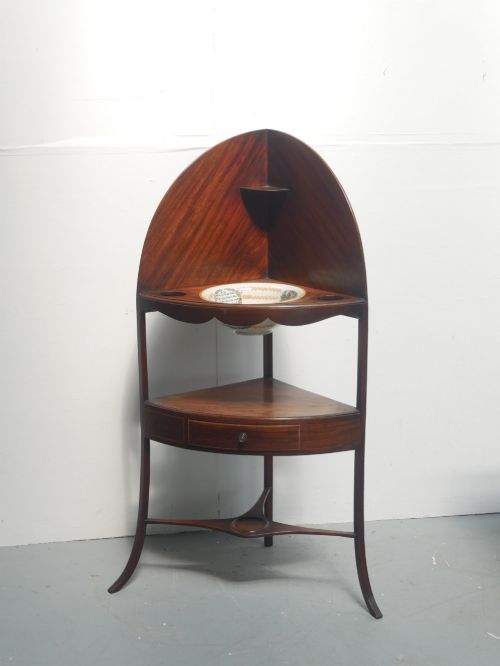
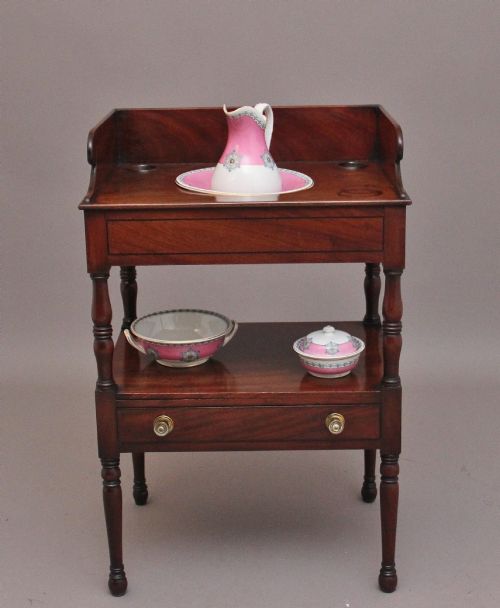
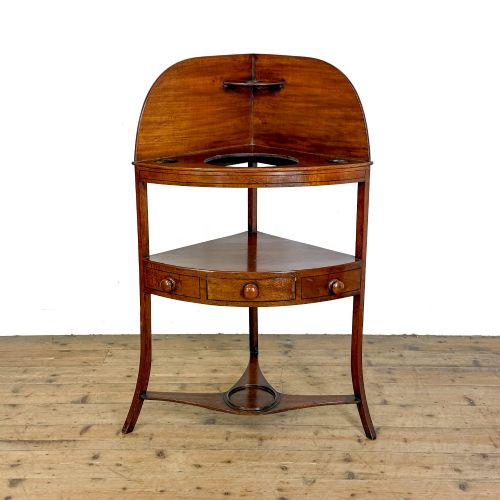
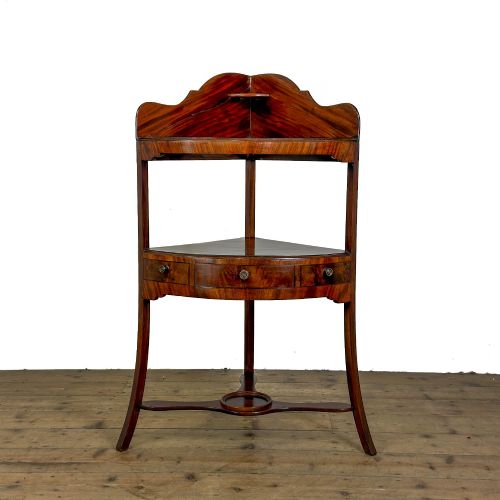
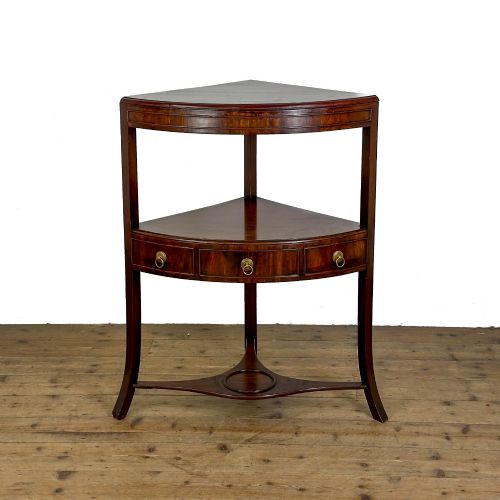
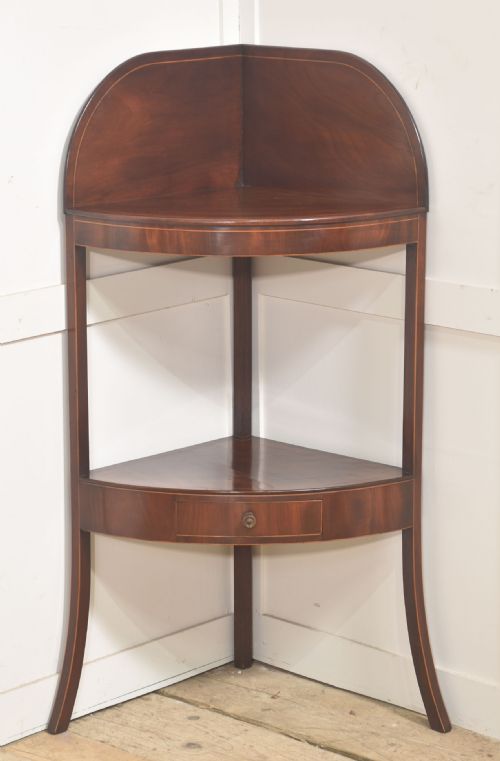
When you search for a georgian wash basin stand, you encounter compact corner units and round freestanding frames built to hold ceramic basins. Most pieces on this page are mahogany corner washstands dating from the eighteenth century, alongside occasional wig stands, plant stands and campaign versions.
These stands were essential bedroom and dressing room furniture before plumbed bathrooms existed. Makers designed them with tiers for water jugs, basins and soap, often incorporating small drawers or enclosed cabinets below.
How they were made
Cabinetmakers built these pieces primarily using solid mahogany and mahogany veneers, occasionally incorporating satinwood or boxwood inlay for decorative contrast. Brass fittings secure folding tops and compartments, while ceramic bowls and glazed basins complete the functional design.
Joinery techniques included precise corner framing to fit domestic interiors, alongside turned vertical supports and triform bases for stability. Finer examples integrated stringing and boxwood details into the woodwork.
Georgian Wash Basin Stand Retail Price Guide 2026
Typical asking prices for georgian wash basin stand among the pieces listed under this phrase on Sellingantiques today, from the lower quarter to the upper quarter. They describe what is for sale here now, not the wider market.
Some clever surviving examples feature hidden folding tops that neatly conceal the washing bowl when guests arrive.
What varies in quality
The distinction between standard examples and exceptional pieces rests on timber selection, decorative inlay and structural survival. Fine grain patterns in the mahogany and crisp boxwood stringing elevate the visual weight of a room.
Makers who incorporated clever folding mechanisms, bow fronts or integrated small drawers achieved higher tiers of craftsmanship. Survival of original brassware and unaltered basin rings further separates standard utilitarian items from master cabinetwork.
Gillows Lancaster
The Georgian Wash Basin Stand Glossary
- Corner washstand
- A triangular furniture piece specifically designed to fit snugly into the corner of a room to save floor space.
- Wig stand
- A smaller pedestal or stand featuring a small circular dish top historically used for holding gentlemen's hairpieces.
- Boxwood inlay
- Contrasting pale wood strips set into the darker mahogany surface to create geometric borders and decorative lines.
- Campaign washstand
- A portable, often folding stand constructed for travel and military use during the nineteenth century.
Georgian Wash Basin Stand: Frequently Asked Questions
What is a georgian wash basin stand?
A georgian wash basin stand is a piece of antique furniture built to hold a wash bowl, pitcher and toiletries before indoor plumbing became common in homes.
Most examples take a triangular corner shape or a round freestanding form, often featuring tiered shelves and small compartments.
How were they used historically?
These stands sat in bedrooms or dressing rooms to facilitate morning washing and grooming routines. Servants would fill the basin with warmed water from a jug stored on a lower shelf.
Enclosed sections and small drawers kept soap, powders and sponges out of sight when not in use.
Can I use one as a plant stand?
Many people repurpose these stands today as plant holders or lamp tables in modern interiors. The circular basin cutouts provide secure housing for potted plants and trailing greenery.
Their compact corner footprints make them particularly useful for filling empty spaces in hallways and living rooms.
How do I spot a genuine period piece?
Look for traditional construction methods such as hand-cut dovetails in the small drawers and authentic timber ageing in the mahogany. Period pieces often feature pegged joints and hand-turned supports rather than modern mechanical fixings.
Original brass hardware and subtle variations in the wood grain also point towards authentic eighteenth or nineteenth-century manufacture.