

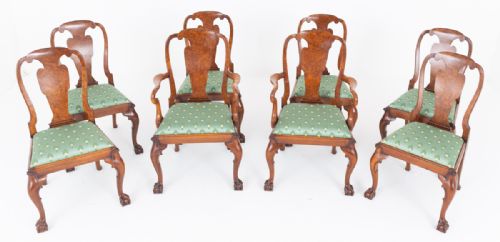


Georgian Walnut Carver
A georgian walnut carver brings warmth and presence to a room, offering sturdy timber and deep grain that suits a study or dining table.
Georgian Walnut Carver
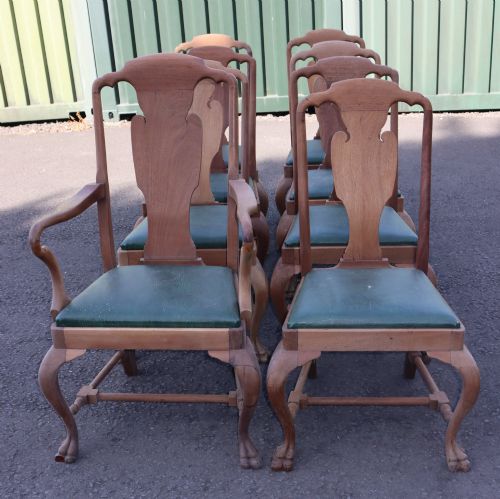
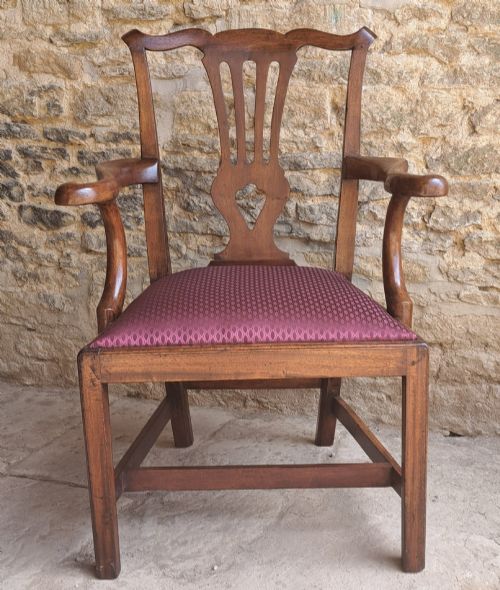
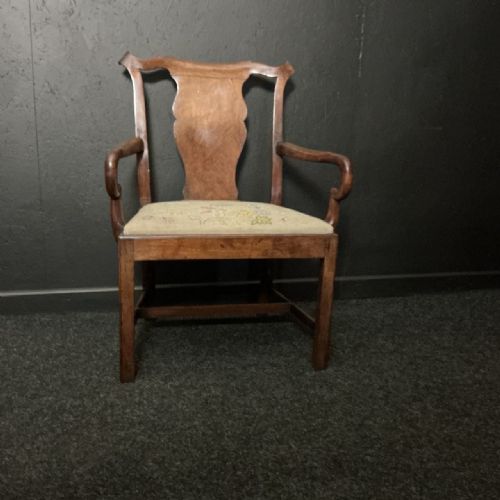
A georgian walnut carver spans single armchairs, desk chairs, and large sets of dining chairs made in walnut. You will find pieces originating from the eighteenth century alongside later revivals from the Victorian era and the early twentieth century.
The forms vary from high back armchairs and study chairs to elbow chairs and sets numbering up to twelve pieces. Many examples follow George I, George II, and Queen Anne styles, showing classical proportions and carved details.
How they were made
Makers shaped these chairs from walnut and burr walnut timber, employing skilled joinery to construct robust frames and carved armrests. Upholstered elements rely on fabric, leather, textile, velvet, and tapestry.
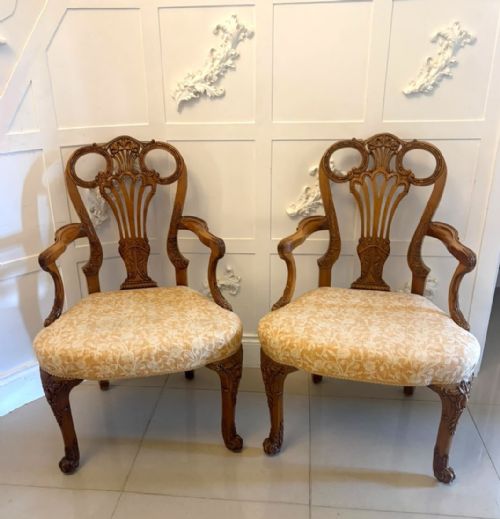
Detailing often includes brass fixtures and intricate hand carving applied to the woodwork, particularly on the knees, crest rails, and splats of the chair backs.
Georgian Walnut Carver Retail Price Guide 2026
Typical asking prices for georgian walnut carver among the pieces listed under this phrase on Sellingantiques today, from the lower quarter to the upper quarter. They describe what is for sale here now, not the wider market.
Some dining sets arrive in large groups of twelve, ready to seat a very hungry committee.
What varies in quality
The distinction in quality lies in the depth of the timber grain, particularly the selection of burr walnut veneers, and the crispness of the carved ornamentation on the arms and legs. Superior examples display harmonious proportions and careful timber matching across larger dining sets.
Construction integrity also defines the tier of a piece, separating straightforward utilitarian seating from finely proportioned armchairs with robust joinery and period-appropriate upholstery materials like tapestry or leather.
Spillman & Co
The Georgian Walnut Carver Glossary
- Carver
- An armchair, typically designed with elbow rests to match a set of smaller dining chairs. These were often placed at the head of a table.
- Burr walnut
- A specialised timber cut from the warted growths on walnut trees, prized for its swirling, highly decorative grain patterns. It was frequently used for veneering prominent surfaces.
- Splat
- The vertical wooden strip down the centre of a chair back, often shaped in a vase or fiddle outline during the eighteenth century.
- Barley twist
- A woodworking technique turning timber into a spiral rope shape. This detail appears frequently on revival and seventeenth- or eighteenth-century framing.
Georgian Walnut Carver: Frequently Asked Questions
How do I spot an eighteenth-century original?
Examine the timber construction underneath and behind the seat frame for hand-cut joints and signs of age in the walnut. Eighteenth-century pieces generally exhibit heavier timber weight and traditional pegging.
Compare the carving style against established George I or George II motifs. Revivals from later decades often display subtle differences in finish and machine assistance.
Can I use these carvers at a modern desk?
Many desk armchairs and study armchairs provide suitable proportions for writing tables. Check the clearance height beneath your desk surface against the arms of the carver.
Consider seat heights carefully, as older chairs sometimes sit lower than contemporary office seating. Adding a subtle pad can adjust the height if needed.
What is the difference between George I and George II styles?
George I designs tend to feature heavier proportions, solid vase splats, and rounded pad feet. Walnut was the predominant timber of this earlier period.
George II pieces often introduce sharper carved details like lion masks or ball and claw feet, alongside cabriole legs with shell motifs on the knees.
How do I care for walnut timber and upholstery?
Dust walnut frames regularly with a soft cloth and feed the wood periodically with traditional wax to maintain the lustre. Keep chairs away from direct heat sources to prevent the timber from splitting.
Protect fabric, leather, or tapestry upholstery by avoiding direct sunlight. Professional cleaning preserves delicate textile and tapestry fibres.