
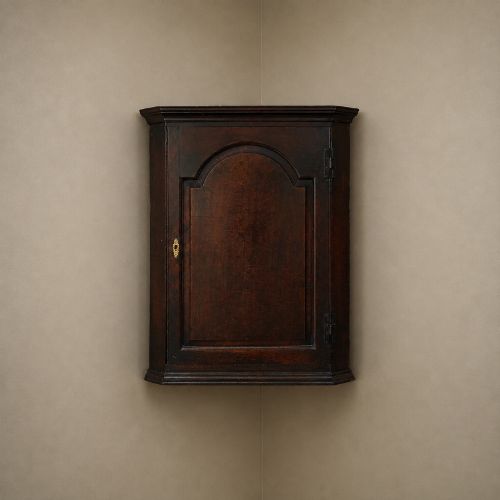
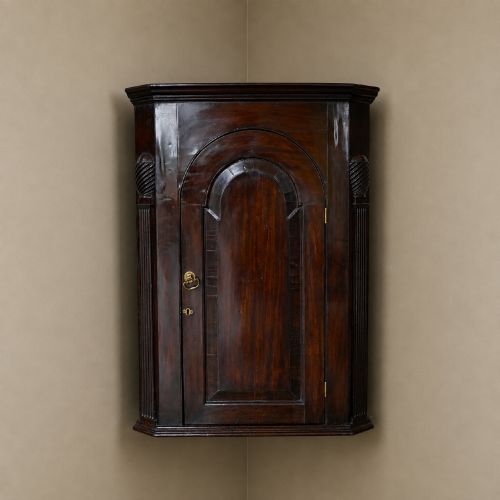
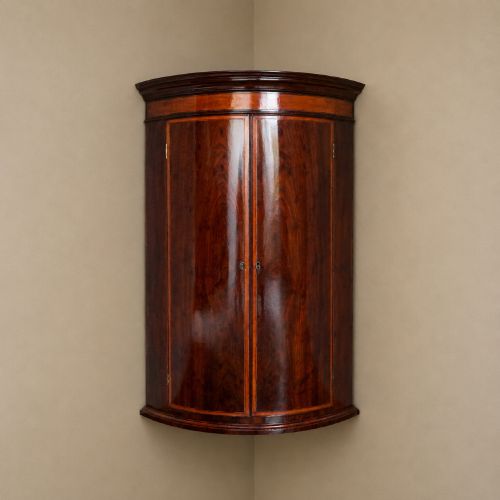
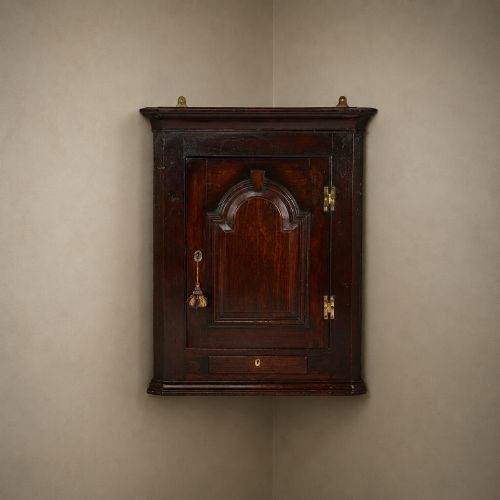
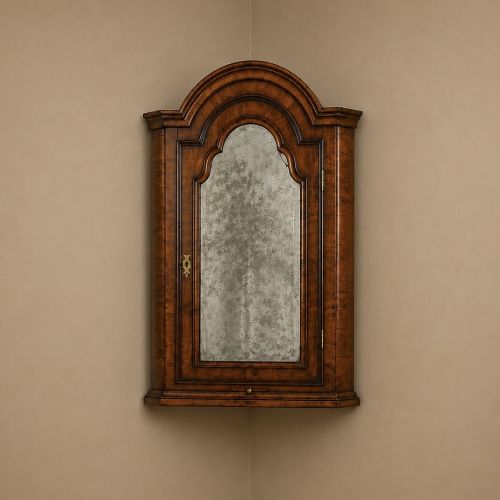
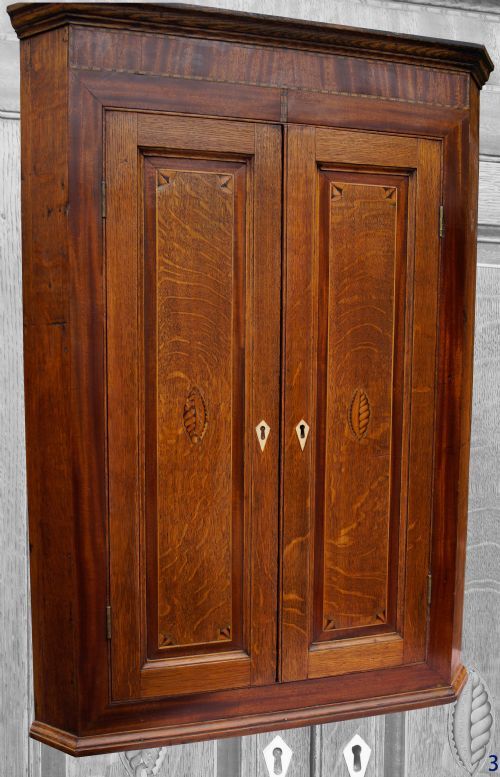
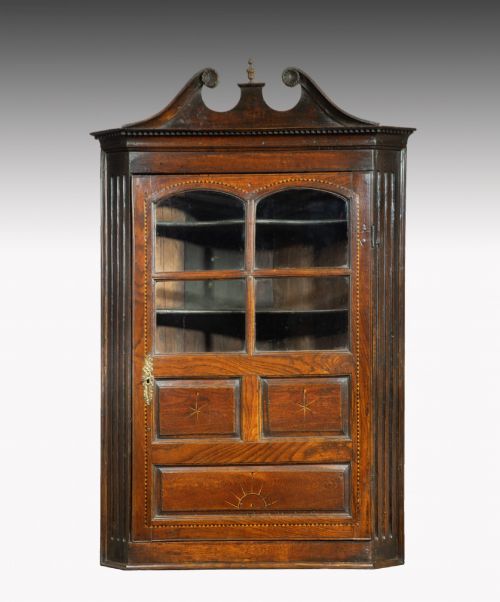
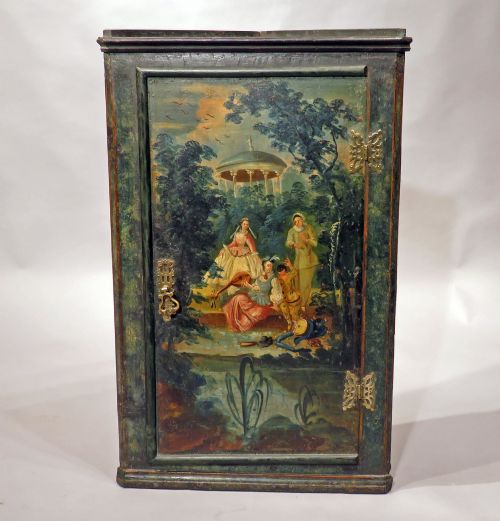
Georgian Wall Corner Cabinet
A georgian wall corner cabinet makes use of neglected angles to display or hide household items while saving floor space.
Georgian Wall Corner Cabinet
When searching for a georgian wall corner cabinet, buyers encounter timber cupboards designed to fit snugly into room angles. The versions most commonly met on this page are wall-hanging iterations constructed during the eighteenth and early nineteenth centuries.
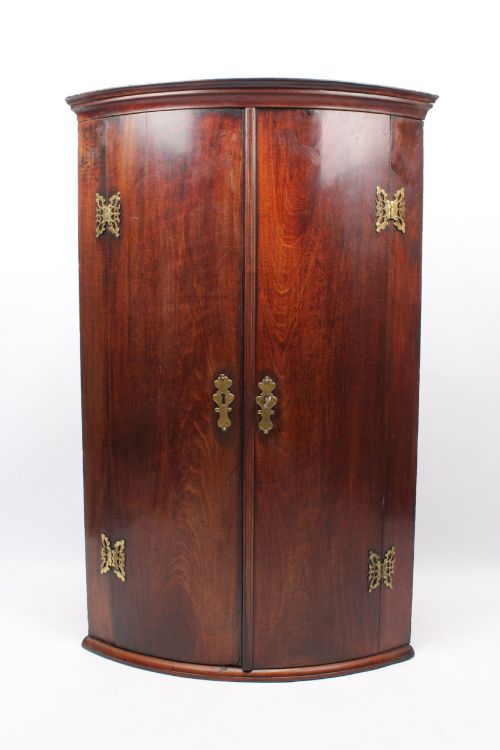
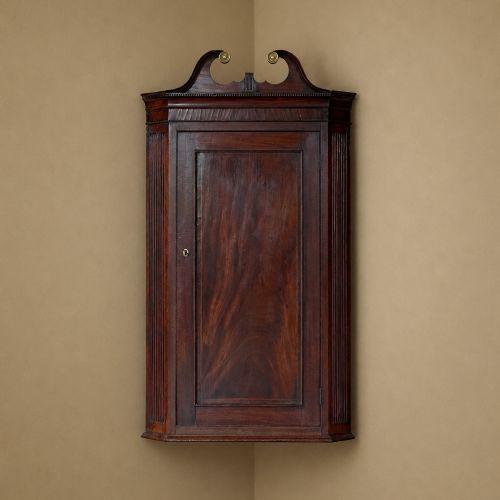
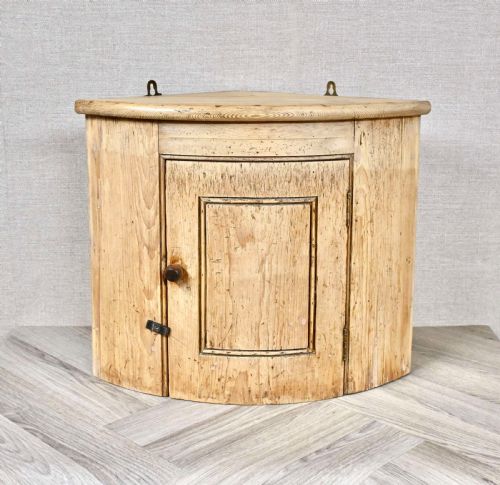
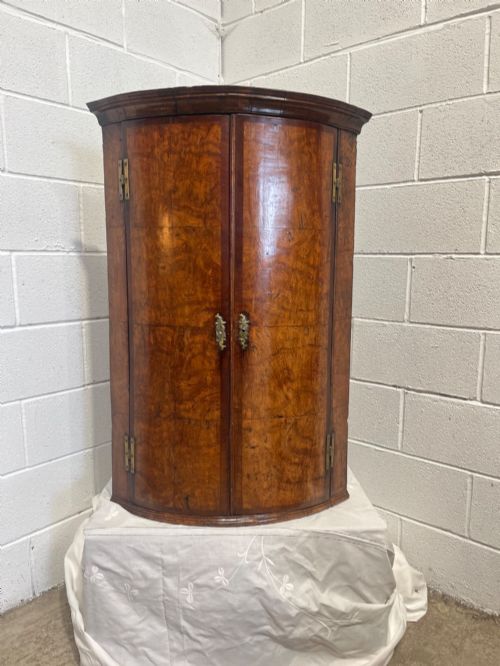
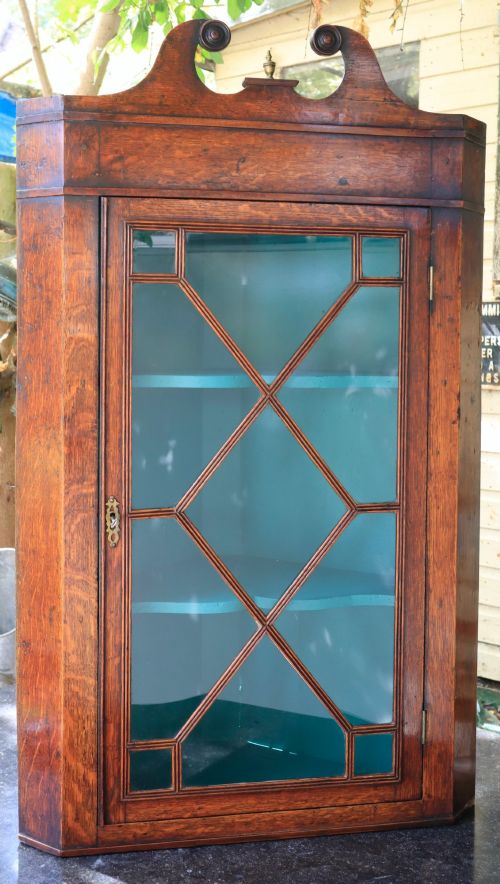
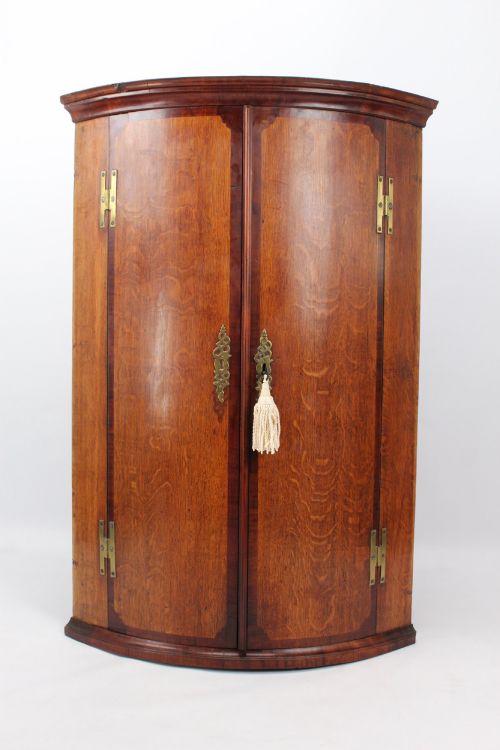
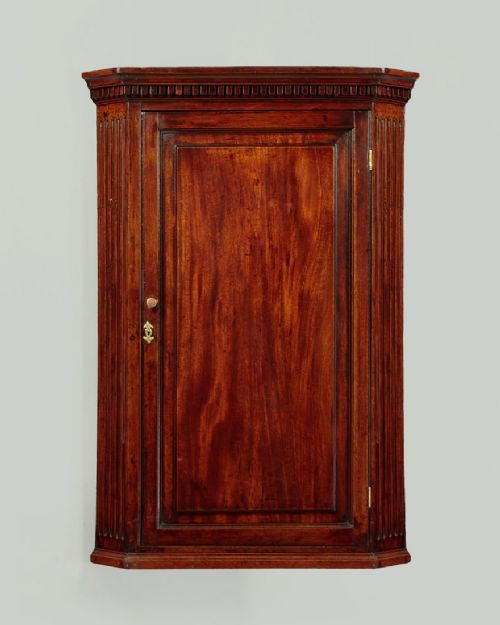
These storage forms include flat-fronted varieties alongside bow front designs and glazed display units. Oak and mahogany serve as the primary timbers, though pine and walnut examples appear with varying frequency across the listings.
What varies in quality
The choice of timber grain and the precision of the cabinet work define the upper tier of these pieces. Select examples display highly figured veneers and careful inlay work rather than plain stock.
Original elements such as brass H-hinges, working locks with keys, and untouched interior paint or mirror glass elevate the integrity of a piece. Simple vernacular cupboards in stripped pine occupy a different category from polite urban mahogany furniture.
Listings feature woods spanning mahogany, oak, pine, walnut, and lacquer, alongside brass fittings and glass.
The Georgian Wall Corner Cabinet Glossary
- Bow front
- A convex curved cabinet front that projects outward from the corner walls. This curved profile requires skilled joinery to shape the doors and matching frame.
- Astragal glazed
- A glass door divided into smaller panes by narrow wooden mouldings known as astragal bars. This allows for the display of contents inside the cupboard.
- Japanned
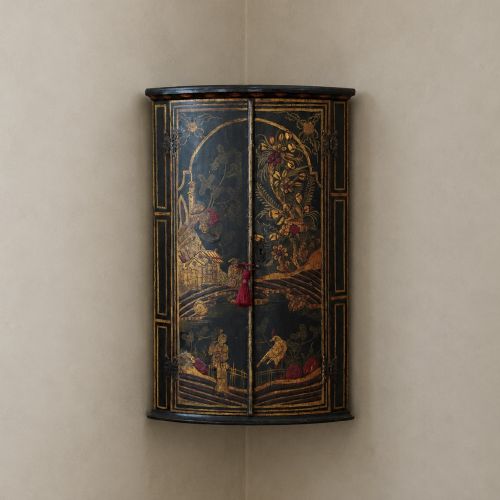
- European imitation of East Asian lacquerwork using built-up layers of varnish and painted decoration. It often depicts figures, landscapes or floral motifs in gold upon a dark ground.
- Candle slide
- A small pull-out wooden shelf positioned beneath the door used historically to hold a taper or candle for illumination while selecting items.
Georgian Wall Corner Cabinet: Frequently Asked Questions
How do I hang a heavy corner cupboard?
These cabinets attach to walls through sturdy internal fixing points or reinforced backboards designed to bear the weight of the timber structure. Professional installation into solid masonry or direct wall studs ensures safety.
Because eighteenth-century walls and modern partitions differ in construction, suitable load-bearing fixings must be selected for the specific wall type to prevent movement.
What were corner cabinets used for?
Households utilised these cupboards in dining rooms, parlours, and bedrooms to store tableware, glassware, or personal provisions out of the way. The enclosed shelving kept dust off delicate items.
Glazed versions allowed owners to exhibit porcelain and silverware, turning an awkward room junction into a deliberate display feature.
How do I tell mahogany from oak on these pieces?
Mahogany presents a reddish-brown hue with fine, uniform grain patterns or dramatic flame and plum pudding figures. Oak shows a paler golden-brown colour with prominent growth rings and silver flecks known as medullary rays.
Examining the interior timbers and secondary woods behind the cabinet helps clarify the primary material used by the maker.
Are bow front cabinets later than flat front ones?
Bow front corner cupboards became particularly fashionable during the George III period toward the latter half of the eighteenth century and into the nineteenth century. Flat fronted oak and mahogany examples span earlier decades from the early 1700s onward.
Style evolution moved from austere early panels toward curved surfaces and delicate crossbanding as cabinet-making techniques advanced.