

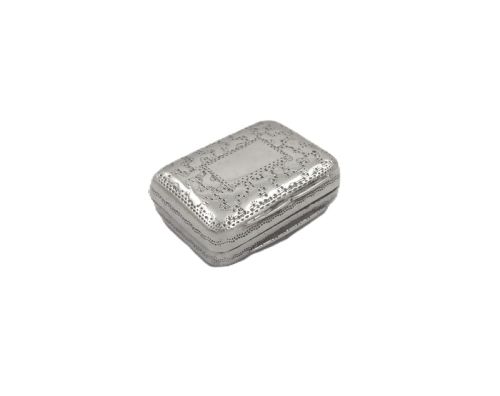


Georgian Vinaigrette Box
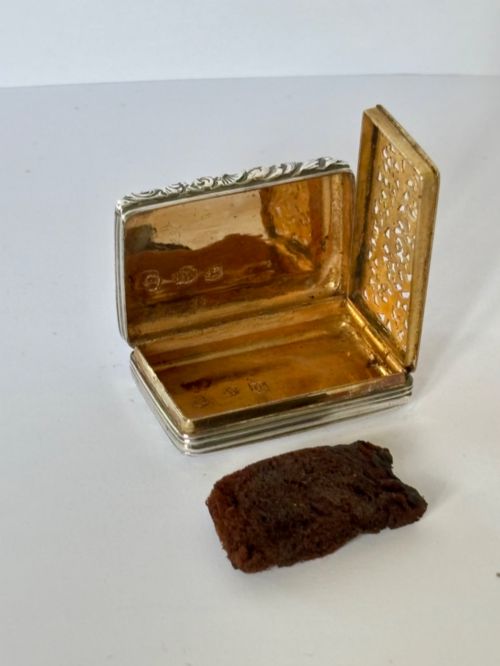
A georgian vinaigrette box is a tiny pocket container designed to hold a scented sponge, combining silver or gold with intricate pierced grilles.
Georgian Vinaigrette Box
A georgian vinaigrette box is a pocket container designed to hold a scented sponge soaked in vinegar. The examples seen here span the Georgian period, the William IV era, and the late eighteenth century into the nineteenth century.
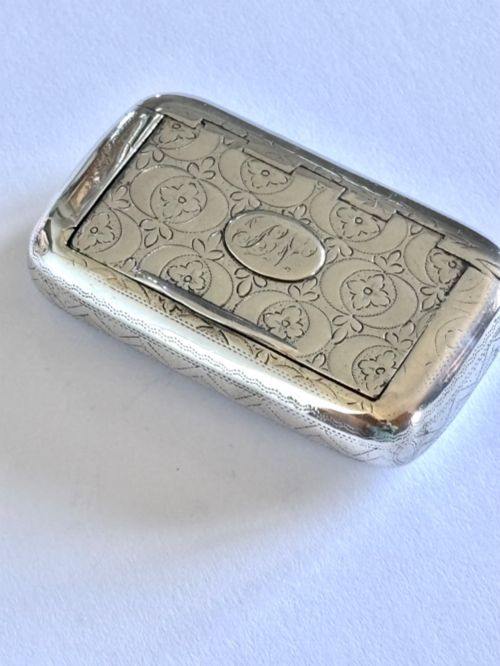
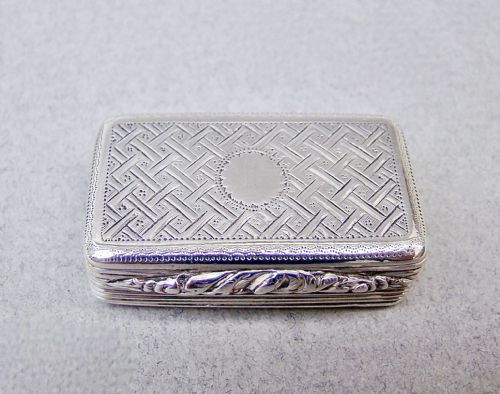
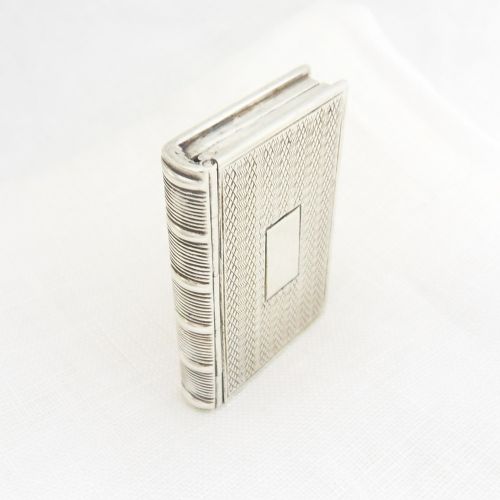
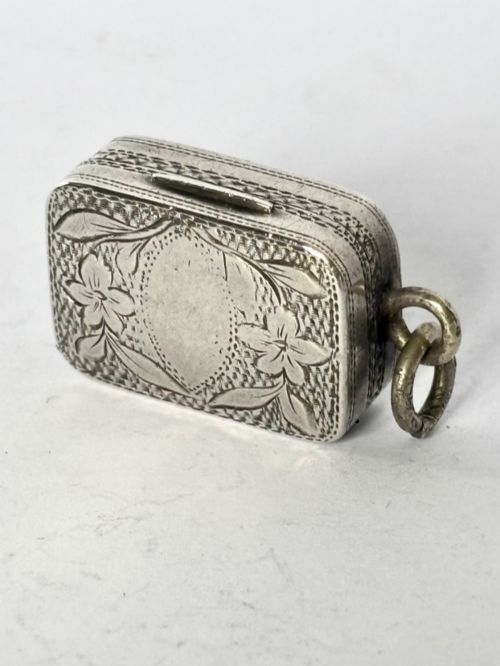
Most pieces take the form of small rectangular silver boxes, alongside book forms, novelty fish shapes, round boxes, and cowrie shell adaptations. Origins include Birmingham and London assay offices, alongside Scottish and Swiss pieces.
Materials and construction
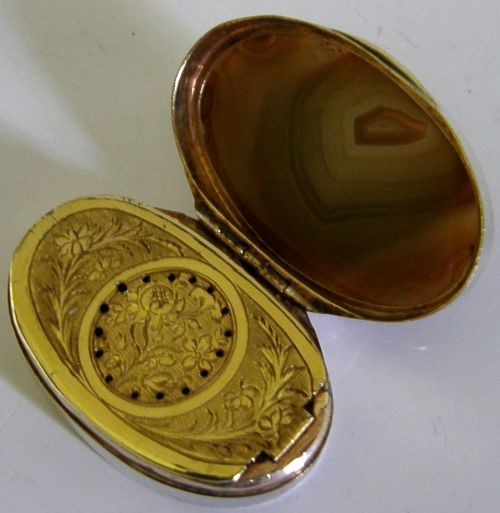
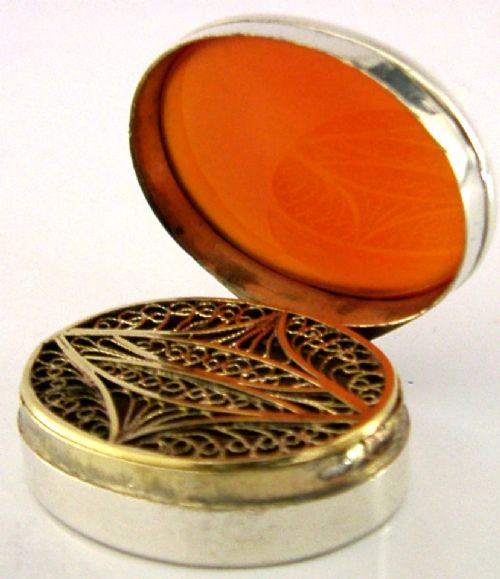
Makers utilised sterling silver, gold gilt, eighteen-carat gold, and agate panels, often combining silver-gilt interiors with exterior stone or metal. Cowrie shells and enamel also appear as body materials.
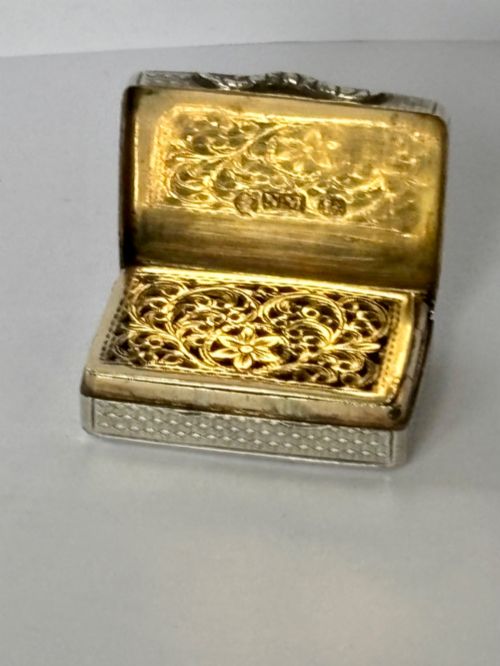
Internal hinged grilles are pierced and engraved by hand to allow the release of scent from the sponge while holding it securely in place.
Georgian Vinaigrette Box Retail Price Guide 2026
Typical asking prices for georgian vinaigrette box among the pieces listed under this phrase on Sellingantiques today, from the lower quarter to the upper quarter. They describe what is for sale here now, not the wider market.
Listings combine sterling silver, agate, gold gilt, and eighteen-carat gold across rectangular, round, fish, and book forms.
Distinctions in craftsmanship
Quality rests in the crispness of the exterior chasing and the delicacy of the internal pierced grille work. Simple rectangular boxes contrast with novelty shapes and precious metal gold bodies.
The presence of original fitted leather cases and intact internal gilt surfaces separates standard production from exceptional survival pieces.
Taylor and Perry·Samuel Pemberton·Thomas Johnson·Jacob Amyand·Giles Loyer·Nathaniel Mills·John Bettridge·Reily and Storer
The Georgian Vinaigrette Box Glossary
- Vinaigrette
- A small hinged box containing a sponge soaked in aromatic vinegar. These were carried in pockets or reticules to counteract unpleasant odours.
- Silver-gilt
- Sterling silver that has been coated with a thin layer of gold on the surface. This technique protected the silver from the corrosive properties of acidic vinegar.
- Grille
- The internal pierced and hinged metal plate inside the box. It sits over the sponge and allows the scent to diffuse.
- Assay mark
- Official stamps indicating the purity of the metal, the place of testing, and the date of manufacture. These marks help identify makers and production years.
Georgian Vinaigrette Box: Frequently Asked Questions
What is a georgian vinaigrette box?
A georgian vinaigrette box is a small pocket container created to hold a scented sponge. They were used during the eighteenth and nineteenth centuries.
Inside each box sits a pierced metal grille that releases fragrance while keeping the wet sponge contained.
How were vinaigrettes used?
Owners carried these small boxes in pockets or bags during daily outings. Opening the lid allowed the aromatic vinegar on the sponge to mask unpleasant street odours.
The internal grille lifted on a hinge to allow replacement or re-soaking of the sponge.
What materials are used?
Makers constructed these pieces from sterling silver, gold gilt, and eighteen-carat gold. Some incorporate agate panels, enamel, or cowrie shells.
Interiors are frequently gold-gilt to prevent the acidic vinegar from tarnishing the silver.
How do I identify periods?
Dating relies on hallmarks stamped into the metal by assay offices in London, Birmingham, and Edinburgh. Maker marks and date letters provide precise years of production.
Stylistic shifts move from Neoclassical restraint to elaborate William IV novelty forms.