




Georgian Vegetable Tureen
A georgian vegetable tureen brings mass and quiet authority to a dining table, holding anything from roasted roots to rich broths with solid, period grace.
Georgian Vegetable Tureen
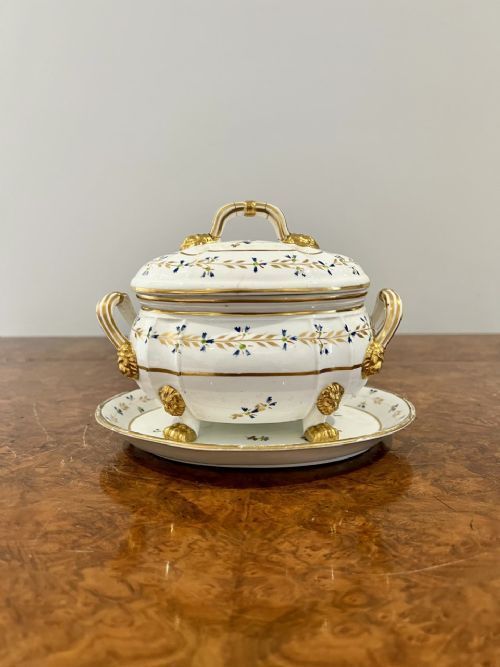
A georgian vegetable tureen sits at the centre of formal dining, designed to keep side dishes warm and present them with ceremony. The pieces on this page span the late eighteenth and early nineteenth centuries, running from the Georgian and Regency eras into the early nineteenth century.
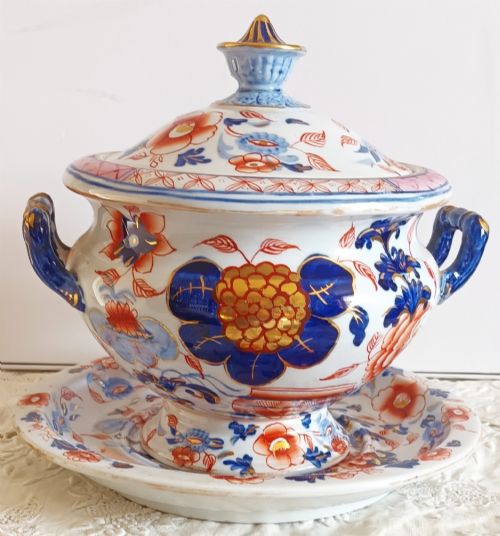
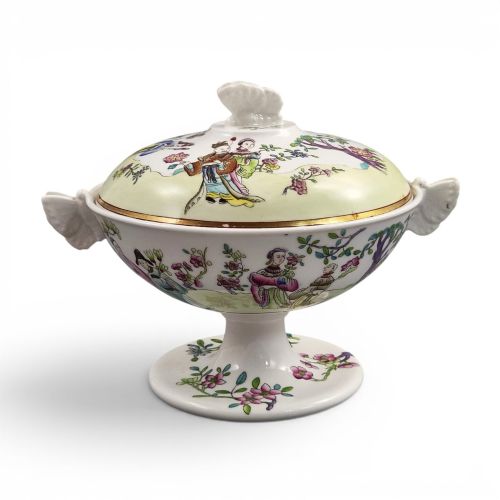
You will find these vessels rendered in heavy earthenware, ironstone ceramic, and Old Sheffield plate, alongside sterling silver and porcelain. Forms range from large covered bowls and entree dishes to sauce tureens and complete supper sets with lampstands.
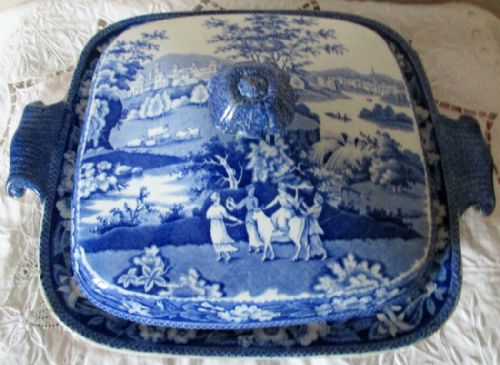
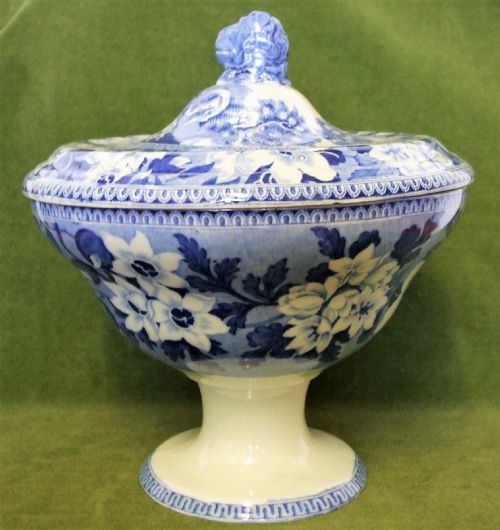
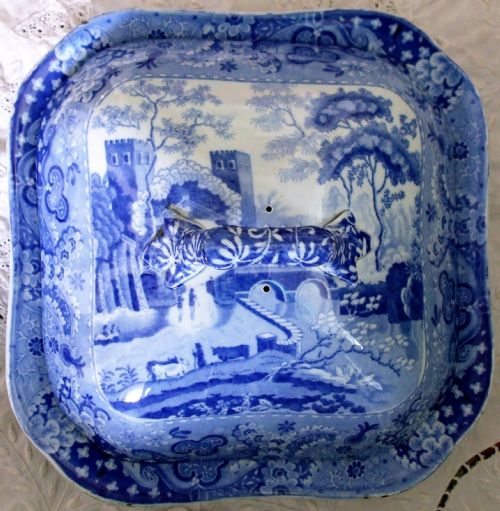
Blue and white transfer-printed pottery appears frequently, bearing named scenes like Castle, Elephant, and Europa. Alongside these earthenware pieces, porcelain from factories such as Worcester and Crown Derby sits with silver-plated warmers and copper-bodied plate.
Materials and construction
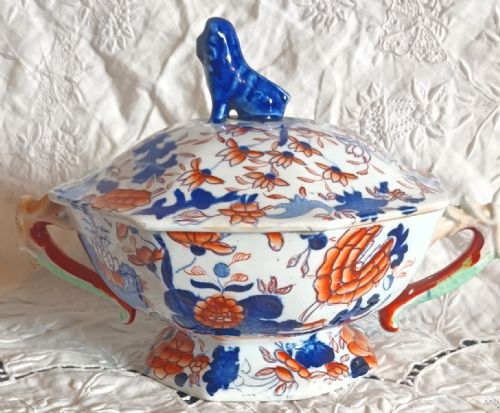
Pottery tureens relied on earthenware and ironstone bodies, often finished with detailed blue and white transfer printing or hand-painted enamel and gold leaf accents. Ironstone provided a dense, durable ceramic body that suited heavy kitchen use while taking crisp mouldings.
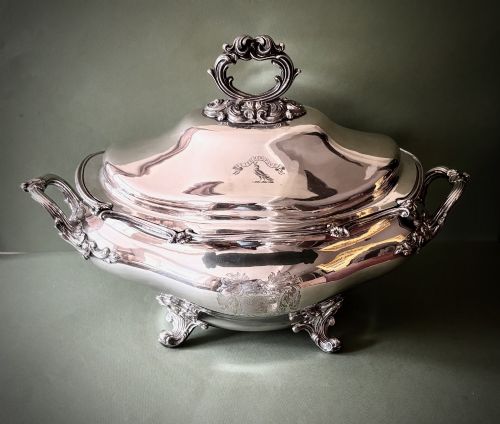
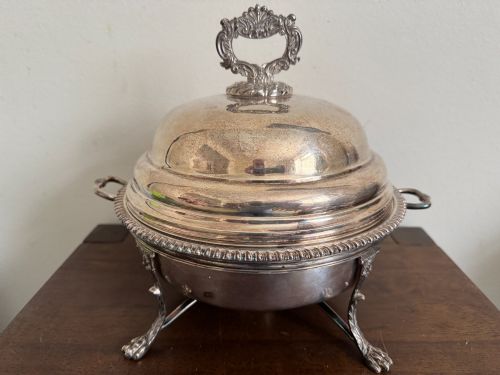
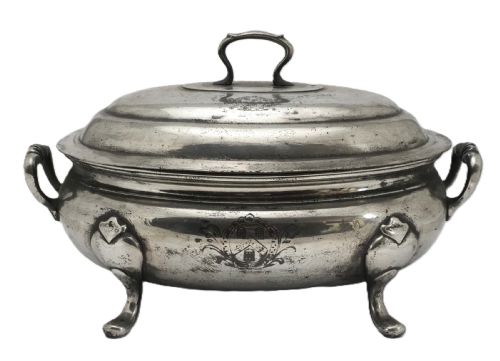
Silver-plated examples utilised a thin layer of silver fused to a copper core, a process known as Old Sheffield plate, sometimes augmented with applied silver wire borders. Sterling silver versions were beaten and chased by hand, while porcelain pieces required high-firing pastes and meticulous overglaze gilding.
Georgian Vegetable Tureen Retail Price Guide 2026
Typical asking prices for georgian vegetable tureen among the pieces listed under this phrase on Sellingantiques today, from the lower quarter to the upper quarter. They describe what is for sale here now, not the wider market.
Blue and white transfer patterns on these pieces include pastoral scenes like Castle, Europa, and Elephant, produced by Staffordshire potters.
The markers of quality
The distinction between standard domestic wares and superior examples rests in the crispness of the moulding and the weight of the metal or ceramic body. Heavy gauge Sheffield plate holds its copper core firmly beneath the silver skin, whereas finer ceramics display precise transfer registration and controlled enamel colours.
Makers known for innovation, such as Mason's with patent ironstone or Flight, Barr & Barr with Worcester porcelain, invested greater skill in handle modelling and gilding execution. The presence of matching covers, stands, and original crests or armorials elevates a piece from a simple utility vessel to a considered dining ornament.
J. & R. Clews·John Rogers & Son·John and Richard Riley·Crown Derby·Flight Barr & Barr·William Grundy·Matthew Linwood·Cresswick
The Georgian Vegetable Tureen Glossary
- Old Sheffield plate
- A composite metal formed by fusing a sheet of silver to a copper ingot, developed in the eighteenth century to create silver-appearance items without solid silver cost. It shows a faint copper bleed at seams and edges upon close inspection.
- Ironstone
- A heavy, durable ceramic patented in the nineteenth century that bridged the gap between earthenware and porcelain. It resists chipping and took blue and white transfer prints with exceptional clarity.
- Transfer printing
- A decoration technique where an engraved copper plate transfers a design onto tissue paper, which is then rubbed onto the unglazed or bisque ceramic. This method allowed intricate patterns like Castle or Europa to be repeated with precision.
- Sauce tureen
- A smaller version of the main dining tureen, specifically scaled for gravies, sauces, or drawn butter. These often include an integral or separate matching underplate.
- Entree dish
- A shallow covered vessel used for serving individual courses or side dishes during formal dinners. Many date to the Regency period and feature removable handles for versatile serving options.
Georgian Vegetable Tureen: Frequently Asked Questions
What is a georgian vegetable tureen?
A georgian vegetable tureen is a covered ceramic or metal vessel made during the Georgian or Regency periods to serve side dishes at the dining table. These pieces combined practical heat retention with decorative presence.
They often formed part of larger dinner or supper services, accompanied by matching platters, stands, or ladles. Their forms reflect the changing dining habits of the late eighteenth and early nineteenth centuries.
How were these tureens used?
These vessels were filled in the kitchen with cooked vegetables, potatoes, or stews and brought directly to the dining table with the lid in place to retain heat. Some metal versions included warming compartments or lampstands.
During formal meals, multiple tureens of various sizes populated the table layout alongside meat dishes and soup tureens, allowing guests to serve themselves or receive help from attendants.
How do I identify the period of a tureen?
Dating relies on material characteristics, pottery marks, and stylistic details such as the transition from neoclassical urn shapes to bolder Regency forms. Ironstone and porcelain bodies often carry impressed or printed factory marks underneath.
Blue and white transfer patterns frequently correspond to specific maker timelines active around 1800 to 1830. Heraldic engravings and maker stamps on silver or plate provide direct documentary clues.