
Georgian Upholstered Dining Chairs
Georgian upholstered dining chairs combine sturdy mahogany or walnut frames with period fabrics to anchor a traditional dining room.
Georgian Upholstered Dining Chairs
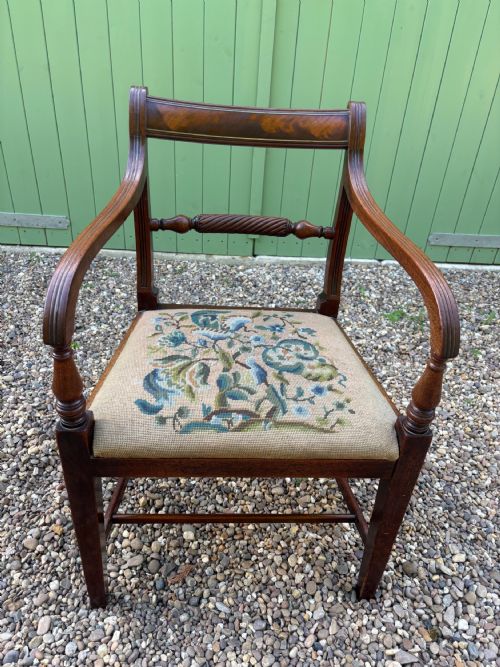
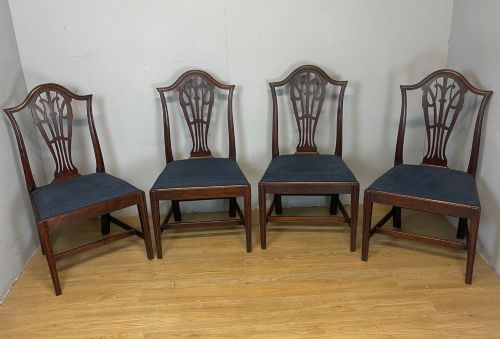
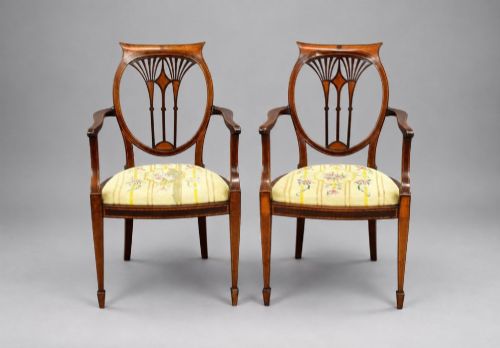
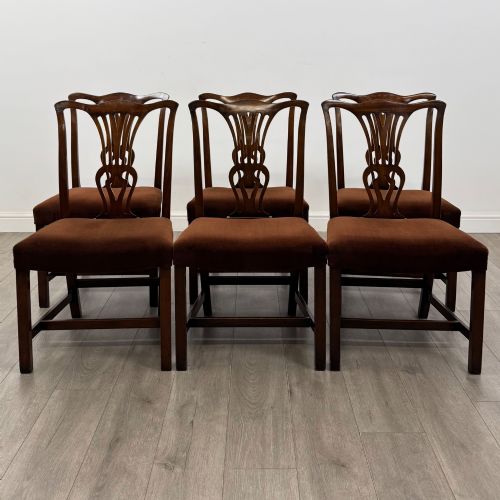
When searching for georgian upholstered dining chairs, buyers encounter dining suites, side chairs, and armchairs spanning the eighteenth and nineteenth centuries, alongside later revival pieces from the twentieth century.
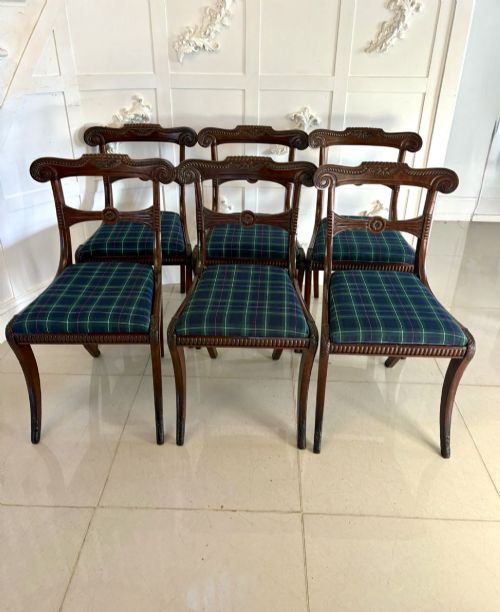
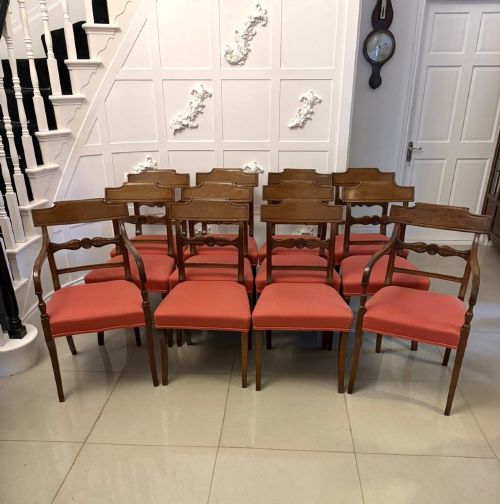
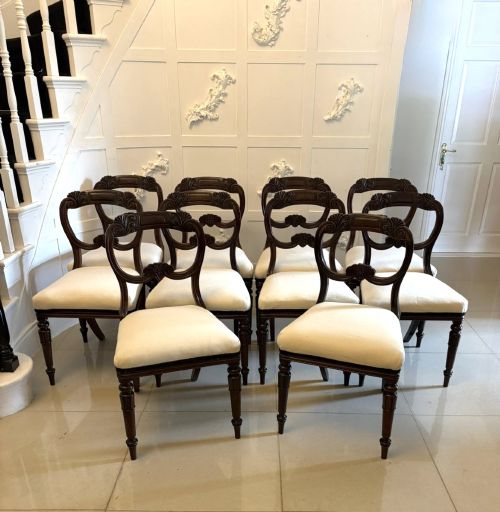
The selections on this page predominantly feature mahogany and walnut timber structures, often arranged in matching sets or substantial groups alongside individual carver chairs.
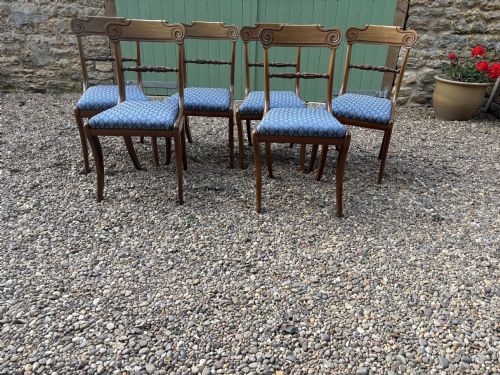
Design influences range from George II and George III Chippendale styles to Regency brass-inlaid models and William IV bar backs.
Materials and Technique
Cabinet makers utilised dense hardwoods, predominantly mahogany, walnut, and occasional fruitwood or oak, shaping frames through traditional joinery and carved detailing.
Upholstery was applied over supportive webbing using various fabrics including silk, damask, velvet, and modern replacement textiles paired with brass accents.
Listings feature woods including mahogany, walnut, rosewood, and oak, paired with diverse upholstery fabrics.
Evaluating the Range
The distinction between standard examples and top-tier pieces lies in the crispness of the carved details on the splats and legs, as well as the proportion and uniformity across large sets.
Subtleties in timber selection, such as figured Cuban mahogany or rich walnut grain, elevate certain items, alongside documented workshop origins.
Gillows
The Georgian Upholstered Dining Chairs Glossary
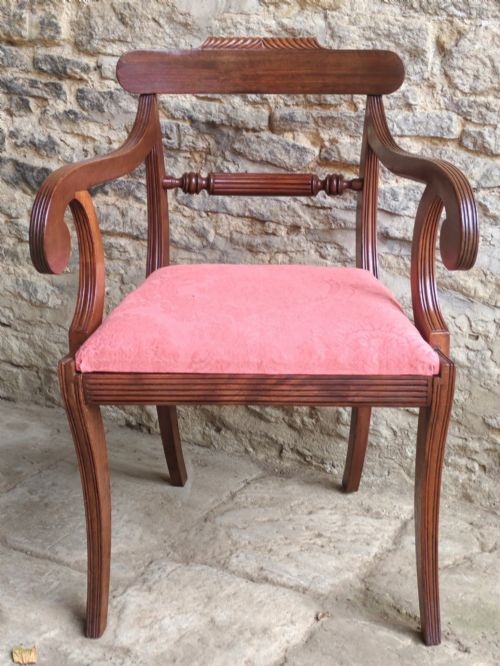
- Carver
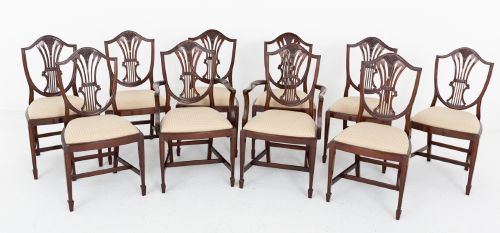
- An armchair designed with elbow supports, traditionally placed at the head of a dining table. These often accompanied sets of smaller side chairs.
- Bar Back
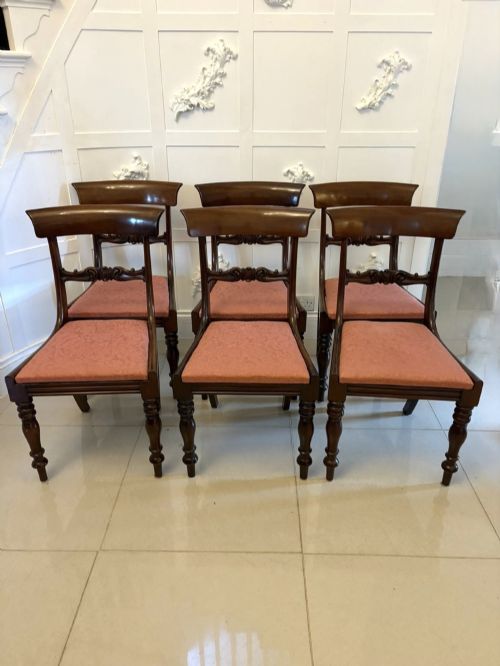
- A dining chair featuring a horizontal top rail shaped like the rail of a traditional tavern bench. This form gained popularity during the Regency period.
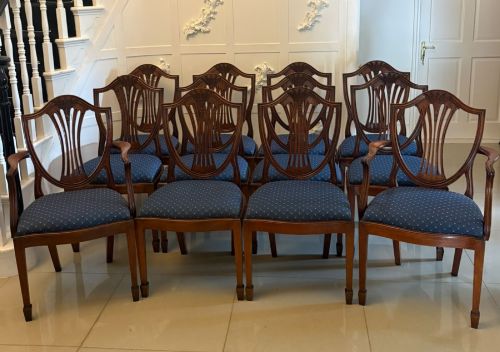
- Shield Back
- A chair back carved in the outline of a shield, a signature style popularised by Hepplewhite designs. The central splat typically fans out from the base.
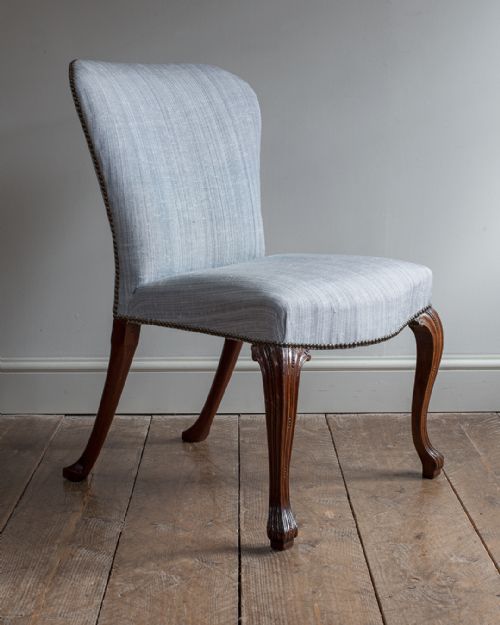
- Cabriole Leg
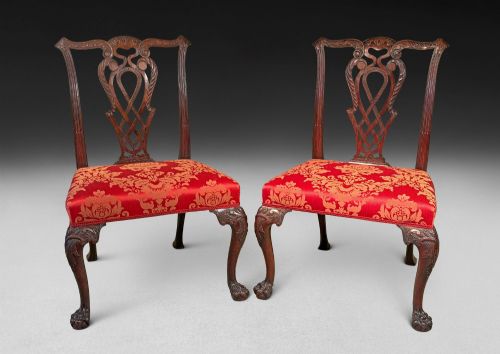
- A furniture leg that curves out at the knee and tapers inward to an ankle, often terminating in a pad or claw foot. This shape derives from ancient Chinese forms.
- Ribbon Back
- A Chippendale chair back design featuring carved wooden ribbons intertwined through the central splat. It represents a high level of cabinet-making skill.
Georgian Upholstered Dining Chairs: Frequently Asked Questions
How many chairs came in a standard set?
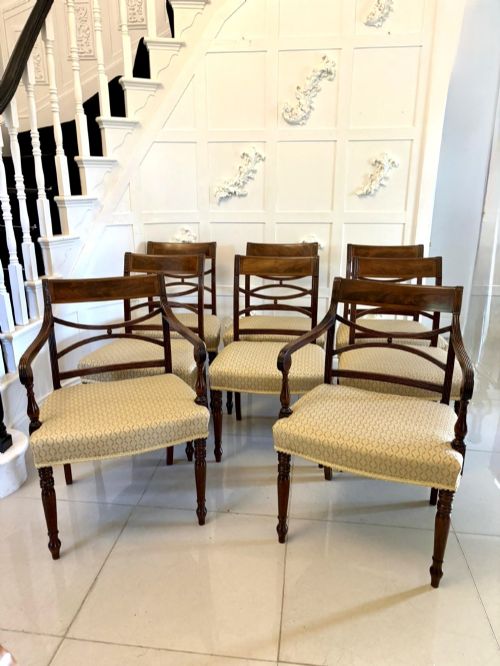
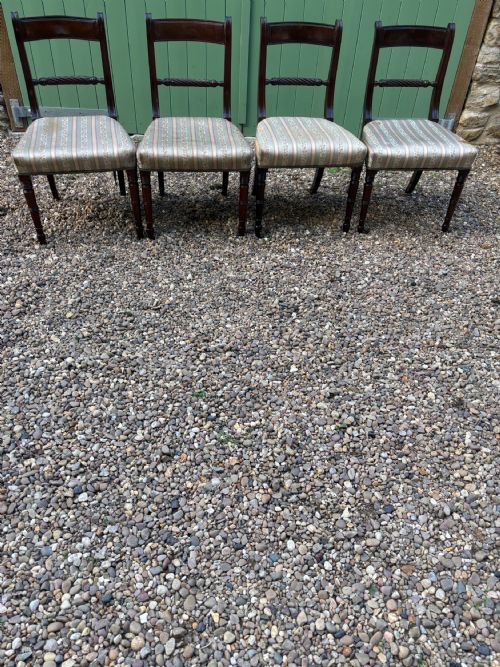
Period dining sets vary widely, with smaller groups of four or six common for everyday dining, while larger gatherings required sets of eight, ten, or twelve.
Larger configurations frequently included a pair of matching armchairs, often termed carvers, designed for the heads of the table.
Are these chairs suitable for daily use?
These pieces were built by skilled cabinet makers using dense hardwoods like mahogany and walnut, making them structurally robust for regular seating.
Modern buyers often check the internal webbing and upholstery support to ensure the seats withstand contemporary use without compromising the antique frames.
How do I spot a revival piece?
Revival items, such as those made around nineteen-hundred or nineteen-twenty, copy earlier George III or Chippendale styles using period-appropriate timber and joinery techniques.
Examining the wear patterns, timber oxidation, and construction marks helps distinguish eighteenth-century originals from later nineteenth and twentieth-century interpretations.
What is the difference between a side chair and a carver?
Side chairs lack arms and possess a narrower profile, allowing multiple chairs to fit neatly around a dining table.
Carver armchairs feature integrated elbow rests and wider seats, traditionally intended for the host and hostess.