

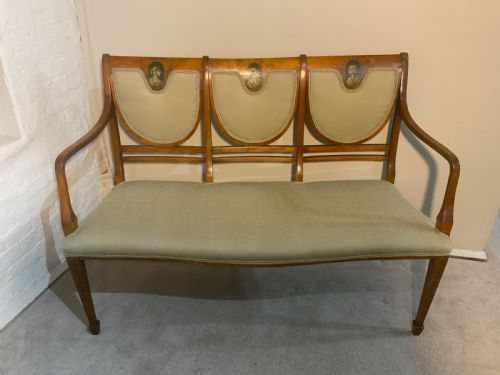


Georgian Triple Chair Bench
A georgian triple chair bench offers extended seating formed by conjoined chair backs, favoured for its refined linear frame and enduring utility.
Georgian Triple Chair Bench
A georgian triple chair bench presents an elongated seating form where three distinct chair backs merge into a single unified settee or sofa. These pieces primarily emerge from the nineteenth and eighteenth centuries, alongside later revival interpretations.
Buyers encountering this group will frequently find variations styled after classic makers or periods, including Hepplewhite, Regency, Chippendale, and George II. The overarching formats range from shield back designs to open frame chair back settees.
Origins span English workshops to continental makers, notably represented by Dutch walnut examples. The primary object types catalogued here include settees and chair back sofas.
How they were made
Cabinet makers constructed these benches using timbers such as mahogany, walnut, and satinwood, frequently employing inlaid details to define the crest rails and splats. Painted finishes and gold leaf occasionally accent the wood structures.
Upholstery forms an integral component, utilising fabric and textile covers over padded seats to provide comfort across the triple span.
Georgian Triple Chair Bench Retail Price Guide 2026
Typical asking prices for georgian triple chair bench among the pieces listed under this phrase on Sellingantiques today, from the lower quarter to the upper quarter. They describe what is for sale here now, not the wider market.
Several makers clearly decided that three chairs welded together would make excellent gossip seats.
What varies in quality
The refinement of the carved details on the splats and stiles dictates the visual hierarchy of the piece, separating standard production from exceptional artistry. Crisp execution in mahogany or figured walnut elevates the presence of the frame.
The integrity of the conjoined back structure and the precision of inlaid satinwood elements reveal the underlying standard of workshop construction.
The Georgian Triple Chair Bench Glossary
- Chair back settee
- A form of seating featuring two or more conjoined chair backs forming a unified bench. This design maintains the open vertical slats characteristic of standalone chairs.
- Shield back
- A spade-shaped or curving chair back contour popular in late eighteenth-century furniture design. This outline appears frequently in Hepplewhite style pieces.
- Splat
- The vertical wooden strip positioned in the centre of a chair back. Carved or pierced splats define the stylistic period of the bench.
- Crest rail
- The top horizontal member of a chair back. It often bears carving, shaping, or inlay work.
- Stile
- The upright vertical side member of a chair frame. Stiles connect the crest rail to the seat structure.
Georgian Triple Chair Bench: Frequently Asked Questions
What is a georgian triple chair bench?
A georgian triple chair bench is a long seat constructed by joining three individual chair frames into one continuous piece of furniture. It combines the aesthetic of dining chairs with the utility of a settee.
These pieces typically feature open wooden backs and upholstered seats, making them suitable for hallways, drawing rooms, or large dining spaces.
How do I identify the style?
Stylistic identification relies on examining the back splats, the shape of the crest rails, and the presence of specific decorative motifs like shields or carved mahogany details. Reference points include Hepplewhite, Regency, and Chippendale aesthetics.
Comparing the woodwork and silhouette against known historical periods helps determine whether a piece is eighteenth century or a later nineteenth-century revival.
Were these benches used for dining?
Historically, chair back settees and benches provided flexible seating around dining tables or along long gallery walls. Their open backs kept rooms feeling spacious compared to solid-backed upholstered sofas.
In modern settings, they serve well as accent seating in entryways or placed against living room walls.
What woods were used?
Cabinet makers utilised dense hardwoods such as mahogany and walnut for their strength and ability to hold fine carved details. Satinwood was also selected for its pale grain and suitability for inlay work.
Some examples feature painted wood surfaces enriched with gold leaf.