


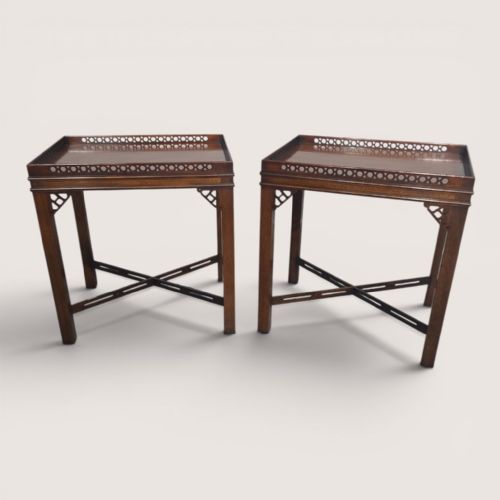
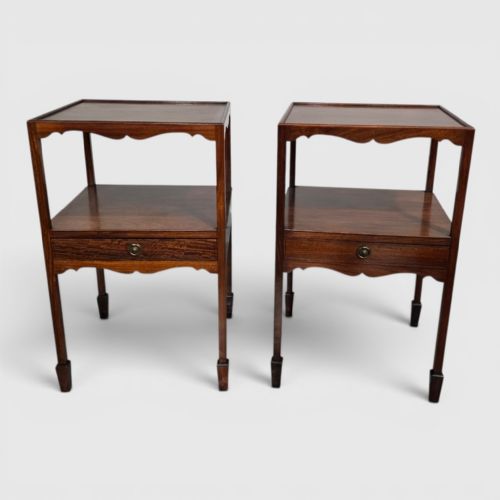
Georgian Tray Top Bedside
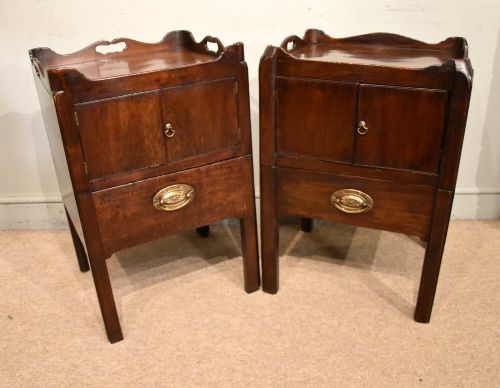
A georgian tray top bedside table is a functional and elegant antique built to hold chamber equipment or lamps beside a sleeping berth.
Georgian Tray Top Bedside
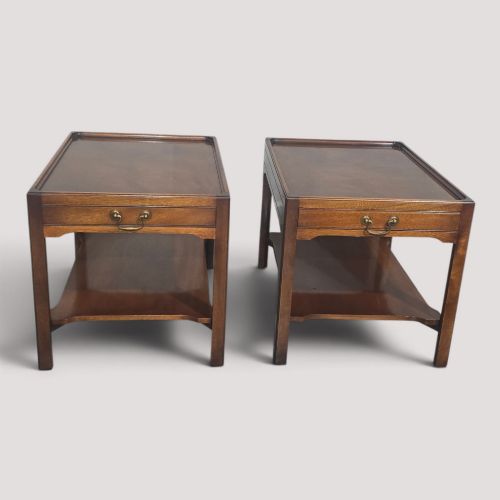
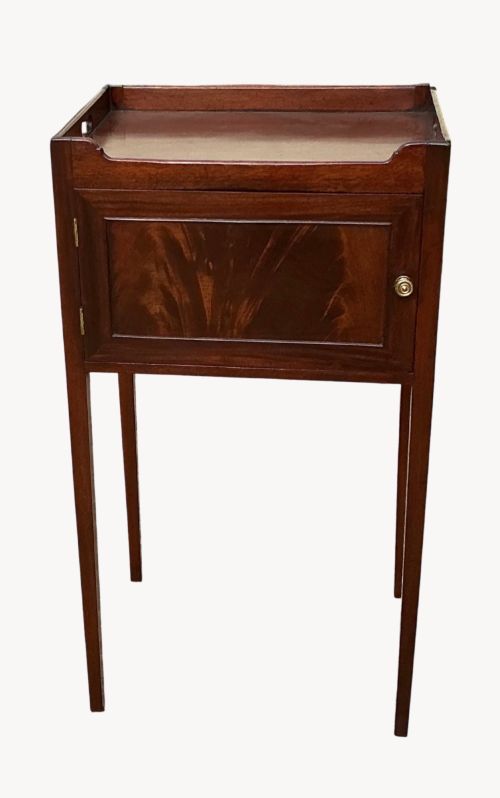
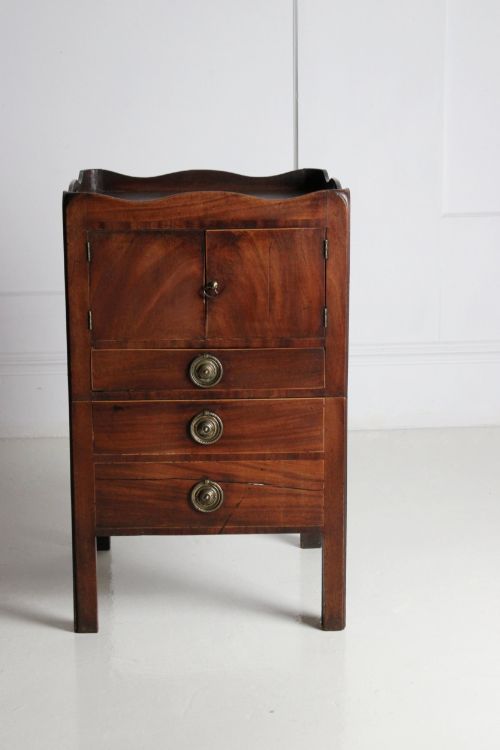
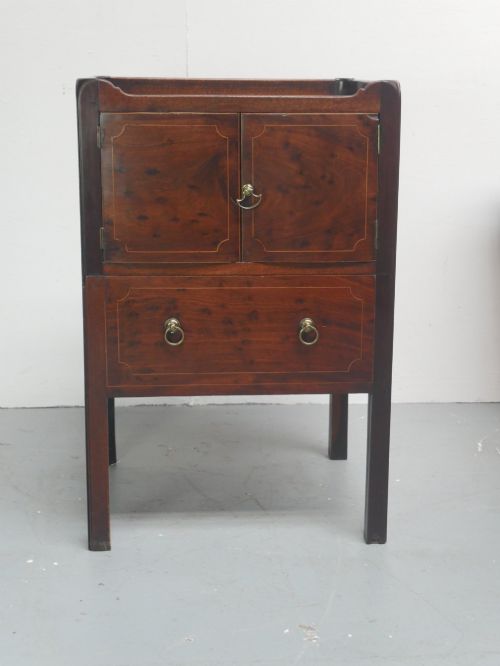
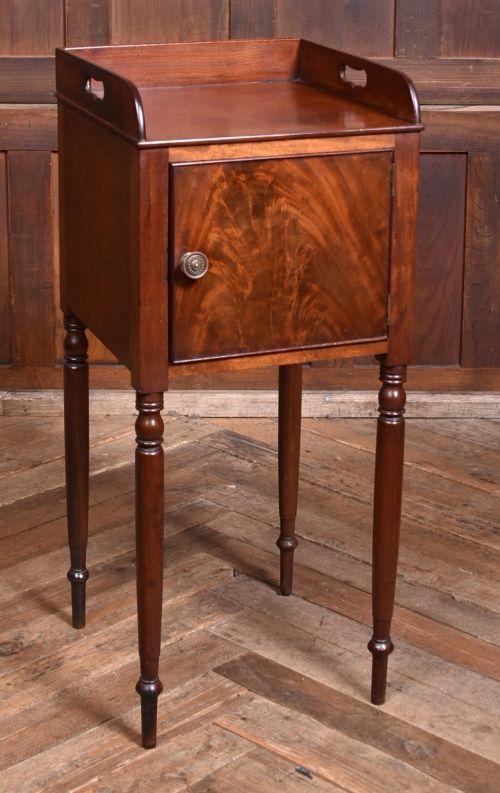
A georgian tray top bedside table is typically encountered as an 18th-century or George III cabinet, commode, or pot cupboard featuring a raised gallery edge around the top surface. These compact items served functional purposes in sleeping quarters, often enclosing a chamber pot or holding personal belongings behind a door or drawers.
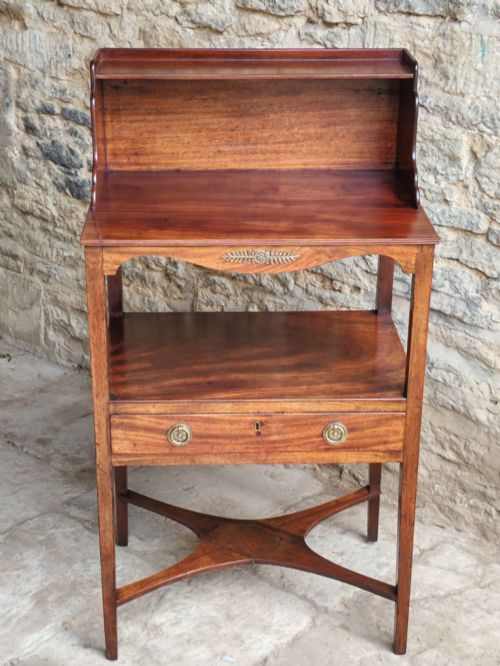
The selections span authentic pieces from the Georgian and Regency periods alongside later revivals from the early 20th century, including the 1910, 1920, and 1930 decades. While traditional forms feature solid mahogany or flame mahogany veneer, buyers also find satinwood and inlaid decorative treatments reflecting Sheraton and Chippendale styles.
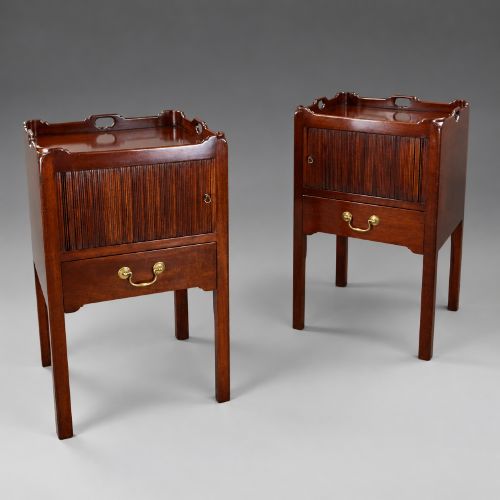
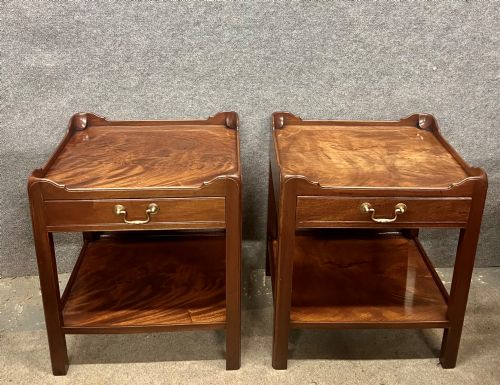
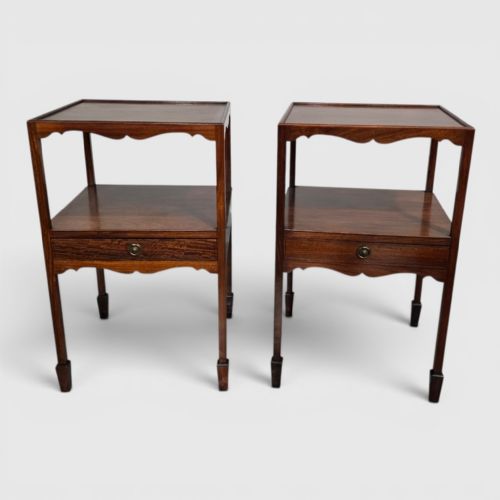
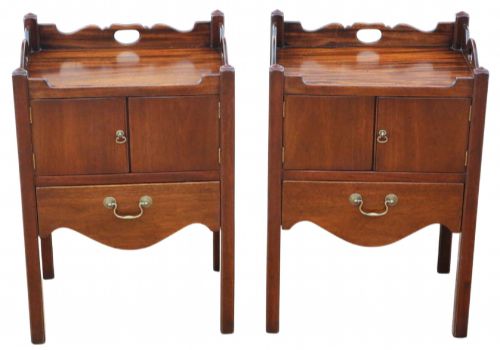
Configurations range from single cupboards and nightstands to matched pairs suitable for modern lamp tables. The defining characteristic across these variations remains the tray top, designed to prevent items from sliding off the working surface.
How They Were Made
Cabinet makers utilised solid mahogany and flame mahogany veneers, often applying boxwood inlay, ebony details, and hand-painted elements to elevate the visual texture. Timber selection was central to construction, with high-grade boards chosen for cabinet doors and tray tops.
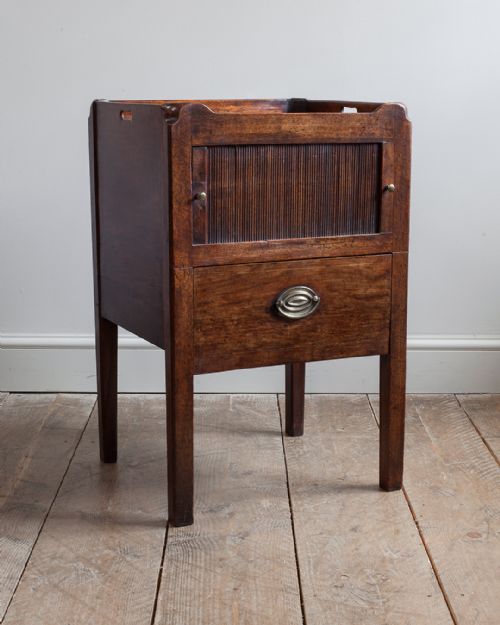
Joinery techniques involved precise mortise and tenon frames, dovetailed drawer boxes, and occasionally tambour fronts constructed from narrow strips of wood running on tracks. Brass hardware, including drop handles and hinges, was fitted to secure doors and drawers during daily use.
Some tray tops feature clever cut-out carrying handles, proving that even 18th-century furniture occasionally needed to be hurried out of the way.
What Varies in Quality
The standard of timber figure and veneer selection marks the distinction between standard examples and superior pieces, with flame mahogany and marquetry requiring expert alignment. Finely grained surfaces and crisp boxwood inlay demonstrate superior craftsmanship from the workshop.
Proportional balance and the preservation of original hardware and tray galleries dictate desirability among collectors. Original patination on the timber surface carries more weight than heavily restored finishes.
The Georgian Tray Top Bedside Glossary
- Tray Top
- A raised rim or gallery shaped around the upper edge of a table to retain items placed upon it. This feature prevents objects from rolling off the surface.
- Commode
- A decorative closed piece of bedroom furniture fitted with doors or drawers. In the context of bedside tables, it often describes enclosed pot cupboards.
- Tambour
- A flexible sliding shutter formed from thin vertical strips of wood glued to canvas. It allows access to enclosed cabinet spaces without swinging doors.
- Flame Mahogany
- A figured mahogany veneer cut from the branch forks of the tree. It creates a distinctive flame-like pattern across the wood grain.
Georgian Tray Top Bedside: Frequently Asked Questions
What is a georgian tray top bedside table used for?
These tables originally served in bedrooms to hold chamber utensils, wash basins, or personal items during the 18th and 19th centuries.
Today, buyers repurpose them as lamp tables or bedside stands where the enclosed cabinet offers discrete storage.
How do I identify a George III bedside table?
Authentic George III pieces date from the mid to late 18th century, displaying period timber characteristics such as dense solid mahogany and hand-cut dovetails.
They often feature simpler functional forms like pot cupboards with tray tops and minimal inlay compared to later revival styles.
Are these tables sold as pairs?
While original period bedside tables were typically made as single items or occasionally matched pairs, many listings feature pairs assembled from similar 20th-century revival periods.
Buyers frequently seek matching pairs for modern bedroom layouts to place on either side of a bed.
What is the difference between original and revival pieces?
Original pieces date from the Georgian and Regency eras, showing authentic age-related wear and period construction methods.
Revival pieces, such as those from the 1920 and 1930 decades, imitate these earlier styles utilising traditional proportions and decorative inlay.