







Georgian Topographical Art
Georgian topographical art records the towns, rivers and country houses of the past through ink, pencil, and oil on paper and canvas.
Georgian Topographical Art
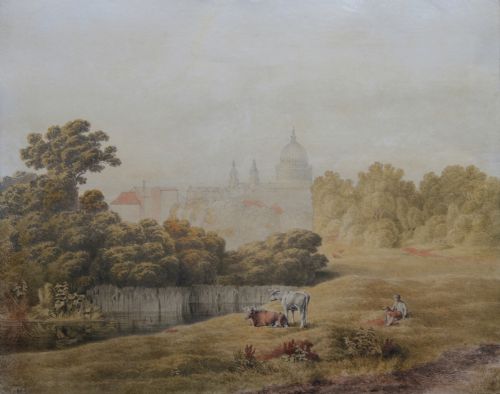
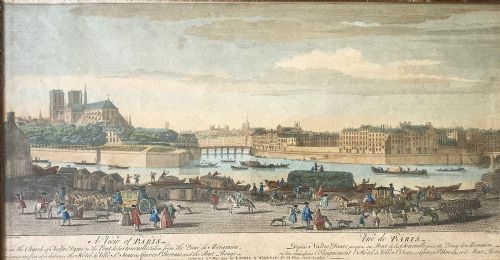
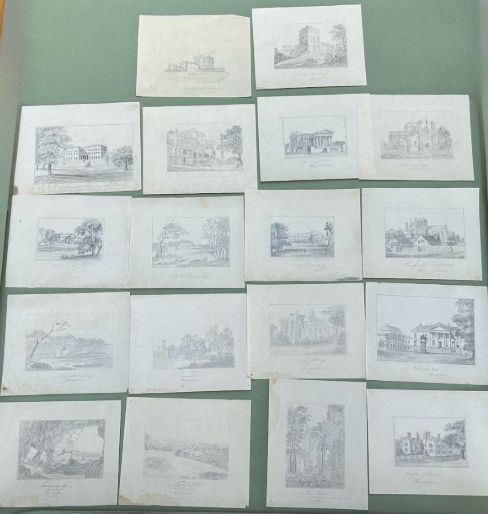
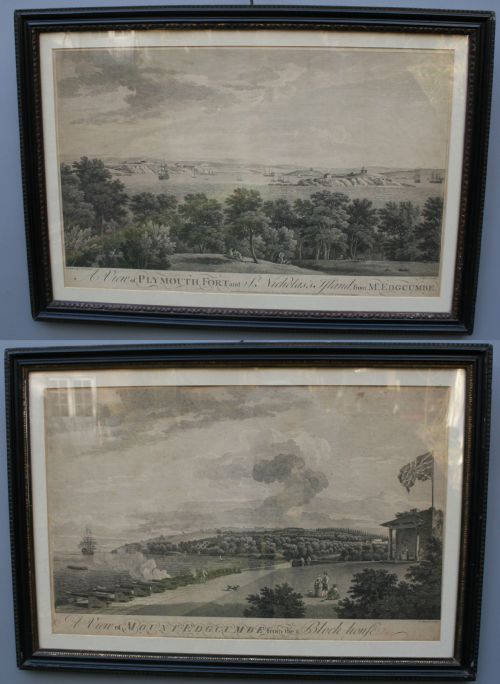
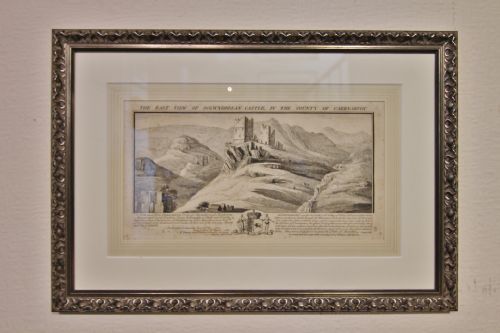
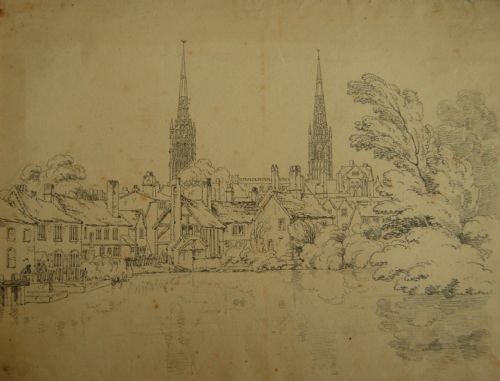
When you search for georgian topographical art, you encounter framed prints, antique maps, and original drawings depicting specific locations across Britain and Europe. The selection spans hand-coloured engravings, monochrome ink sketches, and oil paintings that capture regional landscapes and architecture.
Most pieces date from the eighteenth and nineteenth centuries, reflecting a period when recording country seats, castles, and city views became a widespread pursuit. You will find works ranging from naïve folk art perspectives to detailed architectural studies by named artists.
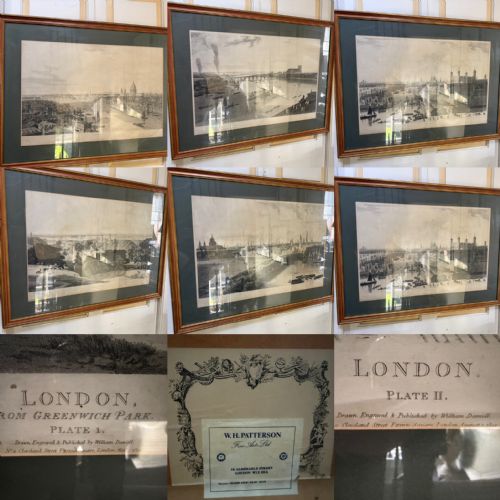
Subjects include identifiable county views, Welsh castles, and London environs, often framed in wood or gilt wood. These works served as records of places before photography, combining artistic interpretation with historical geography.
Materials and techniques
Artists and printmakers worked primarily on paper using graphite, ink, and watercolour, alongside oil on canvas for more substantial paintings. Original hand colouring added vibrancy to monochrome engravings and aquatints after the printing process was complete.
Publishers utilised copperplate engraving and lithography to produce multiple impressions of popular views, sometimes finished with gold leaf on the surrounding frames. Paper supports required careful mounting and framing behind glass to survive centuries of exposure to light and moisture.
Georgian Topographical Art Retail Price Guide 2026
Typical asking prices for georgian topographical art among the pieces listed under this phrase on Sellingantiques today, from the lower quarter to the upper quarter. They describe what is for sale here now, not the wider market.
Surveyors and stone masons occasionally appear in the foreground, supervising the artistic builders of the British landscape.
Distinctions in quality
The precision of the draughtsmanship and the clarity of the topographical detail separate accomplished works from simpler pieces. Early impressions taken from copperplates show crisp lines, whereas worn plates yield softer, less defined imagery.
The presence of original hand colouring executed with skill adds depth and character compared to flat or later applied washes. Attribution to a known artist or engraver elevates a piece from a general record to a documented work of fine art.
Robert Morden·Joseph Farrington RA·Joseph Constantine Stadler·Amos Green·Peter Tillemans·William Marlow·Henry Edridge ARA
The Georgian Topographical Art Glossary
- Aquatint
- An intaglio printmaking technique that produces areas of tone resembling watercolour washes. It was frequently used in this period to reproduce topographical watercolours.
- Cartography
- The science or practice of drawing maps. Antique county maps form a distinct category of topographical art.
- Lithography
- A planographic printing method based on the repulsion of oil and water. It allowed artists to draw directly on limestone to produce tonal prints.
- Naïve art
- Artwork characterised by a childlike simplicity in perspective and proportion. These pieces offer charming, unacademic interpretations of local landscapes.
Georgian Topographical Art: Frequently Asked Questions
What is topographical art?
Topographical art depicts specific, recognisable places such as buildings, towns, rivers, and country houses rather than imaginary scenes. These works function as visual historical records of locations as they appeared centuries ago.
Artists focused on accurate representation, making these pieces valuable for local history and architectural research today.
How should I hang these works?
Keep works on paper away from direct sunlight to prevent the fading of inks, watercolours, and hand colouring. Framing behind conservation glass provides essential protection against ultraviolet light and ambient moisture.
Grouping smaller framed engravings or drawings together creates a strong visual impact on a wall without overwhelming a room.
Are these works original?
The category includes both unique original works and period printed editions. Original drawings and paintings are one-of-a-kind, whereas engravings and lithographs were produced in multiples during their respective eras.
Catalogues specify whether a piece is an original painting, drawing, map, or a period printed impression.
How do I identify periods?
Stylistic clues, framing materials, and paper characteristics help determine the age of a piece. Eighteenth-century works often display distinct hand-laid paper textures and specific printing techniques characteristic of the era.
Signatures, inscriptions, and artist attributions also provide reliable markers for dating works accurately.