

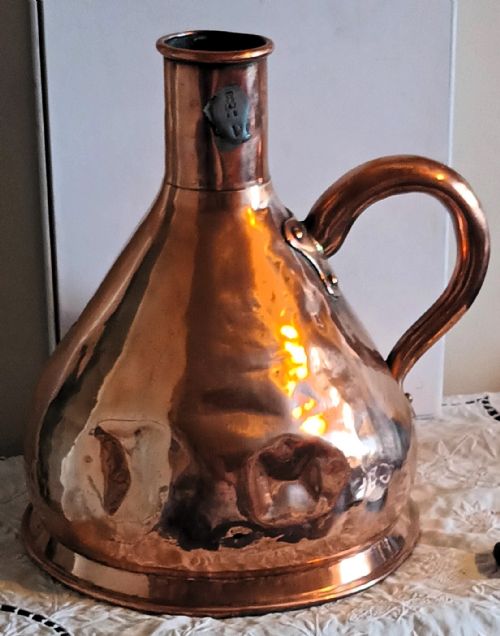


Georgian Tavern Jug
These robust georgian tavern jug examples bring utilitarian utility and historic public-house character into modern rooms.
Georgian Tavern Jug
A georgian tavern jug is a heavy liquid measure or pitcher produced during the eighteenth and nineteenth centuries for use in public houses and clubs. These functional vessels include large gallon measures, graduated sets, and ale pitchers designed for serving and measuring drinks.
The pieces on this page span the georgian era, stretching from the mid-eighteenth century into the nineteenth century. Buyers will frequently encounter generous copper vessels alongside regional pewter forms like tappit hens and pot measures.
Origins represented across these listings include English workshops, Scottish foundries, and Channel Islands makers. Each georgian tavern jug reflects the practical demands of historical hospitality through enduring utilitarian forms.
How they were made
These vessels rely primarily upon heavy-gauge copper and durable pewter, materials chosen for their ability to withstand constant tavern use. Copper examples often feature riveted seams and sturdy handles, while pewter items are cast to achieve solid, thick walls.
Certain pieces incorporate secondary materials such as lead or silver-plated lids, adding functional security and decorative contrast to stoneware or metal bodies. Metal surfaces show the marks of hand-hammering and forming techniques typical of period workshops.
Georgian Tavern Jug Retail Price Guide 2026
Typical asking prices for georgian tavern jug among the pieces listed under this phrase on Sellingantiques today, from the lower quarter to the upper quarter. They describe what is for sale here now, not the wider market.
What varies in quality
Quality in a georgian tavern jug rests upon the crispness of capacity stamps, the integrity of construction, and the preservation of original surface patination. Examples carrying clear maker marks or specific regional foundry attributions command greater interest.
The balance of proportion and the survival of matching lids or graduated sets distinguish finer utilitarian survivors from standard workshop output. Heavy, uncompromised gauge metal indicates superior original manufacture.
Loftus of Oxford Street London·John De St Croix
The Georgian Tavern Jug Glossary
- Tappit hen
- A traditional Scottish pewter measure featuring a lid and a distinctive knob or tap on top. This form served as a standard capacity vessel for ale and wine.
- Ale pitcher
- A large pouring vessel designed to hold and serve malt beverages in domestic or commercial settings. These often incorporate ceramic bodies with fitted metal lids.
- Pewter measure
- A standardised cylindrical or bulbous container used for dispensing exact quantities of liquid. Official capacity marks are frequently stamped directly onto the metal.
- Gallon measure
- A large-capacity vessel intended for bulk liquid handling behind the bar. These substantial pieces represent the heaviest tier of tavern hardware.
- Channel Islands Georgian
- A regional stylistic designation denoting pewter and metalwork produced in Jersey and surrounding islands during the Georgian period. Pieces from this origin display distinct local forms.
Georgian Tavern Jug: Frequently Asked Questions
What were georgian tavern jugs used for?
These vessels were utilised within public houses and inns for storing, measuring, and serving ales, beers, and spirits to patrons. Their robust construction handled the heavy daily demands of eighteenth and nineteenth-century hospitality.
Larger gallon examples acted as master containers for filling smaller drinking vessels, while pitchers brought drinks directly to tables.
How do I date a georgian tavern jug?
Dating relies upon examining the manufacturing techniques, metal composition, and any stamped capacity marks or maker stamps present on the piece. Eighteenth-century examples often display specific regional silhouettes and hand-beaten characteristics.
Changes in legal standards for liquid measures across the Georgian era also help narrow the production window of surviving items.
Are these jugs safe to use for drinks?
Most buyers treat these historical vessels as decorative display objects rather than functional kitchenware due to their age and material composition. Older pewter and copper items may contain lead or other elements unsuited for modern consumption standards.
Displaying them on shelves or tables allows their historic metal patination and form to be appreciated safely.
What is a tappit hen?
A tappit hen is a traditional Scottish pewter container form characterised by a tapering body and a lidded top featuring a small finial. These vessels held specific historic Scottish liquid quantities such as the scot's pint.
Their heavy, utilitarian build made them enduring fixtures in northern taverns and households.