
Georgian Tallboy Chest of Drawers
When you want a georgian tallboy chest of drawers, you are looking for vertical storage that combines grand scale with compact floor space.
Georgian Tallboy Chest of Drawers
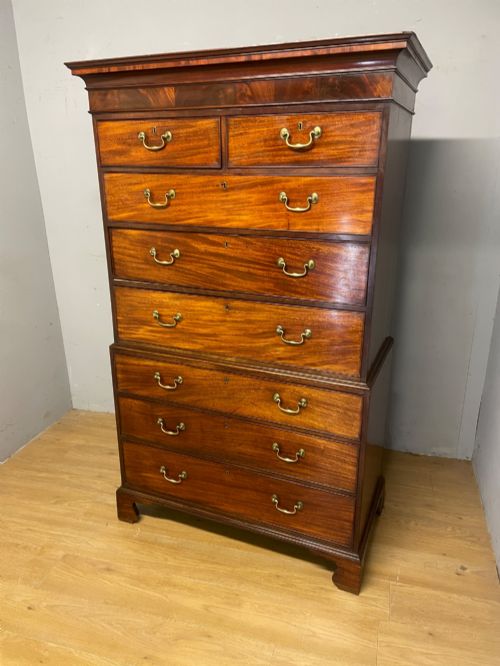
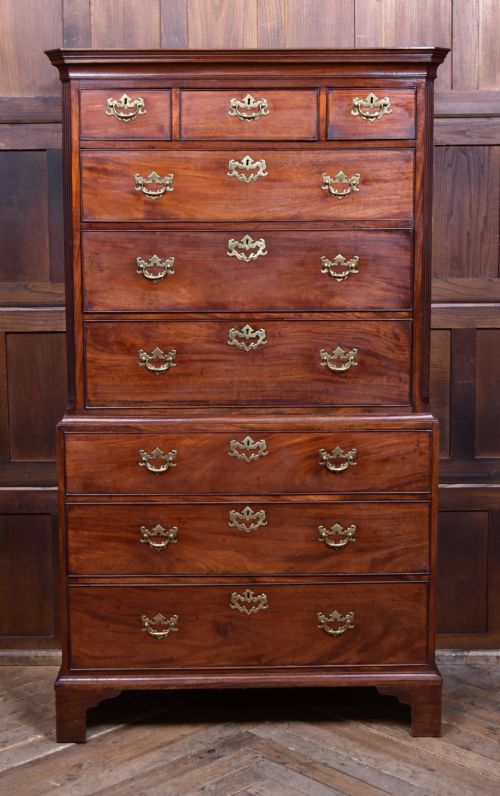
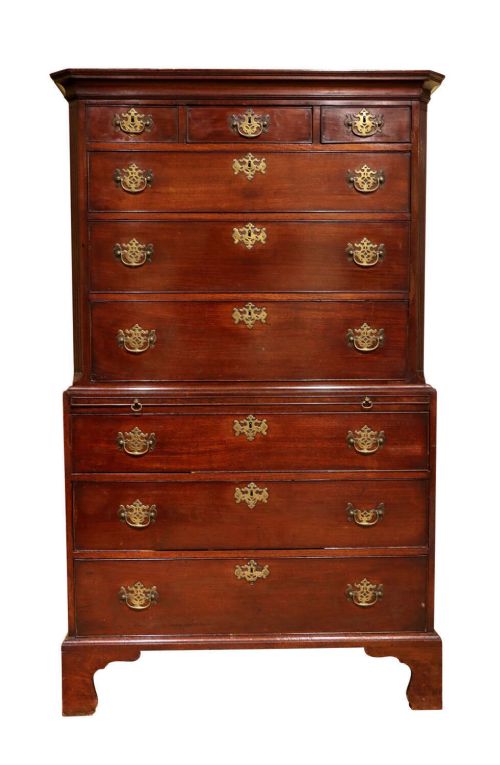
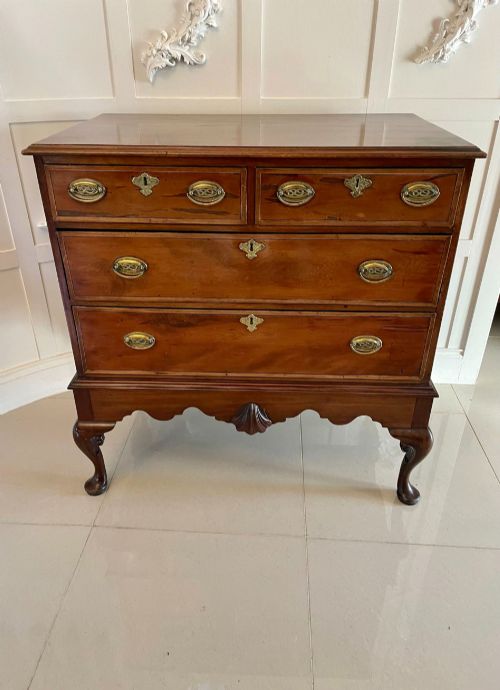
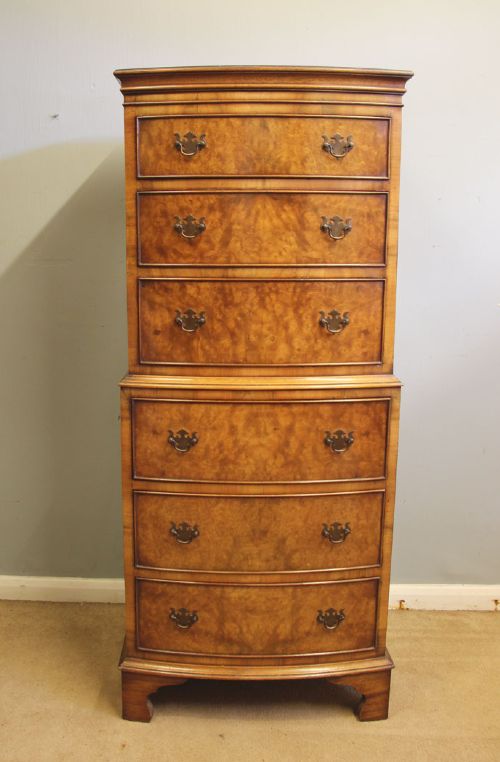
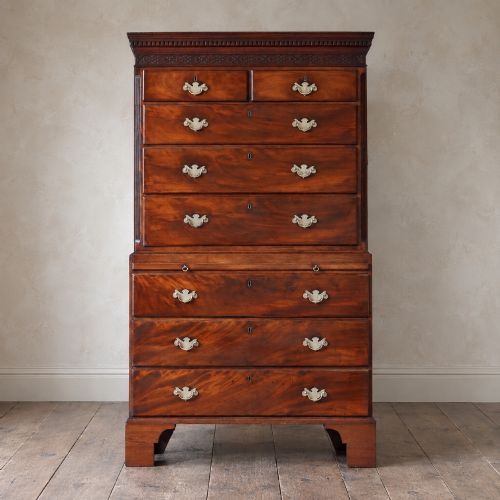
A georgian tallboy chest of drawers is a stacked piece of furniture, usually taking the form of a chest on chest or a chest on stand, designed to maximise bedroom storage without spreading across the floor.
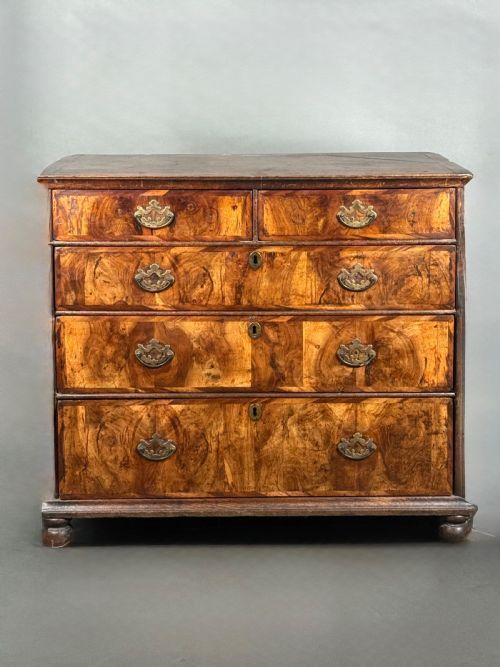
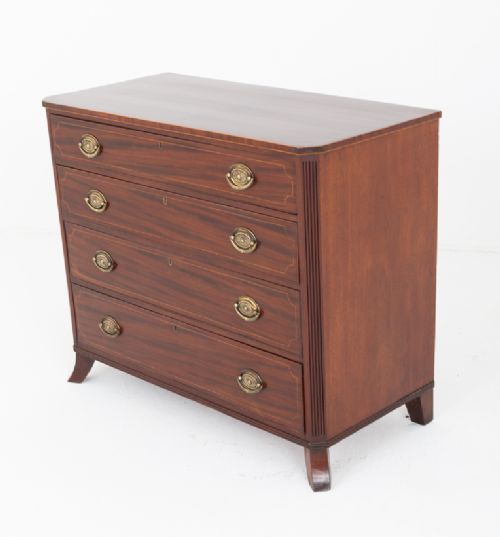
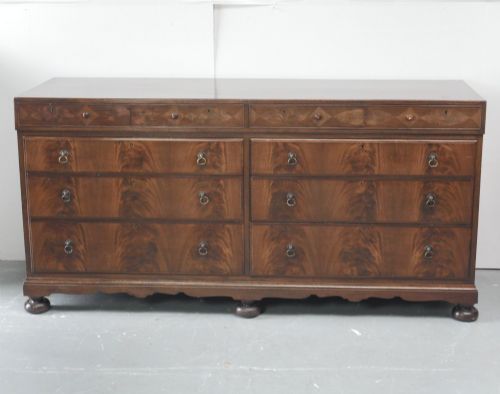
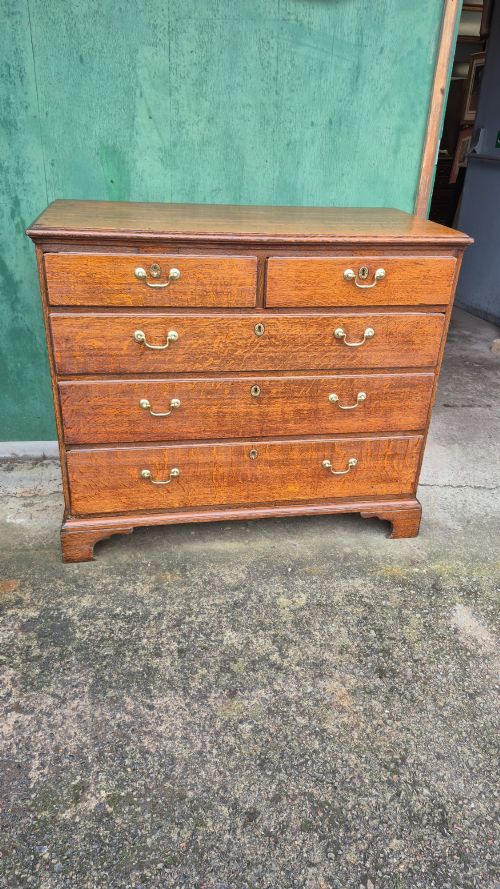
The pieces on this page span the eighteenth century and the Regency period, alongside later twentieth-century revivals, presenting forms that range from simple country oak to elaborate mahogany and burr walnut.
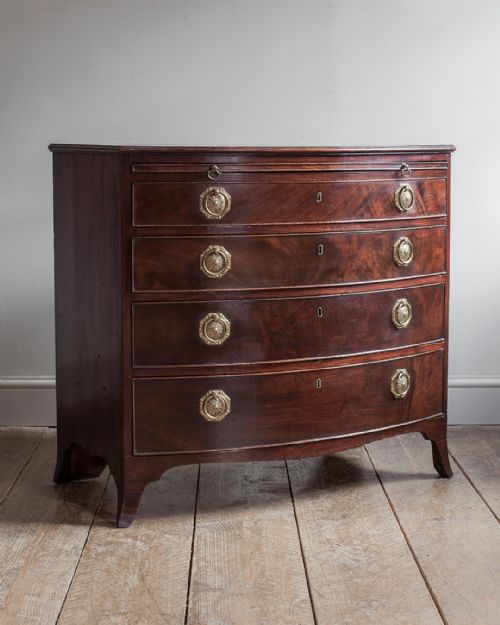
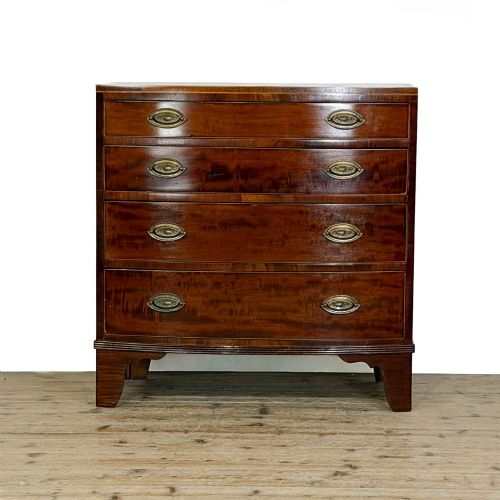
Buyers will encounter tallboys featuring bow fronts, brushing slides, and high vertical tiers of drawers, reflecting the domestic requirements of their original Georgian context.
How They Were Made
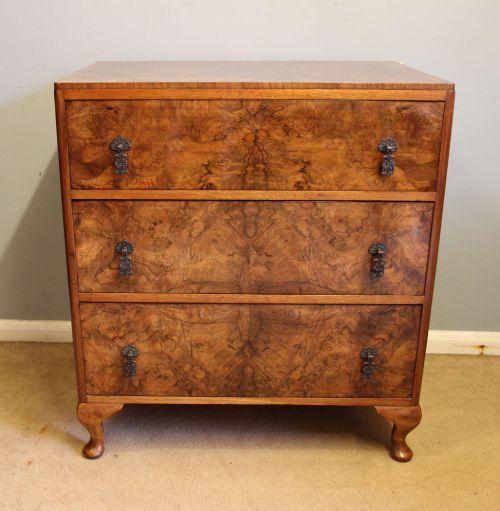
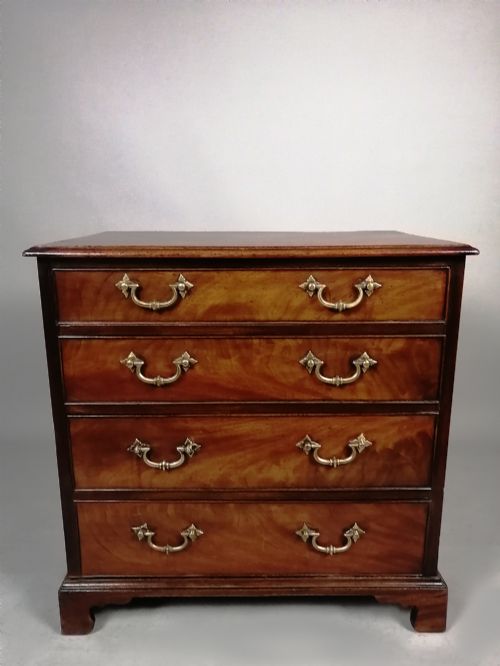
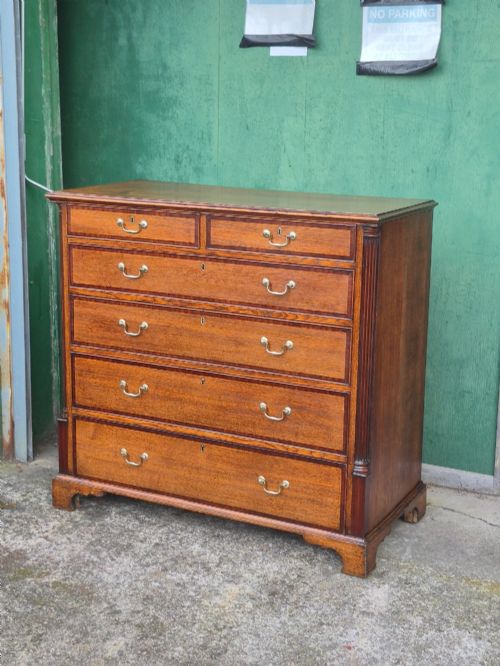
Cabinet makers constructed these carcases using solid timbers such as oak and mahogany, often applying figured mahogany veneers, flame mahogany, or burr walnut to the primary display surfaces.
Secondary detailing relied on contrasting timbers like satinwood for banding, alongside cast brass handles and escutcheons to secure the drawer fronts.
Brushing slides let Georgian gentlemen check their cuffs without leaving the wardrobe.
What Varies in Quality
The distinction between tiers of craftsmanship lies in the selection of timber veneers, where symmetrical grain matching on drawer fronts separates superior examples from plainer stock.
Construction methods also dictate worth, visible in the precision of the drawer dovetailing, the integrity of the original bracket feet, and whether secondary woods like oak remain uniform throughout the interior carcase.
Whytock & Reid·J Moorcroft
The Georgian Tallboy Chest of Drawers Glossary
- Tallboy
- A tall chest of drawers made in two sections, often configured as a chest on chest. This vertical format provided substantial wardrobe and linen storage in period bedchambers.
- Brushing slide
- A pull-out shelf integrated above the top drawer of the lower section. It served as a temporary writing surface or clothes-brushing platform.
- Bow front
- A convex curved front facade popular during the Regency period. This shape softened the rigidity of tall case furniture.
- Chest on stand
- A form where a smaller chest sits upon a low table base with legs. Earlier eighteenth-century examples frequently utilised this lighter silhouette.
- Crossbanding
- A decorative border technique where veneer strips are laid perpendicularly to the surrounding grain. It framed the primary drawer fronts of finer pieces.
Georgian Tallboy Chest of Drawers: Frequently Asked Questions
What is a tallboy used for?
A tallboy provided tiered drawer storage for linens, garments, and personal effects within the domestic bedchamber. The vertical stacking allowed households to store extensive wardrobes within a narrow footprint.
Over generations, these pieces adapted to changing storage needs while retaining their primary role as bedroom case furniture.
How do I tell an 18th-century tallboy from a later revival?
Eighteenth-century examples display hand-cut dovetails, timber shrinkage appropriate to age, and construction methods characteristic of pre-industrial cabinet making. Revivals from the twentieth century often utilise machine-made joints and modern internal secondary woods.
Examining the backboards, drawer linings, and interior glue blocks usually reveals the true period of manufacture.
Did tallboys come in two sections?
Most tallboys and chests on chest were constructed in two separate modular sections to facilitate transport up staircases and through domestic doorways. The upper carcase simply rests upon the lower chest base.
This bipartite design is a defining structural feature of the form.
How do I live with a tallboy in a modern home?
Tallboys offer exceptional vertical storage capacity without dominating floor area, making them practical for bedrooms and dressing rooms alike. Securing the upper section to a wall prevents tipping, given their height and weight.
Polishing the timber surfaces with traditional wax maintains the finish and protects the veneer from dry environments.