


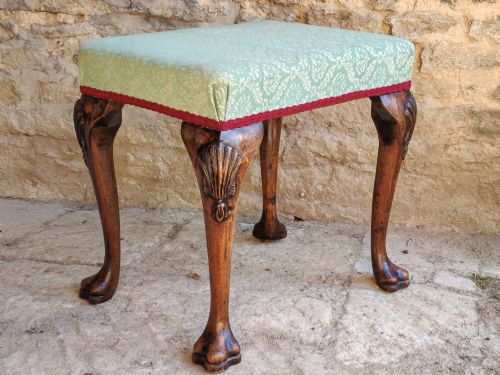
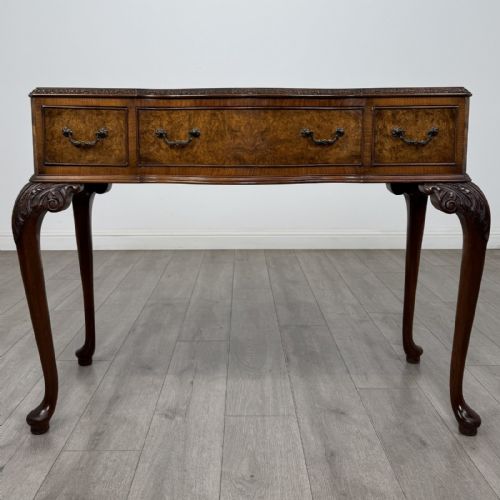
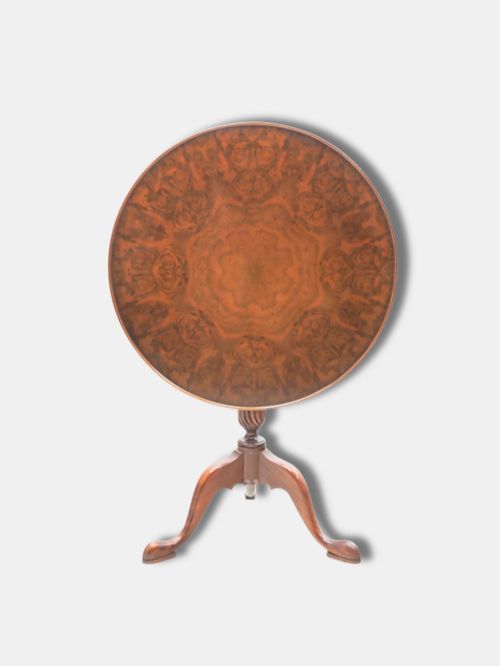
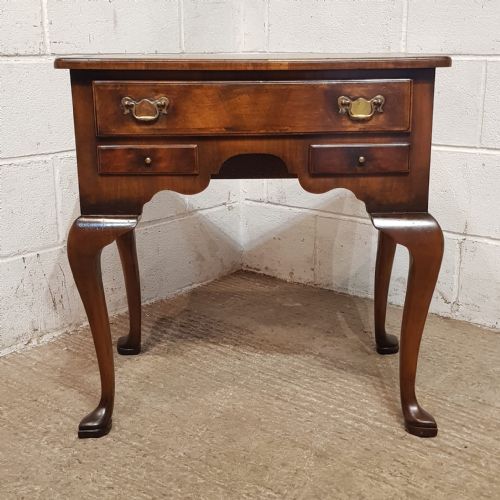

Georgian Style Walnut Table
A georgian style walnut table brings warmth and rich grain to a room, offering functional surfaces shaped by revival craftsmanship.
Georgian Style Walnut Table
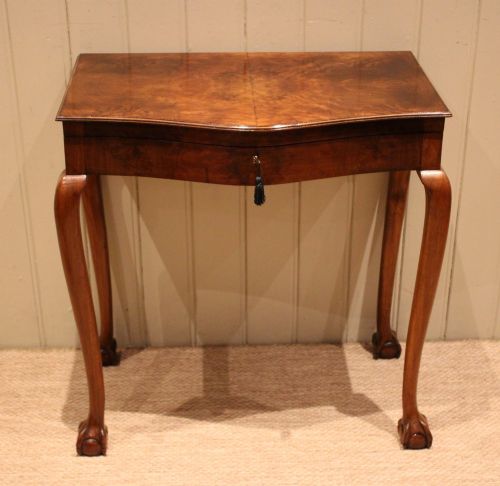
A georgian style walnut table encompasses a variety of forms designed to bring period character into living spaces, drawing upon 18th-century proportions and aesthetics. Buyers searching this phrase will find a selection originating predominantly from the early 20th century, alongside Victorian and Edwardian examples that adopt earlier idioms.
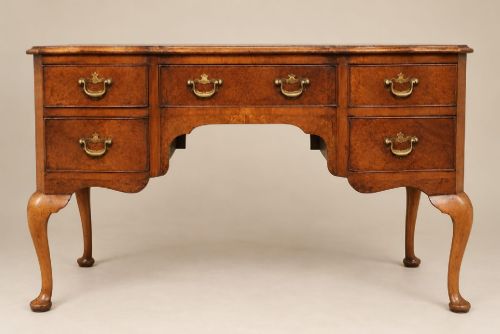
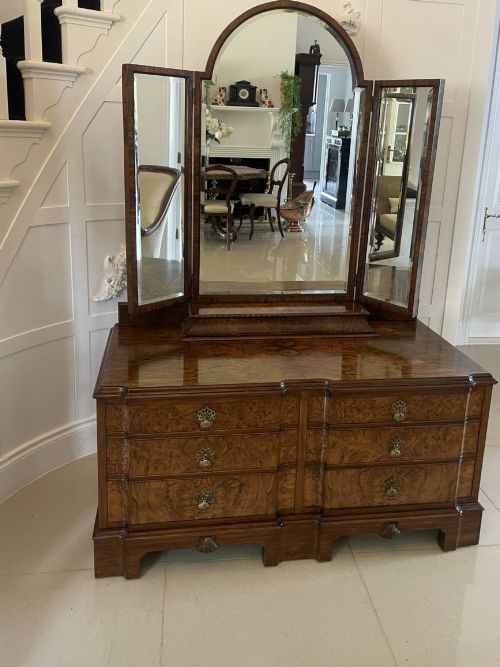
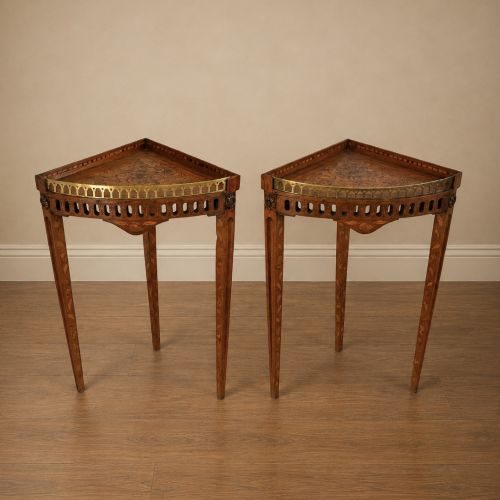
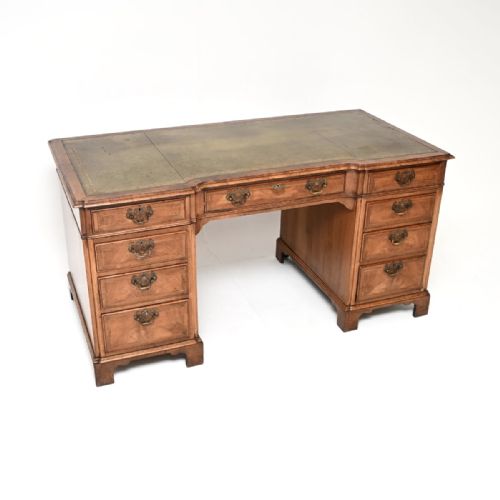
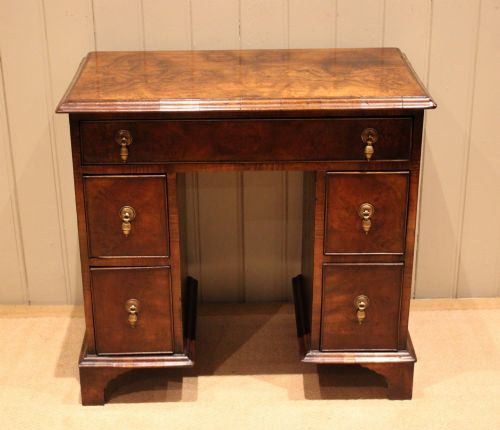
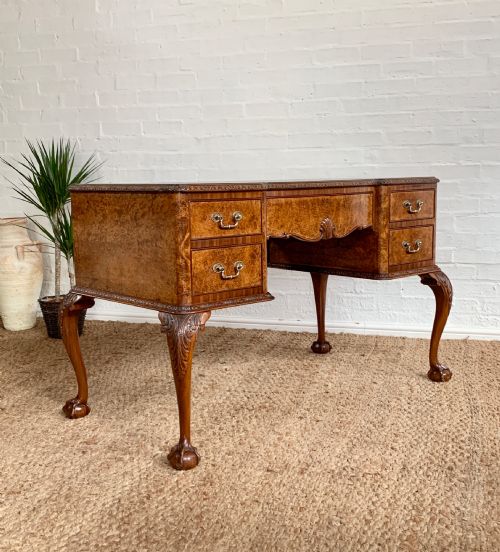
The assortment on this page spans working desks, side tables, console tables, and card tables, frequently utilising burr or figured walnut veneers to create striking surface patterns. These pieces range from compact bedside chests and occasional tables to larger dining tables and extending formats supported by multiple pillars.
Materials and construction
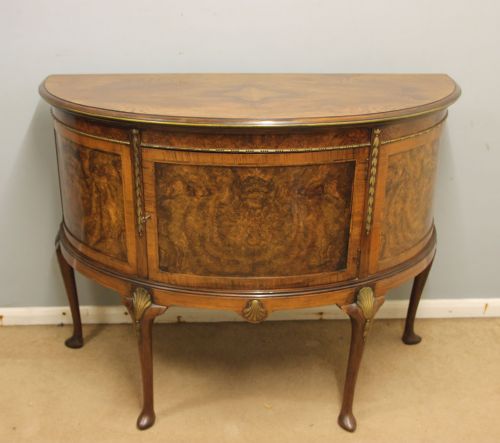
Construction relies heavily on walnut and burr walnut veneers applied over solid secondary timbers, creating figured surfaces with complex grain patterns. Craftsmen utilised techniques such as crossbanding to frame these panels, imparting a sense of depth and formal precision.
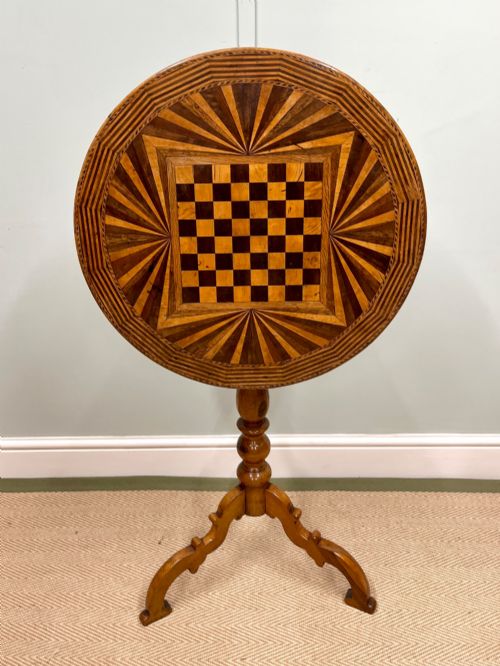
Detailing often incorporates brass hardware, such as handles, galleries, and hinges, alongside leather writing inserts tooled in gold. Occasional pieces display marquetry inlay or incorporate marble tops supported by carved walnut frameworks.
Georgian Style Walnut Table Retail Price Guide 2026
Typical asking prices for georgian style walnut table among the pieces listed under this phrase on Sellingantiques today, from the lower quarter to the upper quarter. They describe what is for sale here now, not the wider market.
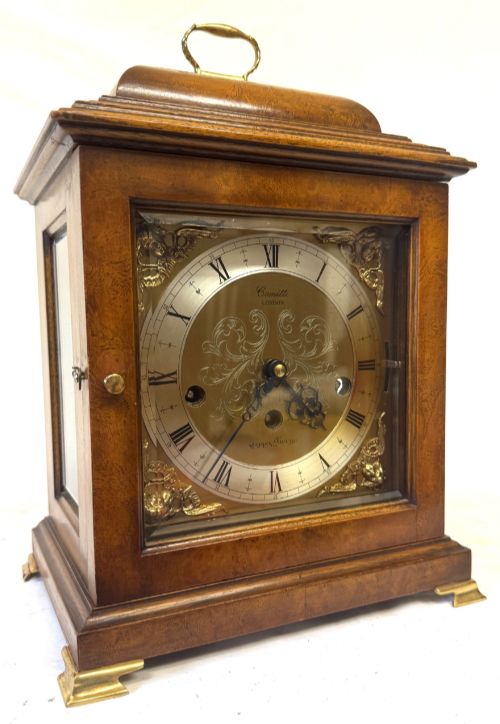
Some miniature bracket clocks arrive ready to chime three separate tunes while sitting quietly upon your sideboard.
What separates the best from the rest
Quality in these tables is determined by the selection of the walnut veneer and the symmetry of its grain pattern across the surface. Uniformity in the matching of burr walnut figures and the crispness of any crossbanding distinguish finer workshop output.
Structural integrity, the subtlety of proportions, and the finish applied to the wood further separate high-grade examples. Tables that retain balanced proportions and meticulous timber selection command greater appreciation.
Comitti Of London·Mappin & Webb·Maples Of London
The Georgian Style Walnut Table Glossary
- Burr walnut
- A figured wood grain obtained from the wart-like growths on walnut trees, prized for its swirling, organic patterns. It is sliced into thin veneers for decorative table tops.
- Crossbanding
- A border technique where strips of veneer are laid perpendicular to the main grain of the table top. This frames the central panel with a contrasting direction of timber.
- Console table
- A table designed to stand against a wall, frequently featuring a semi-circular or serpentine front. These pieces often incorporate brass galleries or marble tops.
- Card table
- A folding table designed for gaming, typically featuring a hinged top that opens to reveal a baize-lined playing surface. Many examples utilise concertina actions or swing legs for support.
Georgian Style Walnut Table: Frequently Asked Questions
What periods do these walnut tables date from?
The pieces listed span the 18th, 19th, and 20th centuries, with a significant concentration originating from the Edwardian era and the interwar decades of the 1920s and 1930s.
While the styles emulate earlier periods like the reign of George II and the Queen Anne era, the actual construction largely reflects early 20th-century revival craftsmanship.
How are card tables and fold-over tables used?
Fold-over tables provide a compact console format against a wall when closed, but unfold to create a stable surface for writing or games.
They serve versatile functions in modern interiors as occasional writing desks or side tables that expand when additional surface area is required.
What is the difference between burr walnut and figured walnut?
Burr walnut derives from the gnarls and growths of the tree, producing dense, swirling patterns that create highly decorative panels.
Figured walnut exhibits natural grain variations and ripples within the standard timber, offering a subtler yet dynamic visual texture compared to burr.
How do I care for a walnut veneer surface?
Walnut surfaces benefit from being kept away from direct sunlight and heat sources to prevent the timber and veneers from drying out or fading.
Routine maintenance involves gentle dusting with a soft cloth and avoiding moisture or harsh chemical polishes that could damage the traditional polish.