
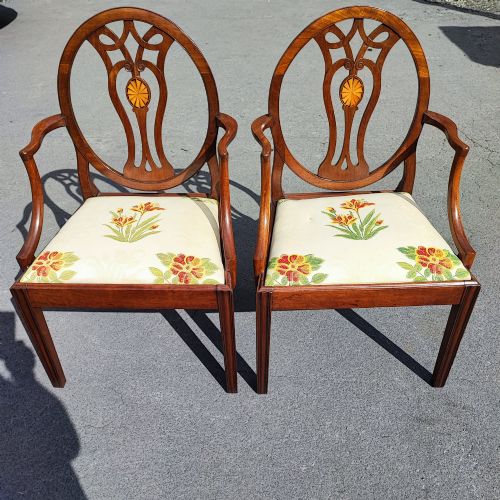
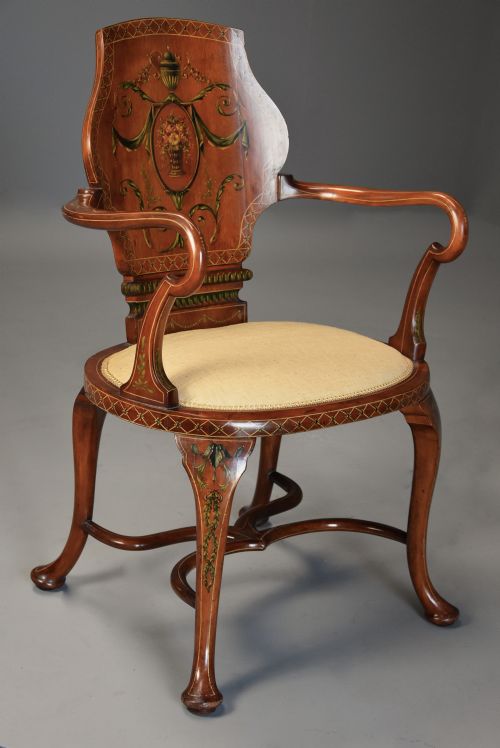



Georgian Style Satinwood Desk
A georgian style satinwood desk brings refined timber and lighter neoclassical tones to a study.
Georgian Style Satinwood Desk
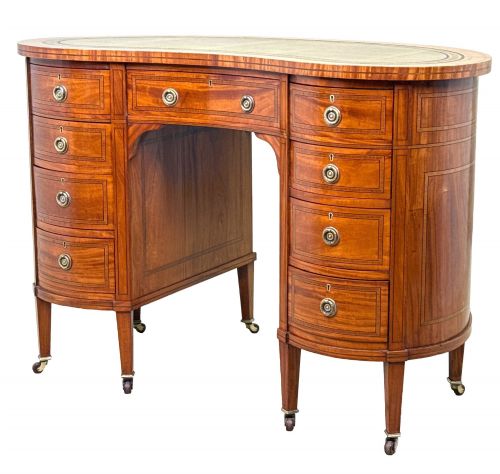
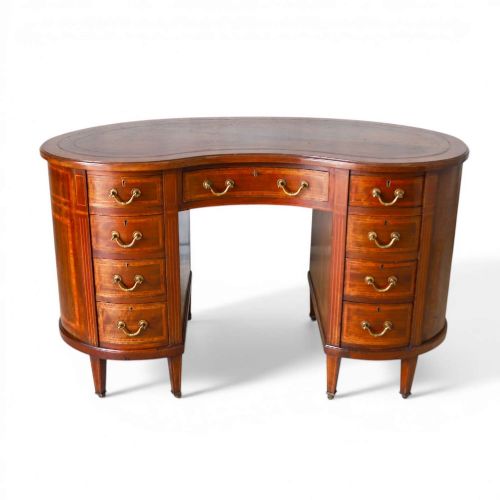
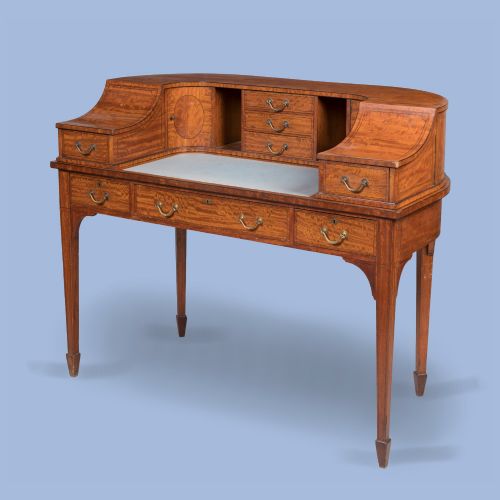
A georgian style satinwood desk draws on late eighteenth century design principles, typically taking the form of a kidney desk, a kneehole desk, or a writing table. These pieces often feature lighter cabinet woods combined with contrasting stringing and banding.
Buyers meet examples spanning from the original eighteenth century period through to nineteenth century interpretations and Edwardian revivals. The selection includes cylinder bureaus, bonheur du jour writing tables, and Carlton House desks.
Cabinetmakers of the Sheraton Revival period frequently utilised satinwood veneers alongside mahogany frames. Such pieces bridge the gap between Georgian architectural proportion and later decorative preferences.
Materials and construction
Craftsmen applied figured satinwood veneers over stable secondary timbers such as mahogany or oak. Marquetry decoration and contrasting stringing lines defined the writing surfaces and drawer fronts.
Makers incorporated brass handles, keyhole escutcheons, and leather writing inserts into the timber carcass. Structural framing relied on traditional joinery methods to support the decorative veneer work.
A tiny writing slide tucked into the side of a bonheur du jour invites secret notes.
Assessing quality in execution
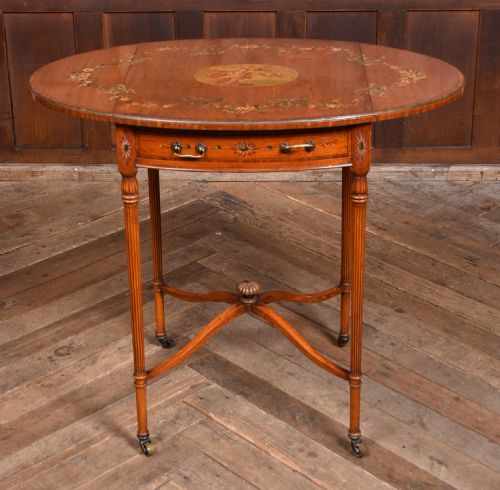
The crispness of the inlay work and the symmetry of the grain patterns distinguish superior examples. Finer pieces demonstrate meticulous hand-painted details or precise marquetry panels rather than mechanical transfers.
Depth of colour in the timber and the retention of original brass hardware elevate a desk's standing. Construction integrity within the drawer linings and stability of the secondary woods reflect the standard of the workshop.
Edwards & Roberts·Gillows of Lancaster·Shoolbred of London
The Georgian Style Satinwood Desk Glossary
- Satinwood
- A hard, yellow timber with a natural sheen, prized for cabinet veneers. It takes a high polish and accepts marquetry contrasting well with darker woods.
- Carlton House desk
- A horseshoe-shaped writing desk featuring a stepped superstructure of small drawers and pigeonholes. This form emerged in the late eighteenth century.
- Marquetry
- The art of forming decorative patterns using fitted pieces of wood veneer. Artisans combine various timbers to create pictorial or geometric designs.
- Sheraton Revival
- A late nineteenth and early twentieth century design movement that copied or adapted the neoclassical furniture of Thomas Sheraton. These items favour satinwood and delicate inlay.
- Kneehole desk
- A compact desk featuring a central recess for the user's legs flanked by banks of drawers. The arrangement provides storage while maintaining a balanced facade.
Georgian Style Satinwood Desk: Frequently Asked Questions
How do I care for satinwood?
Satinwood benefits from placement away from direct sunlight and heat sources, which can dry out the timber. Regular dusting with a soft, dry cloth preserves the polished surface.
Application of appropriate paste wax maintains the moisture balance of the veneer. Avoid chemical sprays that might degrade the historic polish.
Are these desks suitable for daily use?
Many examples provide functional writing surfaces with integrated drawers for modern stationery needs. Leather inserts offer a durable writing medium when maintained properly.
Buyers should consider the height and knee clearance of older desks before daily computer use. Compact forms work well as occasional writing stations.
How do I distinguish Georgian from revival pieces?
Eighteenth century pieces exhibit construction methods, timber maturity, and wear patterns consistent with their age. Secondary woods and dovetail joints provide clues to the exact decade of manufacture.
Revival pieces from the Edwardian period often employ machine-sawn veneers and different interior framing techniques. Comparing the secondary timbers helps clarify the production era.