



Georgian Style Library Seating
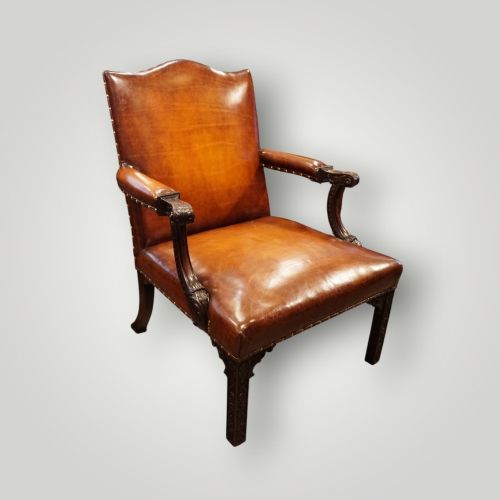
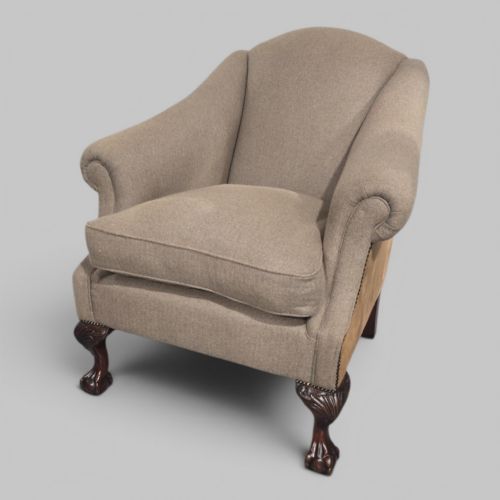
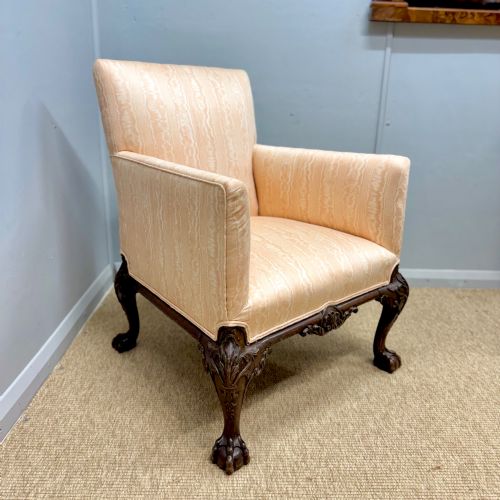
Georgian style library seating brings substantial mahogany frames and leather upholstery into a room, offering the heavy comfort required for reading and writing.
Georgian Style Library Seating
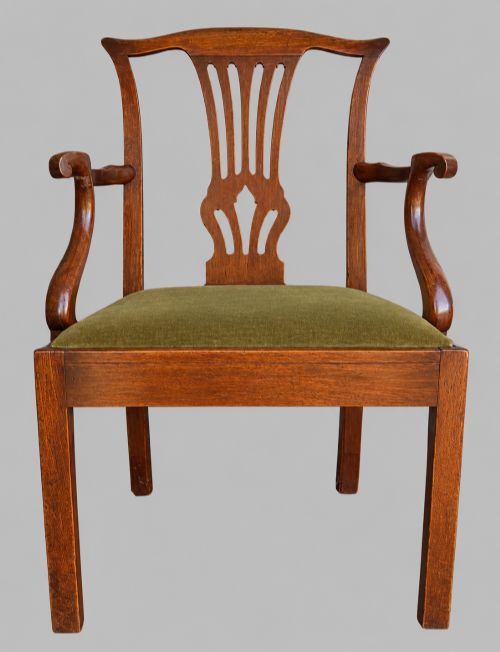
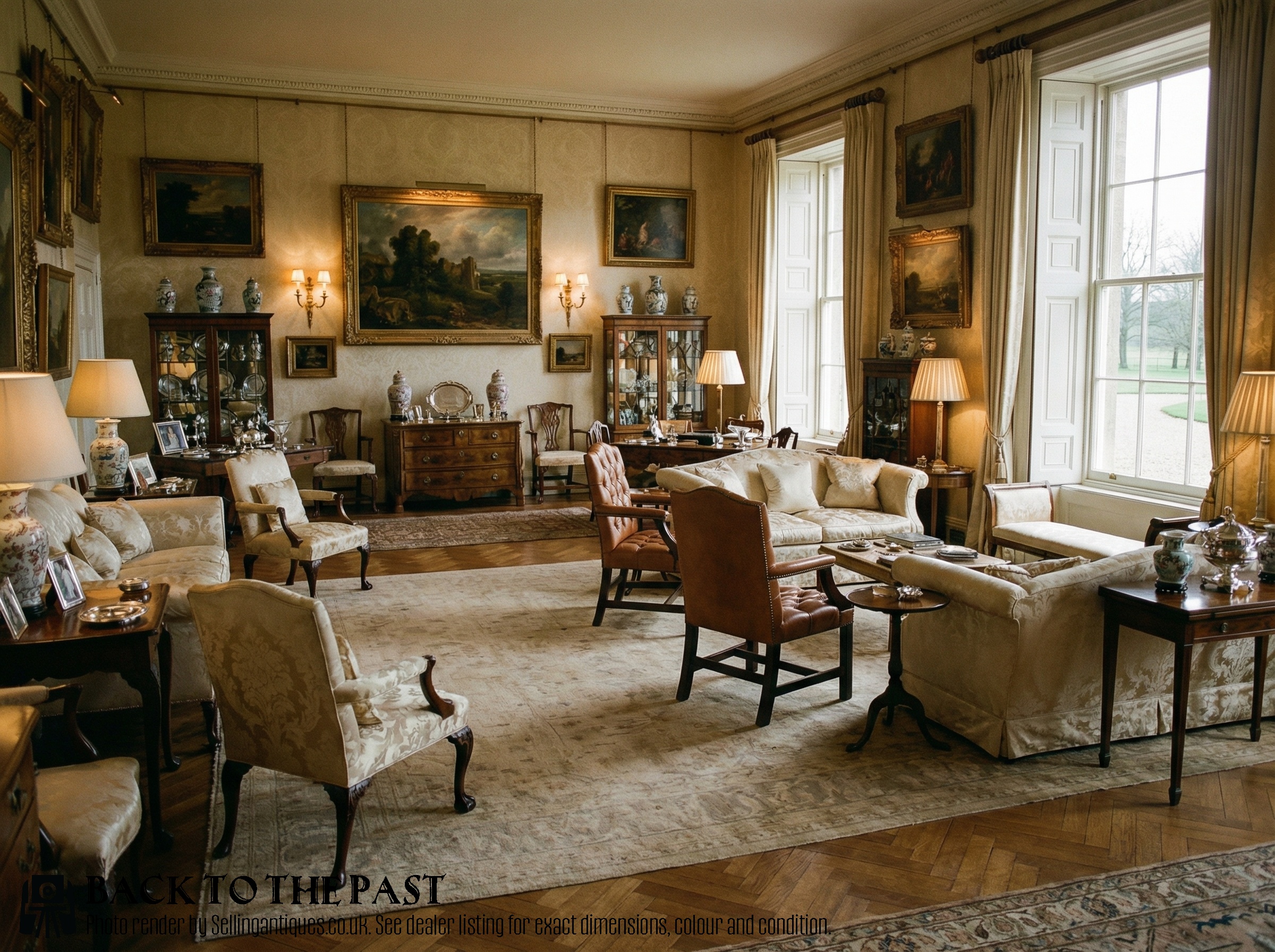
Georgian style library seating spans sturdy desk chairs, open armchairs, and substantial sofas designed for study rooms and parlours. Buyers searching for georgian style library seating most frequently encounter mahogany Gainsborough chairs and caned bergères dating from the eighteenth century onwards.
The selection ranges from genuine eighteenth-century period seating to later revivals produced across the nineteenth and early twentieth centuries. Forms include low armchairs, high-backed reading seats, and revolving desk chairs framed in walnut or oak alongside the dominant mahogany.
Makers and manufacturers through the nineteenth and twentieth centuries revisited these Georgian proportions, producing revival library chairs with identical structural demands. These later interpretations utilise traditional upholstery methods and classical carving to mimic the earlier forms.
How they were made
Frames rely principally upon dense mahogany and walnut, chosen for structural strength under carved ornamentation. Craftsmen joined these timbers using mortise and tenon joints to support heavy daily use in private libraries.
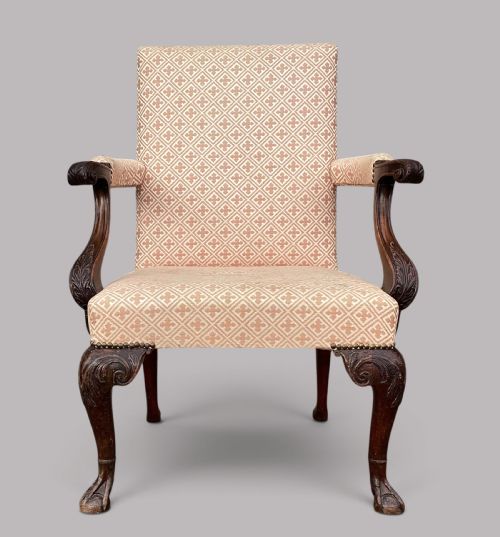
Carving on arms, rails, and cabriole legs relies on manual chisel work rather than cast decoration. Blind fretwork, fluting, and scroll terminals demonstrate the direct hand of the cabinetmaker.
Cockfighting chairs feature distinctive low upholstered steps designed for straddling backward to watch sports.
What varies in quality
The integrity of the timber frame dictates foundational quality, distinguishing pieces with crisp, deep hand-carving from softer, flat machine moulding. Crisp detailing on the knees of cabriole legs and along the arm terminals separates superior examples from plainer workshop output.
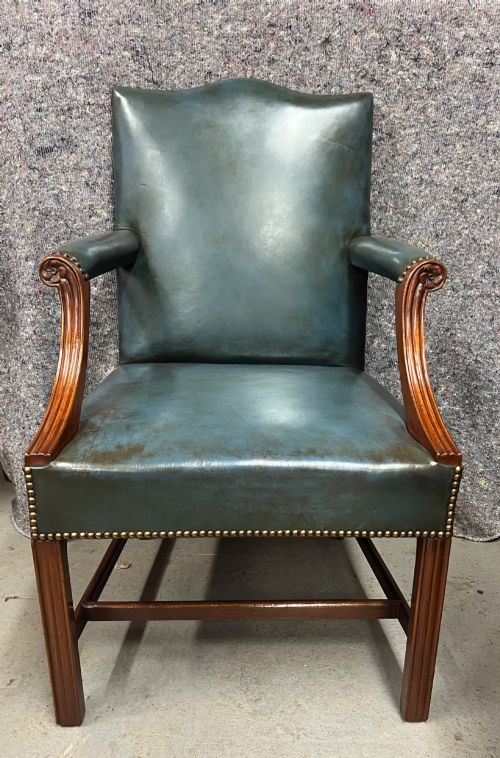
Leather quality and upholstery execution determine longevity and tactile appeal, with hand-dyed vegetable-tanned hide outlasting modern corrected-grain alternatives. The precision of the horsehair stuffing and the tension of the internal webbing govern how the seat retains its profile over decades of use.
The Georgian Style Library Seating Glossary
- Gainsborough chair
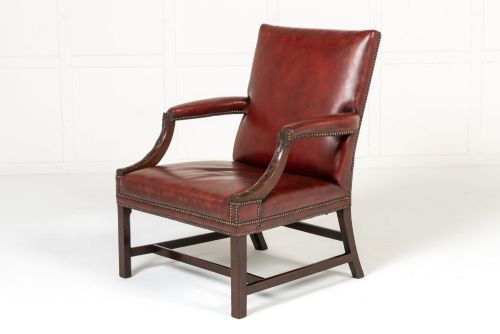
- A wide, upholstered armchair with open padded arms, a low seat, and a square back, designed originally for eighteenth-century writing desks. This form remains the quintessential library seat.
- Bergère
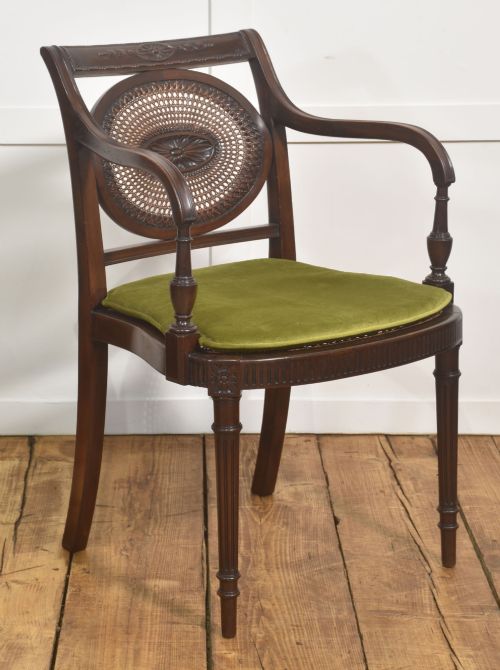
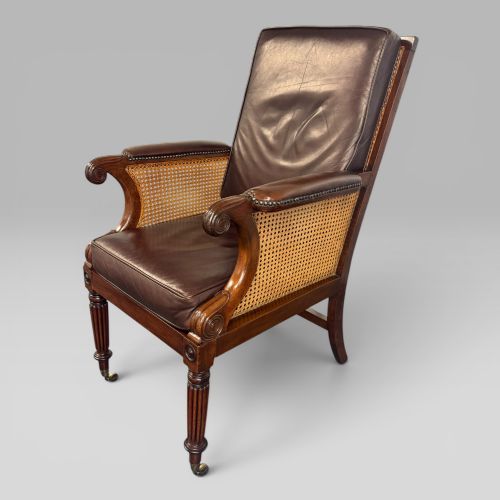
- An enclosed armchair with a solid wooden frame and woven cane panels filling the back and sides. It often accommodates a loose feather-filled seat cushion.
- Cabriole leg
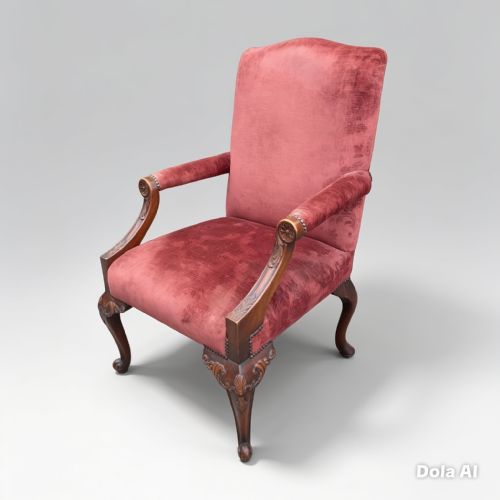
- A furniture leg that curves outward at the knee and tapers inward toward the foot, mimicking animal limbs. It frequently terminates in a claw and ball foot.
- Blind fretwork
- Low-relief geometric or interlaced carving applied to the flat surfaces of furniture legs and rails. It imitates Chinese lattice designs popular during the mid-eighteenth century.
- Horsehair stuffing
- A traditional filling material derived from animal manes and tails, valued for its natural spring and durability. It provides firm, breathable support beneath the leather or fabric cover.
Georgian Style Library Seating: Frequently Asked Questions
What is a Gainsborough chair?
A Gainsborough chair is a wide, open-armed desk chair with a low seat designed for writing and reading in eighteenth-century libraries.
These pieces feature upholstered backs and padded armrests supported by wooden frames, often terminating in cabriole legs.
How do I spot a reproduction?
Distinguishing period pieces from later revivals involves examining timber shrinkage, tool marks, and construction methods. Eighteenth-century frames show hand-cut joinery and aged mahogany patination.
Twentieth-century revival pieces display machine-cut elements and different secondary woods underneath the upholstery webbing.
Are these chairs comfortable?
Library seating from this era prioritises upright posture for reading and desk work rather than deep lounging. The low seats and firm horsehair stuffing offer solid support.
Many examples feature wide armrests and supportive back angles suited for extended periods of study.
How do I care for leather?
Leather upholstery requires regular dusting and occasional treatment with appropriate leather creams to prevent drying and cracking. Avoid placing antique hide near direct heat sources.
Gentle cleaning preserves the natural patina developed through decades of handling.
What is a bergere?
A bergère is an upholstered armchair featuring cane panels integrated into the wooden frame along the back and sides. This construction lightened the visual weight of heavy library seating.
These chairs usually include a removable down cushion for the seat.