
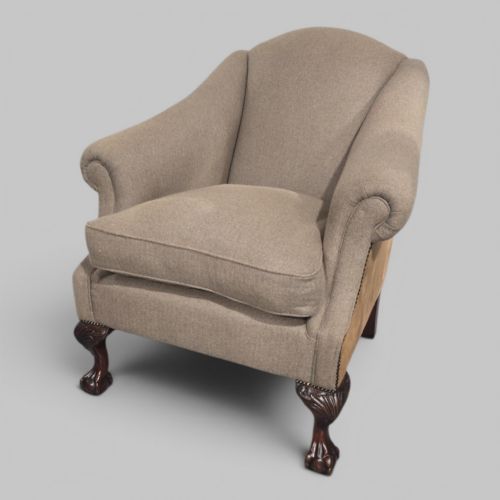
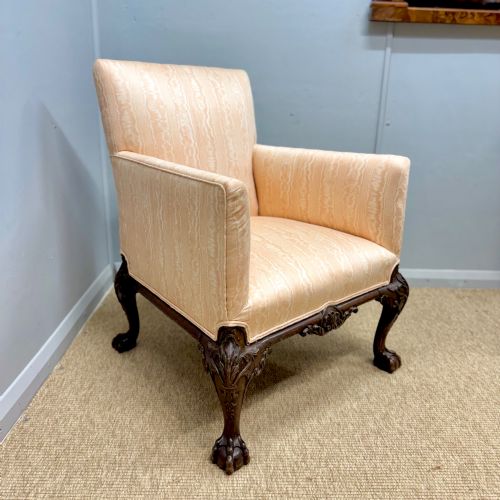


Georgian Style Library Seat
A georgian style library seat brings substantial presence and deep comfort to a study, combining period proportion with supportive seating.
Georgian Style Library Seat
A georgian style library seat encompasses sturdy armchairs, desk chairs, and low settees designed for reading and writing. The selection centres heavily on mahogany and walnut frames, ranging from authentic eighteenth-century examples to later revivals from the nineteenth and early twentieth centuries.
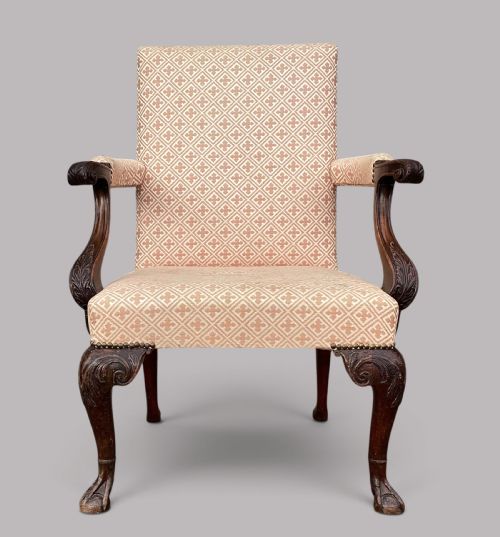
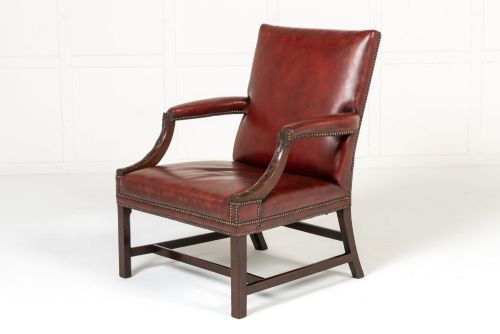
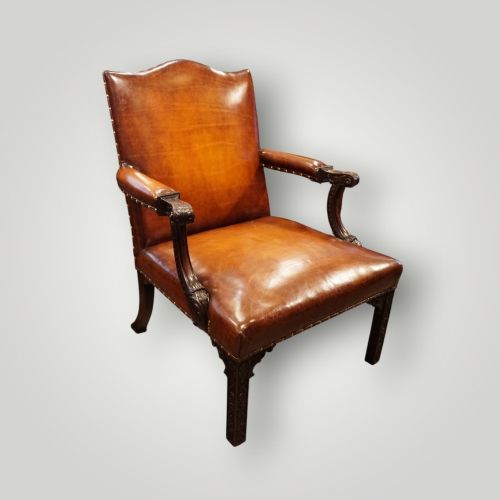
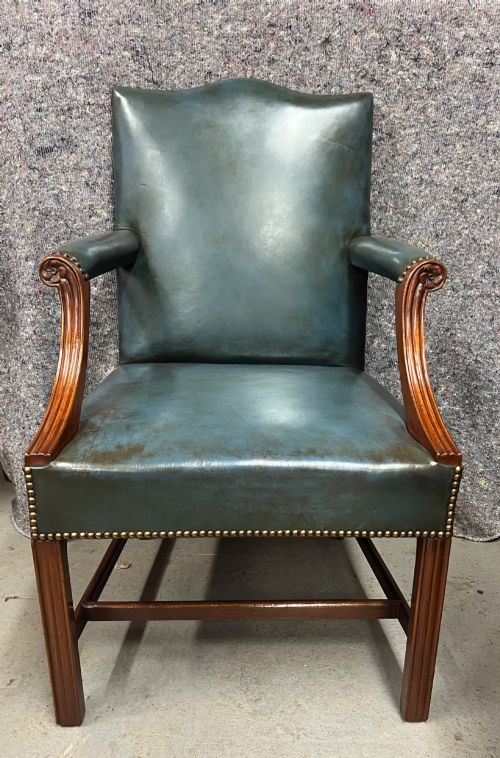
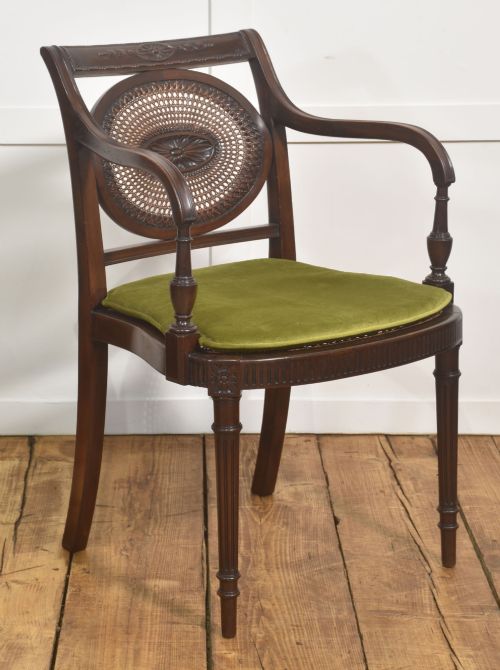
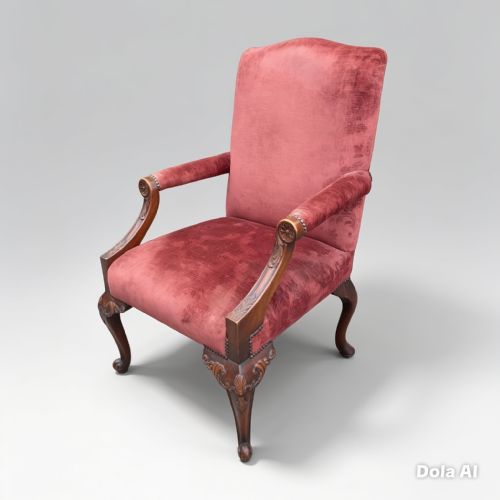
Gainsborough armchairs with upholstered backs and open padded arms appear frequently in the listings. These versatile pieces sit alongside bergères featuring caned panels and robust desk chairs suited to traditional workspaces.
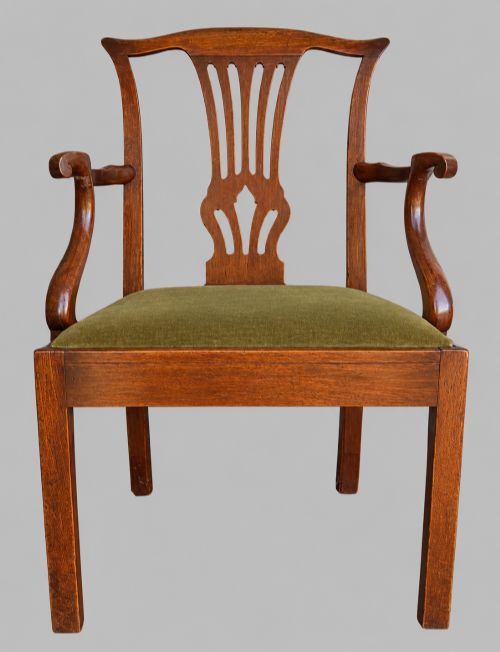
Makers drew on established design vocabularies including Chippendale, Hepplewhite, and Regency idioms. Pieces span formal George II and George III proportions through to Edwardian and later interpretations.
Materials and construction methods
Makers relied on dense hardwoods like mahogany and walnut to build durable, weight-bearing frames capable of supporting elaborate carved details. These timbers were shaped into hipped cabriole legs, straight supports, and curved armrests using traditional joinery.
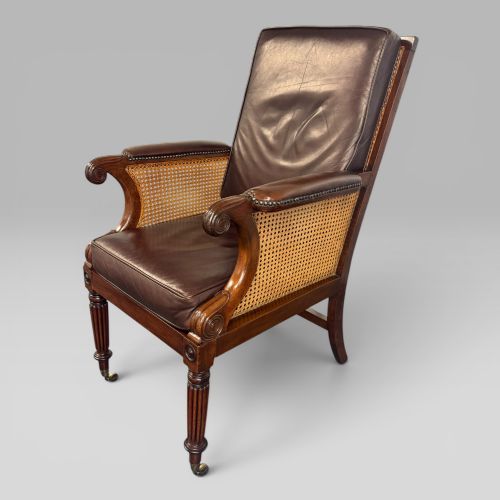
Upholstery involved hand-dyed hide leather, rich velvet, and woven fabric pulled tight over supportive interior stuffing. Brass tacks frequently secure the edges of the leather panels to the wooden framework.
Caning appeared on specific bergère models, woven tightly through drilled holes along the frame to create breathable backrests and seat bases.
The listings combine eighteenth-century originals with later revival pieces from the nineteenth and early twentieth centuries, constructed in mahogany, walnut, oak, and cane.
Indicators of distinction
The crispness and depth of hand-carved ornamentation separate exceptional frames from plain production pieces. Sharp blind fretwork, moulded rails, and well-defined cabriole legs demonstrate superior workshop skill.
Selection of timber grain and the quality of secondary woods dictate the overall integrity of the piece. Superior examples utilise well-figured mahogany or rich walnut with minimal structural compromise over time.
The choice of covering materials, from hand-dyed English hide to fine velvet, contributes heavily to the tactile success of the seating.
The Georgian Style Library Seat Glossary
- Gainsborough chair
- A type of wide armchair with a padded back, open padded arms, and short legs designed for reading or desk work. These seats date back to the mid-eighteenth century.
- Bergère
- An enclosed upholstered armchair with wooden framing, often featuring woven cane panels on the sides and back. This French-inspired form gained popularity during the Regency period.
- Cabriole leg
- A furniture leg that curves outward at the knee and tapers inward toward the foot, mimicking animal limbs. It appears frequently on eighteenth-century seating.
- Blind fretwork
- Low-relief carved ornamentation applied to flat wooden surfaces to mimic intricate pierced joinery without cutting through the wood. Cabinet makers used this technique extensively on Chippendale-style furniture.
- Cockfighting chair
- A specialised low armchair with a padded backrest designed to be straddled backwards during spectator sports. They typically feature solid timber frames and leather upholstery.
Georgian Style Library Seat: Frequently Asked Questions
How do I identify a true Georgian piece?
Examine the timber species, construction joinery, and wear patterns across the frame. Eighteenth-century pieces utilise dense native or imported hardwoods with hand-cut joints that show natural age.
Compare the proportions against established design canons from the period. Revival pieces often reveal slight discrepancies in weight and machine-cut elements hidden beneath the upholstery.
Can I use these seats daily?
These seats were originally built for heavy daily use in studies and libraries. Sturdy hardwood frames and durable leather or fabric upholstery handle normal sitting well.
Ensure the internal webbing and padding remain sound before regular use. Periodic conditioning of leather surfaces prevents cracking and preserves the material.
How should I care for the leather?
Clean leather surfaces gently with a soft, dry cloth to remove dust. Apply specialised leather balms periodically to maintain suppleness and prevent drying.
Keep the seating away from direct heat sources and strong sunlight to avoid fading. This preserves the hand-dyed finish on antique hides.