

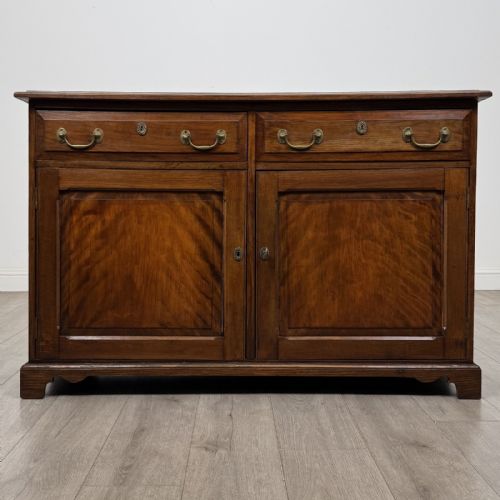
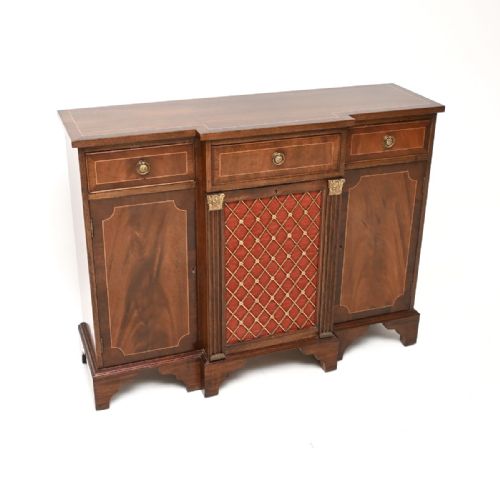
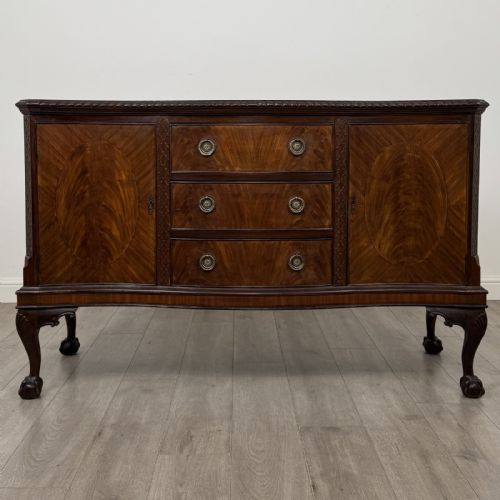
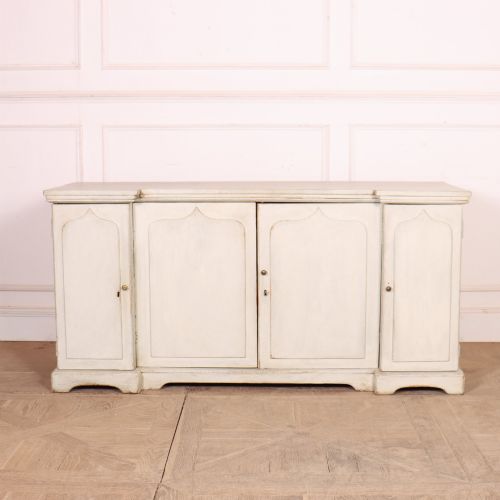
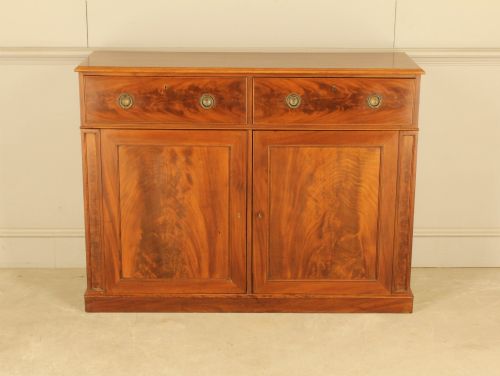
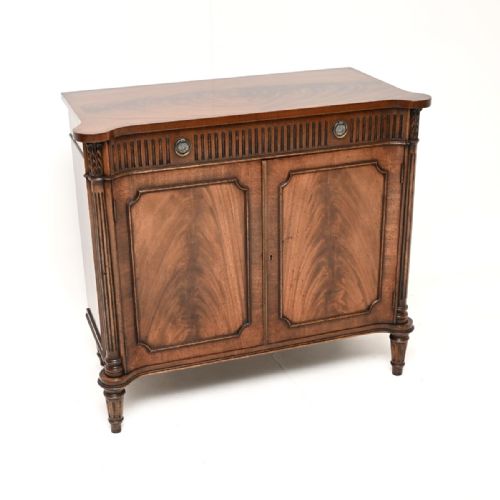
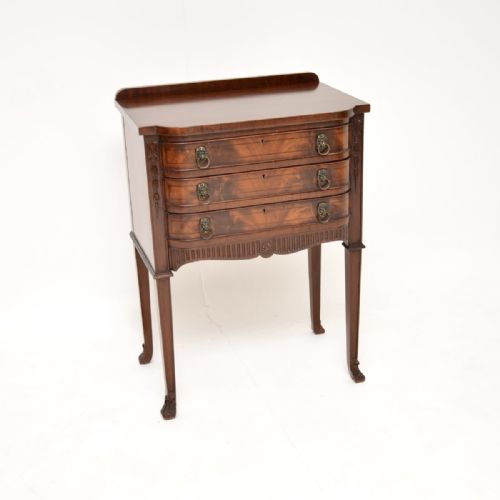
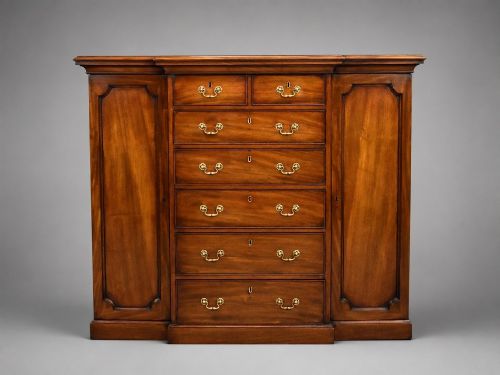



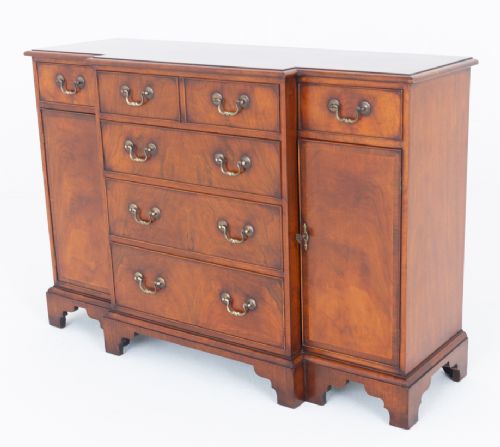
Georgian Style Buffet Cupboard
A georgian style buffet cupboard is a substantial storage piece built for dining rooms, offering deep drawers and surface space for serving.
Georgian Style Buffet Cupboard
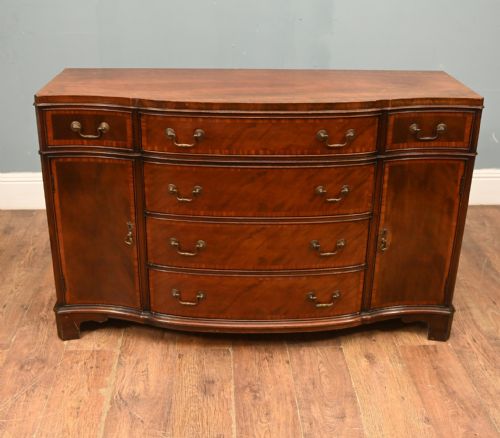
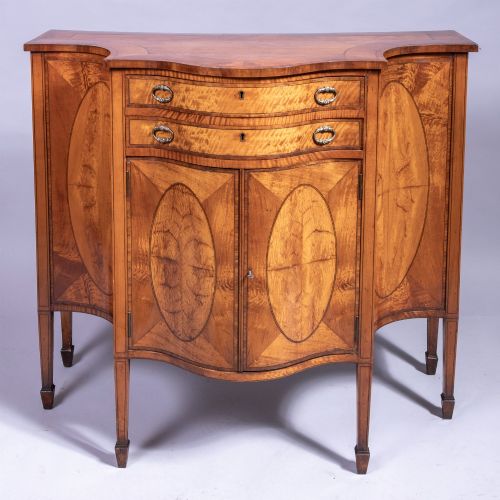
When you search for a georgian style buffet cupboard, you encounter a range of heavy timber servers, sideboards, and dressers spanning the eighteenth century through to later revival periods. The selections include breakfront configurations, bowfront silhouettes, and simpler cabinet forms designed for storage and display.
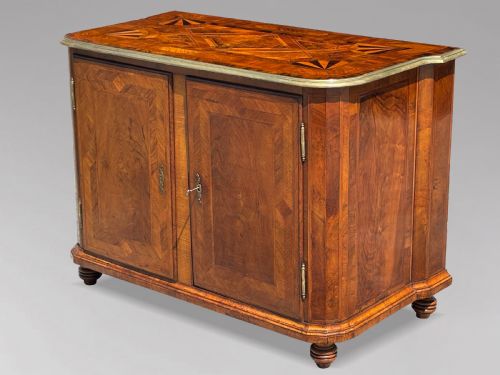
The pieces originating from the Georgian period sit alongside later revivals from the nineteenth and early twentieth centuries, including Edwardian and Sheraton Revival interpretations. English country house examples appear alongside continental walnut and Maltese pieces, showing regional variations in timber and proportion.
Object types vary from formal sideboards and side cabinets to pot board dressers and dresser bases, sharing a common heritage of dining room utility. Many pieces utilise cupboard doors paired with drawer banks, establishing the traditional footprint expected of these servers.
Materials and construction
Makers built these pieces primarily using solid hardwoods and decorative veneers, with mahogany, oak, and walnut dominating the construction. Cabinet makers applied satinwood, rosewood, and marquetry details to add contrast and pattern to the primary timber surfaces.
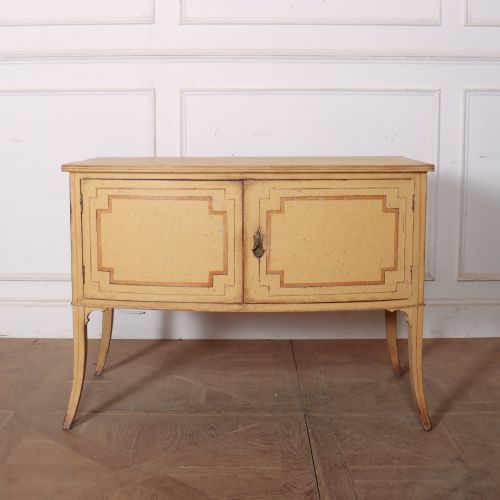
Secondary materials such as brass provide hardware handles and escutcheons, while paint finishes appear on vernacular painted side cabinets and dresser bases. Carpenters employed traditional joinery, geometric carvings, and inlay techniques to finish the structural framework.
Georgian Style Buffet Cupboard Retail Price Guide 2026
Typical asking prices for georgian style buffet cupboard among the pieces listed under this phrase on Sellingantiques today, from the lower quarter to the upper quarter. They describe what is for sale here now, not the wider market.
Materials documented across the inventory include brass, mahogany, oak, satinwood, paint, walnut, pine, and iron.
Distinguishing quality across pieces
The grade of timber selection and the precision of veneer work separate standard utilitarian pieces from finer examples. Finely figured curl-mahogany and detailed marquetry require skilled handwork, whereas simpler painted or plain oak pieces rely on straightforward joinery.
Structural complexity also defines the tier of a piece, with breakfront and serpentine shapes demanding advanced carpentry compared to flat-front cabinets. The integration of decorative elements, from brass mountings to intricate inlay, marks the distinction between everyday storage and formal dining furniture.
The Georgian Style Buffet Cupboard Glossary
- Breakfront
- A cabinet or sideboard whose central section projects forward from the recessed wings. This architectural arrangement creates depth and shadow across the front elevation.
- Bowfront
- A curved convex front typical of certain sideboards and servers. This shape softens the room's angles while expanding internal storage capacity.
- Dresser Base
- The lower section of a kitchen or dining room dresser, featuring cupboards and drawers beneath a flat top. It functions independently as a serving sideboard.
- Pot Board
- An open lower shelf built into a dresser base, traditionally used for storing pots and heavy kitchenware. It sits a few inches off the floor between the legs.
- Marquetry
- Decorative veneer patterns formed by fitting together thin pieces of wood, shell, or ivory. Craftsmen apply these designs to cabinet doors and drawer fronts.
Georgian Style Buffet Cupboard: Frequently Asked Questions
What is a georgian style buffet cupboard?
It is a heavy timber storage unit designed for dining spaces, combining cupboards and drawers to hold tableware and serve food.
These pieces originate from both the eighteenth century and subsequent revival periods, reflecting formal and country house tastes.
How do I style a buffet cupboard in a modern dining room?
Use the broad top surface to display lamps, ceramics, or serving trays while keeping table linen and cutlery stored inside.
Pare the piece with simple seating to let the timber grain and historical details anchor the room.
How can I tell an original Georgian piece from a revival?
Examine the secondary woods, construction methods, and hardware style to gauge the manufacturing period against known historical practices.
Revival pieces from the later centuries often mimic eighteenth-century proportions using machine-cut elements and distinct timber finishes.
What is the difference between a sideboard and a dresser base?
A sideboard focuses on formal dining room storage with a mix of shallow drawers and deep cupboards for plates and silver.
A dresser base often stems from a vernacular kitchen tradition, sometimes featuring an open pot board beneath the main counter.