

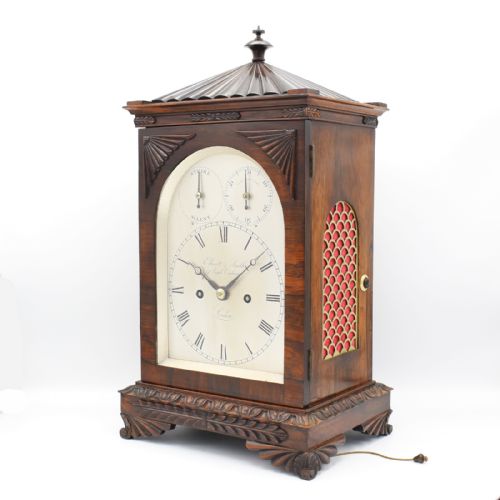


Georgian Striking Bracket Clock
A georgian striking bracket clock is a portable timepiece designed for a table or bracket, combining complex mechanical movement with cabinet-making of the highest order.
Georgian Striking Bracket Clock
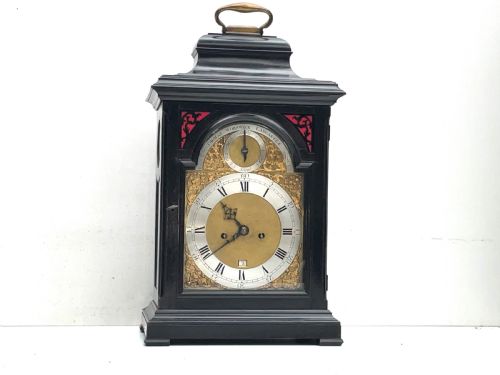
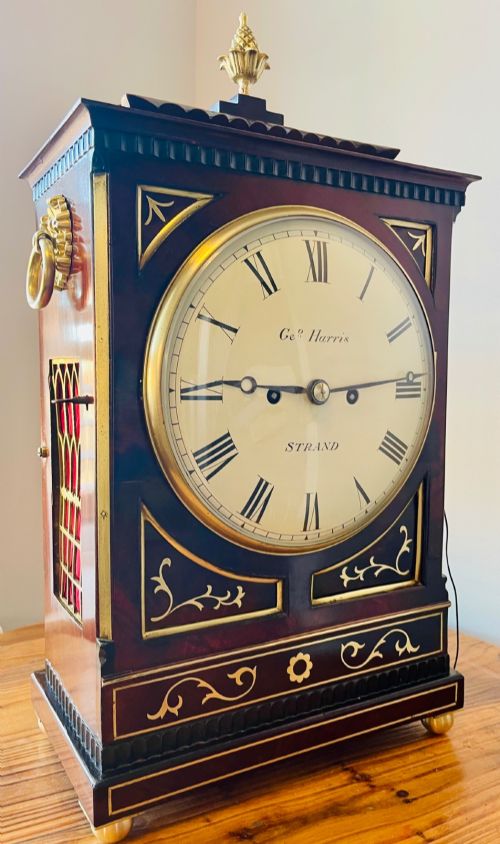
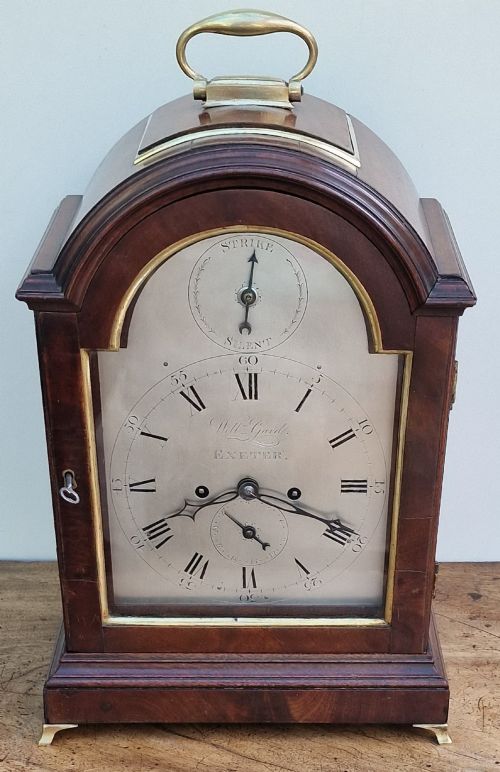
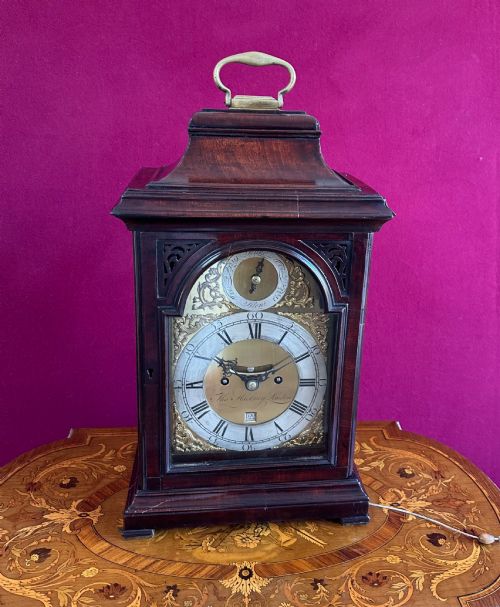
A georgian striking bracket clock brings together heavy table-top timekeepers and architectural cabinetry spanning the eighteenth and early nineteenth centuries. Most examples met on this page appear in rich mahogany or ebonised wood cases, frequently featuring brass mounts, glazed side panels, and distinct bell-top or lancet profiles.
Makers from London and provincial towns housed intricate fusee or verge movements inside these timber frames. Alongside standard striking mechanisms, variations incorporate quarter-striking, alarms, or automaton functions reflecting the technological ambitions of the period.
Cabinet styles range from classical architectural forms to restrained George II and George III proportions, supplemented by occasional Regency gothic revival iterations or lacquered finishes in red, green, and gold.
Materials and construction
Timbers like solid mahogany, ebonised wood, and occasionally tortoiseshell or exotic veneers formed the structural housings. Brass provided robust reinforcement through carrying handles, bracket feet, dial spandrels, and intricate fretwork sound panels.
Dials combined engraved silvered brass or white enamel with fine steel hands, protected behind curved or flat glass panes. Inside, brass gear trains operated via fusee or verge escapements, driving internal bells to mark the hours and quarters.
Assessing craftsmanship
The refinement of the movement dictates the standing of a piece, separating straightforward timekeeping from complex twin-chain fusee or quarter-striking systems by noted makers. Hand-engraved backplates and signed dials demonstrate the individual attention given by master horologists.
Cabinet execution further defines the tier of work, seen in the choice of timber grain, the crispness of brass mountings, and the integration of specialised elements like silk-backed sound frets or bell-top proportions.
William Gard·Mappin & Webb·Ellicott & Smith·John Witherston·Des Granges·Louis Recordon·Somersall·William Withers·John Taylor·James Smith·Chater & Son·Robert Higgs·John Leroux·John McGregor·John Fletcher·Watson·William Smith·Benjamin Maud·John Ellicott·Isaac Hurley·Joseph Lum
The Georgian Striking Bracket Clock Glossary
- Bracket Clock
- A portable mechanical clock designed to stand on a furniture bracket or table. These pieces often feature carrying handles on top for movement between rooms.
- Fusee
- A conical pulley used in mechanical clocks to equalize the diminishing power of the mainspring as it unwinds. This mechanism ensures even driving force throughout the running period.
- Verge Escapement
- An early type of clock escapement utilising a crown wheel and a rod with pallets. It regulates the release of the gear train to control timekeeping.
- Bell-Top
- A distinctive domed cabinet silhouette shaped like a bell. This form appeared frequently on eighteenth-century English clock cases.
- Silvered Dial
- A brass clock face treated with silver powder to produce a matte metallic finish. Numerals and inscriptions are subsequently engraved and blackened for legibility.
Georgian Striking Bracket Clock: Frequently Asked Questions
What is a bracket clock?
A bracket clock is a portable spring-driven timepiece designed to sit on a table, chest, or dedicated wall bracket rather than standing on the floor.
Historically, these clocks were built with sturdy carrying handles so owners could transport them easily between rooms in a large household.
How did these clocks strike the time?
These timepieces utilised internal gear trains linked to metal bells or gongs, struck by small hammers at the end of every hour or quarter-hour.
More complex movements incorporated repeating mechanisms that allowed the owner to pull a cord and hear the last hour restated in the dark.
Where were these clocks placed?
They sat prominently in principal rooms such as drawing rooms, libraries, or hallways where guests could admire both the cabinetry and the chime.
Because they relied on spring power rather than swinging pendulums, they remained reliable when placed on stable furniture surfaces.
How do you wind a fusee clock?
Winding requires a specialised key inserted into the dial holes to tension the mainspring via the internal fusee cone.
Care must be taken during the winding process not to over-tension the chain or gut line that connects the spring barrel to the fusee.