


Georgian Steel Fire Irons
Georgian steel fire irons are the hearth implements that bring functional elegance to period fire grates.
Georgian Steel Fire Irons
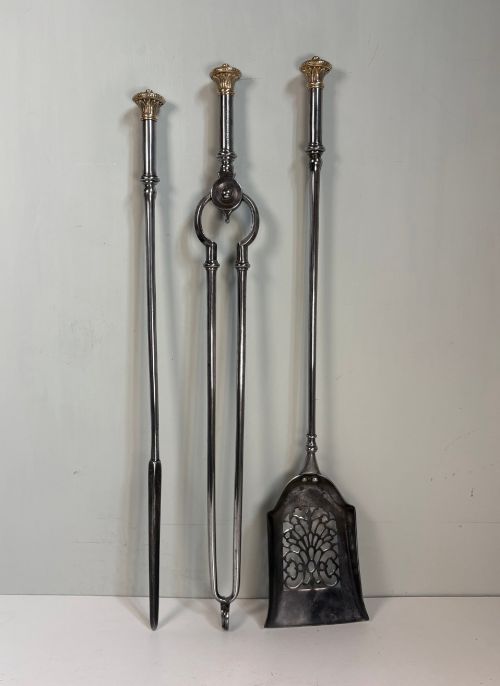
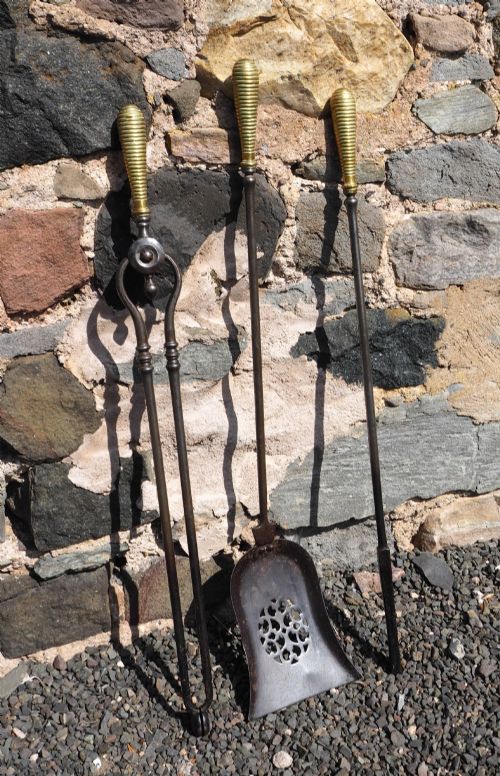
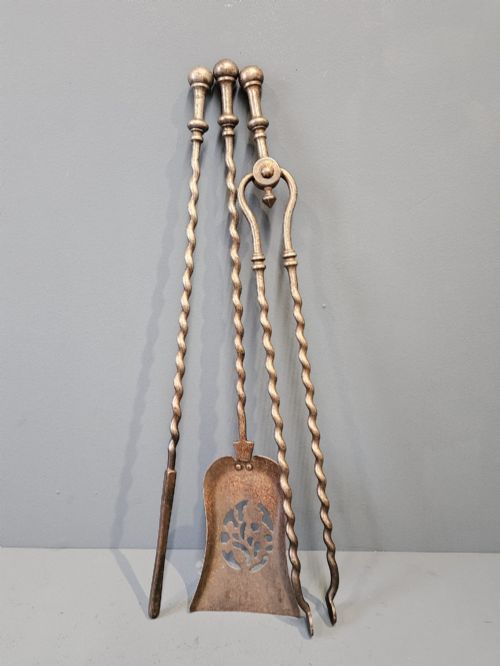
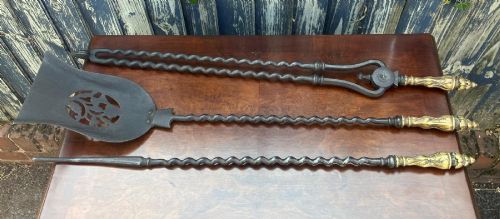
When you search for georgian steel fire irons, you look for matched or assembled sets of pokers, tongs and shovels designed for coal or wood hearths. The most common forms on this page include three-piece companion sets dating from the Georgian, Regency and early nineteenth-century periods.
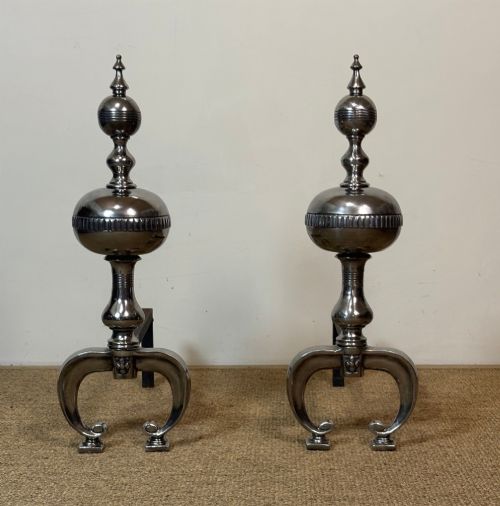
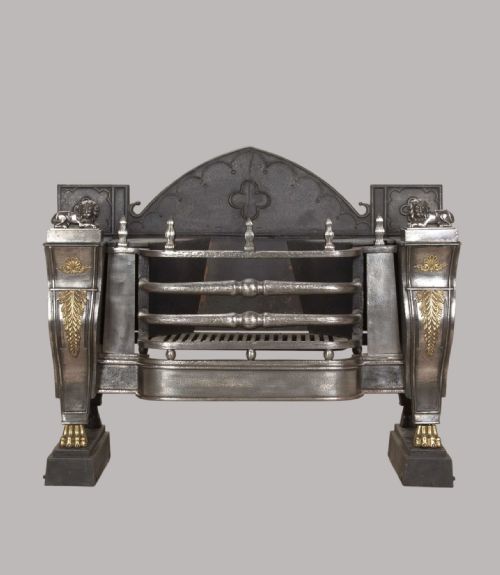
These hearth tools often appear alongside related fireplace accessories such as fire dogs, fenders, footmen and hob grates. The sets range from simple utilitarian iron pieces to polished steel implements accented with brass and gilt highlights.
How they were made
Blacksmiths and metalworkers shaped these implements using forged wrought iron and cast iron, frequently finishing the surfaces with burnishing or high-polish techniques. Many examples incorporate brass or gilt brass handles and mounts to provide contrast against the grey steel shafts.
Techniques combine hand-wrought shaping with turning on a lathe for handle grips and finials. The resulting tools balance structural durability with refined decorative detail suited to polite domestic interiors.
Some eighteenth-century steel tongs doubled as pipe lighters, ensuring the master of the house could easily ignite his tobacco directly from the glowing hearth.
What varies in quality
Quality rests in the crispness of the turning on the handles and the integrity of the original polish rather than sheer weight. Better examples maintain matched proportions across the poker, tongs and shovel, showing deliberate hand-finishing.
The degree of material combination also shifts the character of a set, with integrated brass mounts and burnished steel marking out higher status workshop production over plain utilitarian iron.
The Georgian Steel Fire Irons Glossary
- Burnished steel
- Metal finished with a high mechanical polish to create a bright, reflective surface. This treatment was favoured in Regency and late Georgian interiors.
- Ember tongs
- Pliers-like tools specifically shaped for moving glowing coals or embers within the grate. They often include specialised pipe-lighting attachments in period examples.
- Hob grate
- A fireplace design featuring raised side shelves for heating water or food. These grates frequently accompany sets of steel fire irons.
- Footman
- A metal stand placed in front of the hearth to keep kettles warm. These accessories share the steel and brass materials seen on companion fire tools.
- Fire dogs
- Iron or steel supports placed inside the hearth to hold logs. They are often found grouped stylistically with companion fire iron sets.
Georgian Steel Fire Irons: Frequently Asked Questions
What is included in a set?
A standard set comprises three matching tools: a poker, a pair of tongs and a shovel. These pieces were designed to manage the coal or wood fire efficiently.
Additional companion pieces such as Ember tongs or hearth brushes occasionally complete the grouping depending on the original commission.
How do I date these tools?
Dating relies on the stylistic cues of the handles, the shaping of the shovel blades and the specific polish applied to the steel. Regency and Georgian examples often feature slender turned grips and classical finials.
Archival comparisons with documented pieces from the eighteenth and early nineteenth centuries provide the most reliable chronological benchmarks.
Can I use them on an open fire?
Most of these implements are forged from robust steel and iron intended for active hearth use. Their historic construction makes them fully functional for tending traditional fires.
Care should be taken to clean and dry polished surfaces after use to prevent moisture damage and preserve the historic finish.
Why are some mounted with brass?
Brass mounts and finials provided decorative contrast against the dark grey of polished steel. This dual-metal approach matched the prevailing interior design tastes of the Regency and Georgian periods.
Sets featuring gilt brass or solid brass elements usually indicated a more formal drawing-room setting rather than a back-of-house kitchen hearth.