






Georgian Sporting Oil Painting
A georgian sporting oil painting brings the fields, stables and coaching roads of past centuries directly onto a wall.
Georgian Sporting Oil Painting
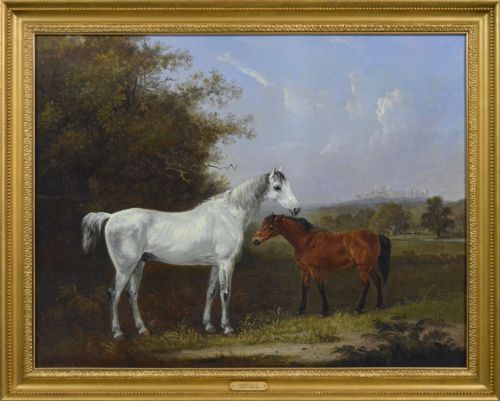
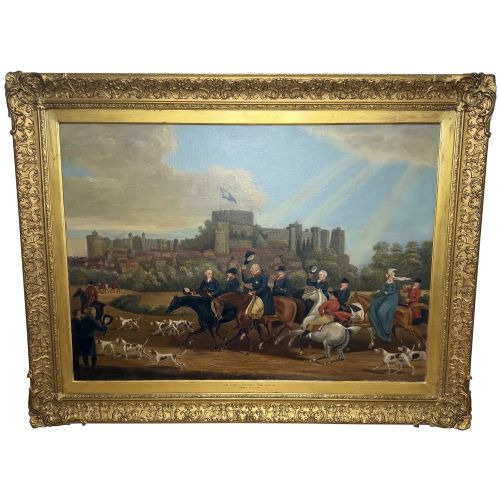
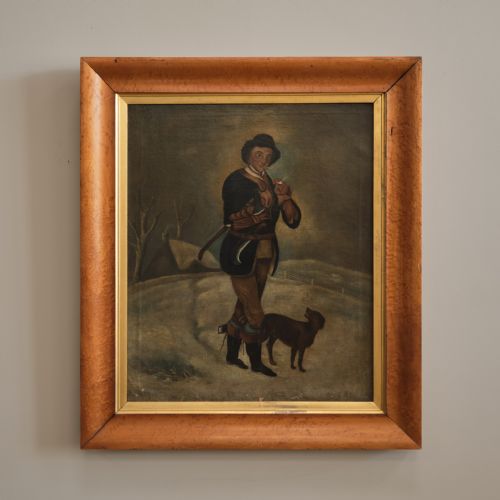
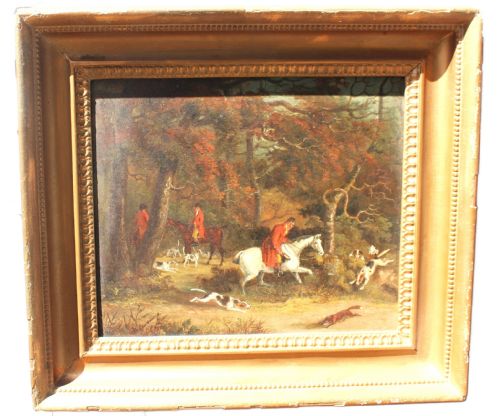
A georgian sporting oil painting captures horses, hounds, hunting parties, coaches and shooting scenes across canvas, pine panel and wood. These works document rural pursuits, notable hounds, and thoroughbred horses in expansive country landscapes.
The selections span the eighteenth century, the Regency era and the nineteenth century, reflecting both polished academic output and naive folk art interpretations. Canvases range from intimate animal portraits to large hunting party compositions.
Subjects frequently centre on specific horses, coaching journeys such as the York to London mail run, and canine companions depicted with individual character.
Materials and Technique
Artists painted primarily with oil paint on stretched canvas or wooden panels, applying layers of pigment to build depth in landscapes and animal coats. Support materials include pine panels and canvas secured within period wooden frames.
Gilt wood and gold leaf frames frequently enclose these works, providing a decorative border that complements the dark, rich tones of the oil pigments. Panel paintings utilise prepared wooden surfaces to receive fine brushwork.
Several canvases pay homage to specific named dogs, ensuring a nineteenth-century hound named Lady gazes eternally from her frame.
The Measure of Quality
Quality rests upon the artist's command of anatomy, perspective and the naturalistic movement of animals within a landscape. A superior canvas shows precise rendering of equine muscle structure, hound expressions and atmospheric lighting.
Weaker works often display rigid proportions, flat backgrounds and generic animal forms executed by lesser-known or naive hands. The handling of paint in foliage, coats and sky determines whether a piece holds true artistic merit.
John Sanderson Wells·William Williams·Samuel Raven·Clifton Tomson·Abraham Cooper·Samuel Henry Alken·James Ward·John Nost Sartorius·John Vine·George Stubbs·James Barenger·John Charles Maggs·Samuel John Egbert Jones·Stephen Elmer·Dean Wolstenholme·Benjamin Marshall·James Pollard
The Georgian Sporting Oil Painting Glossary
- Oil on Canvas
- Pigment mixed with drying oil applied to a woven fabric support. This remains the most common medium for works of this period.
- Pine Panel
- A solid wood board used as a painting surface rather than textile. Panels offer a rigid base favoured by certain eighteenth-century painters.
- Giltwood
- Wood carved and coated with a thin layer of gold leaf or metallic gilt. These frames add warmth and a formal finish to the artwork.
- Naive
- An artistic style characterised by a childlike simplicity of perspective and proportion. These works lack formal academic training yet possess charm.
- Attributed to
- A term used when an artwork shows the style of a known hand but lacks definitive signature proof. It suggests strong stylistic similarities to a master.
Georgian Sporting Oil Painting: Frequently Asked Questions
What do these paintings depict?
These works illustrate rural British life, focusing on horses, hunting scenes, coaching inns and canine portraits. They record the animals and pastimes valued by landowners and travellers.
Scenes range from solitary stable portraits of prized stallions to vast gatherings of huntsmen and hounds in open countryside.
How were they displayed?
Original owners hung these paintings in country houses, libraries and estate dining rooms to celebrate their sporting interests and prized animals. Heavy gilt wood frames enhanced their presence in wood-panelled interiors.
Today, they suit traditional studies, living rooms and hallways where their historical subject matter can be appreciated at close range.
How do I date a painting?
Dating relies on costume, carriage design, framing styles and canvas preparation methods recorded in the physical structure of the piece. Details such as top hats, flintlock shotguns and coaching liveries offer clear chronological clues.
Signatures, inscriptions on the reverse and attribution to recorded artists further narrow the era of creation.
Are panel paintings older than canvas?
Pine panels appear frequently in eighteenth-century works, whereas canvas gained dominance through the nineteenth century. However, panels continued to be used alongside canvas for smaller compositions.
The choice of support often reflects the artist's preference or the regional traditions of the workshop.