





Georgian Snap Action Table
A georgian snap action table brings clever engineering and rich timber together for tea and cards in any room.
Georgian Snap Action Table
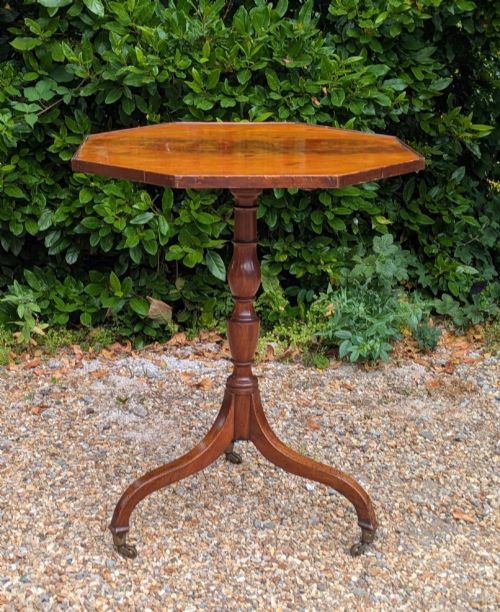
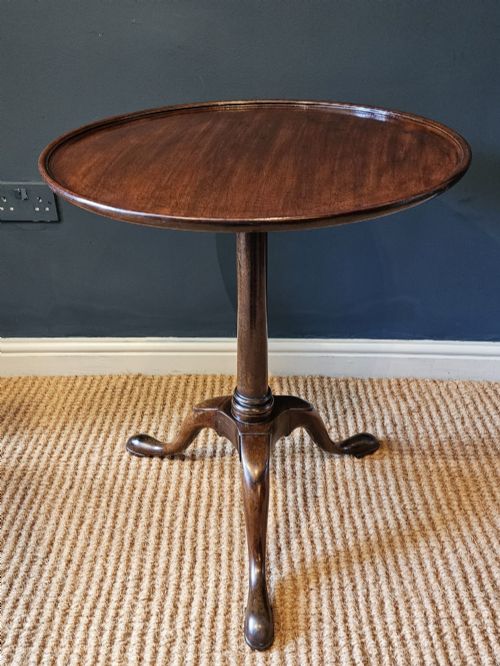
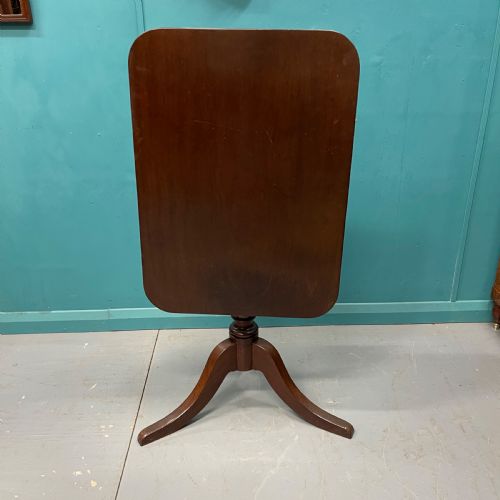
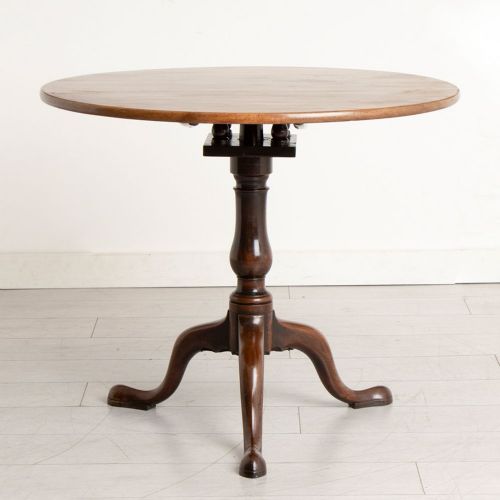
A georgian snap action table brings a clever tilting mechanism and a sturdy tripod base to domestic interiors, serving as an occasional or tea table. The form appears across the Georgian, Regency, and 18th Century periods in various circular and oval formats.
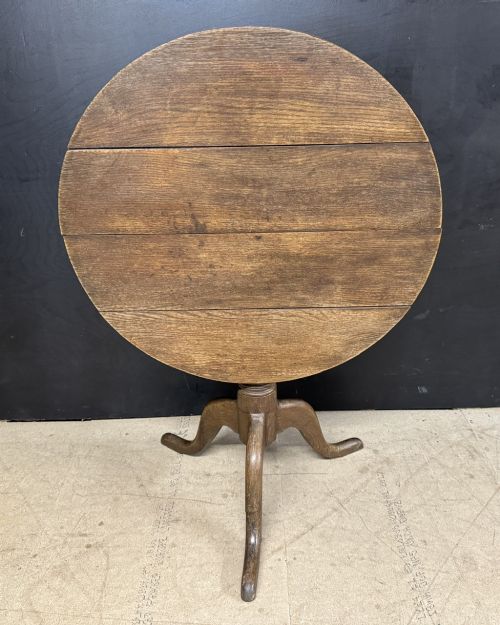
Most examples found here utilise mahogany, red walnut, oak, or satinwood, often standing upon a central pillar with three legs. The design allows the top to tip vertically when not in use, saving valuable floor space in smaller rooms.
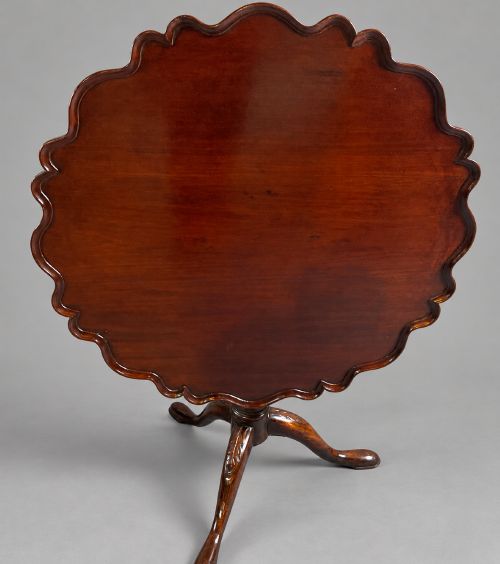
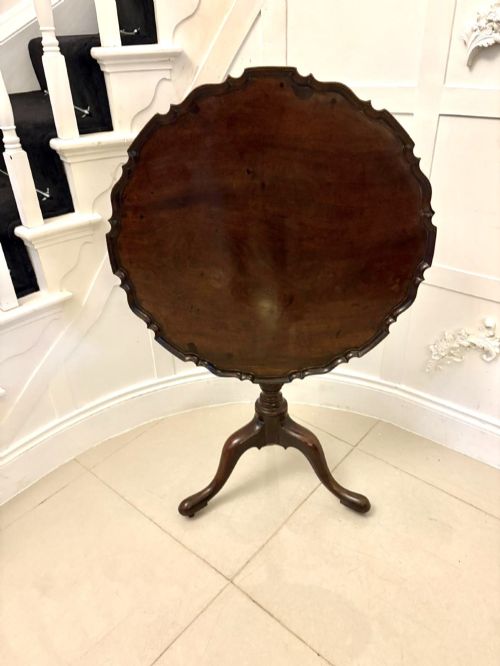
Makers produced these tables as occasional, side, dining, or breakfast tables, employing dish tops, pie crust edges, and scalloped details. The surface mechanisms frequently incorporate birdcage actions that permit both tilting and rotation.
How they were made
Cabinetmakers constructed the tops from solid timbers like mahogany, red walnut, and oak, occasionally selecting single boards of impressive width. These surfaces were frequently shaped by hand to create raised pie crust borders or dished profiles.
The pivoting mechanism relied on clever joinery and iron or brass components, connecting the tabletop to a central wooden pillar. Three legs spread outwards from the base to ensure stability during use.
Georgian Snap Action Table Retail Price Guide 2026
Typical asking prices for georgian snap action table among the pieces listed under this phrase on Sellingantiques today, from the lower quarter to the upper quarter. They describe what is for sale here now, not the wider market.
Table forms span occasional, side, dining, and breakfast tables with tilt-top and birdcage mechanisms.
What varies in quality
The choice of timber heavily influences the character of a piece, from figured mahogany to plain country oak. Grain patterns and timber selection mark the difference between formal parlour pieces and simpler provincial works.
The sophistication of the turning on the central pillar and the precision of the snap action mechanism reveal the skill of the original workshop. Details such as carved tripod legs or moulded edge tops elevate the overall execution.
The Georgian Snap Action Table Glossary
- Snap action
- A mechanical catch that locks the tilting tabletop firmly into the horizontal position. It releases to let the surface fold flat against the pedestal.
- Birdcage
- A timber framework beneath the tabletop that allows the surface to both rotate and tilt. This mechanism sits atop the central column.
- Tripod base
- A supporting structure consisting of three legs radiating from a central pillar. This design provides steady footing on uneven floors.
- Pie crust edge
- A raised, undulating border carved along the perimeter of the tabletop. It often appears on finer tea tables.
- Dish top
- A circular tabletop with a concave centre shaped from the solid wood. This feature helps prevent items from sliding off the surface.
Georgian Snap Action Table: Frequently Asked Questions
What is a snap action table?
A snap action table is a piece of furniture featuring a pivoting top that locks horizontally with a spring or latch mechanism. When released, the surface tilts vertically for compact storage against a wall.
Craftsmen built these primarily during the 18th and 19th centuries using timbers such as mahogany and oak. They served versatile functions in homes, operating as tea, breakfast, or occasional tables.
How do I use one today?
These tables fit easily into modern rooms as side tables or display surfaces for lamps and decorative objects. Their compact footprint suits corners or empty wall spaces.
Leaving the top tilted showcases the timber grain and the craftsmanship of the underframe. When flat, they offer a convenient surface for daily use.
What is a birdcage action?
A birdcage action is a rotating and tilting wooden frame located directly beneath the tabletop. It connects the surface to the central pillar and permits full 360-degree rotation.
This construction represents a more complex mechanism than a simple pivot hinge. It adds height and structural sophistication to the table.
How do I tell periods apart?
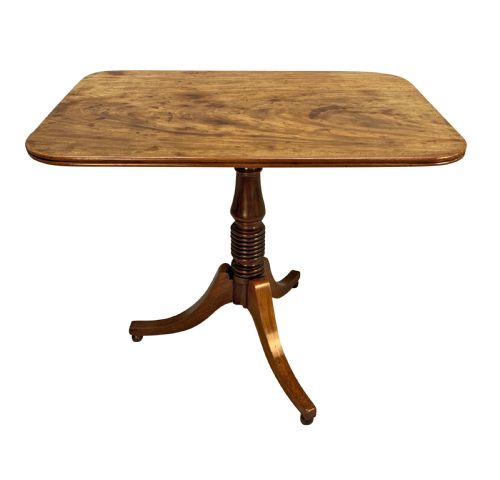
Early Georgian and mid-18th-century examples often display simpler country oak construction or refined mahogany with dish tops and birdcage frames. Later Regency and 19th-century pieces incorporate heavier pedestals and scalloped edges.
Observing the timber choices and leg profiles helps date the piece. Cabinetmaking styles shifted from early carved tripod supports toward plainer Regency interpretations.