
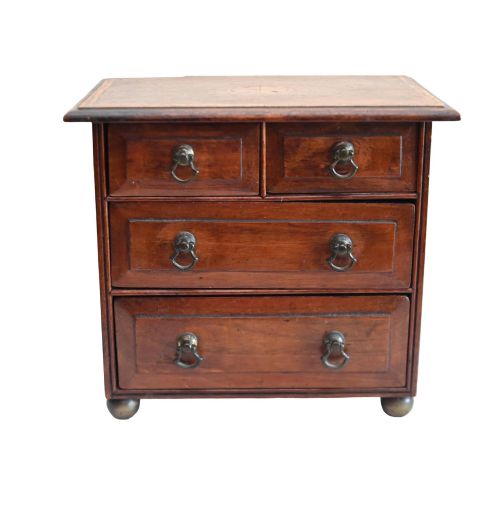
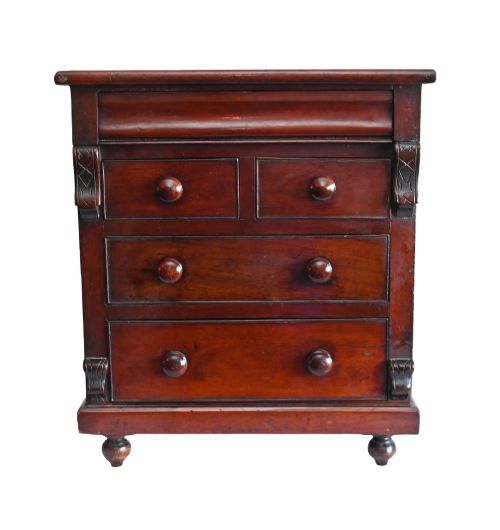
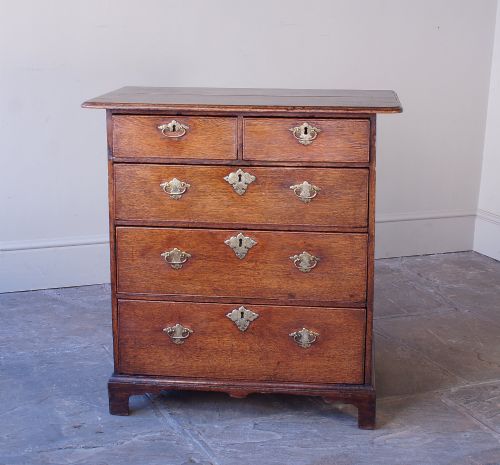
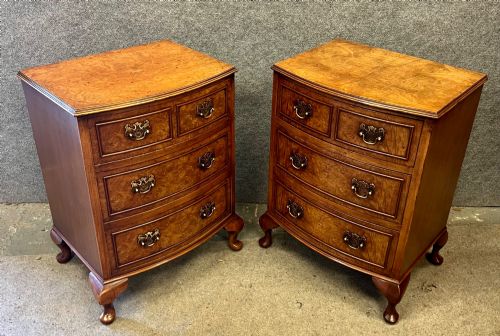
Georgian Small Furniture
Georgian small furniture comprises compact chests, desks and tables made to fit tight rooms without losing the presence of larger periods.
Georgian Small Furniture
When you search for georgian small furniture, you encounter compact versions of domestic pieces designed for rooms with limited space. These items serve practical domestic functions while maintaining formal proportions.
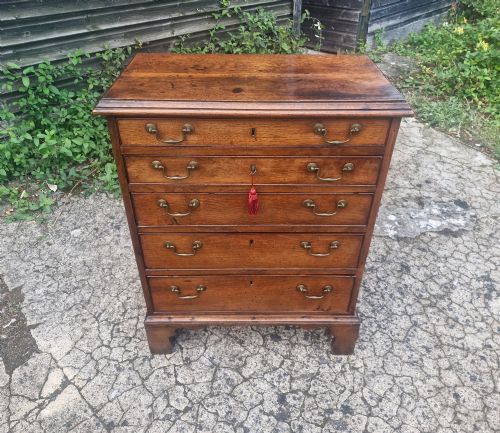
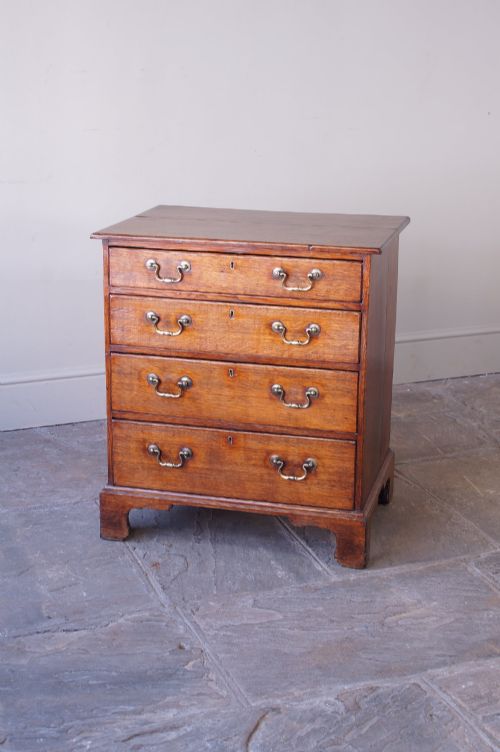
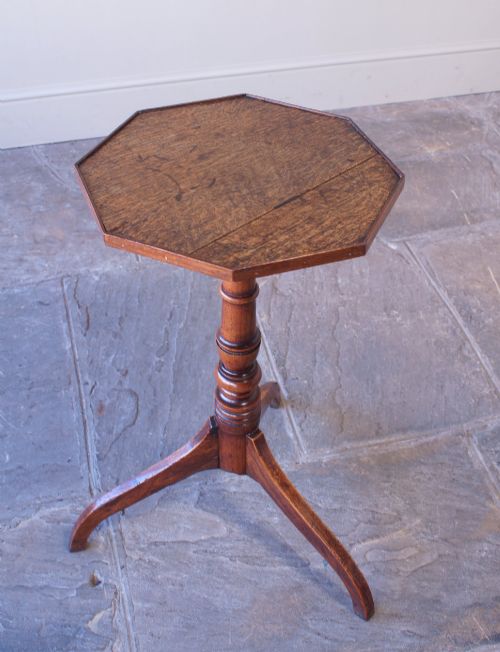
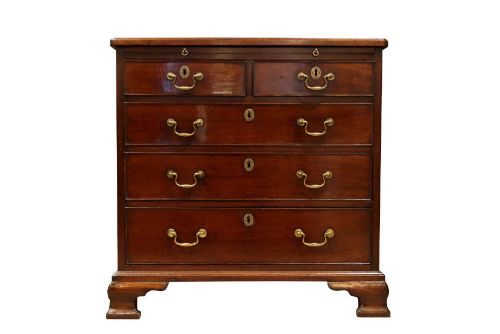
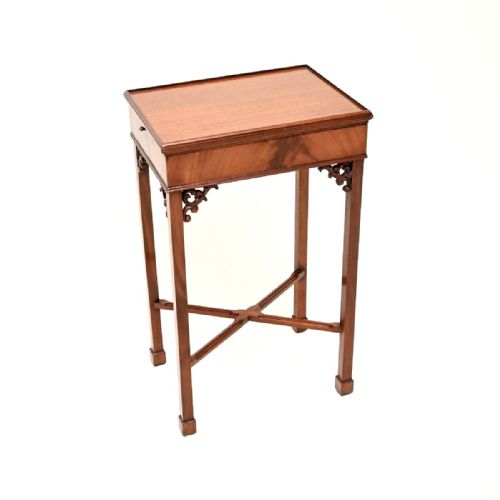
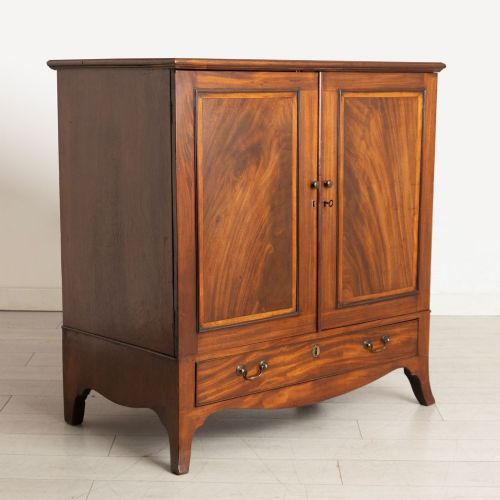
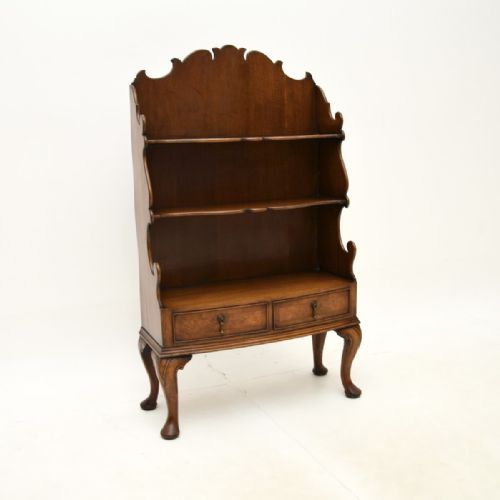
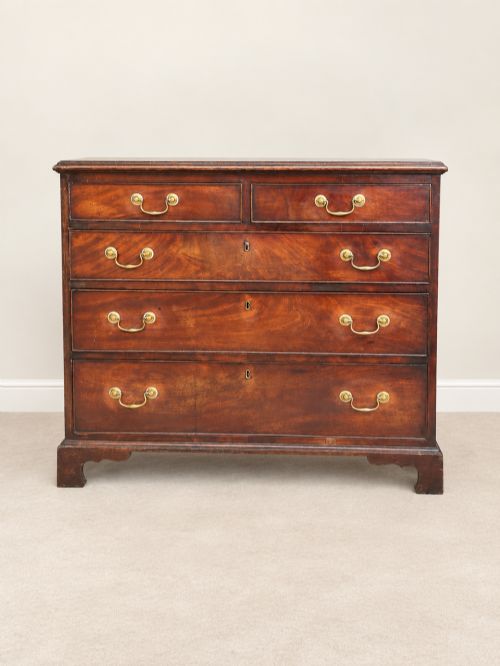
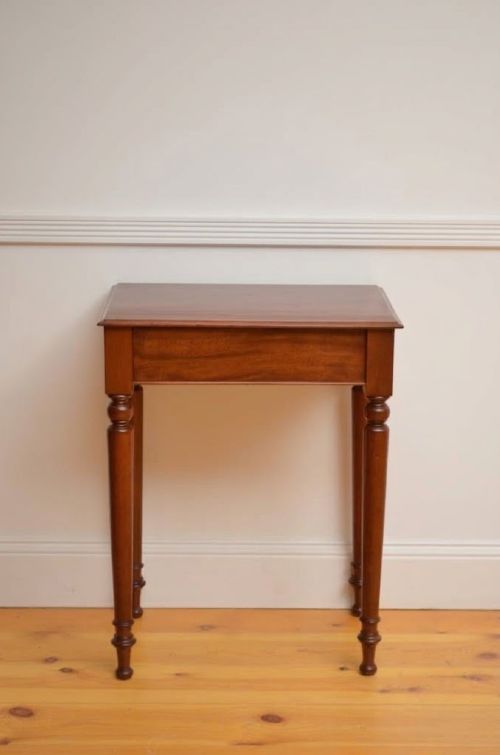
The objects on this page include mahogany chests of drawers, oak cricket tables, satinwood work tables and burr walnut lowboys. Mahogany chests and small cupboards appear most frequently among the listed pieces.
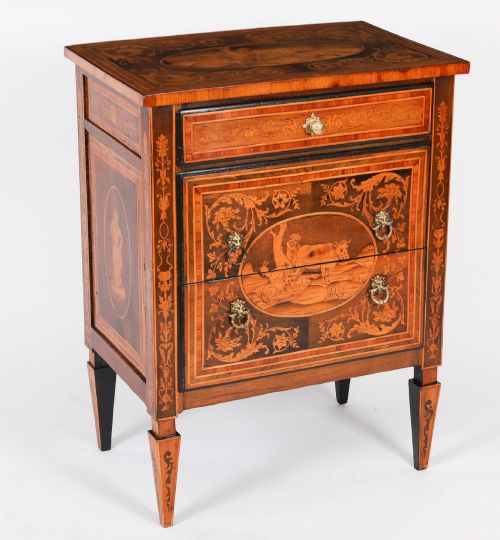
Makers shaped these items across the eighteenth and nineteenth centuries, spanning periods from Queen Anne through to Regency and Edwardian revivals. Vernacular pieces in oak sit alongside sophisticated Sheraton cabinetwork in harewood and satinwood.
Materials and construction
Cabinetmakers relied heavily on mahogany, oak and walnut, often selecting burr veneers or satinwood for decorative surfaces. Solid pine and fruitwoods served for secondary framing or vernacular items.
Joinery methods combined traditional mortise and tenon frames with hand-cut dovetails for drawer construction. Brass handles, escutcheons and hinges provided functional contrast to the dark timbers.
Apprentice pieces allowed young woodworkers to demonstrate mastery to their guild by crafting tiny mule chests and cabinets.
Standards of execution
Quality rests in the crispness of moulded edges, the selection of timber grain on drawer fronts and the integrity of internal carcase construction. Superior examples retain matching timber figures and original brass hardware.
Lower quality pieces often show clumsy timber selection or later alterations to heights and feet. The discipline of the maker dictates whether a small chest or desk holds its structural authority.
The Georgian Small Furniture Glossary
- Coffer bach
- A small Welsh chest used to store household valuables or linen. These miniature blanket chests typically feature dovetailed corners and a hinged lid.
- Crossbanding
- A border veneer applied around the perimeter of a tabletop or drawer front where the grain runs perpendicular to the central panel.
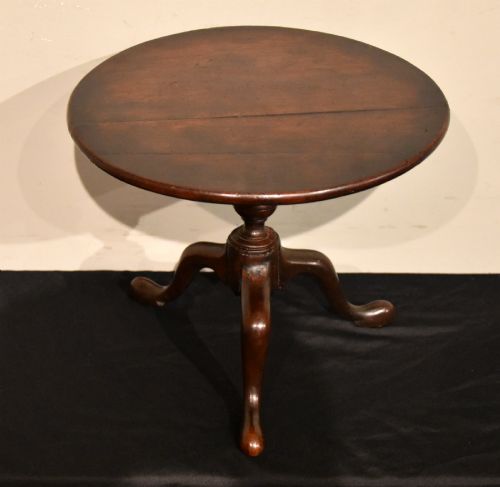
- Cricket table
- A small three-legged occasional table with a round top, common in vernacular oak. The three splayed legs provide stability on uneven floors.
- Lowboy
- A small side table or dressing table fitted with one or more rows of drawers beneath the top. They frequently stand on cabriole legs.
- Bow front
- A convex curved cabinet front that softens the corners of chests and sideboards. This shape requires skilled joinery to bend or shape the timber.
Georgian Small Furniture: Frequently Asked Questions
What is a coffer bach?
A coffer bach is a small Welsh chest made in miniature proportions during the eighteenth century. Families used them to keep family documents, silver or precious linens.
Cabinetmakers constructed these miniature chests in solid oak, often featuring a single drawer beneath the main lidded compartment. They represent a distinct regional tradition within small furniture.
How do I spot a bachelor chest?
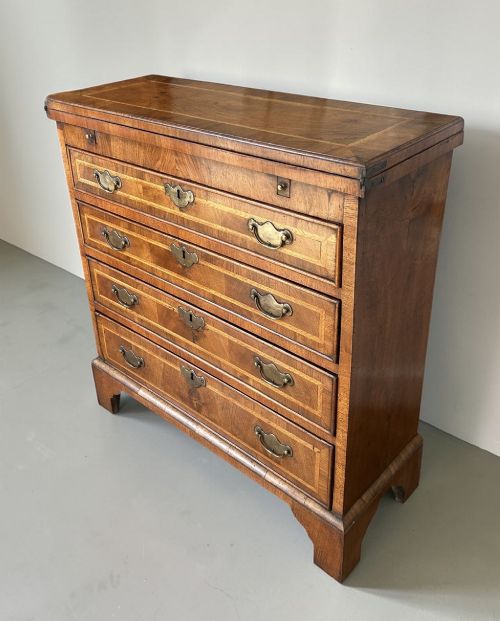
A bachelor chest is a small set of drawers featuring a pull-out brushing slide above the primary drawer bank. Gentlemen used this slide for writing or sorting correspondence without unpacking the main drawers.
These pieces date predominantly from the Georgian period and appear in figured mahogany or oak. The presence of the sliding shelf distinguishes them from standard small chests.
Are these pieces made of solid timber?
Georgian small furniture combines solid construction with decorative veneers applied to stable secondary woods. Primary surfaces like drawer fronts often display figured mahogany, burr walnut or satinwood veneers.
Internal framing, drawer linings and carcase backs frequently utilise oak, pine or fruitwoods. This technique prevented warping while presenting a polished exterior.
How do I care for antique small furniture?
Maintain these pieces in rooms with stable humidity levels, away from direct heat sources and strong sunlight. Sudden temperature shifts cause timber to split and veneers to lift from their carcases.
Apply traditional beeswax sparingly to nourish the polish and remove dust with a soft, dry cloth. Avoid modern silicone sprays which damage historic polished surfaces.