
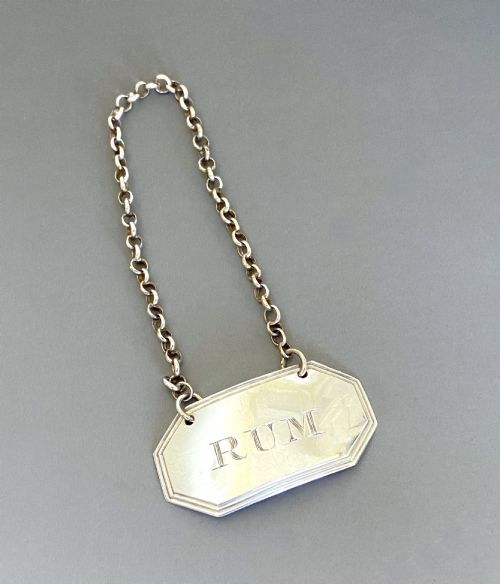


Georgian Silver Liquor Label
A Georgian silver liquor label sits upon the neck of a decanter, marking out brandy, rum, sherry or gin with bright, pierced metal.
Georgian Silver Liquor Label
When you search for a georgian silver liquor label, you are looking at small pieces of barware designed to hang from bottle necks by chains or collars. The examples on this page span the Georgian, Regency and William IV periods, alongside specific dates from the eighteenth and nineteenth centuries.
You are most likely to meet individual decanter labels and sets of three, stamped for specific contents like rum, madeira, sherry and gin. Scottish and English provincial origins appear alongside London work, showing the wide reach of silversmiths working in solid silver and sterling silver during these eras.
These items served a practical purpose on the dining table or sideboard, preventing confusion between decanters of dark and clear spirits. Their shapes range from simple scrolls and rectangles to ornate rococo revival designs with pierced borders.
How they were made
Silversmiths made these labels from solid sterling silver, often shaping the metal by hand-cutting, piercing and stamping. The lettering was typically pierced through the plate or engraved deeply into the surface to stand out against the background.
Makers added decorative borders using techniques such as embossing and chasing, creating motifs of vines, leaves and scrolls. Suspension came from matching silver link chains or rigid collars designed to slip easily over the bottleneck.
One miniature rum label on this page bears the cheerful designation 'One Go', leaving no doubt as to the intended serving size.
What varies in quality
The distinction between ordinary and exceptional work lies in the crispness of the piercing and the depth of the engraving. Sharp, clean lettering and well-defined floral or scroll borders show superior handwork by skilled silversmiths.
Completeness also drives the hierarchy, as labels retaining their original suspension chains and clear hallmarks command greater interest. Sets that match in style and maker hold a different appeal compared to assembled groups gathered over time.
Elizabeth Morley
The Georgian Silver Liquor Label Glossary
- Decanter label
- A small tag hung around the neck of a bottle or decanter to identify the beverage inside. These items are also historically known as bottle tickets or wine labels.
- Pierced work
- A technique where metal is cut through to create openwork patterns, letters or decorative borders. This method lightens the object and highlights the text against the dark glass of a bottle.
- Sterling silver
- An alloy of silver containing 92.5 percent pure silver and 7.5 percent other metals, usually copper. This standard alloy provides the durability needed for items handled frequently.
- Hallmark
- A series of official marks stamped on precious metals to show the standard of purity, the assay office, the maker and the year of production. These marks offer a reliable guide to the age and origin of the piece.
- Rococo Revival
- A nineteenth-century design style drawing on the asymmetrical scrolls, shell motifs and naturalistic curves of the eighteenth-century rococo movement. This style appears frequently on later Georgian and William IV barware.
Georgian Silver Liquor Label: Frequently Asked Questions
What is a georgian silver liquor label?
A georgian silver liquor label is a small piece of antique barware designed to hang around the neck of a decanter. It identifies the spirit within, such as rum, sherry, gin or madeira.
These items were essential dining table accessories in the eighteenth and nineteenth centuries. They allowed hosts and guests to distinguish between similar-looking decanters of wine and spirits.
How were they attached to bottles?
These labels were typically hung from the neck of a decanter using a fine silver link chain. Some examples utilised a rigid metal collar or band that slipped over the bottleneck.
Finding a piece that retains its original matching chain adds significantly to its historical integrity. Replacements are common due to the delicate nature of the original chains.
How do I read the hallmarks?
Hallmarks on these pieces usually include a standard mark like the lion passant for sterling silver, a city mark for the assay office and a date letter. A maker's mark identifies the silversmith or workshop responsible for the piece.
Consulting standard silver reference books helps translate the date letters and maker's initials. These stamps provide the most reliable evidence for dating an item accurately.
Were they sold in sets?
Makers and retailers offered both individual labels and matched sets of three or more for different decanters. Sets often shared a unified design, such as vine leaves or rococo borders.
Assembled sets gathered by collectors over time are also common in the marketplace. Matched sets made by the same silversmith remain particularly desirable.