



Georgian Silk Textile
When you handle a georgian silk textile, you hold centuries of delicate handwork in silk, wool and gold leaf.
Georgian Silk Textile
A georgian silk textile brings together needlework pictures, maps, samplers and wall panels spanning the eighteenth and nineteenth centuries. The pieces on this page include framed embroidery, needlework samplers and woven panels from the Georgian, Regency and Victorian periods.
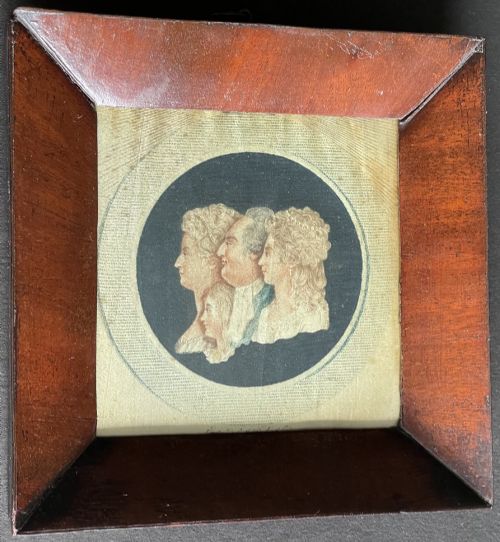
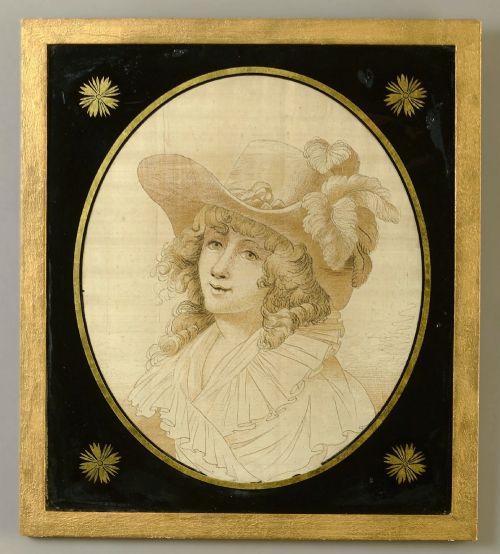
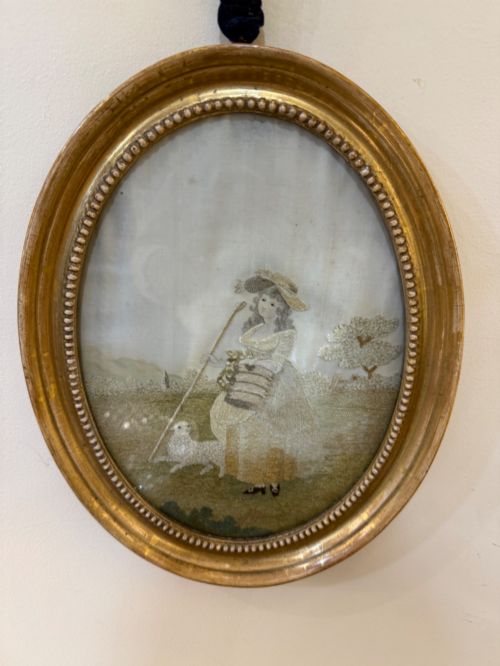
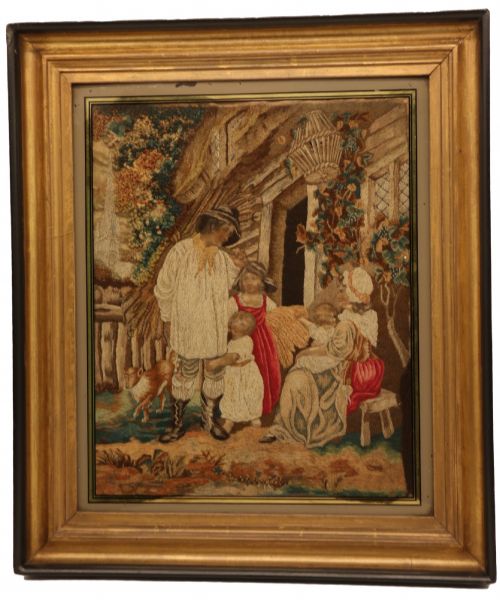
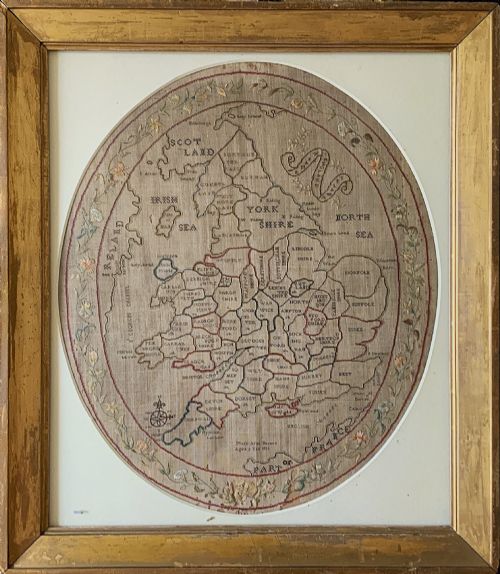
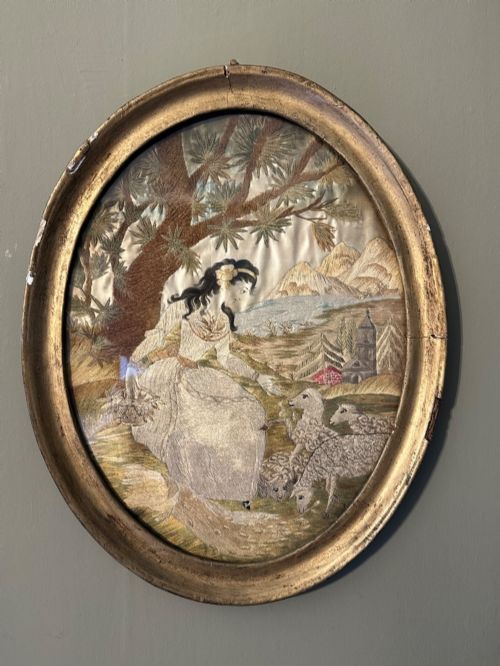
Makers recorded in the evidence range from young girls stitching maps of England and Wales to skilled hands creating pastoral farming scenes, portraits and theatrical silkwork pictures. Wall hangings and bell pulls sit alongside detailed needlepoint and print on silk.
How they were made
Materials recorded in the listings combine silk, silk thread, wool and linen, often mounted in wood, giltwood or glass frames with verre églomisé borders. Certain panels incorporate gold leaf and glass alongside hand-painted silk elements.
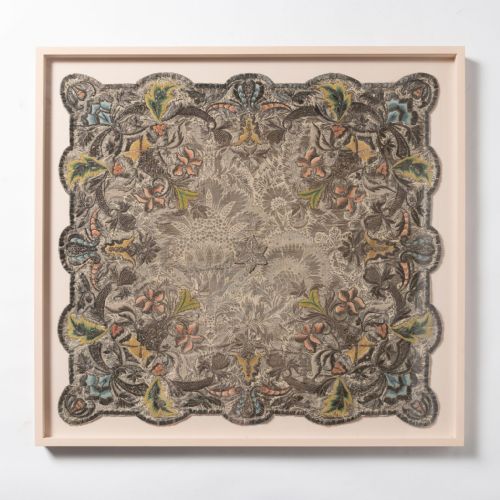
Techniques range from crewel work embroidery and needlework pictures to woven Bizarre silk lampas and ciselé silk velvet hangings. Individual makers used coloured threads and beads to build pictorial depth on fabric grounds.
Georgian Silk Textile Retail Price Guide 2026
Typical asking prices for georgian silk textile among the pieces listed under this phrase on Sellingantiques today, from the lower quarter to the upper quarter. They describe what is for sale here now, not the wider market.
Materials documented across the pieces include silk, linen, wool, glass, giltwood, gold leaf, and silk floss.
What varies in quality
Quality rests on the fineness of the needlework and the preservation of the delicate silk threads and hand-painted details. Tightly worked samplers with clear lettering and balanced pictorial composition stand apart from simpler work.
The choice of framing, such as original verre églomisé glass or carved giltwood, influences the character of each textile panel. Intricate woven structures like lampas and ciselé velvet show high technical skill in the loom work.
Mary Banion·Mary Greening·Louiss Elkins·Elizabeth Horn·Sarah Baker·Mary Mason·Martha Hall·Mary Street·Rachel
The Georgian Silk Textile Glossary
- Sampler
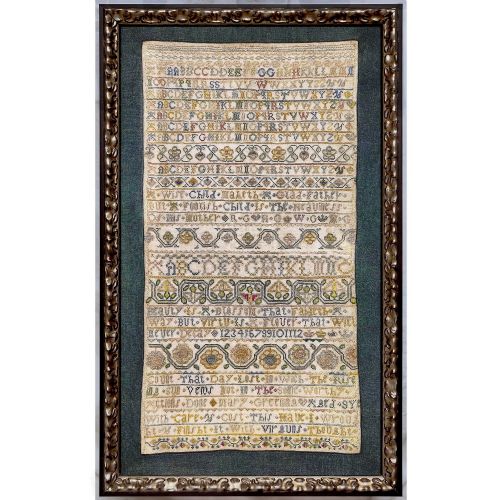
- A piece of needlework produced as a demonstration or test of skill in various stitches, often featuring alphabets, numbers, and names.
- Verre églomisé
- A process of applying design and gilding to the rear face of glass to create a decorative frame border.
- Lampas
- A type of figured textile where the pattern is formed by supplementary weft threads on a ground weave.
- Ciselé velvet
- A velvet fabric where cut and uncut loops create a patterned effect against the background.
- Bell pull
- A long, narrow embroidered strip hung on a wall and attached to a cord for summoning household staff.
Georgian Silk Textile: Frequently Asked Questions
How do I care for antique silk textiles?
Keep framed textile art and samplers away from direct sunlight to prevent silk threads from fading and becoming brittle over time. Maintain stable indoor humidity levels to protect the underlying linen or wool fabric.
Avoid hanging pieces in damp rooms or areas prone to strong temperature fluctuations. Professional conservation mounting helps support fragile fabrics without putting stress on the historic stitches.
What subjects appear on these textiles?
Common subjects include educational map samplers of England and Wales, pastoral farming scenes, portraits, and literary or biblical stories. Commemorative pieces and theatrical silkwork pictures also feature frequently.
Many samplers record the name and age of the young maker alongside dates and alphabets. Floral motifs, birds, and garden views appear across both needlework pictures and woven panels.
Are these pieces framed originally?
Some textiles retain period wooden or giltwood frames, occasionally featuring verre églomisé glass decoration around the edge. Many pieces have been reframed at later dates to ensure proper preservation behind protective glass.
When evaluating a framed textile, look at how the fabric is secured against the glass. Correct mounting prevents the delicate silk embroidery from pressing directly against the surface.
How do I distinguish eighteenth and nineteenth century pieces?
Eighteenth-century examples often include detailed pastoral scenes, woven lampas lengths, and band samplers with complex needlework. Colour palettes and stitching styles shift as the Regency period introduces new pictorial formats.
Nineteenth-century pieces frequently comprise signed samplers, map work by schoolgirls, and beaded bell pulls. Examining the specific materials, framing techniques, and inscribed dates helps narrow down the period of origin.