


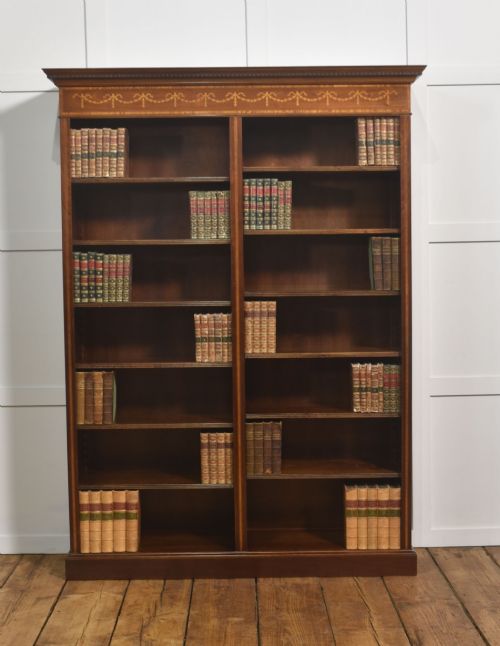
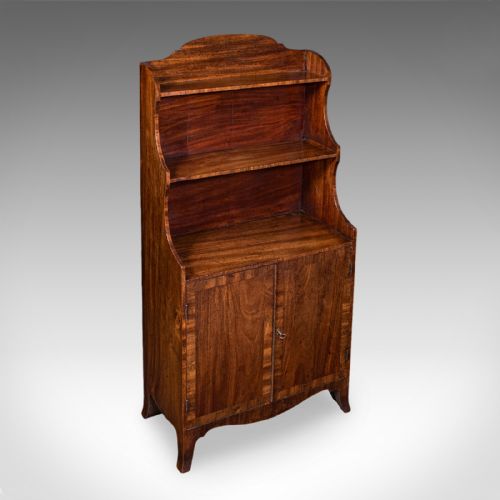
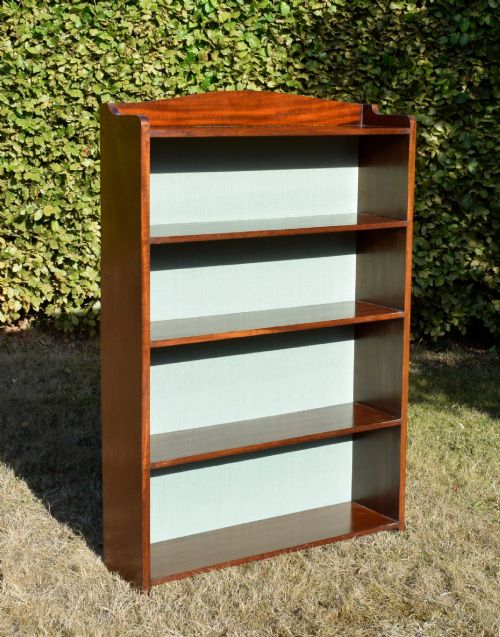
Georgian Shelving Unit
A georgian shelving unit brings timeless utility to a room, offering handsome timber construction configured for books, display and daily service.
Georgian Shelving Unit
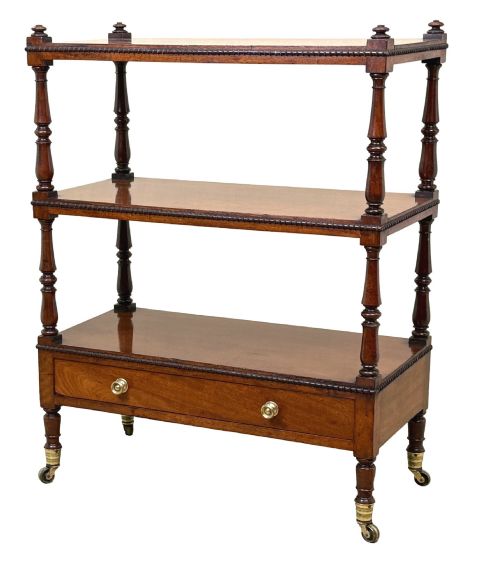
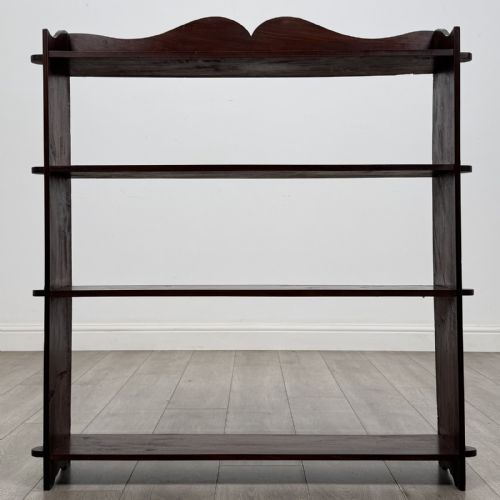
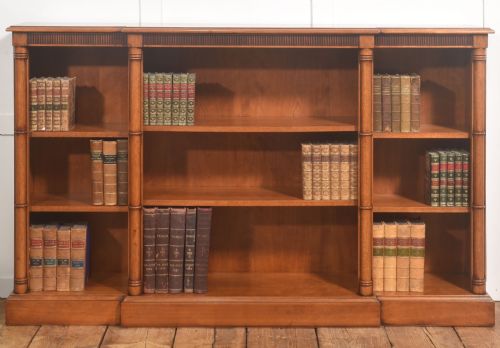
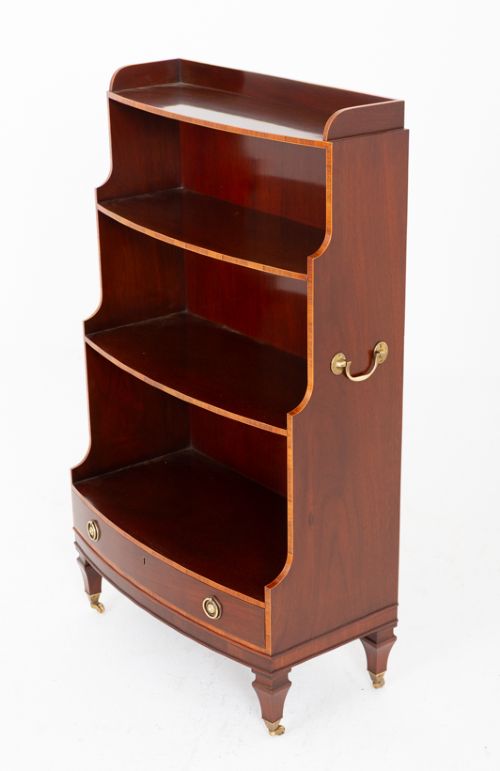
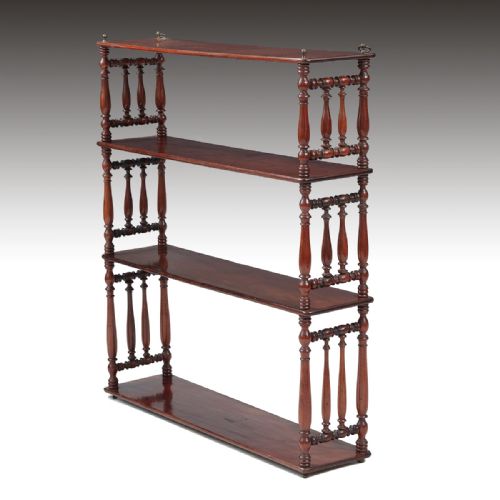
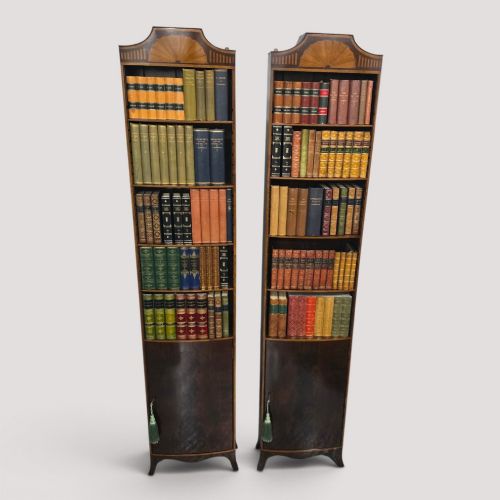
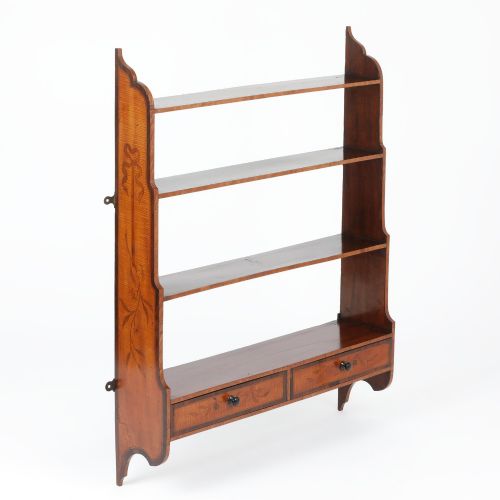
A georgian shelving unit encompasses a variety of timber storage forms, from open bookcases and dwarf bookcases to multi-tiered whatnots, hanging shelves and corner cabinets. The selection spans the eighteenth century through the regency era, alongside later revival pieces that emulate those earlier proportions.
Mahogany dominates the offerings, supplemented by walnut, satinwood, oak, rosewood and occasional painted finishes. Buyers encounter freestanding tall bookcases, compact dwarf models and corner units designed to utilise neglected angles of a room.
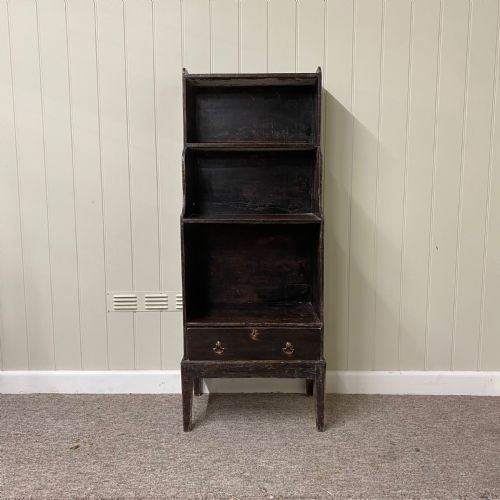
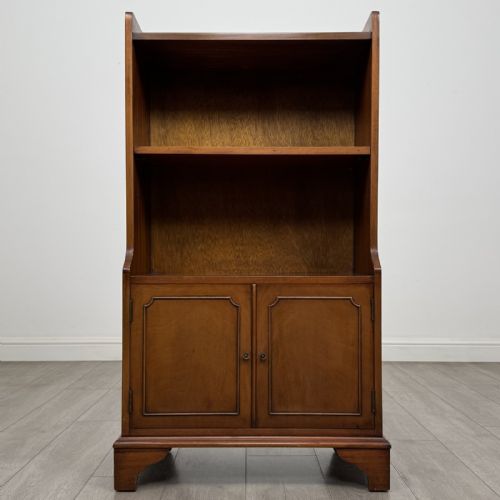
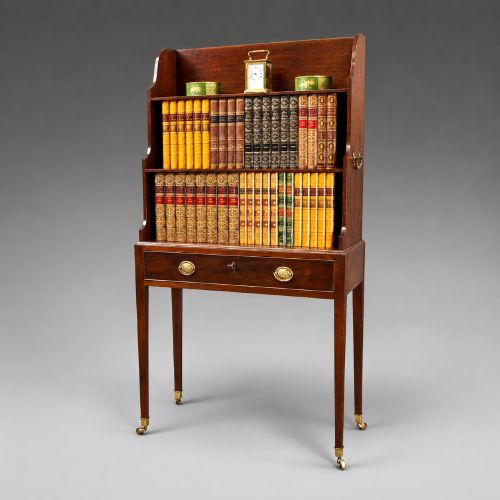
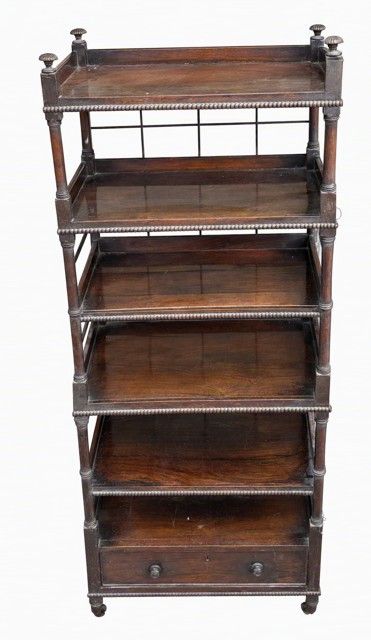
The term also covers etageres and waterfall bookcases, providing tiered display space for books and decorative objects. Pieces originate from both the original Georgian and Regency periods and subsequent revival decades.
How they were made
Cabinetmakers utilised solid and veneered timbers, selecting mahogany, walnut and satinwood for their grain and structural stability. Joinery relied on traditional methods such as dovetailed boards and pegged joints to construct robust frames.
Decoration often included brass inlays, delicate stringing, crossbanding and painted details. Shelves were frequently made adjustable using wooden ratchets or brass strip supports, allowing customisation of interior heights.
Georgian Shelving Unit Retail Price Guide 2026
Typical asking prices for georgian shelving unit among the pieces listed under this phrase on Sellingantiques today, from the lower quarter to the upper quarter. They describe what is for sale here now, not the wider market.
The listings span the eighteenth century to the 1930s, featuring mahogany, walnut, satinwood, oak and rosewood across open bookcases, whatnots and corner cabinets.
What varies in quality
The caliber of a georgian shelving unit rests upon timber selection and the crispness of its mouldings. Superior examples exhibit carefully matched grain patterns, fine inlay work and well-proportioned cornices that balance the visual weight of the piece.
Construction integrity distinguishes workshop output, seen in the thickness of backboards, the neatness of dovetailing and the retention of original brass fittings. Pieces retaining their structural rigidity and honest surfaces command greater appreciation among collectors.
Gillows·Waring And Gillows
The Georgian Shelving Unit Glossary
- Waterfall bookcase
- A tiered shelving unit featuring stepped open shelves that diminish in depth toward the top. This form became popular during the Regency period for displaying small volumes.
- Whatnot
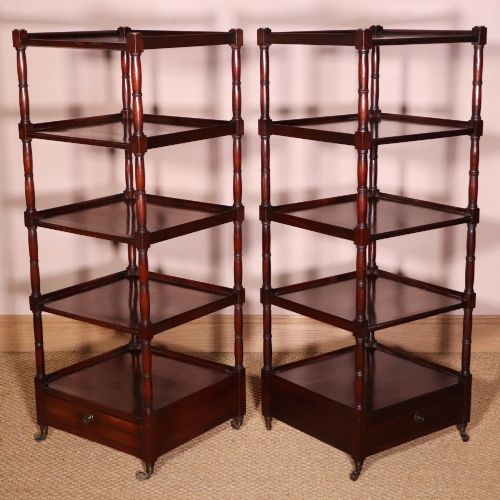
- A piece of freestanding furniture consisting of several open shelves above one another, used for displaying ornaments or books. Examples from the early nineteenth century often incorporate small drawers or turned supports.
- Breakfront
- A cabinet or bookcase whose central section projects forward from the flanking wings. This architectural arrangement creates depth and visual interest in larger library pieces.
- Dwarf bookcase
- A low open bookcase designed to sit beneath dado height. These items offer accessible shelving without dominating the wall space of a room.
- Etagere
- A set of open shelves for displaying ornaments, similar to a whatnot. The term derives from French and frequently appears alongside English tiered furniture forms.
Georgian Shelving Unit: Frequently Asked Questions
What is a waterfall bookcase?
A waterfall bookcase is a tiered shelving unit where each shelf steps back progressively from the one below it. This design creates a distinctive cascade silhouette that gained popularity during the Regency period.
Such pieces were typically constructed from mahogany or satinwood to hold books and small decorative objects. Their compact footprints made them versatile additions to period drawing rooms and libraries.
How do I use a whatnot?
A whatnot serves as a multi-tiered open display stand for books, ceramics and small ornaments. They work well in corners or against blank walls where a heavy cabinet would feel too imposing.
Because the shelves are open on all sides, these pieces function best for items intended for regular viewing rather than enclosed storage. Their slender uprights provide sturdy support without blocking light.
Are these shelves adjustable?
Many open bookcases and shelving units feature adjustable shelves supported by wooden pegs, ratchets or brass strips. This adaptability allowed owners to accommodate volumes of varying heights.
When inspecting a piece, check the interior uprights for the original adjustment mechanism. Fixed shelves are also common, particularly in smaller whatnots and hanging wall racks.
How do I tell Regency from revival?
Regency pieces date from the early nineteenth century and exhibit period-specific timber patination, hand-cut joinery and authentic brass hardware. Revival pieces from later decades often display machine-tooled elements and cleaner, less weathered timber surfaces.
Examining the secondary woods used for drawer linings and backboards helps clarify the manufacturing date. Comparing the construction techniques against known eighteenth and nineteenth-century practices confirms the age of the piece.