


Georgian Sheet Music Stand
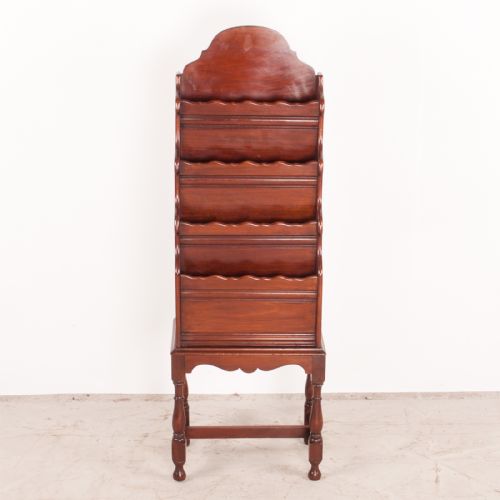
A georgian sheet music stand provides a dedicated place for scores and folios, combining upright divisions with stable timber frames for daily use.
Georgian Sheet Music Stand
Buyers seeking a georgian sheet music stand encounter forms ranging from freestanding music desks to tiered canterburys designed to hold scores and papers. The selection on this page centres on pieces from the Georgian, Regency, George III, and George IV periods alongside later revivals.
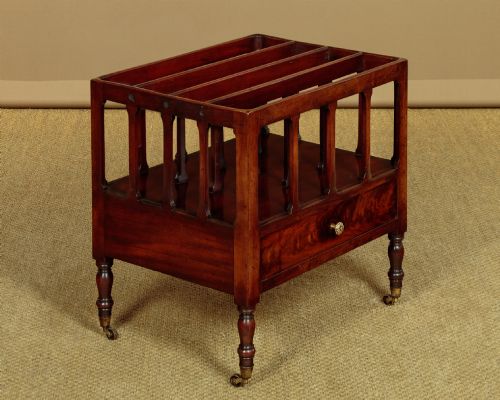
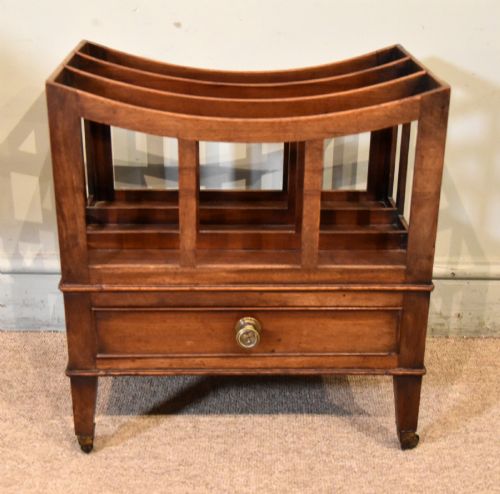
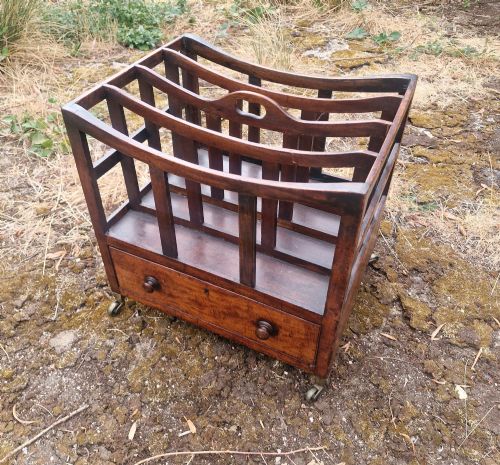
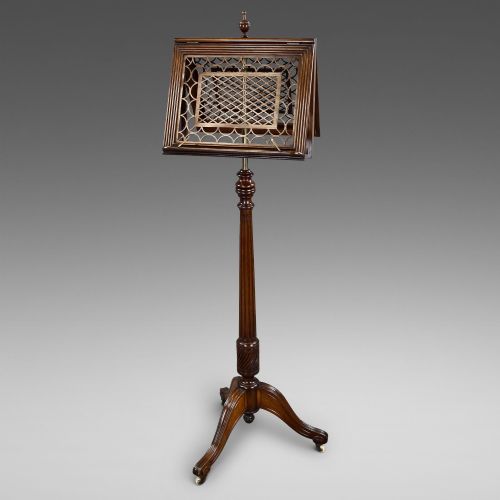
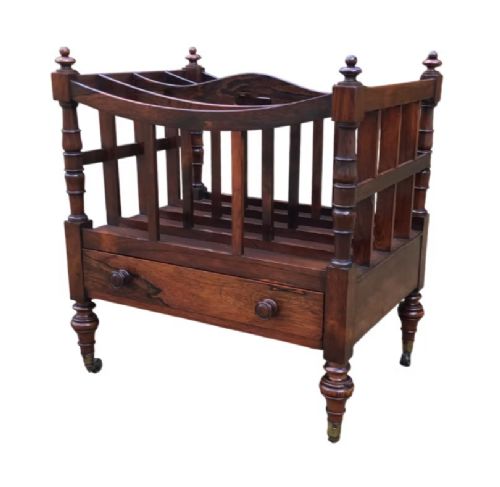
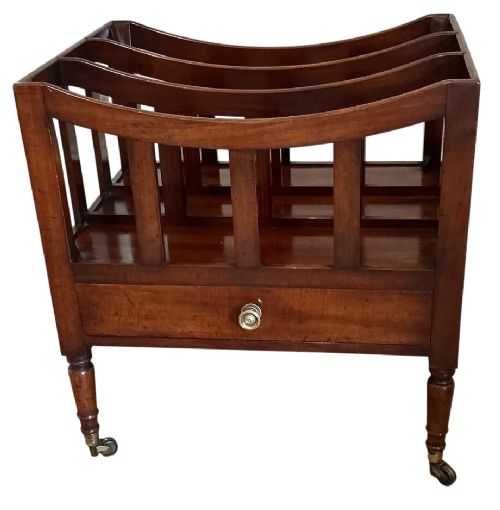
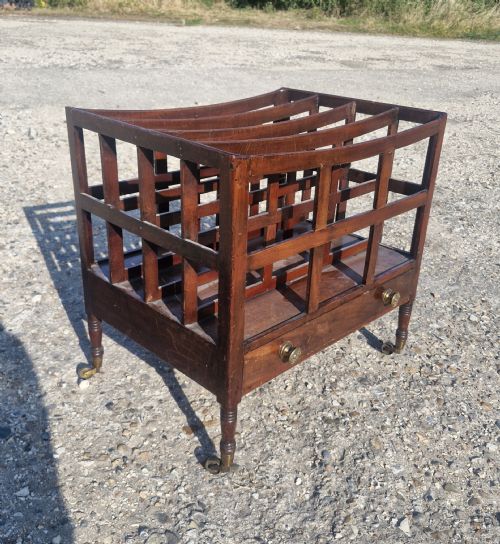
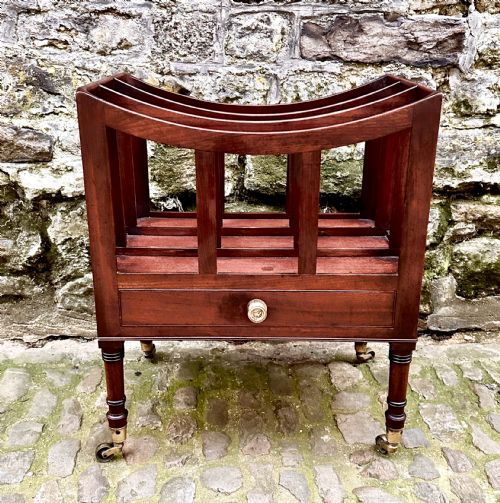
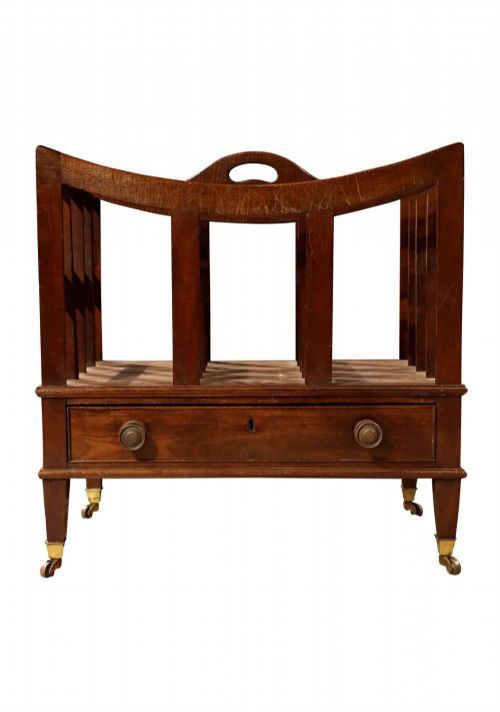
Canterburys emerge as the most frequent form in this selection, constructed with partitioned divisions above a single drawer and supported on castors. Music stands and duet stands provide adjustable reading surfaces for musicians working from folios and manuscripts.
Cabinet and rack variations also appear within these listings, utilising mahogany, rosewood, and Cuban mahogany timbers. Pieces span the early nineteenth century through to Edwardian and later interpretations.
Distinctions in quality
Quality rests upon the selection of timber figures, the crispness of turned members, and the integrity of the joinery within the slatted divisions. Finer examples display carefully matched mahogany grains and well-proportioned drawer structures that operate smoothly.
The sophistication of decorative elements, such as carved details or inlaid timber stringing, separates standard utilitarian pieces from more ambitious commissions.
Some stands feature carved Prince of Wales feathers, offering a jaunty nod to royal patronage while holding your evening reading.
The Georgian Sheet Music Stand Glossary
- Canterbury
- A low stand with partitioned sections designed for holding sheet music, folios, and periodicals. It frequently includes a small drawer beneath the divisions.
- Duet stand
- An adjustable music stand featuring a wider reading desk designed to accommodate two musicians sharing a single score. These pieces often incorporate mechanical ratchets for height and angle adjustment.
- Cuban mahogany
- A dense, dark timber imported from the Caribbean, prized by cabinet makers for its rich grain and capacity to take a sharp carved edge.
- Satinwood
- A light, hard timber utilised for contrasting inlay work and banding on darker cabinet woods.
- Castor
- A small wheel fitted to the base of legs to allow the stand to be moved easily across a room.
Georgian Sheet Music Stand: Frequently Asked Questions
What is a Canterbury used for?
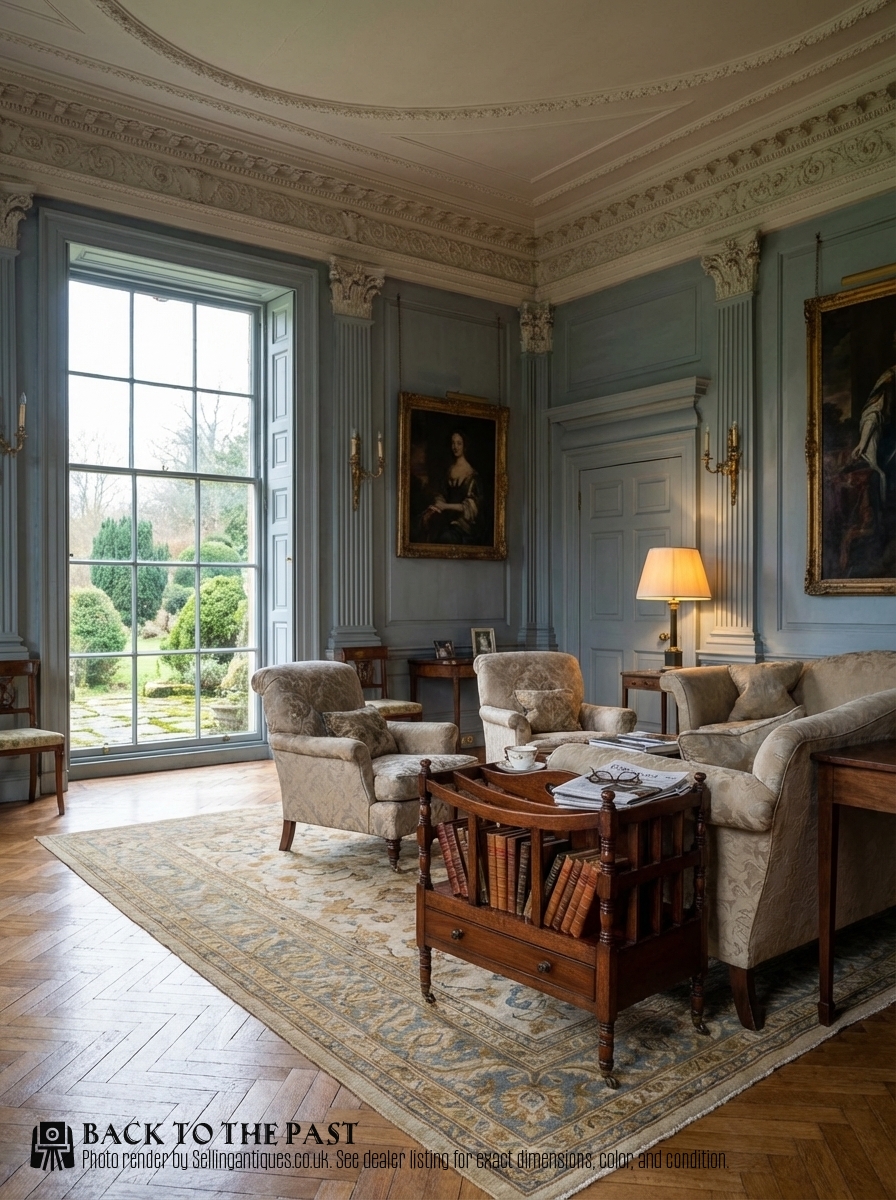
A Canterbury was originally built to hold sheet music, scores, and literary periodicals near a piano or seating area. The vertical slats kept folios upright and separated for easy selection.
Over time, owners also utilised these stands for newspapers and letters, making them versatile storage furniture in period drawing rooms.
How do I adjust a music stand?
Adjustable stands typically use a sliding wooden stem secured by a brass thumbscrew or a ratcheted mechanism behind the desk. Loosening the screw allows the reading surface to rise or tilt to the desired angle.
Care should be taken when adjusting older brass and timber fittings to prevent binding or stripping the thread.
What timber was used?
Mahogany and rosewood dominate these pieces, with Cuban mahogany appearing on substantial examples for its deep colour and heavy grain. Satinwood inlay and ebony stringing provided decorative contrast.
Secondary timbers like pine or oak were occasionally used for internal drawer linings and hidden framework.
How do I date these pieces?
Dating relies on stylistic markers such as Regency curve lines, George III proportions, and the specific turning of the legs. The presence of hand-cut dovetails and patination on the timber aids identification.
Later Victorian and Edwardian pieces often repeat these Georgian forms while displaying subtle differences in timber finish and mechanical hardware.