


Georgian Settle
A georgian settle is a high-backed wooden bench built to block drafts in old rooms, prized for deep timber character and utilitarian form.
Georgian Settle
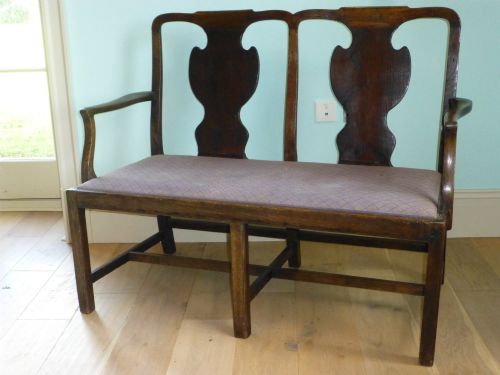
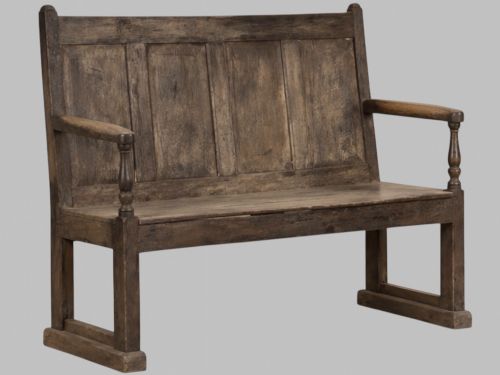
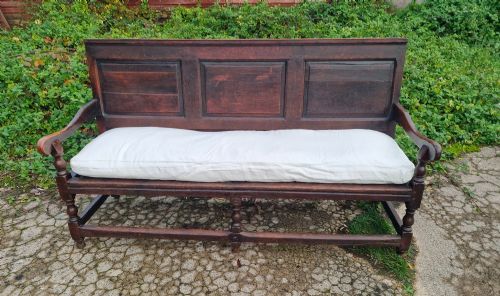
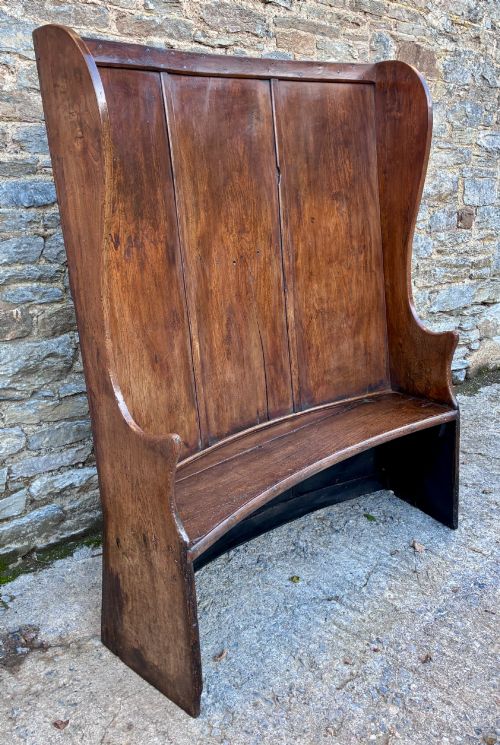
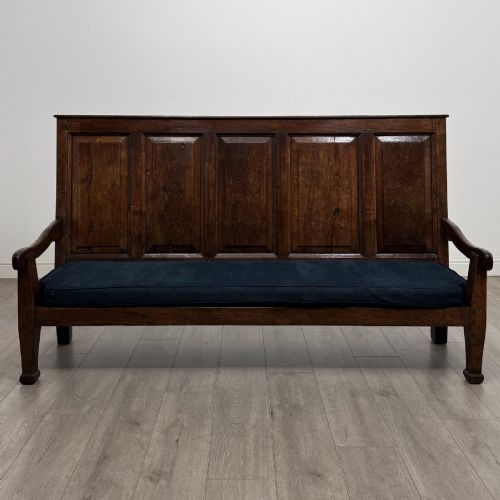
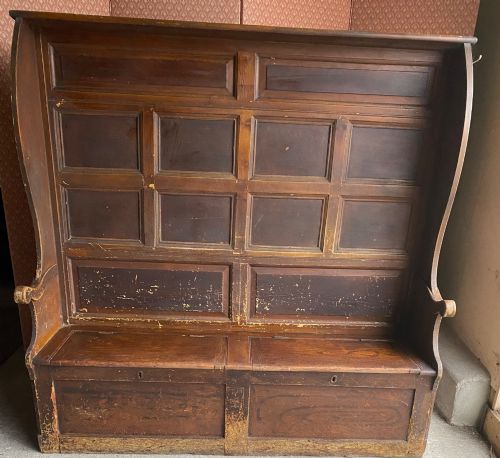
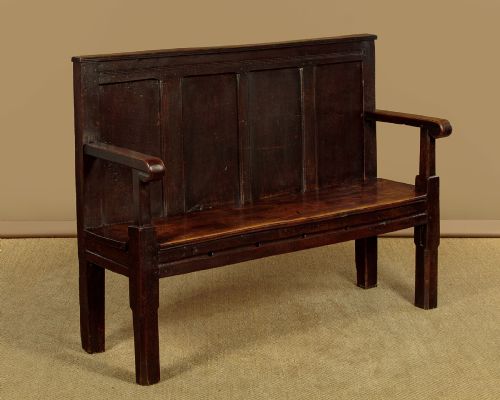
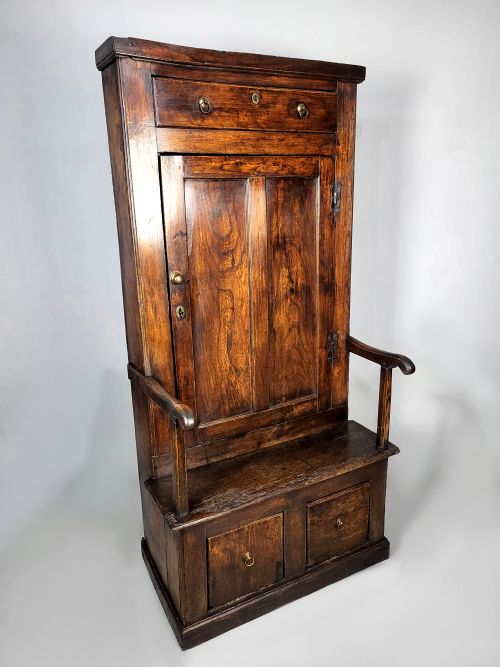
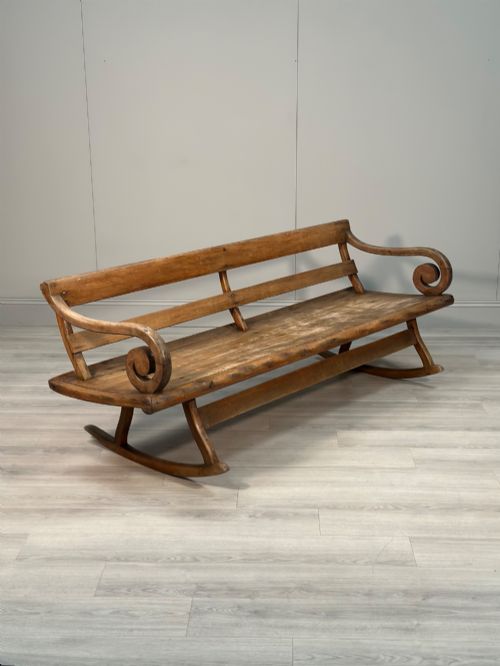
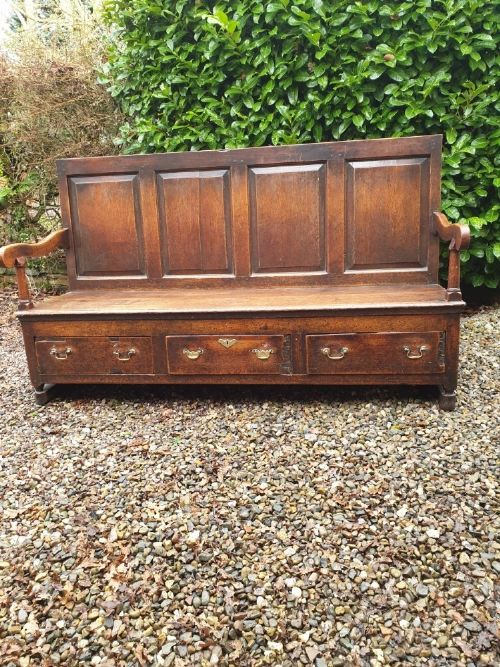
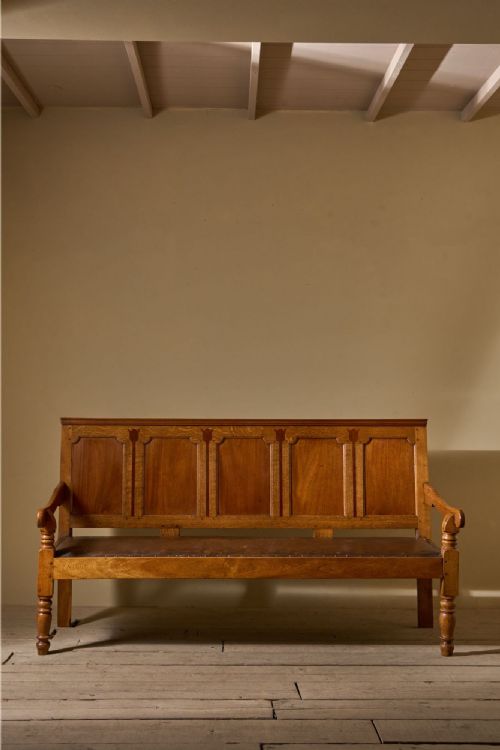
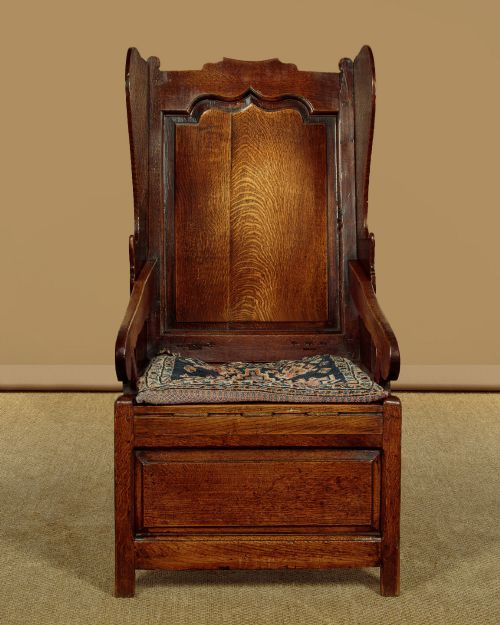
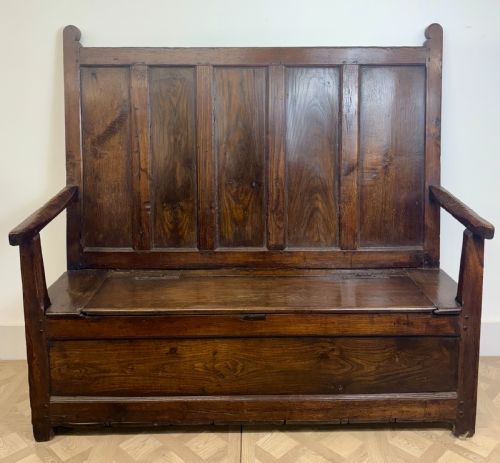
A georgian settle is a substantial domestic seat designed to protect occupants from cold draughts in domestic interiors and taverns. These pieces appear principally in oak and pine, taking forms such as panel-backed benches, box settles with storage beneath the seat, and winged barrel versions.
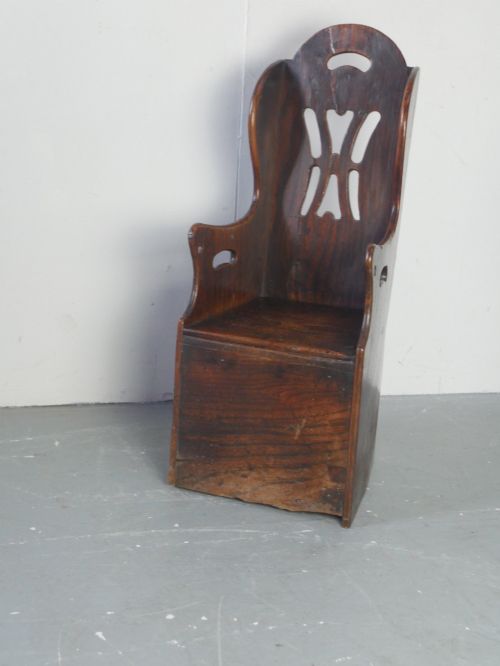
The selections available range from sturdy English country oak examples to vernacular pine pieces originating from Wales and Hungary. Buyers encounter straight-backed benches, carved hall settles, and specialised seating such as lambing chairs alongside smaller child-sized variants.
Materials and Construction
Cabinet makers utilised native timbers including oak, elm, ash, and pine, often assembling panels with traditional pegged joinery. Many examples retain board seats, exposed framing, and structural iron or brass fixings.
Surfaces exhibit varying finishes from waxed patinas to original painted schemes in black, blue, and various tones of honey brown. Certain forms incorporate integrated storage boxes beneath the seat or hinged tabletops.
Georgian Settle Retail Price Guide 2026
Typical asking prices for georgian settle among the pieces listed under this phrase on Sellingantiques today, from the lower quarter to the upper quarter. They describe what is for sale here now, not the wider market.
Several settles double as tables, proving that 18th-century cabinet makers possessed an enduring love for practical multifunctionality.
Assessing Quality and Authenticity
Quality rests in the integrity of the timber, the depth of the natural patina, and the retention of original structural elements like board seats and high panel backs. Pieces displaying untouched surfaces, regional vernacular character, and honest signs of age command greater interest.
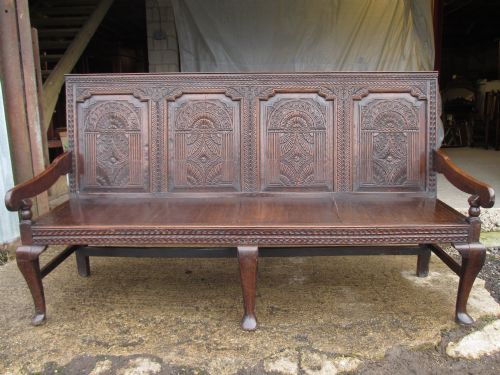
The sophistication of the joinery and the presence of decorative elements, such as carved panels or tulip motifs, distinguish standard utilitarian seating from finer regional examples.
The Georgian Settle Glossary
- Box settle
- A wooden bench featuring an enclosed storage compartment beneath the hinged seat. This design kept contents protected from damp floors.
- Panel-back
- A backrest constructed from wooden panels fitted within a framed structure. This method provided rigidity and strength to large seating units.
- Lambing chair
- An enclosed high-backed armchair, frequently fitted with solid wooden wings and a concealed storage drawer. These seats were traditionally positioned near hearths.
- Barrel settle
- A curved high-backed bench designed to envelop the sitter and block lateral draughts. These forms frequently appear in tavern settings.
- Vernacular furniture
- Domestic pieces built by regional tradesmen using local materials and traditional methods rather than adhering to formal urban styles.
Georgian Settle: Frequently Asked Questions
What is a georgian settle used for?
A georgian settle served as primary seating in domestic kitchens, farmhouses, and public taverns. The high back and solid sides deflected cold draughts from stone floors before central heating existed.
Many variants included integrated storage boxes beneath the seat for household goods, blankets, or firewood. Some vernacular examples doubled as temporary tables or rested near hearths.
How do I identify a period settle?
Period pieces display traditional joinery methods such as pegged mortise and tenon frames, hand-planed boards, and natural timber shrinkage. Examination of the underside and interior reveals historical tool marks and construction consistency.
Surface finishes on older examples typically show deep waxed patinas or authentic historical paint layers rather than modern commercial varnishes.
Where should I place a settle at home?
Settles suit hallways, large kitchens, and living spaces where their high backs function as natural room dividers. Their substantial profiles anchor empty wall spaces effectively.
Ensure adequate floor space to accommodate the high back and deep footprint without overcrowding smaller architectural layouts.
What woods were used for these benches?
Cabinet makers and regional joiners relied primarily on native hardwoods and softwoods available locally. Oak and elm predominate in English country pieces, while pine appears frequently in Welsh and Hungarian examples.
Secondary timbers such as ash occasionally occur within structural frames and spindles, contributing to the overall durability of the piece.