


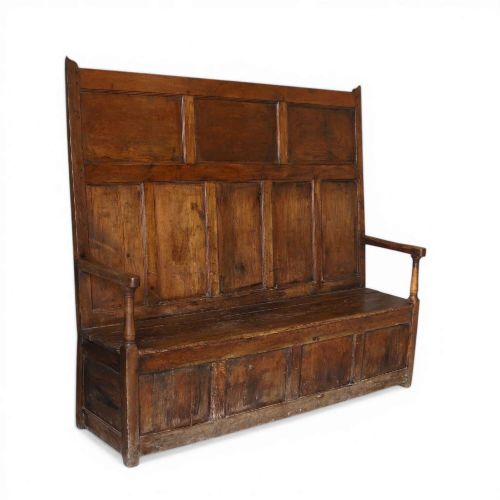
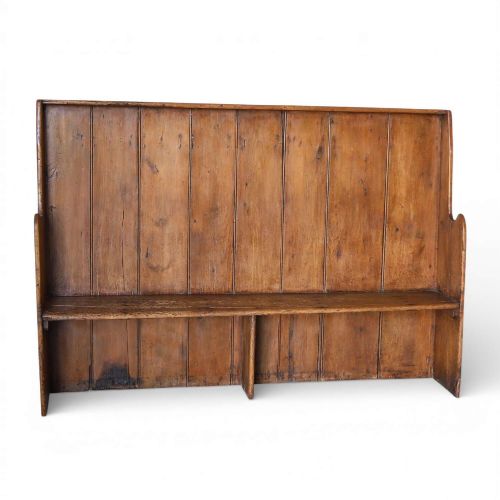
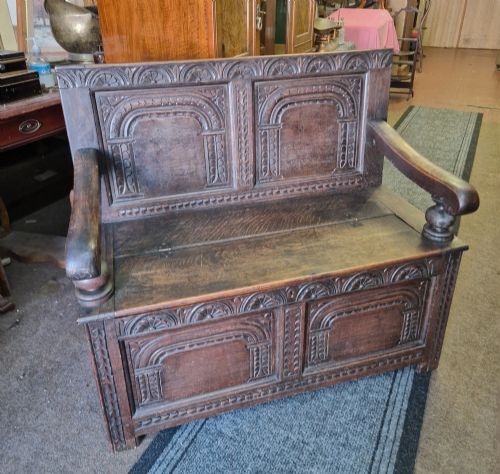
Georgian Settle Seat
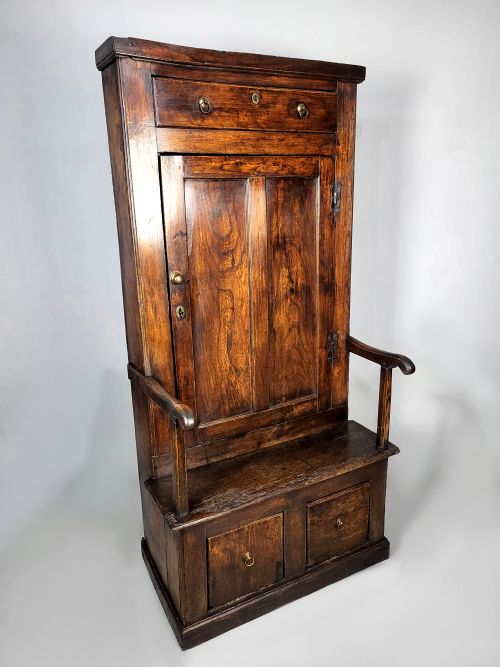
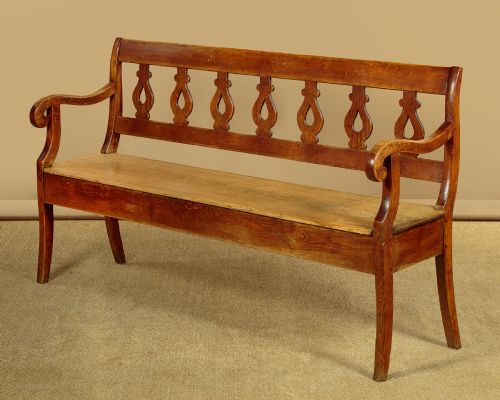
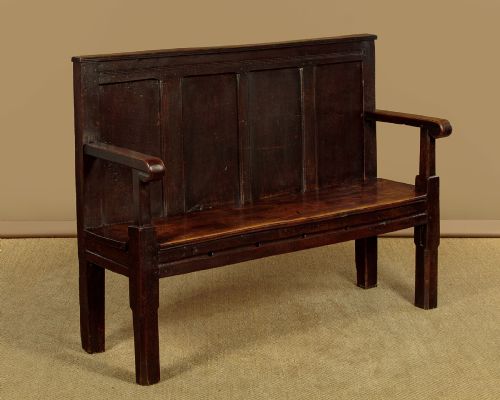
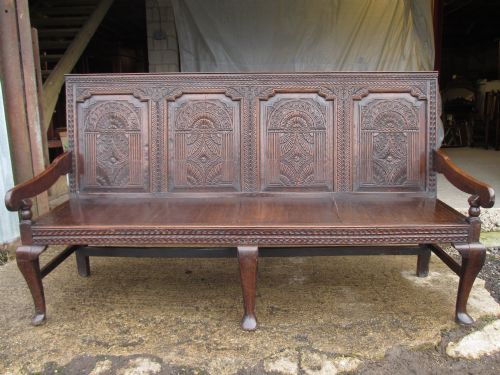
A georgian settle seat brings solid timber construction and high-backed protection from drafts directly into a hallway or living space.
Georgian Settle Seat
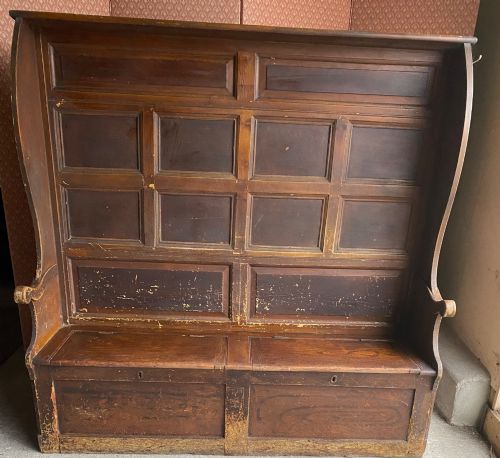
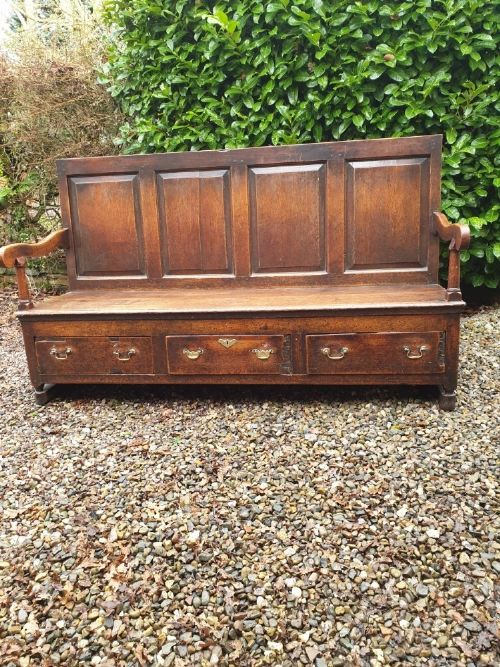
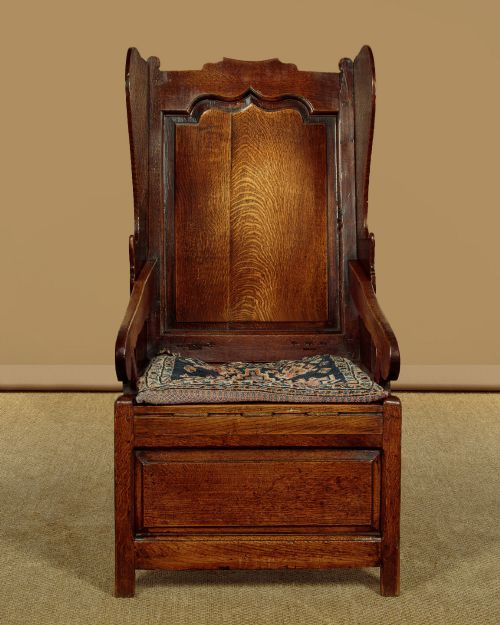
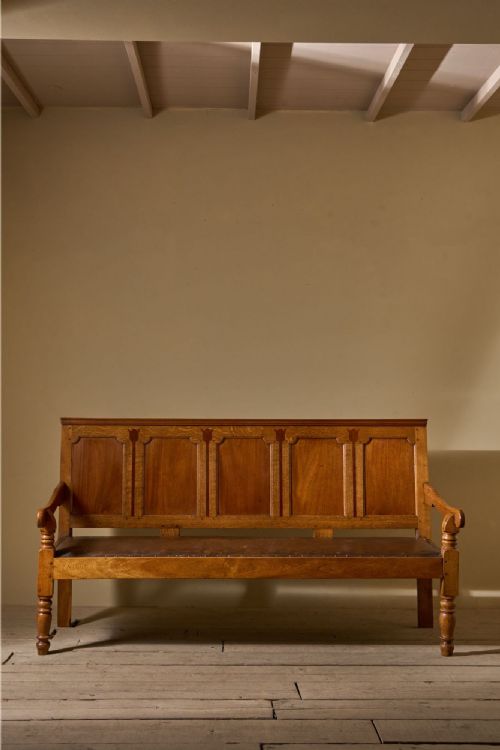
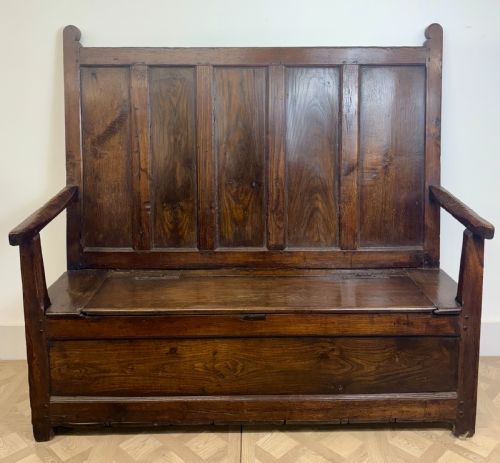
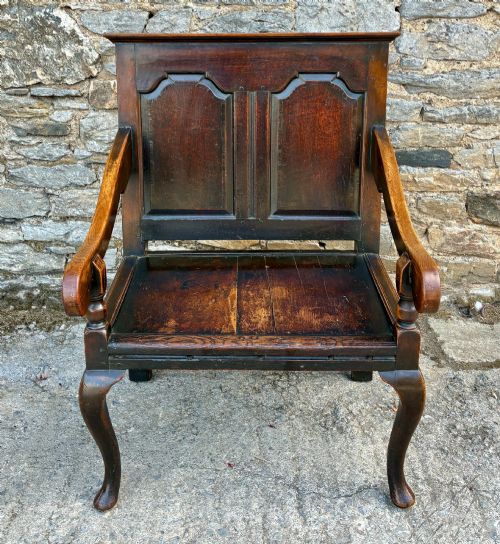
When searching for a georgian settle seat, buyers encounter robust wooden benches designed to block cold drafts in historic rooms. These pieces typically feature high panelled backs, solid wooden seats, and integrated armrests that offer both seating and architectural presence. Examples range from compact two-seater benches to large country house box settles with enclosed storage beneath.
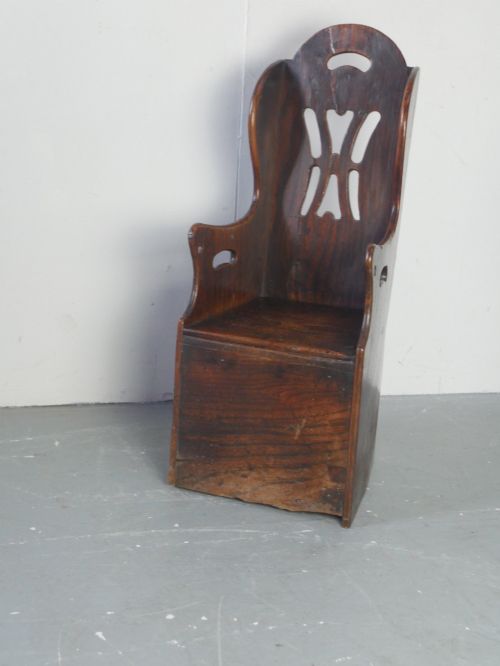
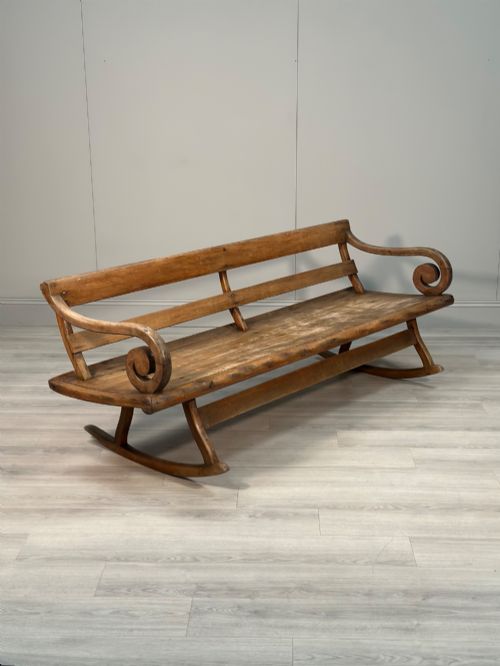
The selections span provincial and vernacular styles, frequently originating from English and Welsh rural workshops. Variants include barrel-backed forms, lambing chairs with hooded tops, and tavern benches built for heavy daily use. Oak and elm predominate, alongside painted pine finishes from regional traditions.
Materials and Construction Methods
Cabinetmakers and rural joiners built these benches using native hardwoods such as oak, elm, and ash, often pairing them with softer pine for panels or painted surfaces. Construction relied on mortise and tenon joints, pegged frames, and heavy boarded backs designed to withstand decades of heavy usage. Iron fixings appear on hinges for box seats and operational compartments.
Surface treatments vary from polished natural timber patinas to original painted finishes in black or regional tones. Box settles incorporate lidded compartments hinged directly into the base, whilst barrel-backed designs utilise steam-bent staves or curved timber segments to enclose the sitter.
Georgian Settle Seat Retail Price Guide 2026
Typical asking prices for georgian settle seat among the pieces listed under this phrase on Sellingantiques today, from the lower quarter to the upper quarter. They describe what is for sale here now, not the wider market.
Listings feature oak, elm, ash, and pine timbers, spanning provincial styles from the eighteenth and nineteenth centuries.
Judging Quality and Proportion
Superior quality in a georgian settle seat rests on timber selection, structural integrity, and the retention of original surfaces. Pieces fashioned from thick, quarter-sawn oak with deep panel moulding and minimal timber replacement command attention above heavily restored examples.
Proportion and scale dictate the visual weight of the piece within a room. Finer examples display balanced arm supports, undisturbed patination accumulated over centuries, and unaltered box bases without extensive timber splicing.
The Georgian Settle Seat Glossary
- Box settle
- A wooden bench featuring an enclosed storage compartment beneath the seat, accessed by lifting the lid.
- Lambing chair
- An enclosed high-backed armchair or settle, traditionally featuring a hooded top and enclosed sides to shield the occupant from drafts.
- Barrel-backed settle
- A seating form with a curved, semi-circular back enclosing the sitter to retain heat.
- Vernacular furniture
- Domestic items built by local craftsmen using regional materials and traditional local designs, distinct from metropolitan court styles.
Georgian Settle Seat: Frequently Asked Questions
Where were settles placed in historic homes?
These benches sat primarily in large farmhouse kitchens, halls, or tavern taprooms where draughts proved problematic. Their high panelled backs deflected cold air away from the fireplace.
Today, they function effectively in modern entryways and large hallways, providing practical seating alongside concealed storage space.
How do box settles differ from standard benches?
A box settle incorporates a hollow compartment beneath the seat plank, enclosed by sides and a front board. This cavity provided secure storage for household blankets or provisions.
Standard benches lack this enclosed base, resting instead on open legs or solid side panels without internal storage.
How should I care for an antique timber settle?
Maintain the wood by applying traditional waxes sparingly and avoiding direct placement near modern heat sources or radiators. Sudden temperature shifts cause historic oak and pine to split.
Keep painted surfaces dry and dust them gently with a soft cloth to preserve the historic patina.