
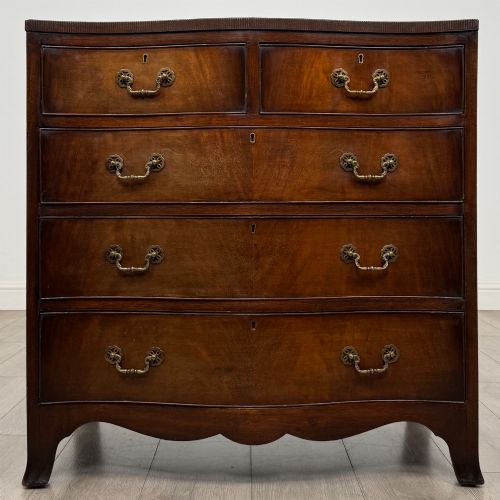
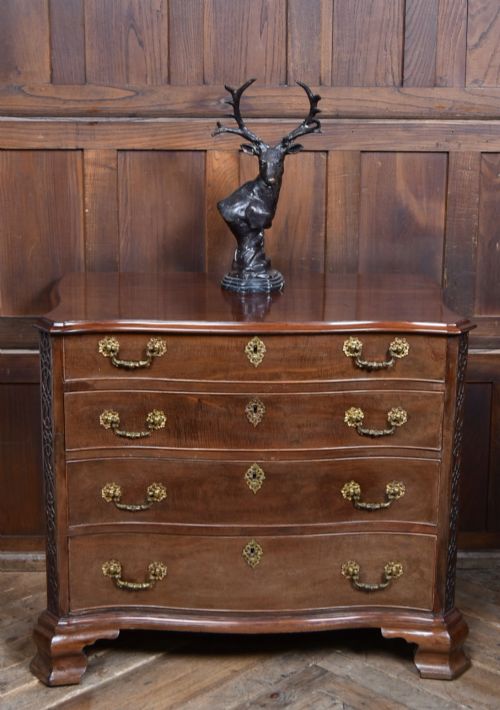
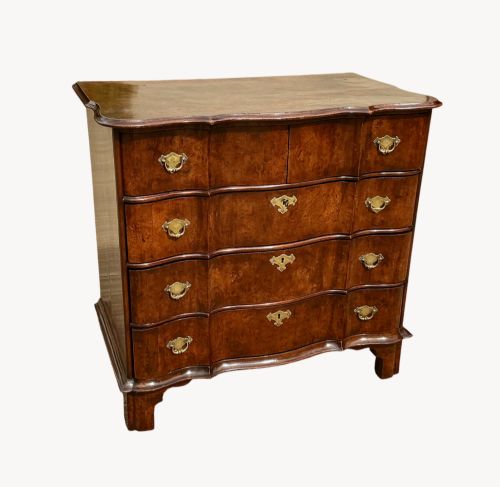
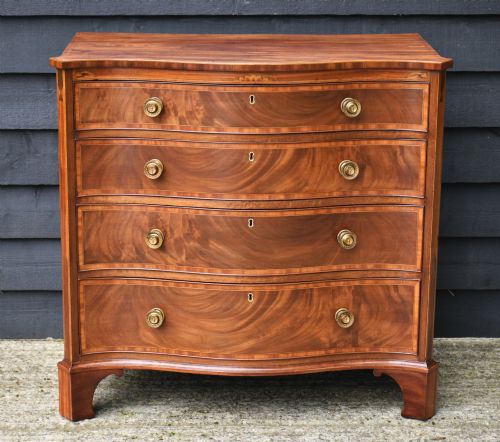
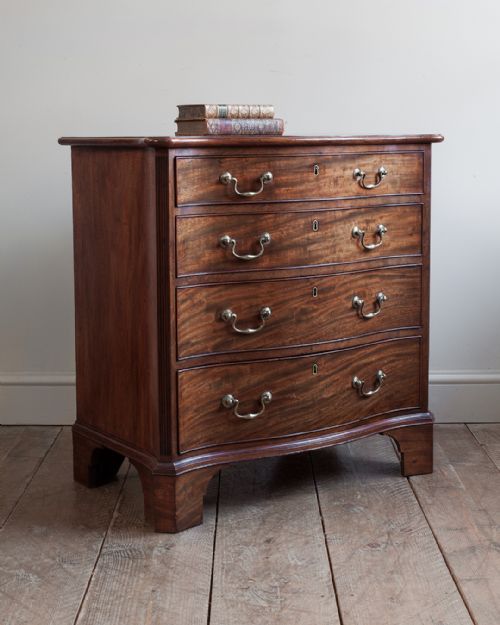

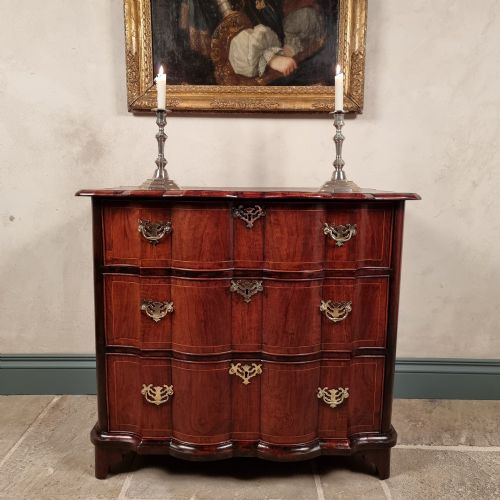
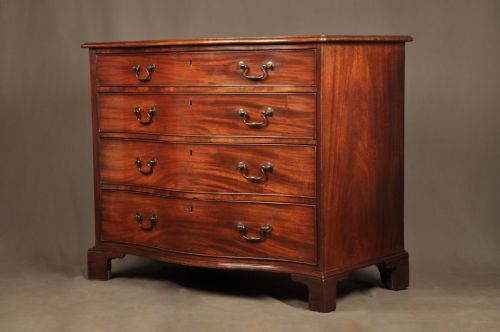
Georgian Serpentine Dresser
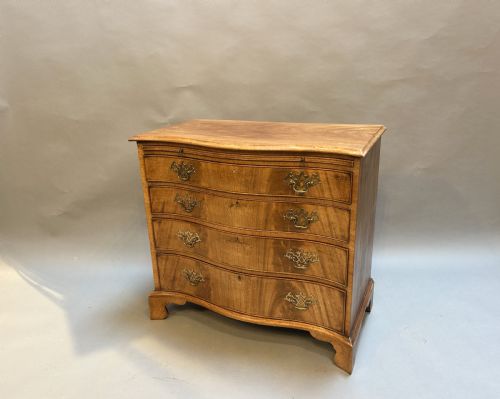
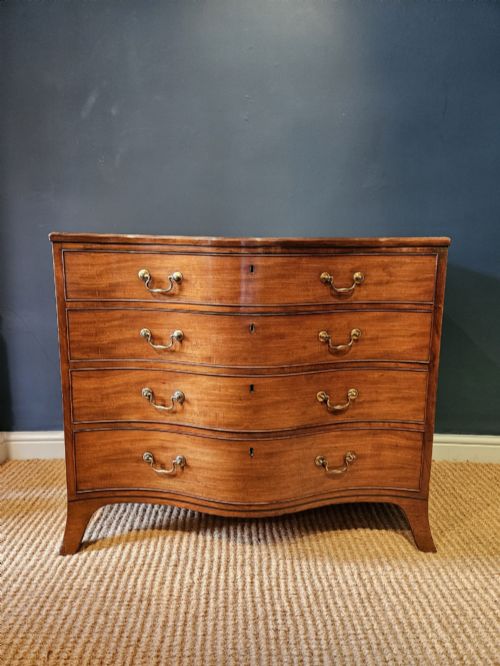
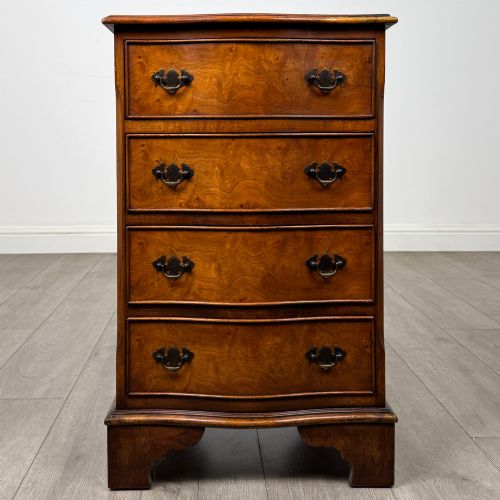
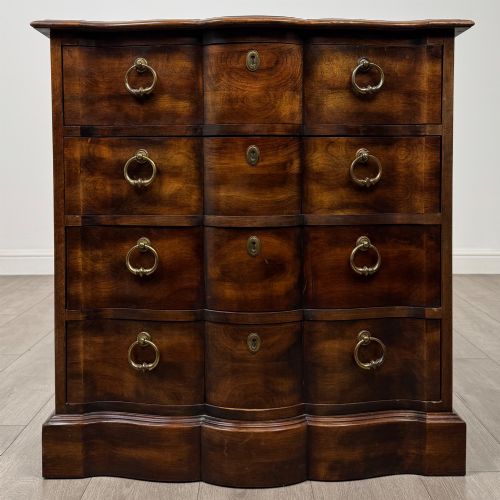
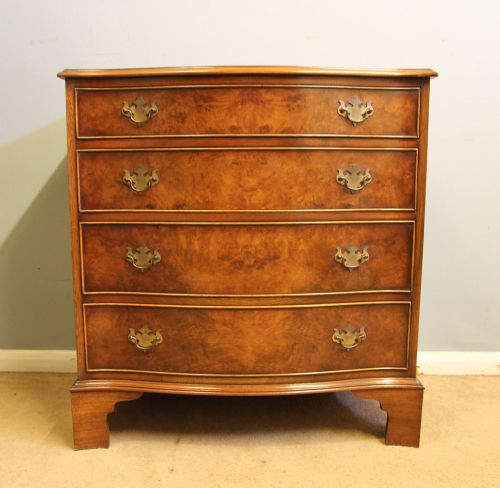
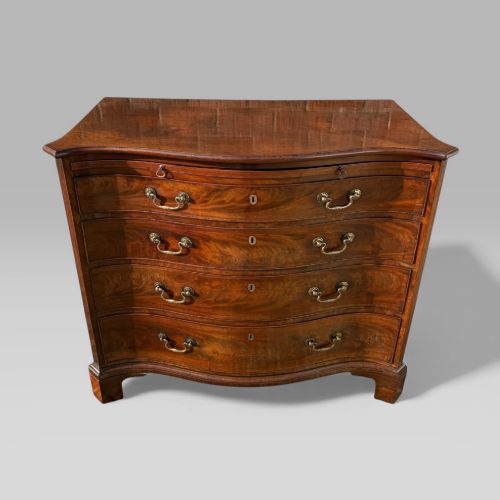
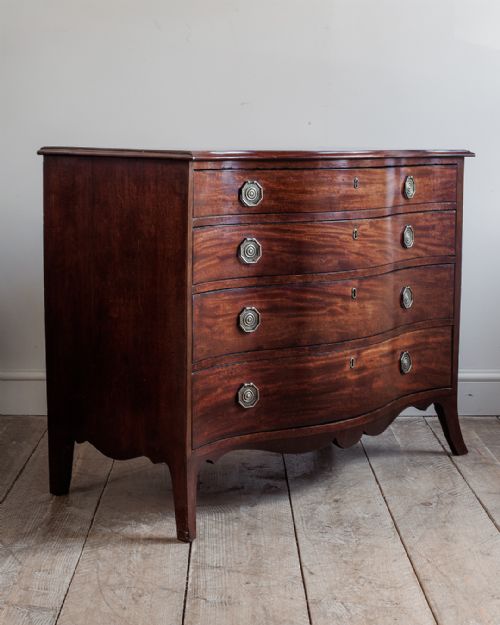
A georgian serpentine dresser brings fluid, undulating curves to formal storage.
Georgian Serpentine Dresser
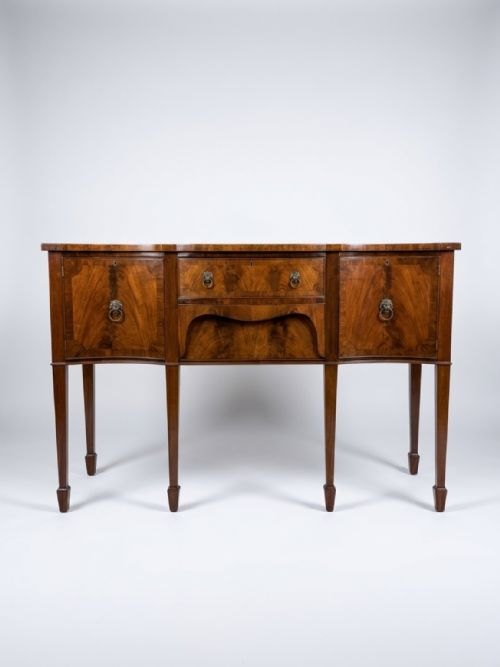
A georgian serpentine dresser typically takes the form of a mahogany or walnut chest of drawers or sideboard defined by a convex centre flanked by concave ends. Buyers encounter genuine eighteenth-century pieces alongside later revival and Edwardian interpretations.
The primary function remains storage, expressed through graduated drawers, fitted slides, and commode forms intended for principal rooms.
Origins stretch from English workshops to Dutch and Bavarian centres, incorporating local timbers and distinct regional cabinetmaking traditions.
Materials and construction
Cabinetmakers utilised solid mahogany, burr walnut, and oak, applying figured veneers to curved drawer fronts that required exceptional skill to shape.
Boxwood inlay, brass handles, and sliding writing brushes complete the construction, joining structural carcases with pegged joints and hand-cut dovetails.
Periods represented span from the eighteenth century through Edwardian revivals to the nineteen-thirties.
Assessing quality and finish
The precision of the undulating curve defines superior examples, where grain patterns match symmetrically across multiple drawers rather than appearing disjointed.
Original brass hardware, uncompromised timber surfaces, and crisp edge moulding separate period originals from later interpretations.
The Georgian Serpentine Dresser Glossary
- Serpentine
- A front contour shaped with a convex centre and two concave sides. This undulating line creates dynamic movement across the face of the furniture.
- Brush slide
- A pull-out wooden board mounted above the top drawer. Historically used for dusting or writing before drawers were opened.
- Dovetail
- A joint formed by interlocking wedge-shaped fingers. Hand-cut dovetails indicate traditional drawer construction.
- Marquetry
- Decorative patterns formed by inlaying contrasting veneers into wood. Artisans utilise various timbers to create elaborate floral or geometric designs.
Georgian Serpentine Dresser: Frequently Asked Questions
How do I spot a true period piece?
Examine the secondary timbers inside the drawer linings, such as oak or pine, alongside the hand-cut dovetails and timber shrinkage. Period pieces show consistent age and wear appropriate to the eighteenth century.
Compare the carcass construction and timber figuring with known revival models from later decades to confirm the date of manufacture.
Where should I place this furniture?
These pieces suit principal reception rooms, hallways, or bedrooms where the curved front can be viewed without obstruction. Their sculptural form functions effectively away from flat walls.
Maintain stable humidity levels away from direct heat sources to protect delicate veneers and solid timber carcases.
What maintenance do curved drawers need?
Apply occasional microcrystalline wax to nourish the timber and protect the polished surface from moisture. Avoid silicone-based polishes that penetrate old finishes.
Ensure drawer runners remain clean and free from grit to prevent undue friction on the curved sides during operation.
Why do some have slides?
Pull-out slides provided a clean surface for gentlemen to brush clothing or write notes in dressing rooms. They represent a practical feature of eighteenth-century case furniture.
Test the runner mechanism gently to ensure the sliding board moves smoothly within its dedicated housing above the top drawer.