

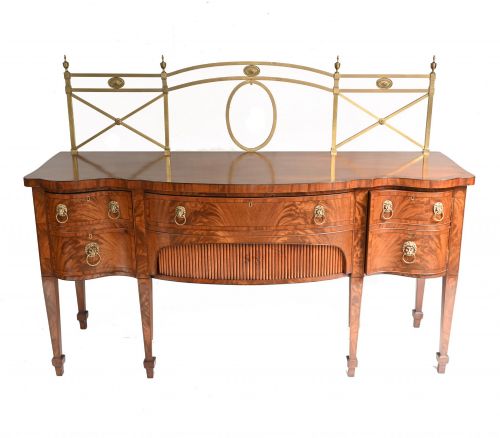
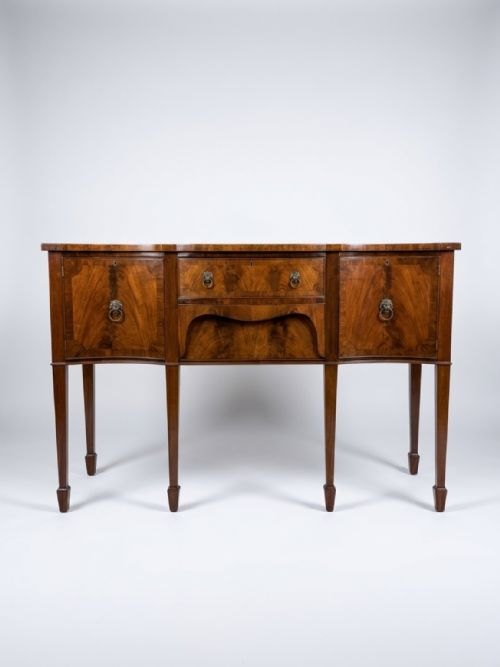
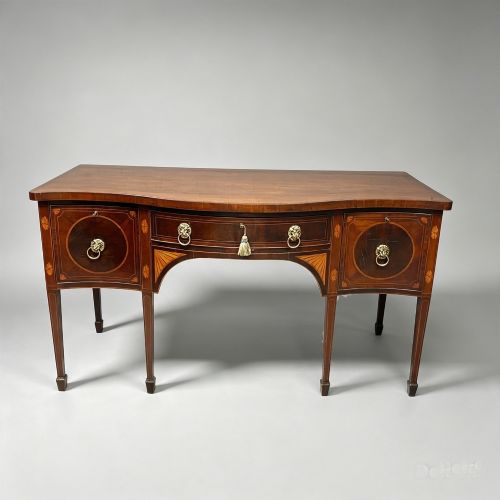
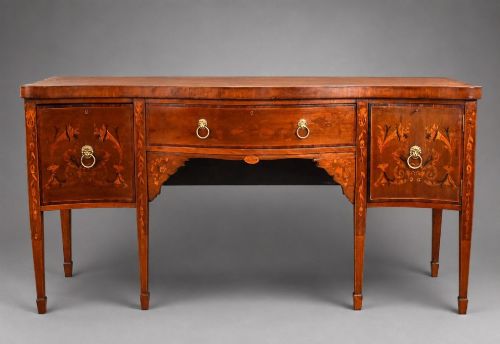




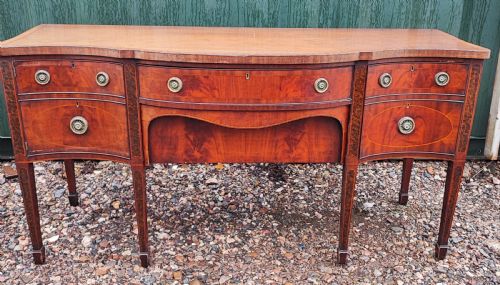


Georgian Serpentine Credenza
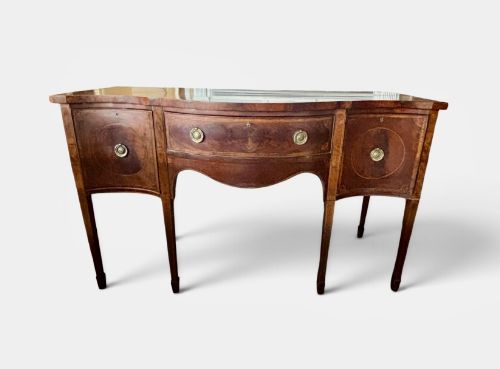
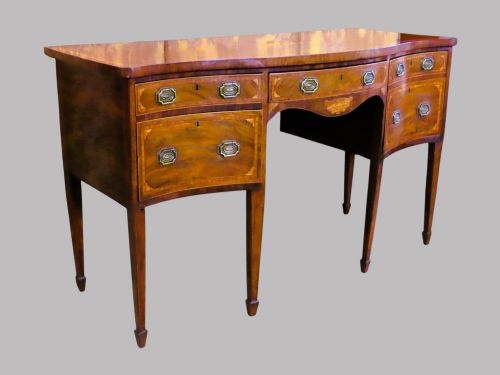
A georgian serpentine credenza brings subtle curves and rich timber to a dining room, offering deep storage with remarkable presence.
Georgian Serpentine Credenza
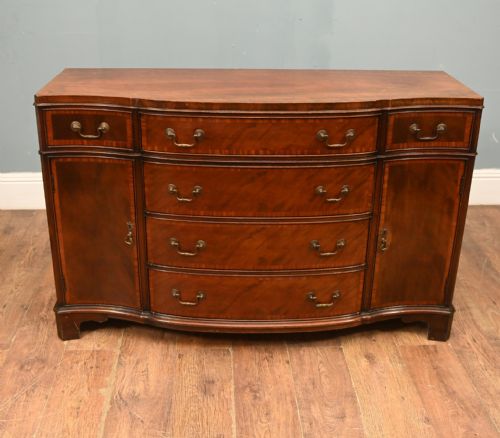
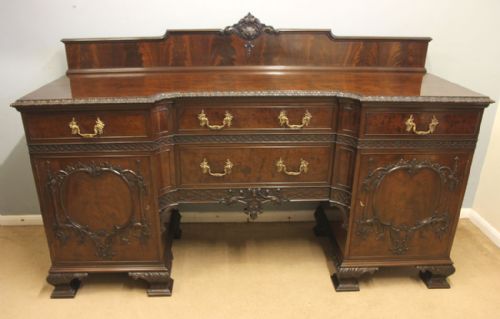
Most examples appearing on this page belong to the Georgian period or subsequent revival eras such as Edwardian and Sheraton Revival. These pieces function primarily as sideboards, side cabinets, and servers.
Makers shaped these items to anchor formal dining spaces while providing generous internal capacity for tableware and linens. The proportions range from compact servers to substantial large sideboards spanning several feet.
Distinctions in quality
The division between standard workshop production and superior cabinet making rests in the selection of timber figures and the precision of the joinery. Flame mahogany surfaces display vibrant, highly figured grain patterns that demand expert bookmatching across curved drawer fronts.
Hand-cut dovetail joints on drawer construction and crisp execution of stringing and marquetry inlay indicate higher artisan skill. The fluidity of the serpentine curve itself, maintaining balance from the centre sweep to the flanking pedestals, dictates the aesthetic success of the piece.
Georgian Serpentine Credenza Retail Price Guide 2026
Typical asking prices for georgian serpentine credenza among the pieces listed under this phrase on Sellingantiques today, from the lower quarter to the upper quarter. They describe what is for sale here now, not the wider market.
Some serpentine sideboards hide secret cellarette drawers lined in lead, designed for chilling wine bottles beside the dining table.
The Georgian Serpentine Credenza Glossary
- Serpentine
- A front contour that curves outward in the middle and inward at the sides. This undulating shape requires advanced woodworking skill to fit doors and drawers flush.
- Inlay
- The technique of embedding contrasting strips of timber such as boxwood or satinwood into the primary wood surface. This creates delicate borders and decorative panels.
- Sheraton Revival
- A late nineteenth and early twentieth century design movement that reinterpreted the lighter neoclassical furniture styles of eighteenth-century designer Thomas Sheraton. These pieces often incorporate rich marquetry and refined proportions.
Georgian Serpentine Credenza: Frequently Asked Questions
Where should I place a serpentine sideboard?
These pieces suit formal dining rooms, large hallways, or spacious living areas where wall space permits a long case piece. Their curved fronts soften linear architectural layouts.
Ensure adequate clearance in front of the cabinet so doors and drawers open fully without obstruction from nearby furniture.
How do I care for mahogany surfaces?
Dust regularly with a soft, dry cloth and apply a quality beeswax periodically to nourish the timber. Avoid placing the furniture in direct sunlight or near heat sources to prevent the wood from drying out.
Use coasters and felt pads beneath objects placed on the top surface to protect the polish from rings and scratches.
Are Edwardian pieces considered antique?
Edwardian furniture dating from the early twentieth century falls into the antique category due to its age exceeding one century. These later interpretations often replicate earlier Georgian forms with great technical skill.
Construction details and secondary woods help differentiate original eighteenth-century pieces from Edwardian revival versions.
What is the difference between a sideboard and a credenza?
While both provide surface space and internal storage for dining ware, traditional sideboards often include specific drawer arrangements for cutlery. Credenzas historically describe low side cabinets without high legs, though the terms overlap frequently in modern antique trade.
Both forms serve identical functional roles in organising and displaying dining room accessories.