

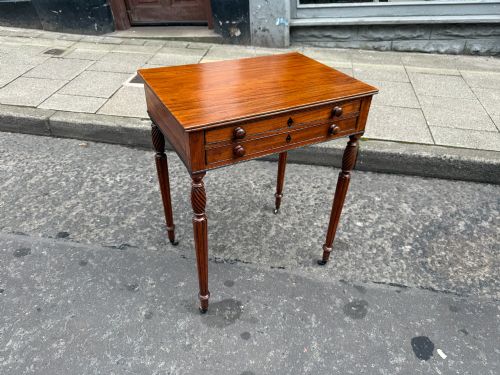
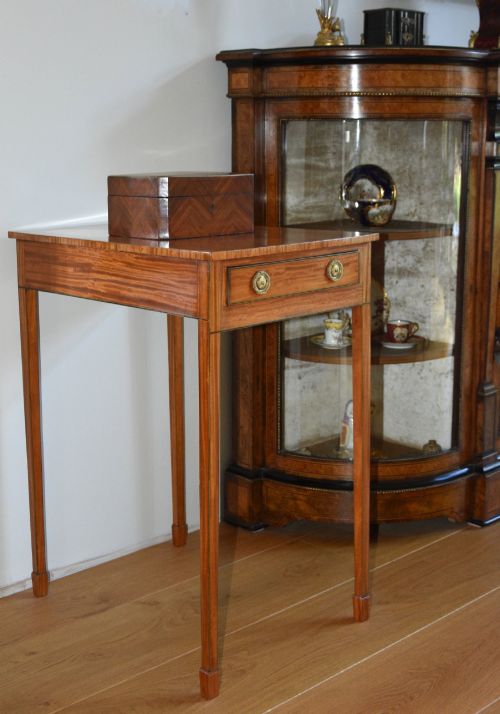
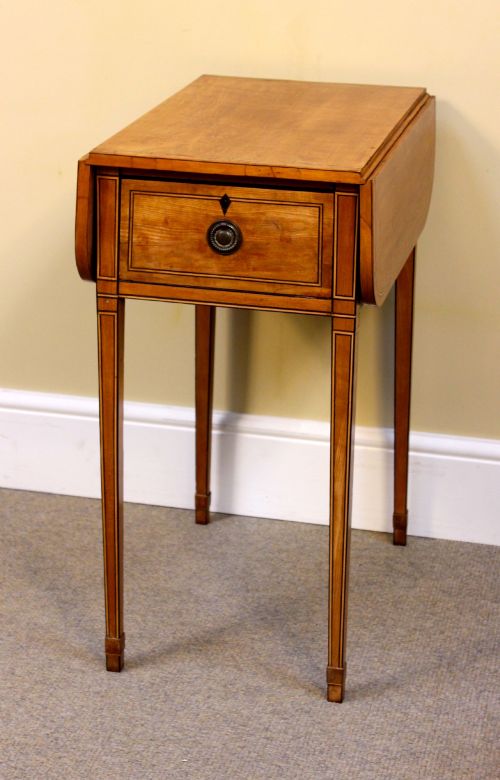
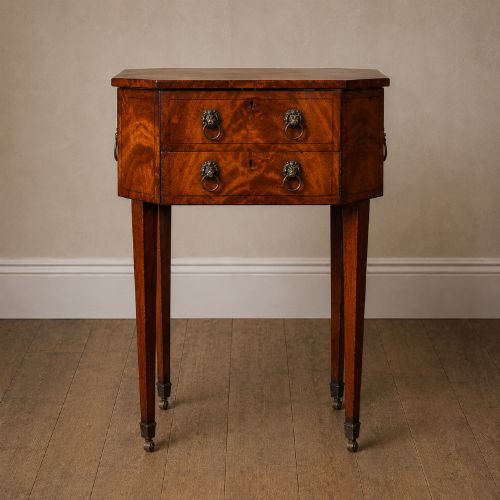




Georgian Satinwood Work Table
A georgian satinwood work table brings refined grain and compartmented practicality to a room, offering a tactile surface for needlework or correspondence.
Georgian Satinwood Work Table
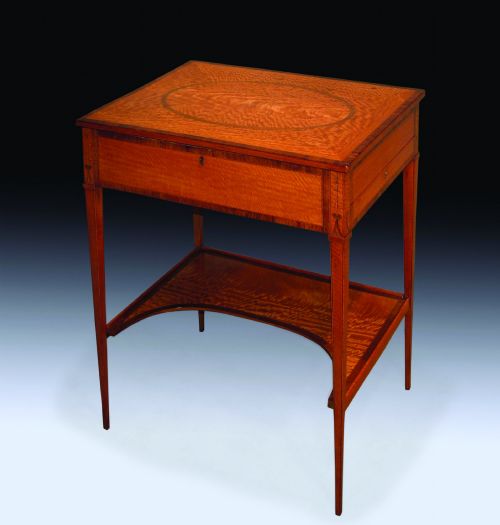
A georgian satinwood work table is a specialised piece of antique furniture designed for domestic tasks such as sewing, needlework, and occasional writing. These tables date primarily from the eighteenth and nineteenth centuries, with examples appearing across the Georgian, Regency, and Edwardian periods.
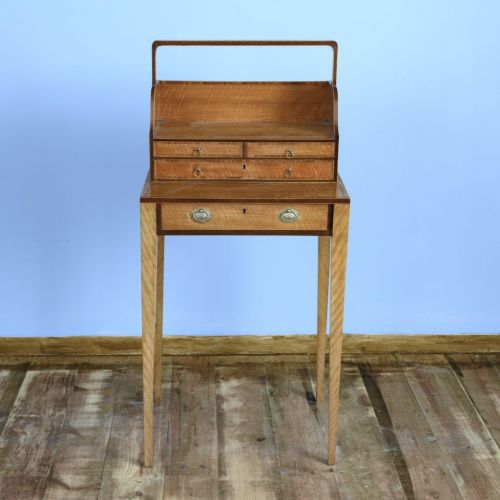
The pieces on this page encompass various forms, including drop-leaf sewing tables, octagonal work tables with lion mask handles, and compact cheverets featuring multiple compartments. While the core materials focus on satinwood, makers also utilised mahogany, rosewood, and harewood.
Buyers will encounter stylistic influences ranging from Sheraton and Sheraton Revival to Neoclassical designs. Alongside dedicated work tables, the selection includes related side tables, lamp tables, writing tables, and occasional tables.
How they were made
Craftsmen utilised satinwood veneers alongside solid timbers such as mahogany and rosewood to construct these tables, often incorporating contrasting stringing in boxwood and ebony. Cabinetmakers applied elaborate inlay and painted Neoclassical motifs to enhance the golden, light-reflecting grain of the primary wood.
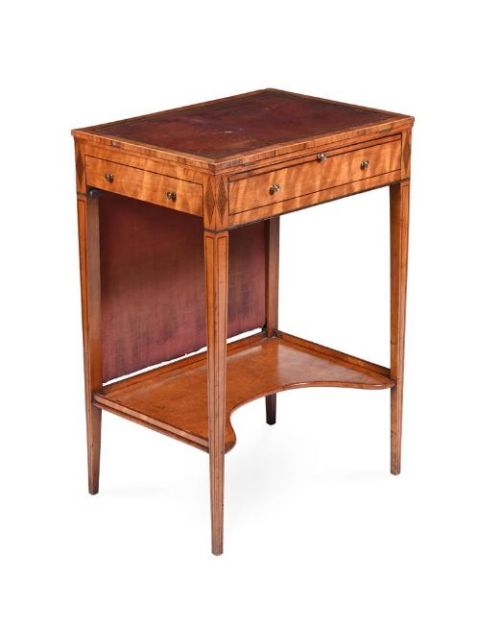
Structural complexity defined many work tables, which frequently featured drop leaves, drawers, and secret rising compartments designed for sewing implements and stationery. Brass hardware, including lion mask handles, secured structural joints and articulated the corners of drawers and pedestals.
Design influences across the available selection include Sheraton, Regency, George III, and Neoclassical styles applied to various work and side tables.
What varies in quality
The sophistication of the timber selection and inlay work marks the distinction between standard and superior pieces. Finer examples display carefully matched satinwood veneers complemented by intricate boxwood and ebony stringing rather than simple painted decoration.
Mechanical complexity also dictates quality, particularly in tables featuring intricate rising internal compartments or drop leaves. The integration of solid secondary timbers and well-cast brass hardware indicates a higher standard of original workshop production.
The Georgian Satinwood Work Table Glossary
- Satinwood
- A durable, dense tropical timber with a lustrous, golden sheen that made it a favourite for high-end eighteenth-century cabinetmaking. Its reflective surface responds well to polishing and delicate inlay.
- Cheveret
- A small movable table fitted with a tier of small drawers or a writing slide, designed specifically for ladies to hold writing materials or needlework.
- Stringing
- Narrow inlay lines of contrasting wood, such as boxwood or ebony, used to outline panels and drawers on Georgian furniture. This technique frames the primary satinwood veneer.
- Drop leaf
- A hinged flap on the side of a table that can be raised to extend the surface area or lowered when space is limited. These leaves often feature on compact sewing tables.
Georgian Satinwood Work Table: Frequently Asked Questions
What is a georgian satinwood work table used for?
These tables served primarily as functional furniture for ladies to store sewing implements, threads, and correspondence while sitting in a parlour or withdrawing room. The fitted drawers and internal compartments kept small tools organised during detailed handwork.
Today, they function well as decorative side tables or bedside cabinets where concealed storage is useful for modern accessories.
How do I identify a Georgian piece?
Authentic Georgian pieces exhibit construction methods typical of the eighteenth and early nineteenth centuries, such as hand-cut dovetails on drawer boxes and the use of native secondary timbers. Stylistic markers include restrained Neoclassical proportions and Sheraton-inspired inlay.
Later revival pieces from the Edwardian era often replicate these forms but utilise different internal framing techniques and machine-sawn elements.
Are these tables sturdy enough for daily use?
While originally built for domestic utility, antique work tables require thoughtful handling due to their age and delicate veneered surfaces. The small legs and hinged drop leaves are sensitive to excessive weight and heavy impact.
Placed in low-traffic areas as lamp or occasional tables, they easily withstand normal everyday use without structural strain.
What woods are combined with satinwood?
Cabinetmakers frequently paired satinwood with contrasting timbers to accentuate the golden grain through geometric banding and inlay. Common companion woods include dark mahogany, rosewood, and harewood.
Boxwood and ebony frequently appear in narrow stringing lines, while secondary structural elements inside drawers often utilise pine or oak.