


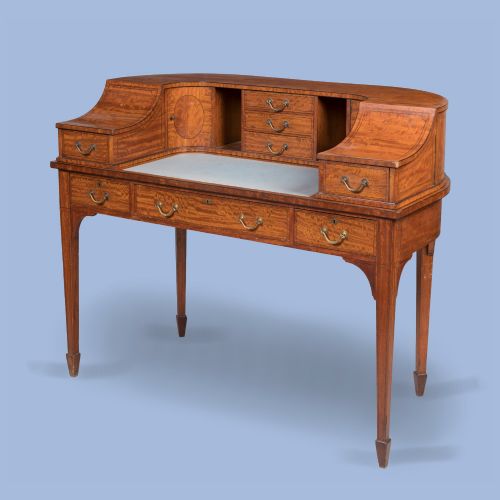

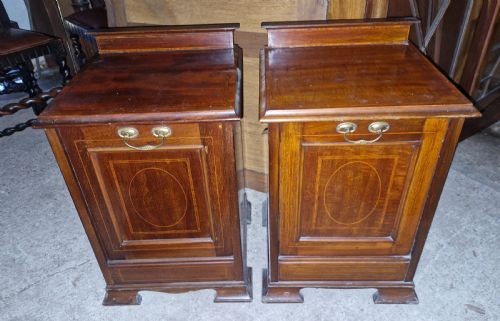


Georgian Satinwood Pedestal
A georgian satinwood pedestal or related piece brings pale timber and disciplined neoclassical line into a room.
Georgian Satinwood Pedestal
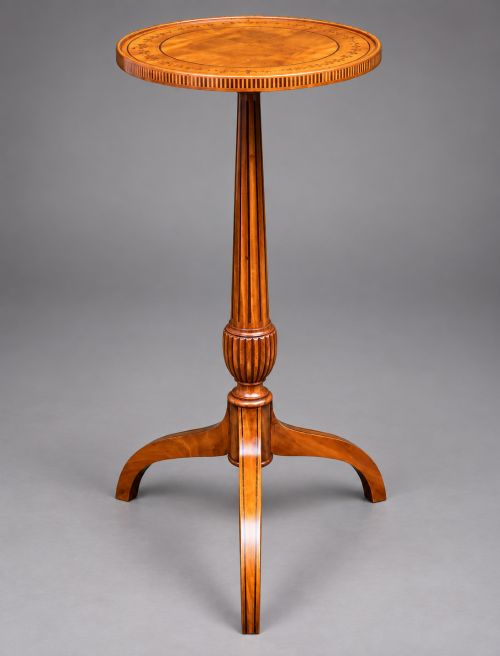
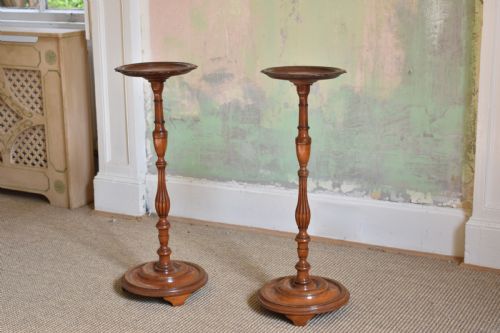
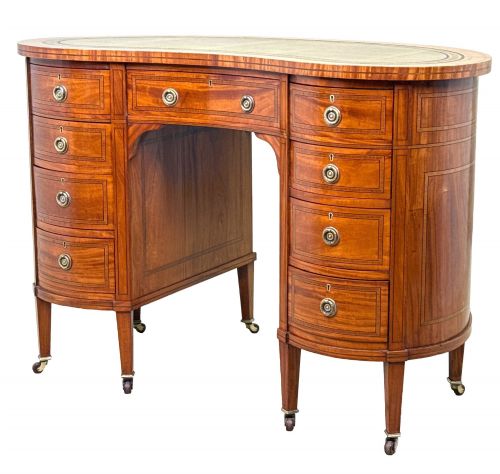
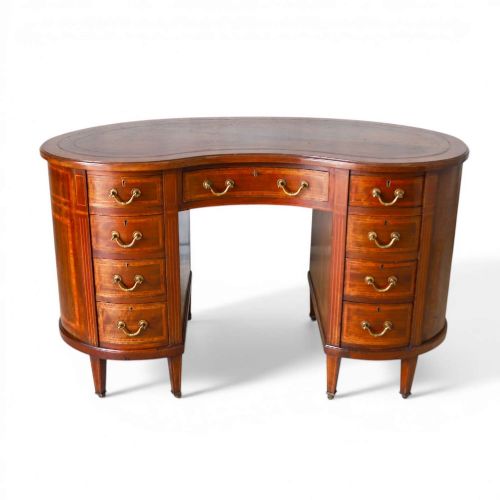
A georgian satinwood pedestal search uncovers tables, desks, and cabinets built across the eighteenth and nineteenth centuries, often showing pale figured timber.
The pieces appearing here include tripod tables, games tables, and writing desks produced during the Georgian, Regency, and Edwardian periods.
Makers and cabinet-makers utilised satinwood alongside mahogany, rosewood, and ebony to create contrasting borders and panels.
Materials and construction
Craftsmen selected dense tropical hardwoods and applied fine satinwood veneers over solid secondary timbers, securing stability in large surfaces.
Inlay work incorporated ebony, rosewood, and brass to form geometric stringing and neoclassical motifs around table tops and drawer fronts.
Hand-painted detailing and marquetry appeared on specific satinwood and birch items, requiring steady brushwork and precise cutting.
Selected furniture includes specialised compartments for champagne bottles, sewing gear, and cutlery urns.
Judging the range
Quality rests upon the selection of the timber figures, where tightly feathered satinwood grain commands greater visual depth than plain stock.
The precision of the contrasting inlay and the retention of original leather writing surfaces or hardware dictate the standing of a piece.
Gillows of Lancaster
The Georgian Satinwood Pedestal Glossary
- Satinwood
- A dense, lustrous yellow timber imported from tropical regions, valued for its golden sheen and smooth finish. It forms the primary visual draw of these pieces.
- Banding
- A narrow strip of contrasting wood veneer applied around the perimeter of a table top or drawer front. This technique frames the primary grain.
- Marquetry
- The art of forming decorative patterns using fitted pieces of coloured veneer. Artisans assemble pictorial or geometric designs into the surface.
- Tripod table
- A small stand supported by a central pillar resting on three spreading feet. These items served tea or held lamps in period rooms.
Georgian Satinwood Pedestal: Frequently Asked Questions
What is satinwood?
Satinwood is a dense, light-coloured tropical hardwood known for its shimmering grain and smooth texture.
Cabinet-makers used it extensively for veneers and decorative banding on high-status tables and desks.
How do I date a piece?
Dating relies on combining stylistic evidence, construction methods, and the secondary timbers visible inside drawers.
Georgian and Regency items display different edge profiles and inlay patterns compared to later Edwardian revivals.
Where were they placed?
These tables and desks stood in drawing rooms, libraries, and parlours to serve specific social functions.
Card tables opened for evening games, while tripod tables held lamps or tea accessories.
Are original surfaces important?
Original leather tops, patinated finishes, and unpolished hardware preserve the historical integrity of the item.
Collectors look for surfaces that have aged naturally through decades of light and use.