
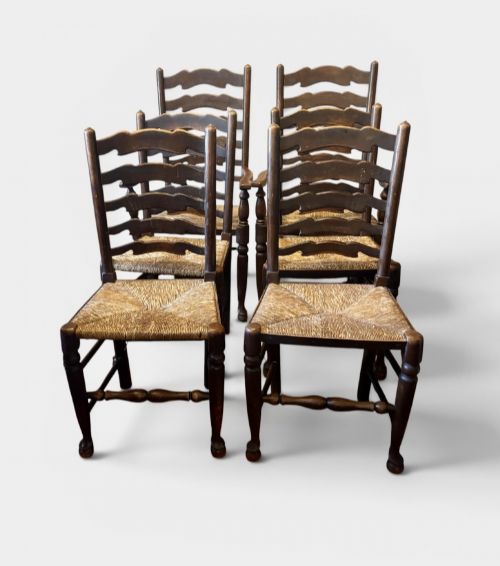


Georgian Rush Seated Chairs
Georgian rush seated chairs combine honest vernacular timber framing with woven organic cordage, offering enduring rustic utility for everyday dining.
Georgian Rush Seated Chairs
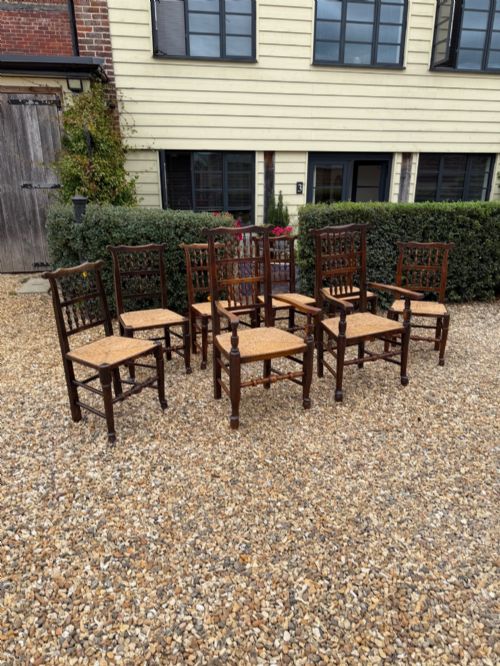
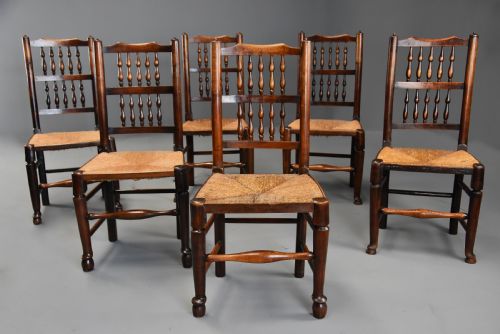
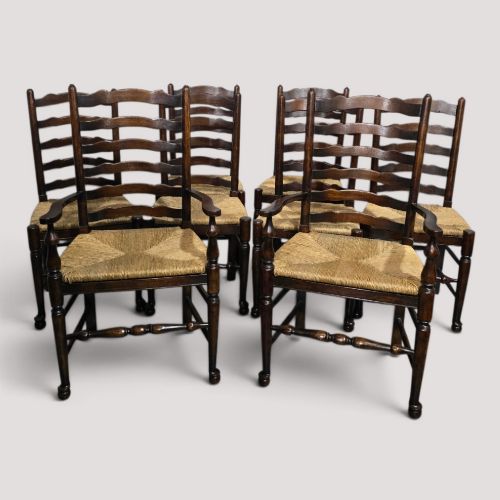
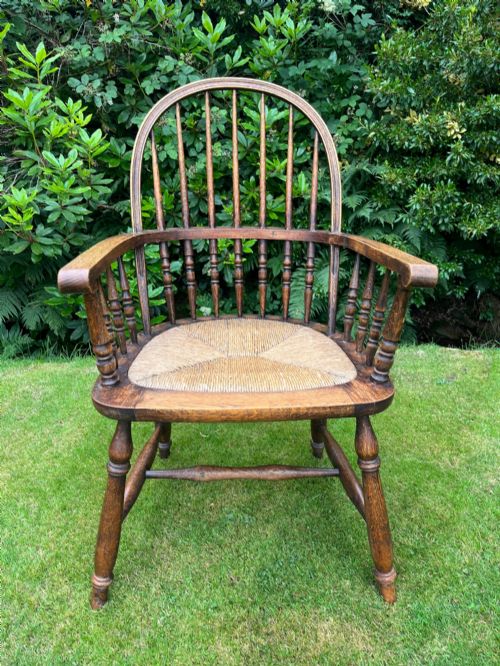
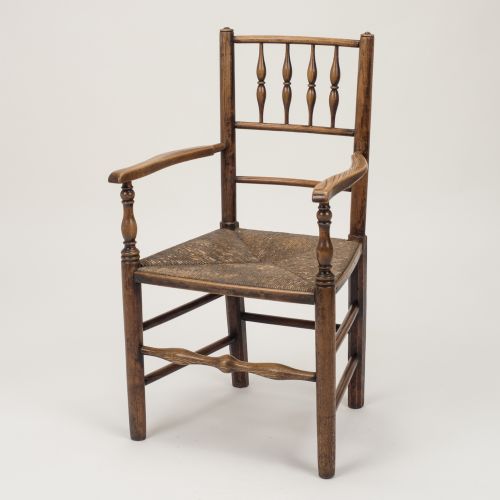
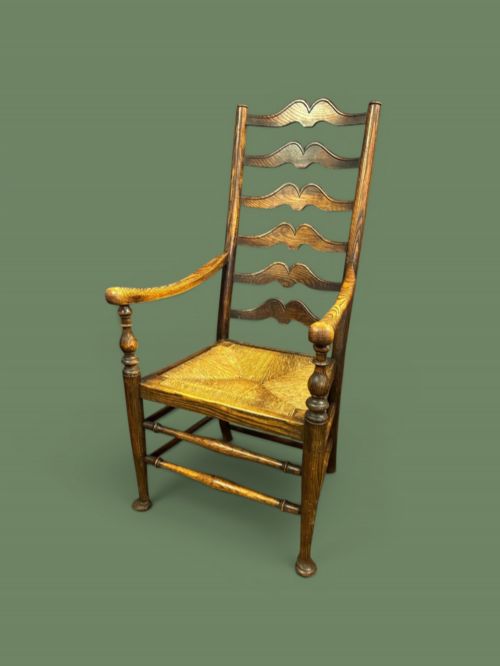
Georgian rush seated chairs represent the practical domestic seating of 18th-century and early 19th-century homes, built for daily utility rather than formal display. Buyers searching for georgian rush seated chairs encounter sturdy ladder backs, spindle backs, and armchairs fashioned by regional makers across England.
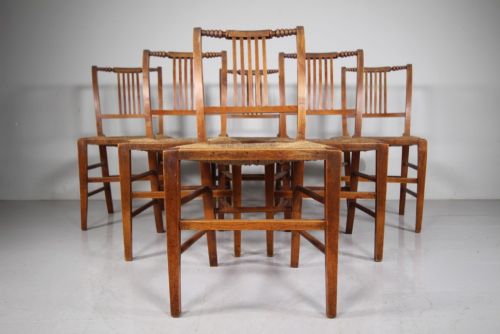
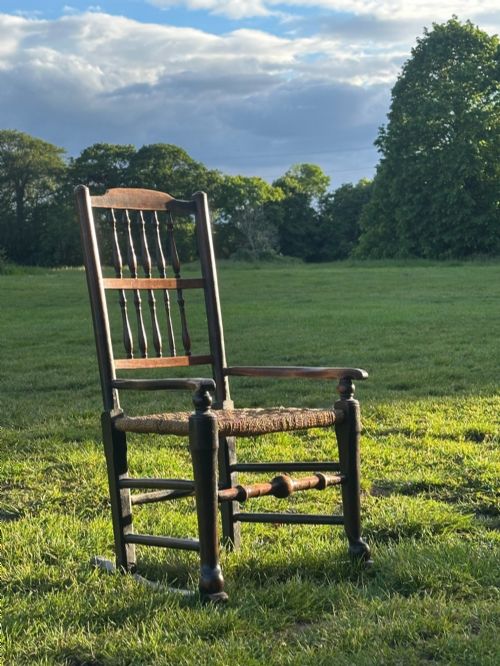
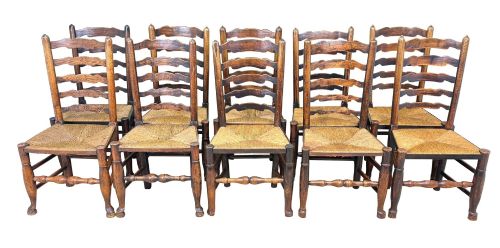
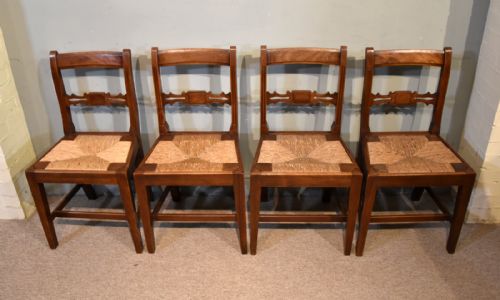
Most examples found on this page span the Georgian period, the Regency era, and the early 19th century, frequently constructed in regional workshops using local hardwoods. These pieces range from single dining chairs to large sets of matching ladder backs and low rocking chairs.
The regional variety includes Lancashire, Cheshire, and Dales forms alongside general English country vernacular styles. Buyers frequently select these chairs to bring genuine historic character and tactile texture into modern dining rooms and kitchens.
How they were made
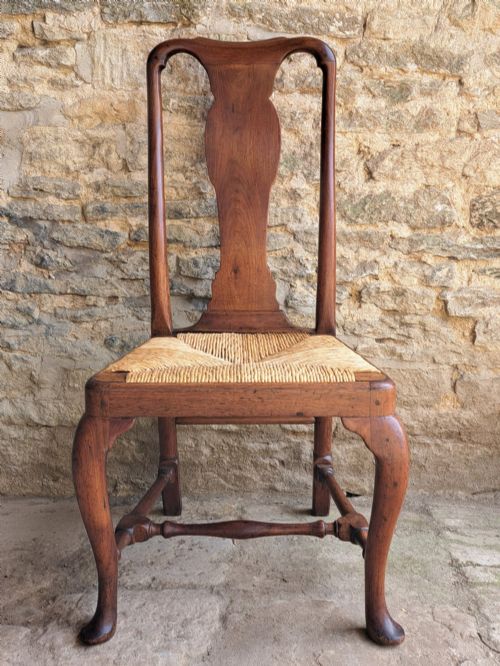
Makers utilised native timbers such as elm, ash, oak, and fruitwood for the frames, turning spindles on lathes and bending wood for backs. Elm frequently provided strong seats, while ash and fruitwood offered flexible strength for uprights and rails.
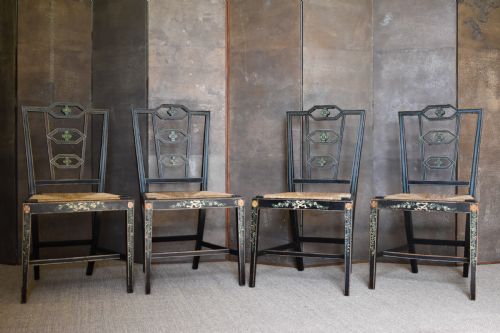
The seats themselves are woven from dried river rush, twisted tightly around the seat frames to create a resilient and supportive platform. Some surfaces retain traces of original paint or decorative faux bamboo turning, reflecting the aesthetic choices of the period.
Several armchairs retain their original paint, proving that our ancestors loved a splash of colour just as much as we do.
What varies in quality
Quality in these chairs lies in the integrity of the timber frame, the tightness of the joinery, and the condition of the woven rush. Superior examples maintain their original structural components without excessive timber replacement or brittle, deteriorated cordage.
The elegance of the turning and the patina developed on exposed wood over centuries also separate ordinary utility chairs from finer regional pieces. Sets that have survived together with matching frames and uniform wear command distinct attention from collectors.
The Georgian Rush Seated Chairs Glossary
- Rush
- Dried marsh plant material twisted into cords and hand-woven to form durable, textured chair seats.
- Ladder back
- A chair back featuring several horizontal curved slats resembling the rungs of a ladder, typical of vernacular seating.
- Spindle back
- A chair back constructed with numerous thin vertical wooden rods turned on a lathe.
- Vernacular
- Everyday objects built by regional craftsmen following local traditions rather than strict academic architectural designs.
- Carver
- An armchair, often designed to match a set of smaller dining chairs at the head of a table.
Georgian Rush Seated Chairs: Frequently Asked Questions
How do I care for rush seats?
Keep rush seated chairs in stable humidity away from excessive moisture, which can cause the plant fibres to rot. Regular gentle dusting and occasional light conditioning help preserve the strength of the woven cord.
Avoid placing these chairs in direct sunlight or beside intense heat sources, as drying out makes the rush brittle and prone to snapping under weight.
Are these chairs comfortable for daily use?
Woven rush seats offer a surprising amount of natural give and spring, making them comfortable for meals and general sitting. The upright posture encouraged by ladder back and spindle back designs supports good sitting habits.
While they lack modern upholstery and padding, their ergonomic wooden contours and flexible seats suit regular everyday dining and relaxed domestic use.
How can I tell regional styles apart?
Regional styles depend heavily on local timber availability and traditional turning patterns favoured by specific workshops in counties like Lancashire, Cheshire, or Suffolk. Examining the thickness of stiles, the shape of arm supports, and the profile of ladder rungs reveals these geographic origins.
Comparing the pitch of the back and the spacing of spindles helps identify whether a chair emerged from northern vernacular traditions or southern English workshops.
Did these chairs originally have cushions?
Historic rush seated chairs were designed to be used without cushions, displaying the clean texture and geometric pattern of the woven rush directly. Seat pads were occasionally added later for comfort, but the original intention was an unadorned organic surface.
Leaving the rush exposed showcases the craftsmanship of the weaver and maintains the authentic aesthetic of country vernacular furniture.