


Georgian Revolving Stand
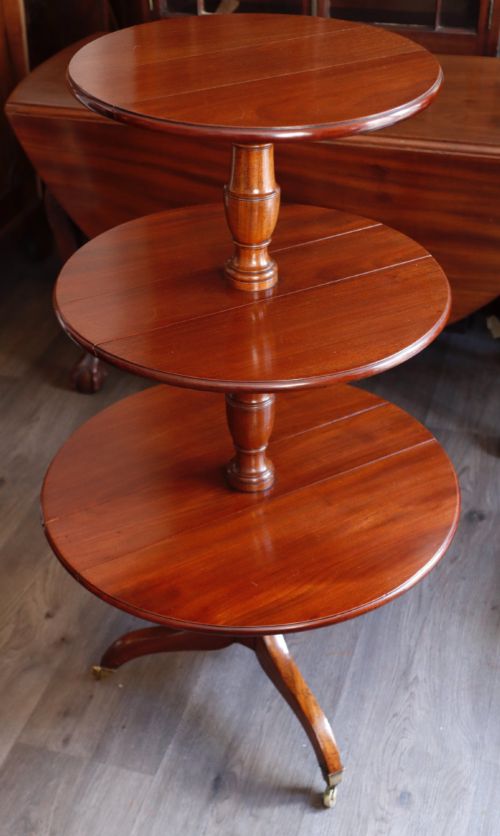
These georgian revolving stand pieces are tiered dining room servers and table-top turntables built for sharing food.
Georgian Revolving Stand
When you search for a georgian revolving stand, you encounter dining furniture designed to rotate for easy service during meals. The selections span multi-tiered freestanding dumb waiters alongside compact table-top lazy susans.
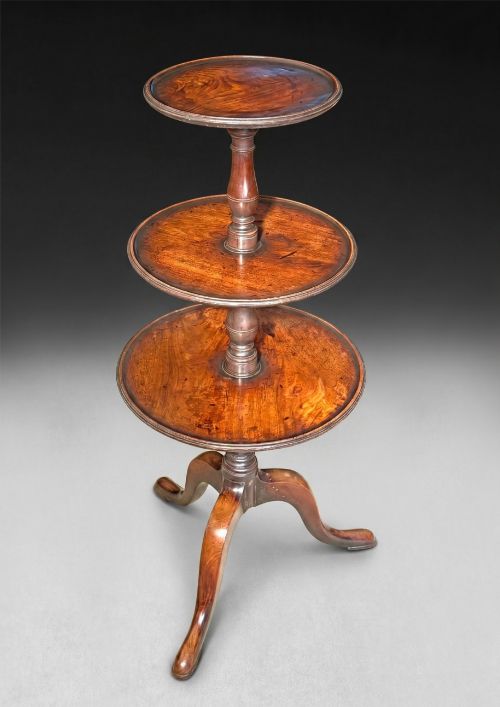
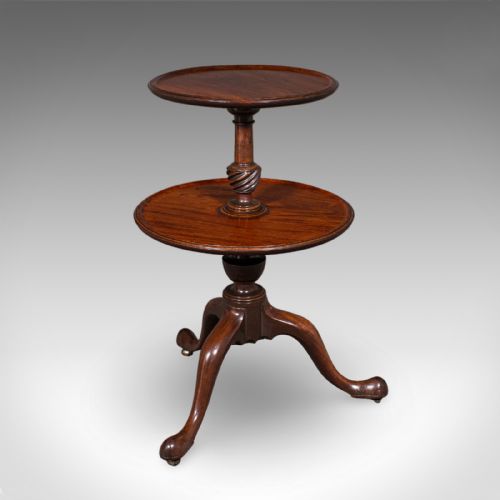
Most pieces date from the Georgian and Regency eras, though occasional early twentieth-century interpretations appear. Forms include circular three-tier stands, two-tier tea serving stands, and occasional revolving tables.
How they were made
Cabinetmakers constructed these rotating pieces primarily in solid mahogany and oak, occasionally incorporating walnut with marquetry inlay. Brass mechanisms and fittings often secure the rotating joints and caster wheels.
Turned wooden columns support graduated circular tiers, relying on traditional joinery to maintain stability while bearing weight on central axes.
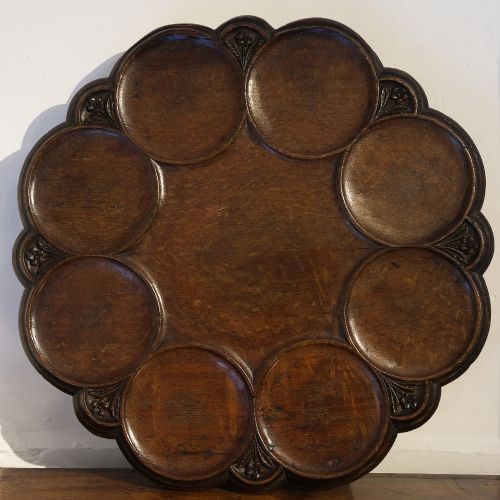
One exceptional listing includes a treen ware revolving egg cup stand from the private collection of Mrs Henry T Ford the second.
What varies in quality
The standard of timber selection and depth of grain figure heavily in the overall impression of a stand. Finely figured mahogany with rich patination sits at the upper end of the scale.
Mechanics dictate utility, where a smooth, balanced rotation without wobble or friction separates superior examples from lesser pieces. Proportion in the graduated tiers and the crispness of turned columns also determine the success of the design.
The Georgian Revolving Stand Glossary
- Dumb waiter
- A freestanding tiered serving stand designed to hold dishes and glasses beside a dining table. These pieces allow diners to help themselves without servant assistance.
- Lazy susan
- A revolving table-top tray or stand used for passing condiments and food dishes. They sit directly on dining tables for communal access.
- Marquetry inlay
- Decorative veneer work forming intricate patterns using various contrasting woods. Craftsmen cut pieces of timber to fit precisely into shaped recesses on the surface.
- Tiered table
- Furniture built with multiple stacked surfaces rising from a central pillar. Each level decreases in diameter toward the top.
- Treen ware
- Small utilitarian wooden objects made for domestic use. These items showcase turned or carved wood grain without extensive upholstery.
Georgian Revolving Stand: Frequently Asked Questions
What is a dumb waiter?
A dumb waiter is a multi-tiered freestanding piece of dining room furniture designed to hold plates, cutlery, and dishes during a meal. They allowed diners to serve themselves without domestic staff present in the room.
Most examples feature two or three circular wooden trays stacked upon a central column, often fitted with castors to move easily across the floor.
How do you use a lazy susan?
A lazy susan sits flat upon a dining table or sideboard to hold condiments, sauces, and shared dishes. Diners simply spin the top to bring items within reach.
Table-top versions are compact and portable, functioning as a revolving platform rather than a tall freestanding stand.
What woods were used?
Makers relied heavily on dense hardwoods like mahogany and oak for structural stability and durability. Walnut also appears, sometimes enhanced with marquetry inlay.
Brass fittings frequently provide functional hardware for pivoting joints and edge details on the revolving tiers.
How do I spot a Georgian piece?
Georgian pieces display traditional joinery methods, period timber patination, and proportions characteristic of eighteenth and early nineteenth-century cabinetmaking. Look for hand-turned columns and authentic column mountings.
Later revival pieces from the early twentieth century often employ machine-cut elements and lack the mellow surface wear of genuine period items.