

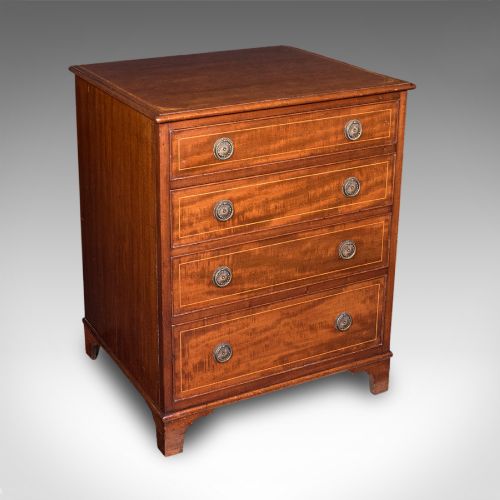
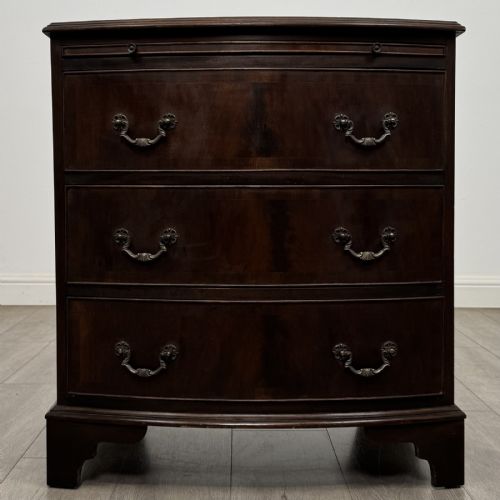
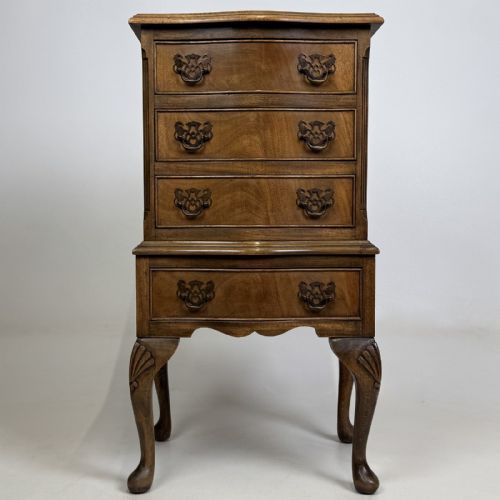
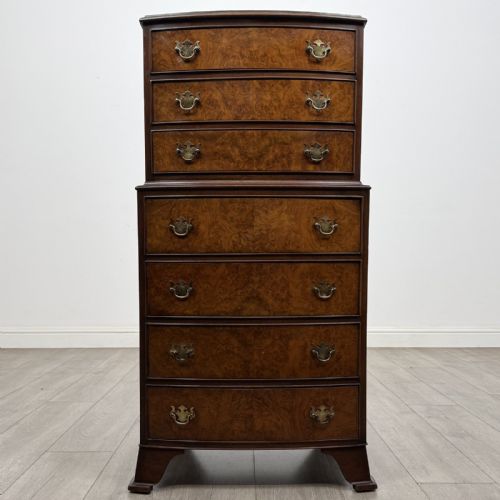
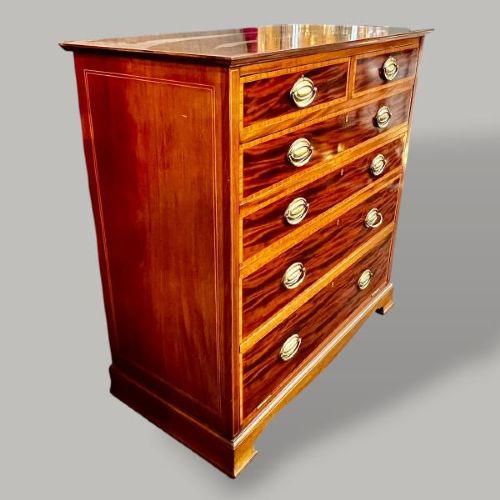
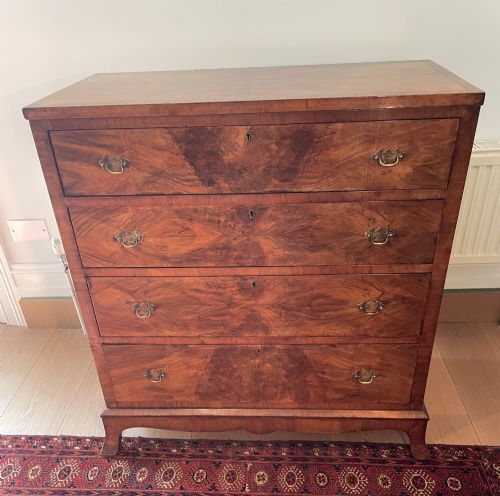
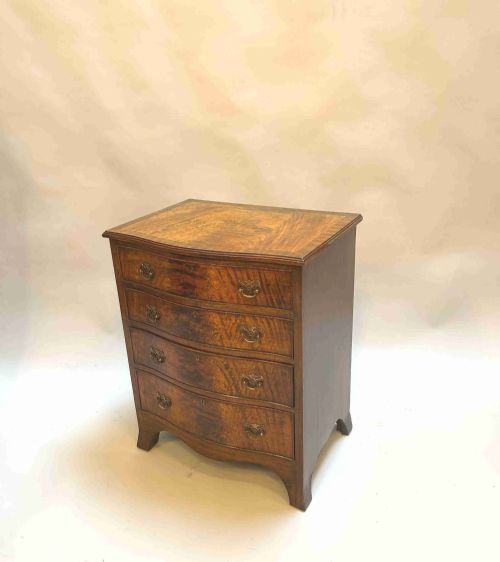
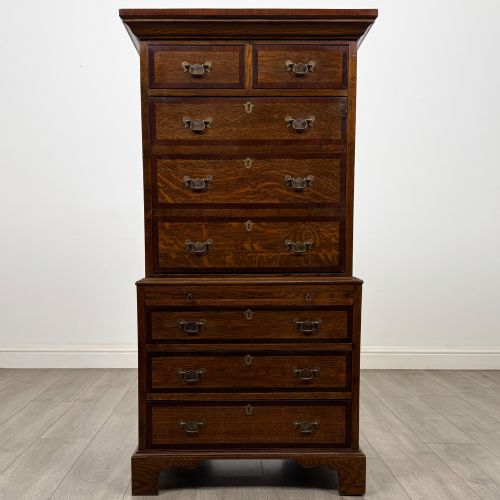


Georgian Revival Tallboy
A georgian revival tallboy offers imposing vertical storage with classic proportions, bringing stately presence and practical drawer space to a bedroom.
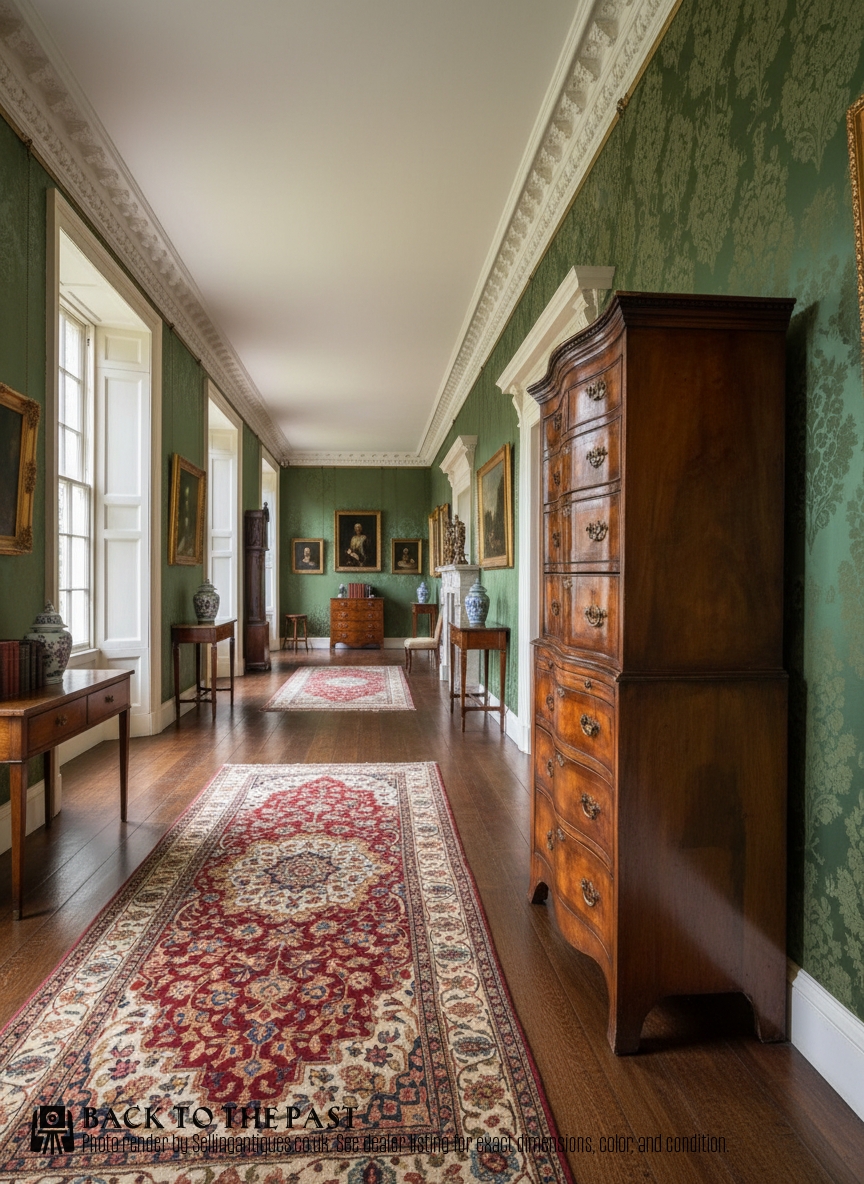
Georgian Revival Tallboy
When you search for a georgian revival tallboy, you are looking at substantial case furniture designed to provide ample vertical drawer space without dominating floor space. These pieces draw heavily on eighteenth-century design principles, often taking the form of a chest on chest or a tall, narrow chest of drawers.
On this page, the pieces you are most likely to encounter date from the late nineteenth century through to the interwar period, spanning the Edwardian era and the George V years. They capture the architectural cornices and bracket feet of earlier centuries while serving contemporary domestic needs for linen and clothing storage.
How they were made
Cabinetmakers constructed these pieces primarily using solid timbers and decorative veneers such as mahogany, figured walnut, and burr walnut over stable secondary woods like pine. Surfaces often display carefully matched veneer grains, particularly on drawer fronts, complemented by brass drop handles or backplates.
Structural integrity relies on traditional joinery methods, including dovetail joints for the drawer construction and sturdy framing for the tall carcase. Certain examples incorporate moulded caddy tops or serpentine fronts, requiring precise woodworking techniques to shape the solid wood and veneer accurately.
Georgian Revival Tallboy Retail Price Guide 2026
Typical asking prices for georgian revival tallboy among the pieces listed under this phrase on Sellingantiques today, from the lower quarter to the upper quarter. They describe what is for sale here now, not the wider market.
Several examples incorporate hidden compartments behind secret panelled mouldings, designed for storing family silver or private correspondence.
What varies in quality
The distinction between standard examples and the finest pieces often rests on the choice of timber and the sophistication of the cabinetwork. Grain selection on drawer fronts, the complexity of mouldings like caddy tops, and the refinement of brass hardware set superior examples apart.
Proportion and execution define the overall success of the revival piece. A well-proportioned tallboy maintains visual balance across its height, with crisp carving and smooth drawer operation reflecting the maker's competence.
The Georgian Revival Tallboy Glossary
- Tallboy
- A tall chest of drawers, often constructed as one chest stacked upon another chest of similar width. This form maximises vertical storage capacity while maintaining a compact footprint.
- Caddy top
- A raised, moulded tabletop profile resembling the lid of a tea caddy. It adds a distinct architectural edge to the piece.
- Bow front
- A convexly curved front on a chest of drawers. This curved profile softens the rectangular lines of the carcase.
- Bracket foot
- A simple foot shape formed by two pieces of wood mitred together at the corner. It lifts the tallboy slightly off the floor.
- Dovetail joint
- An interlocking woodworking joint used at the corners of drawers. It provides exceptional tensile strength to withstand daily pull.
Georgian Revival Tallboy: Frequently Asked Questions
What is a georgian revival tallboy?
A georgian revival tallboy is a tall chest of drawers produced in the late nineteenth or early twentieth century, imitating eighteenth-century styles.
These pieces provide high-capacity vertical storage while reflecting classic architectural proportions and decorative veneer work.
How were tallboys used historically?
Historically, tallboys served primarily in bedchambers for storing linens, garments, and personal items.
The stacked drawer configuration allowed households to organise different types of clothing within a single footprint.
How do I style a tallboy at home?
A tallboy functions well in bedrooms or dressing rooms where floor space is limited but vertical storage is required.
Keep the top surface relatively clear to let the timber grain and moulded cornice remain the visual focal point.
How do I identify a revival piece from an original?
Revival pieces from the Edwardian period or the 1920s and 1930s often utilise secondary woods and machine-assisted joinery alongside hand-cut dovetails.
Examining the internal drawer linings, backboards, and hardware fixings helps determine the manufacturing era.