
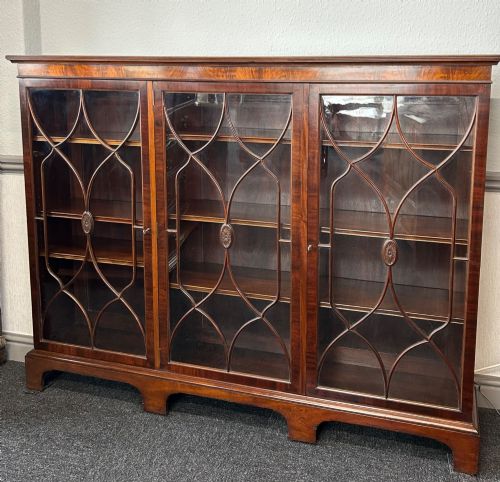
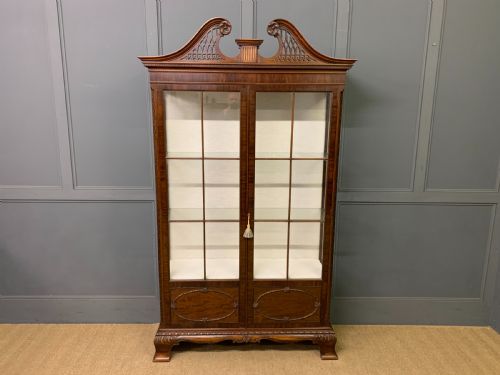


Georgian Revival Bookcase
These pieces take the classic forms of earlier centuries and reinterpret them for Edwardian and later rooms.
Georgian Revival Bookcase
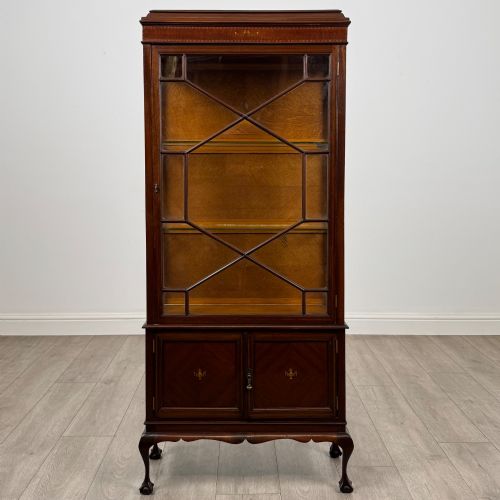
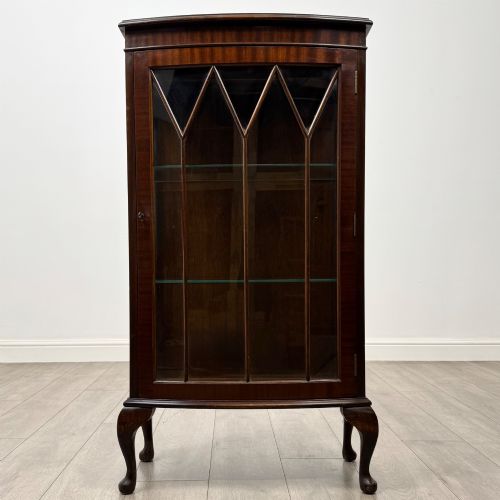
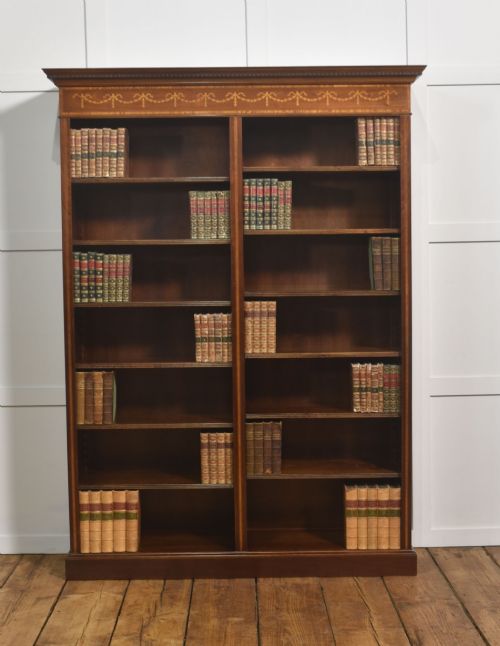
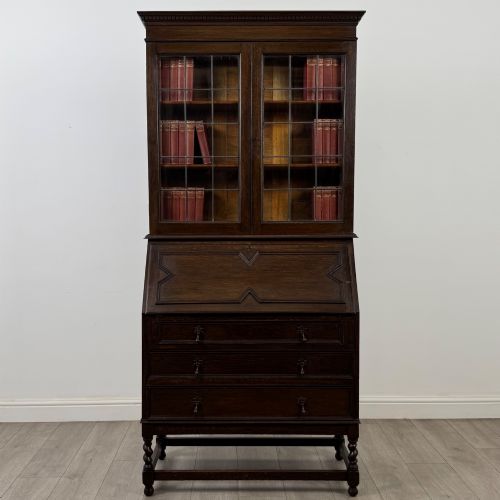
A georgian revival bookcase draws upon eighteenth-century proportions while utilising timber and glazing methods from the Edwardian period onwards. These items span open shelves, bureau variants, and glazed display cabinets produced across the late nineteenth and early twentieth centuries.
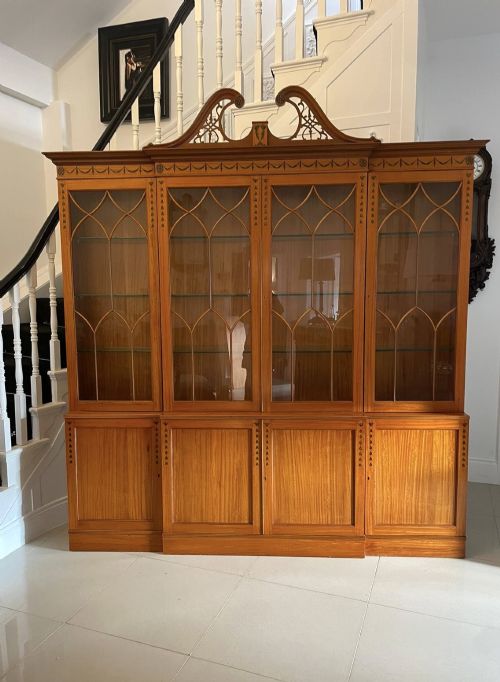
The version most commonly met on this page is the mahogany breakfront or glazed cabinet carrying Sheraton or Chippendale influences. Walnut, satinwood, and oak also appear, alongside specialised forms such as book troughs and corner cabinets.
Materials and construction
Makers relied primarily upon solid mahogany and walnut, frequently applying satinwood inlay, marquetry, or burr walnut veneers to structural carcases. Glass panels were secured within wooden framing, often shaped as astragal bars dividing the door lights.
Brass fittings appeared on handles and escutcheons, whilst internal shelving was commonly adjustable to accommodate varying book sizes. Painted decoration and parquetry served to enrich specific satinwood and cabinet bodies.
Georgian Revival Bookcase Retail Price Guide 2026
Typical asking prices for georgian revival bookcase among the pieces listed under this phrase on Sellingantiques today, from the lower quarter to the upper quarter. They describe what is for sale here now, not the wider market.
Materials span mahogany, walnut, satinwood, and burr walnut, alongside glass, brass, and fabric components.
What separates the best from the rest
The tier of workmanship depends upon the precision of the timber matching, the crispness of inlaid details, and the overall structural balance of the piece. Breakfront forms with intricate astragal glazing and original painted decoration represent the more ambitious end of the spectrum.
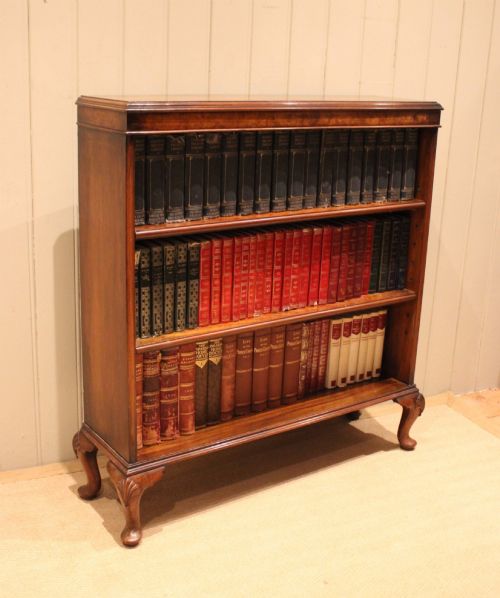
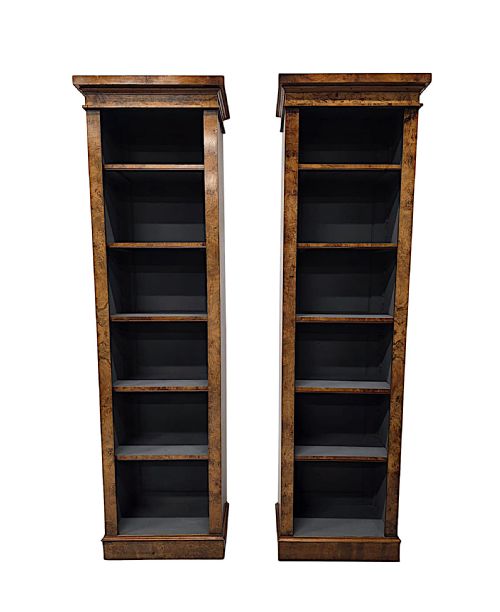
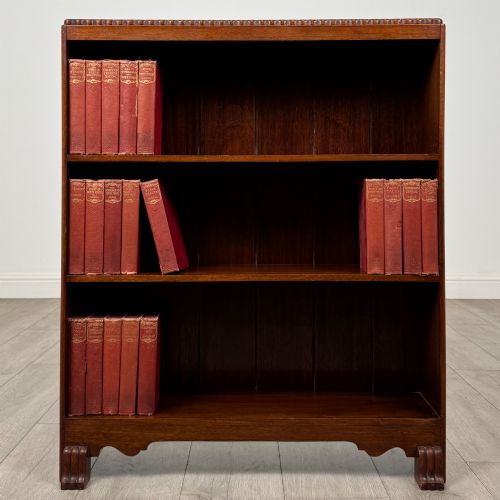
Simpler open bookcases rely entirely upon the grain of the walnut or mahogany and the soundness of their fixed or adjustable shelving. Finer examples display meticulous cabinet-making without recourse to heavy ornamentation.
Wylie and Lochhead·Edwards and Roberts
The Georgian Revival Bookcase Glossary
- Astragal glazed
- Glass doors divided by narrow wooden strips holding individual panes in place. These bars form geometric patterns across the cabinet front.
- Breakfront
- A cabinet formation where the central section projects forward from the flanking wings. This creates architectural depth and visual weight.
- Secretaire bookcase
- A tall cabinet incorporating a pull-down writing drawer with internal pigeonholes and small drawers. It combines a writing desk with upper book storage.
- Marquetry
- Decorative patterns formed by fitting together contrasting veneers of wood, shell, or ivory. These designs often depict floral or classical motifs.
- Parquetry
- Geometric mosaic woodwork arranged in regular patterns such as cubes or squares. It provides a formal decorative surface on cabinet doors.
Georgian Revival Bookcase: Frequently Asked Questions
How do I date a georgian revival bookcase?
Dating relies upon timber characteristics, construction methods, and stylistic cues present in the piece. Many examples date from the Edwardian era through the nineteen-twenties.
Examining the backboards, drawer linings, and hardware often clarifies whether the item stems from the late nineteenth or early twentieth century.
Are the shelves adjustable?
Many variations feature adjustable shelving supported by wooden racks or brass studs. This allows the internal height to be altered for different volumes.
Open bookshelves and glazed cabinets alike frequently provide this flexibility for practical library use.
What is a bureau bookcase?
A bureau bookcase combines a sloping or fall-front writing desk with shelving enclosed behind doors above. It serves both study and storage functions in a single piece of furniture.
Inside the fall-front, small drawers and pigeonholes organise stationery while the upper section houses books.
How should I care for satinwood?
Satinwood requires protection from direct sunlight to preserve its pale golden tone and delicate inlay work. Regular dusting with a soft, dry cloth maintains the polished surface.
Avoiding excessive moisture and wax buildup keeps marquetry and painted decorations secure over time.