
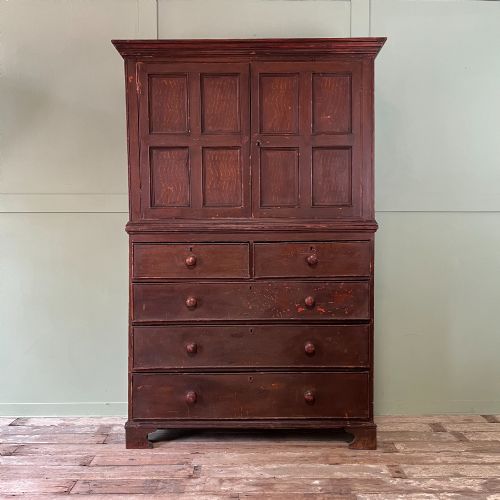
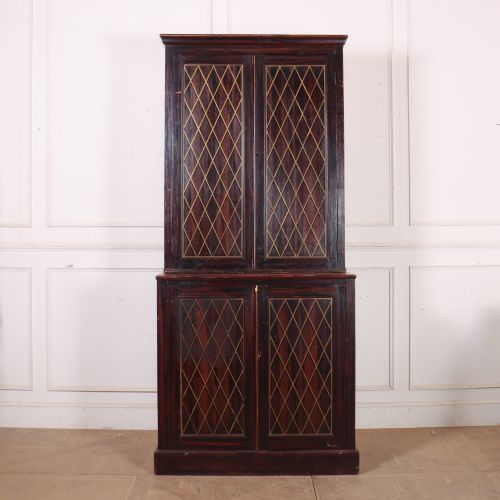
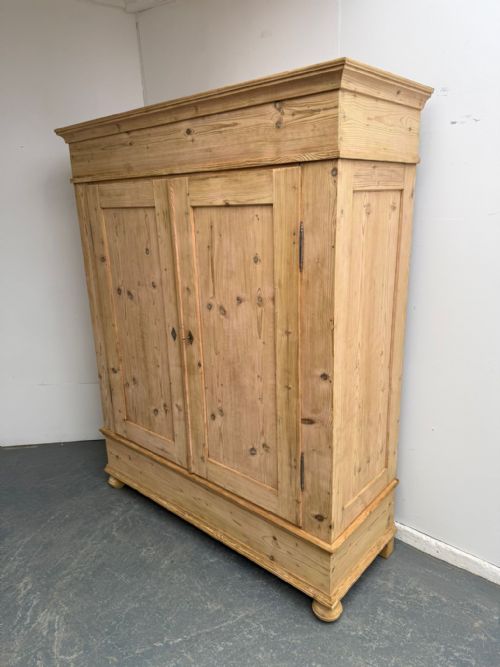
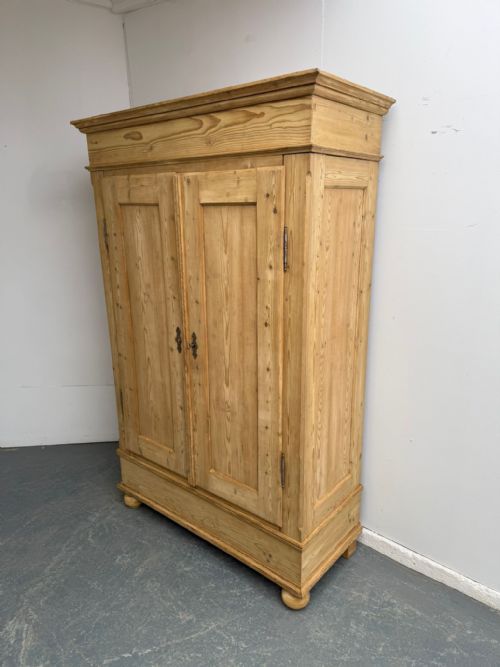


Georgian Pine Housekeeper Cupboard
A georgian pine housekeeper cupboard offers honest country storage with deep drawers and panelled doors built for domestic service.
Georgian Pine Housekeeper Cupboard
A georgian pine housekeeper cupboard is a substantial storage piece originating from domestic service spaces in English, Welsh, and Irish country houses. These large cabinets combine hanging space, shelving, and lower drawers to hold household linens, provisions, and textiles.
The versions most commonly met on this page span the 18th century through the 19th century, often showing regional Vernacular styles from the West Country, Yorkshire, or Ireland. They take the form of tall two-door cupboards, knockdown wardrobes, and linen presses designed to stand against a large wall.
Materials and construction methods
These pieces rely primarily on solid pine, built with pegged mortise and tenon joints to withstand heavy domestic use. Many examples incorporate iron or brass hardware such as strap hinges, locks, and handles.
Surfaces frequently show historical layers of paint or original waxed finishes, with some pieces found stripped back to raw wood. Interior layouts often feature fixed shelving, pegged hanging rails, or deep drawers with hand-cut dovetail joints.
The listings span the 18th and 19th centuries, uniting English, Welsh, and Irish regional pine forms.
Markers of quality in country pine storage
Quality rests in the architectural proportions and the integrity of the original timber framing. Pieces with untouched backboards, original fielded panels, and minimal structural alteration stand apart from heavily restored examples.
The character of the surface finish plays a major role, particularly where old paint retains its genuine patination and wear. Well-executed vernacular joinery with precise dovetailing in the internal drawers distinguishes superior cabinet work.
The Georgian Pine Housekeeper Cupboard Glossary
- Vernacular
- Everyday furniture built by regional makers using local traditions rather than metropolitan pattern books. This approach explains the distinct local characteristics found in pieces from Yorkshire or Ireland.
- Knockdown
- Furniture constructed to be dismantled into sections for easier transport and installation in large houses. This clever joinery uses wooden pins and wedges rather than permanent glue.
- Fielded panel
- A wooden panel with bevelled edges recessed into a frame to allow for natural wood expansion and contraction. This technique keeps the doors stable through seasonal humidity changes.
- Linen press
- A tall cupboard featuring upper sliding trays or shelves above a chest of drawers. These were specifically designed to keep folded textiles flat and protected.
- Dovetail
- A traditional interlocking joint used to construct drawer boxes securely without metal fasteners. The tight triangular pins show the hand of the maker.
Georgian Pine Housekeeper Cupboard: Frequently Asked Questions
What rooms suit a housekeeper cupboard?
These large storage units work well in spacious kitchens, boot rooms, or hallways where they provide deep utility storage for everyday items and linens.
Their commanding scale requires a tall wall and sufficient floor space to let the doors open fully without crowding the room.
How do I care for antique pine furniture?
Keep the wood away from direct heat sources and sudden humidity shifts to prevent the timber from splitting or warping over time.
Feed waxed surfaces occasionally with a traditional beeswax polish and dust painted finishes gently with a dry cloth.
Are these cupboards easy to move?
Many period examples are surprisingly heavy and may require specialist antique transport unless they feature knockdown construction designed for dismantling.
Checking the construction method helps determine whether a piece separates into smaller sections before attempting to move it.
How can I tell an older pine cupboard apart?
Earlier pieces from the 18th century often display hand-sawn timber marks, forged iron hardware, and pegged joinery without modern screws.
Later 19th-century examples tend to use more standardised machine-sawn boards and simpler interior shelving arrangements.