
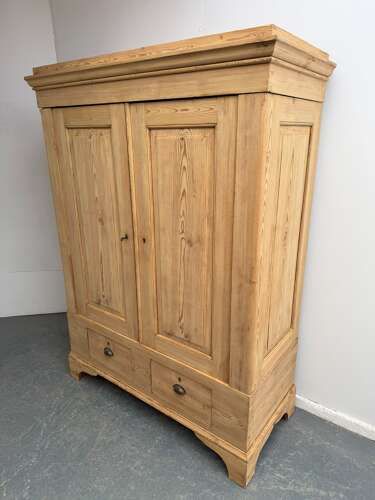
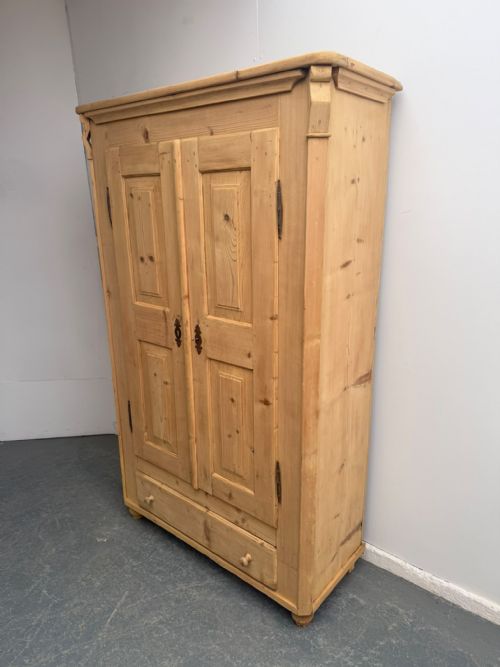
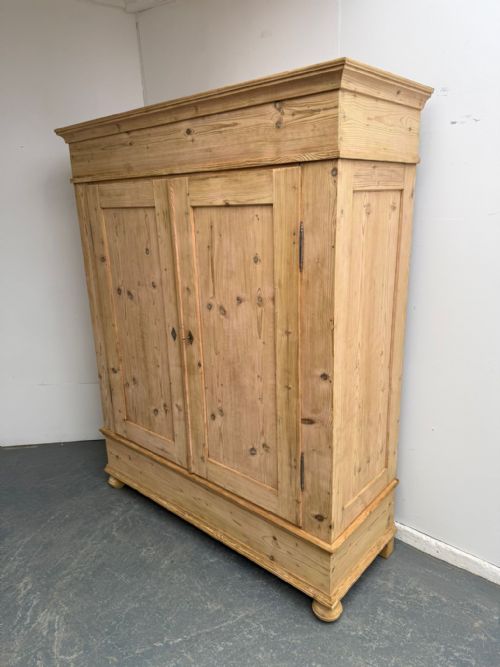

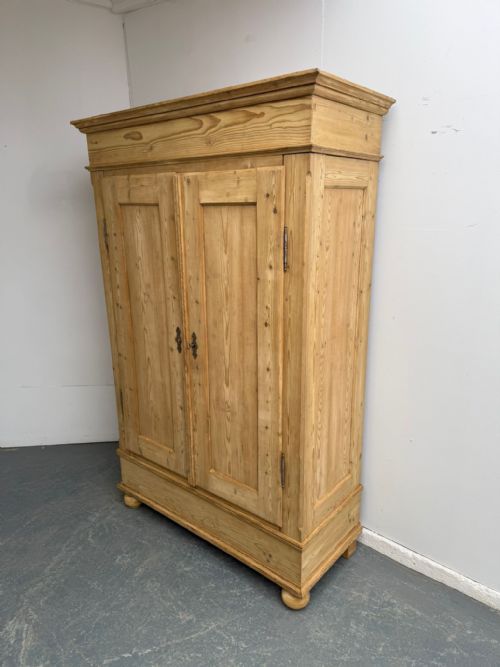


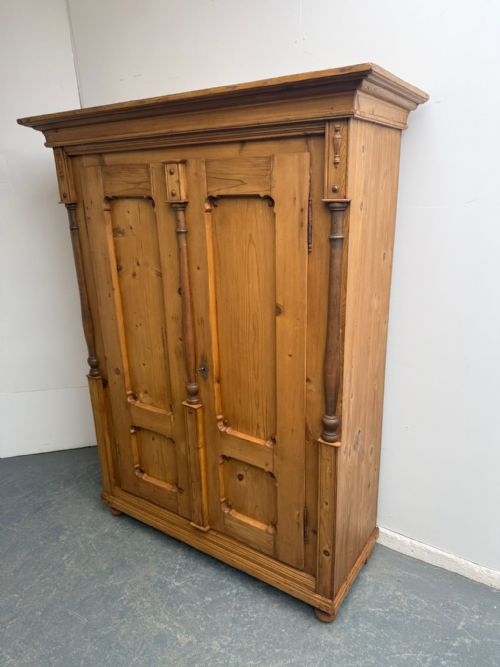


Georgian Pine Clothes Armoire
These georgian pine clothes armoire pieces offer honest vernacular storage, built from solid timber for everyday utility.
Georgian Pine Clothes Armoire
A georgian pine clothes armoire encompasses substantial two-door wardrobes, linen cupboards, and hanging cupboards rooted in the eighteenth century and the early nineteenth century. These sturdy pieces include low cottage examples, hall wardrobes, child's wardrobes, and knockdown variants designed for easier transport.
Most pieces seen here belong to the Georgian era and Welsh vernacular traditions, reflecting regional craftsmanship from the period. Buyers will frequently encounter timber surfaces prepared for finishing, alongside original painted or waxed examples.
These functional items served domestic storage needs in country houses and cottages alike. Their proportions range from compact hall cupboards to large panelled wardrobes with internal shelving and hanging space.
How they were made
Makers utilised solid pine for carcass construction, panelled doors, and internal shelving. Iron and brass hardware, such as hinges and latches, fastened the heavy timber doors securely.
Many larger examples employed knockdown construction methods, allowing the frame to dismantle into manageable sections using timber pegs or basic joinery. Surfaces were finished with protective layers of wax or traditional paint according to domestic preference.
Many cottage wardrobes were built intentionally low to fit beneath the modest ceiling heights of historic rural dwellings.
What varies in quality
Construction methods dictate structural integrity, with pegged knockdown frames and tight panel joins representing superior rural cabinetmaking. Simpler nailed or later altered joints indicate a more utilitarian workshop origin.
Surface preservation significantly affects character, distinguishing pieces retaining untouched historic paint or rich patinated wax from those stripped down or repeatedly refinished over centuries.
The Georgian Pine Clothes Armoire Glossary
- Knockdown wardrobe
- A large piece designed to dismantle into sections for transport through narrow cottage stairwells. This clever construction relies on pegged joints rather than permanent glue.
- Vernacular
- Everyday furniture built by local country joiners using regional materials rather than following formal metropolitan pattern books. These pieces prioritise practical function over high-style ornamentation.
- Linen cupboard
- A deep storage cabinet originally utilised for storing household textiles, blankets, and garments before fitted bedroom closets became common.
- Panelled door
- A door constructed with a central floating timber panel fitted into a grooved frame, allowing the wood to expand and contract naturally with seasonal humidity changes.
Georgian Pine Clothes Armoire: Frequently Asked Questions
What is a knockdown wardrobe?
A knockdown wardrobe is a large cabinet engineered to be taken apart into separate sections, including the top, base, sides, and doors. This clever design enabled heavy furniture to be moved between rooms and transported along narrow stairways.
Pegs and slots secure the frame together without requiring permanent fixings.
How do I care for waxed pine?
Waxed pine benefits from occasional applications of natural beeswax to nourish the timber and maintain a soft sheen. Avoid placing these pieces near direct heat sources or strong sunlight, which can dry out the wood.
Dust regularly with a dry cloth rather than using silicone-based polishes.
Are these wardrobes deep enough for modern hangers?
Many older wardrobes feature shallower internal depths than contemporary closets because historic garments were folded or hung differently. It is wise to check internal measurements if you intend to use standard modern coat hangers.
Some pieces were configured primarily for folded linen or shorter children's garments.
How do I distinguish country pine from formal Georgian pieces?
Country pine pieces display simple vernacular construction details, regional quirks, and robust utility rather than classical architectural orders. They lack the expensive mahogany veneers and intricate carving found in high-status urban townhouses.
The charm lies in honest proportions and local craftsmanship.