

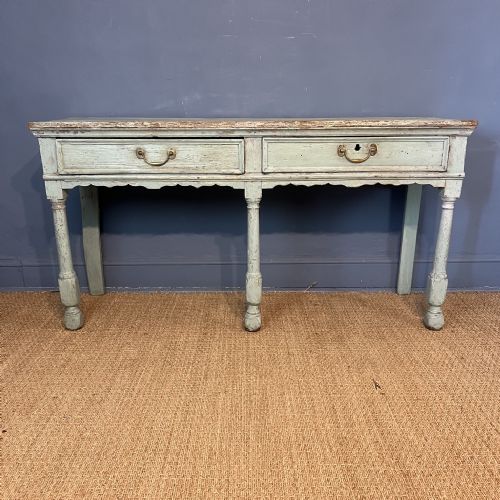
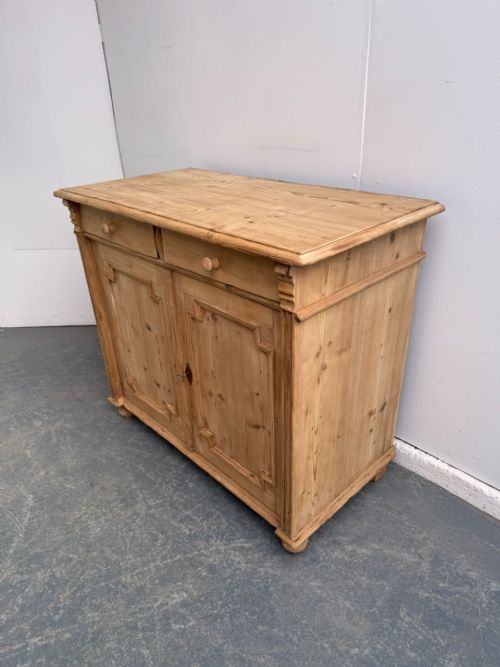


Georgian Pine Dresser Base
A georgian pine dresser base brings honest utility and warmth to a room, offering deep drawers and cupboards built for heavy country use.
Georgian Pine Dresser Base
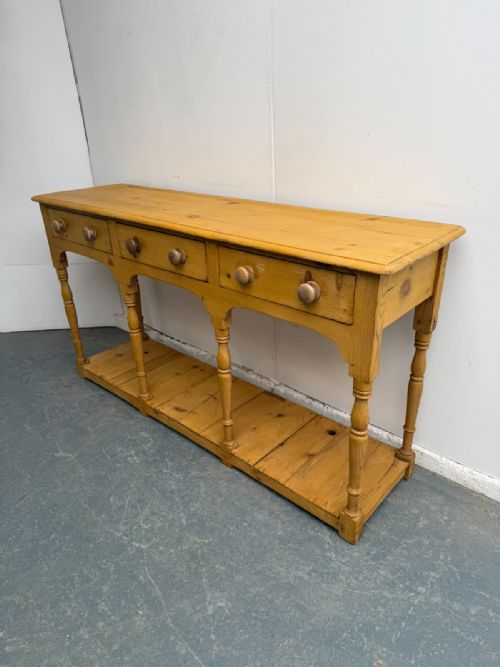
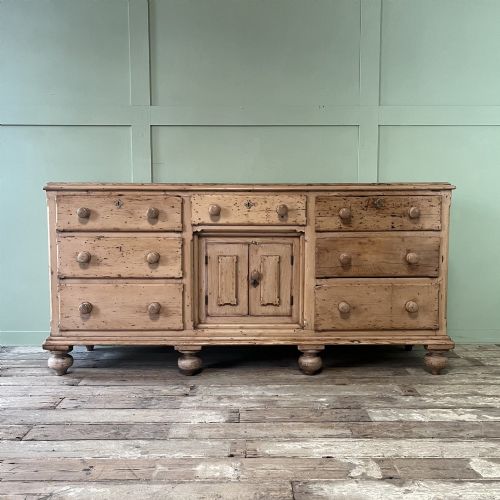
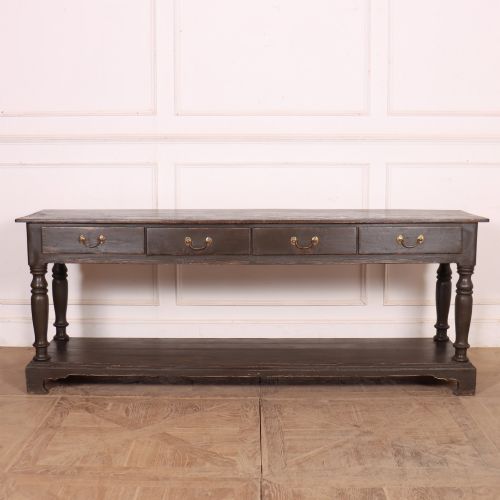
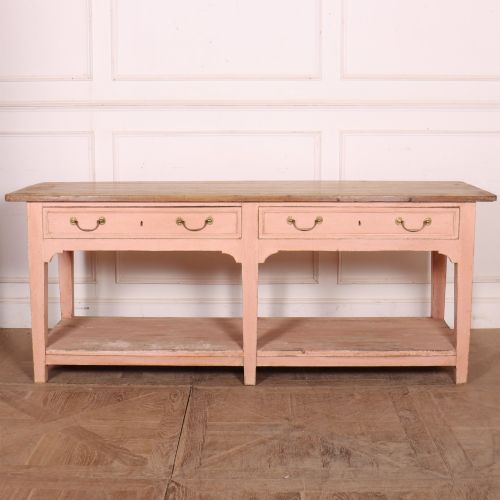
A georgian pine dresser base serves as a substantial low sideboard or kitchen counter, designed originally for storing tableware and provisions in country houses. These pieces combine drawers with cupboards, and many feature an open potboard shelf beneath for storing large platters.
Most examples you encounter on this page date from the eighteenth and nineteenth centuries, reflecting English, Scottish, and Welsh country traditions. They appear in raw waxed pine as well as historic painted finishes, showing the straightforward carpentry of regional workshops.
Materials and construction
Makers built these pieces primarily from solid pine and timber, frequently utilising secondary woods like sycamore for interiors and brass for drawer pulls or hardware. Construction relied on sturdy joints and heavy planks designed to withstand decades of daily domestic labour.
Surfaces often retain layers of original paint or traditional wax finishes that have built up patination over centuries. The combination of softwood boards and simple iron or brass fittings defines the vernacular character of these functional units.
Georgian Pine Dresser Base Retail Price Guide 2026
Typical asking prices for georgian pine dresser base among the pieces listed under this phrase on Sellingantiques today, from the lower quarter to the upper quarter. They describe what is for sale here now, not the wider market.
Listings feature examples from both the eighteenth and nineteenth centuries, encompassing English, Scottish, and Welsh regional styles in pine, paint, and oak.
Distinctions in quality
Quality rests in the proportion of the carcass, the integrity of the timber framing, and the survival of original hardware and paint surfaces. Pieces with untouched historic paintwork or potboard bases command particular interest from collectors.
The sophistication of the mouldings and the clever arrangement of drawers and cupboards separate standard utility furniture from finer country house examples. Timbers that have aged with a rich, unblemished grain and minimal structural alteration represent the upper end of what survives.
The Georgian Pine Dresser Base Glossary
- Potboard
- An open lower shelf beneath a dresser base designed for displaying or storing heavy pots, pans, and serving dishes. This lower tier sits just above the floor on sturdy feet or stile extensions.
- Dresser base
- The lower portion of a kitchen dresser, functioning independently as a sideboard, serving table, or low cupboard. It typically incorporates a combination of working drawers and cabinet doors.
- Vernacular furniture
- Domestic objects made by local craftsmen using regional materials rather than following strict metropolitan design books. These items prioritise practicality and local utility above fashionable ornament.
- Patina
- The deep surface sheen and mellow colour developed on wood and paint over decades of handling, cleaning, and exposure to light. It serves as a visual record of an object's age and continuous use.
Georgian Pine Dresser Base: Frequently Asked Questions
How were these dressers used?
These pieces functioned as the main workhorses of the farmhouse kitchen, holding everyday ceramics, cutlery, and baking supplies. The top surface provided extra room for food preparation and serving.
In larger country houses, they sat in the scullery or pantry, while in simpler homes they occupied the heart of the living space where meals were prepared and eaten.
Can I use one as a sideboard?
A georgian pine dresser base works exceptionally well as a sideboard in a modern dining room or hallway. The deep drawers and cupboards swallow up table linen and tableware with ease.
The long wooden top also offers an ideal surface for lamps, books, or displaying collections, bringing warmth and character to contemporary interiors.
How do I care for painted pine?
Painted surfaces require gentle cleaning with a soft, dry cloth to remove dust without disturbing historic pigment. Avoid modern chemical solvents or harsh multi-purpose cleaners that can strip fragile early finishes.
If the paint is unsealed, keep the piece away from direct heat sources and damp environments to prevent flaking or warping of the pine boards.
How do I spot an 18th century piece?
Eighteenth-century examples often display hand-cut dovetails in the drawer construction and timber boards of varied widths secured with wooden pegs. The overall proportions tend to be heavier and lower than later Victorian iterations.
Examine the backboards and interior framing for signs of hand-adzing and tool marks that reveal older methods of board preparation before machine planing became common.