



Georgian Pie Crust Table
A georgian pie crust table brings sculptural carved wooden edges and tilt-top utility to any room, exactly as makers intended.
Georgian Pie Crust Table
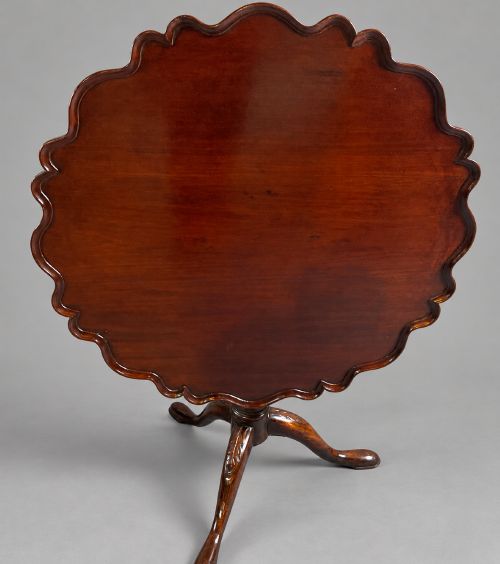
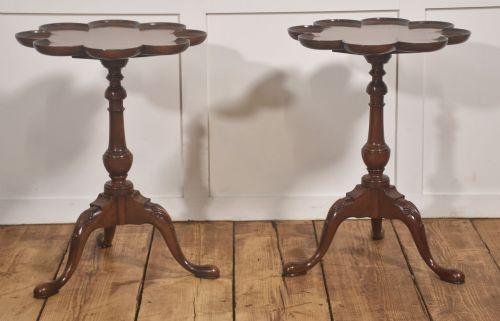
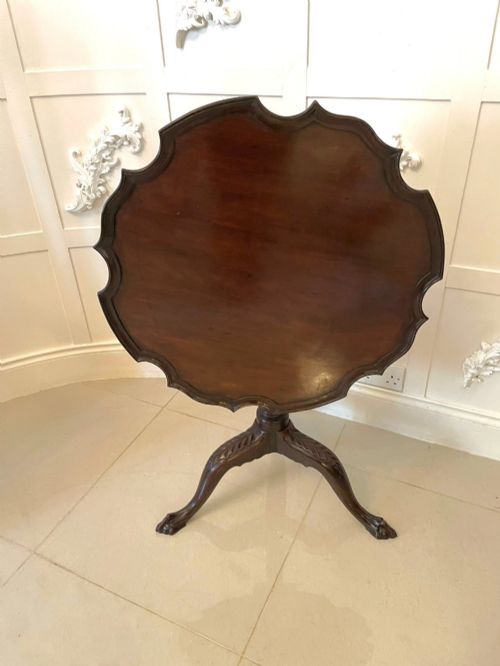
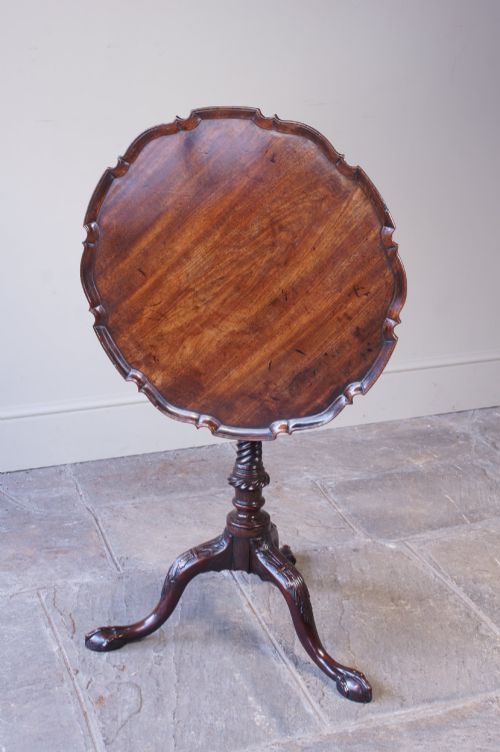
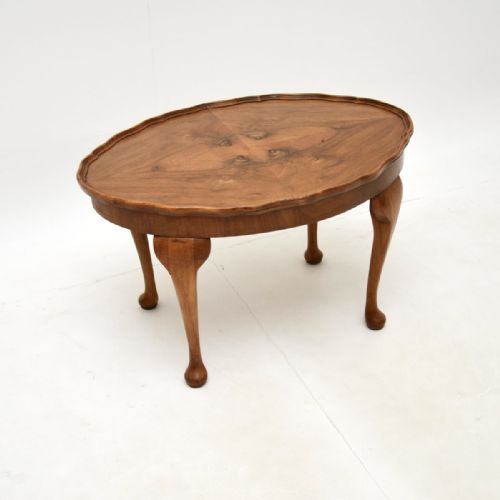
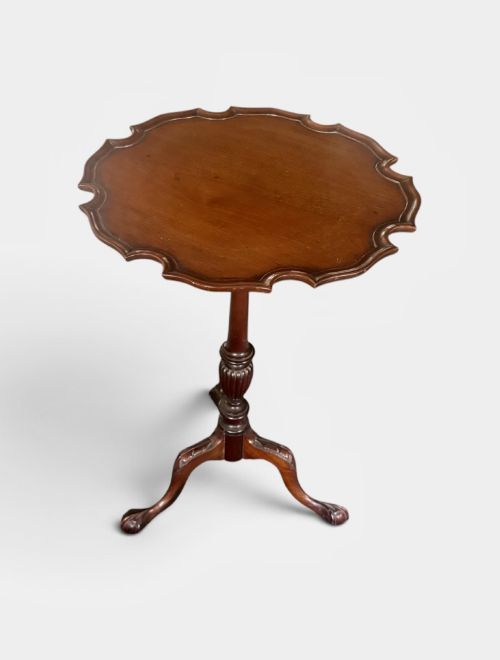
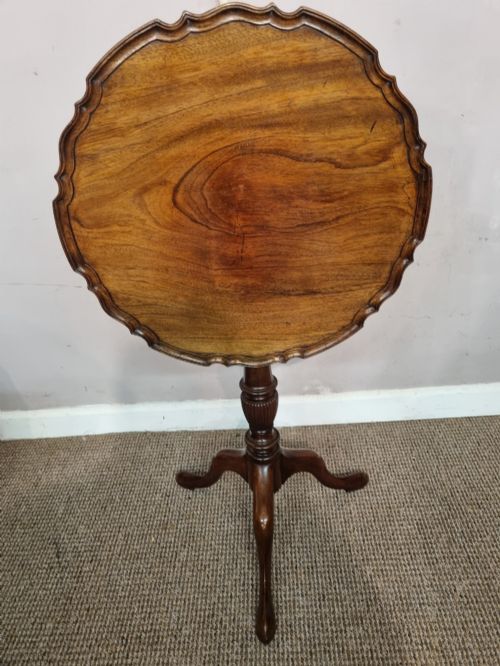
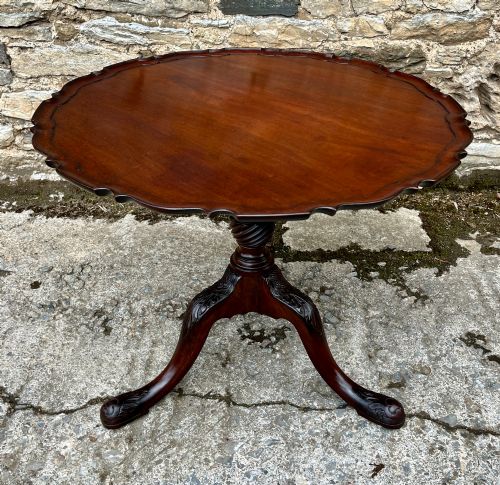
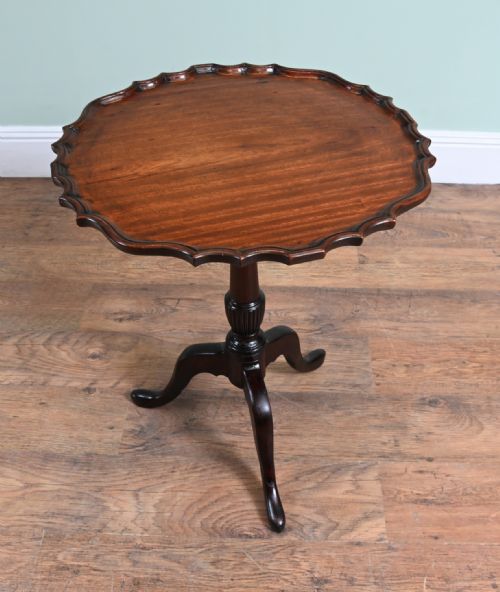
A georgian pie crust table is a small round occasional or tea table distinguished by its raised, carved rim resembling pastry crust. These pieces most commonly appear as tripod tables with tilt tops, alongside later revival iterations from the nineteenth and twentieth centuries.
The form spans centuries of cabinetmaking, moving from eighteenth-century George III originals through Victorian interpretations to twentieth-century revivals. Buyers encounter mahogany and walnut examples configured as wine tables, supper tables, and coffee tables.
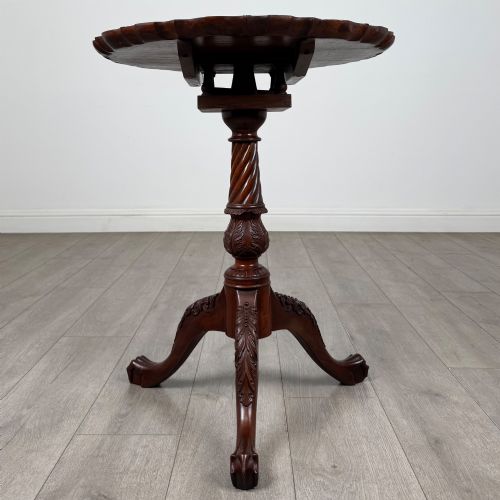
Originating as practical tea and supper furniture, these tables utilise pedestal bases with three legs for stability on uneven floors. The tilting mechanism allows the top to fold flat against the pedestal when not in use, saving floor space.
Materials and Construction
Makers built these tables primarily in solid mahogany or walnut, frequently selecting figured or burr veneers for the circular tops. Goncalo Alves and brass hardware appear occasionally in the construction.
The characteristic rim is carved directly from solid timber rather than attached separately, requiring considerable skill from the woodcarver. Tripod bases connect to the central pillar via dovetail joints and blocking for structural support.
Tilt-top mechanisms often incorporate a birdcage device, allowing the top to both pivot and rotate independently. Turning lathes shaped the central pedestals while hand tools formed the cabriole legs and claw-and-ball or pad feet.
Georgian Pie Crust Table Retail Price Guide 2026
Typical asking prices for georgian pie crust table among the pieces listed under this phrase on Sellingantiques today, from the lower quarter to the upper quarter. They describe what is for sale here now, not the wider market.
Listings include mahogany, walnut, burr walnut, and goncalo Alves across periods spanning the Georgian era to the 1930s.
Distinctions in Quality
Quality rests primarily in the crispness and depth of the carved rim, where master carvers achieved sharp, clean lobes rather than soft, rounded profiles. The selection of timber grain, particularly matched burr walnut or dense mahogany, dictates the visual weight of the top.
Proportion separates standard examples from superior pieces, evident in the graceful sweep of the tripod legs and the turned profile of the central column. The integrity of the tilt mechanism and the seamless movement of the birdcage pivot also indicate superior craftsmanship.
Gillows
The Georgian Pie Crust Table Glossary
- Pie crust table
- A round table featuring a raised, scalloped carved rim. This decorative edge mimics traditional pastry work.
- Tilt top
- A table top hinged to tip vertically when not in use. This mechanism allowed tables to be stored against walls.
- Tripod table
- A piece supported by a single central pillar resting on three legs. The three-point contact provides stability on uneven historic floors.
- Birdcage
- A timber framework beneath the table top that permits rotation and tilting. It connects the top to the central pedestal column.
- Cabriole leg
- A furniture leg featuring a double curve, curving outward then inward toward the foot. This shape derives from animal limbs.
Georgian Pie Crust Table: Frequently Asked Questions
What is a birdcage mechanism?
A birdcage is a small wooden framing structure fitted beneath the table top. It connects the top to the central column and allows the surface to rotate as well as tilt.
This functional element made serving tea or meals easier in period dining spaces. It permitted the user to turn the surface toward them without moving the entire pedestal base.
How do I use a tilt top table?
The tilting top enables the table to fold flat against the central pedestal pillar. This design allows the furniture to be pushed against a wall to clear floor space.
In daily use, these tables serve as wine tables, lamp stands, or small coffee tables. Their compact footprints suit corners and beside seating.
How do I tell an 18th century table from a 1920s revival?
Eighteenth-century examples display hand-cut joinery, timber shrinkage appropriate to age, and distinct patination on the mahogany or walnut surfaces. Revival pieces from the 1920s and 1930s often utilise machine tooling and standardised internal hardware.
Examining the underside reveals tool marks and construction methods specific to the Georgian period versus later revival eras. Wood density and colour depth also help differentiate the eras.
Were these tables meant for dining?
Supper tables and tea tables provided flexible surfaces for light meals and social gatherings before permanent dining rooms became standard. Their portability meant servants could move them easily between rooms.
The raised rim prevented cups and glasses from sliding off while the table was in use or being repositioned.