

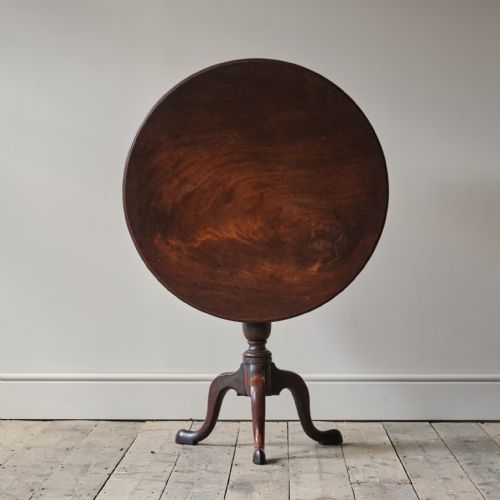
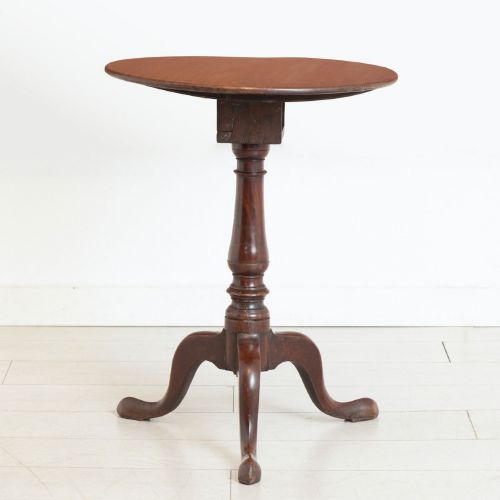


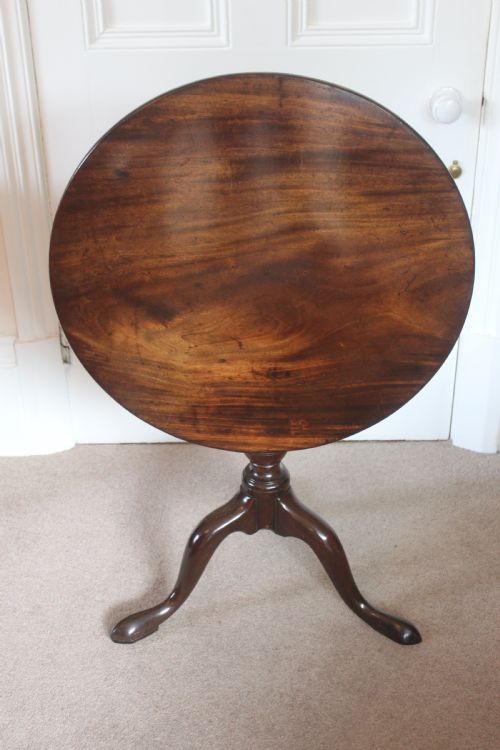
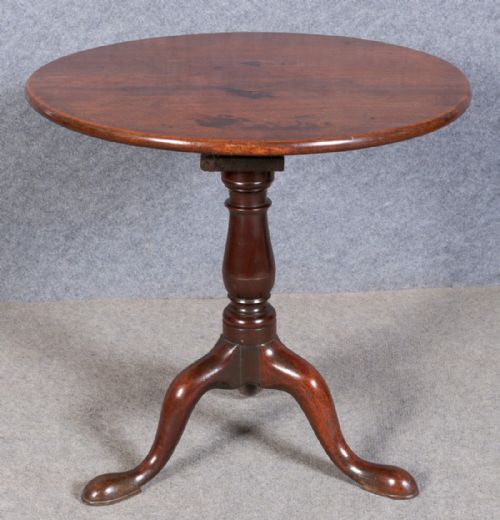


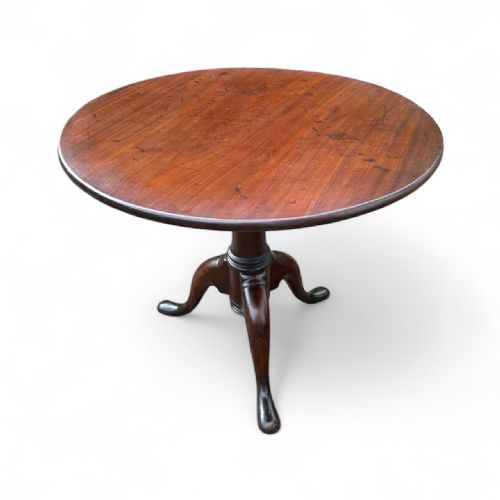


Birdcage Action Tilt Table
A birdcage action tilt table is a clever Georgian design allowing the top to rotate and tilt for compact storage.
Birdcage Action Tilt Table
A birdcage action tilt table combines a circular top with a pivoting mechanism and a folding tripod base. These pieces appear mostly from the eighteenth century, spanning the Georgian and Early Georgian periods.
Most examples found here utilise mahogany, alongside occasional pieces in oak, shaped as occasional tables, side tables, and tilt top tables. The distinctive rotating cage beneath the top gives the furniture its name.
Buyers seeking a birdcage action tilt table encounter traditional tripod supports and dish top profiles. The construction serves both as a functional tea table and a space-saving device when tipped vertically.
How they were made
Joiners constructed these tables primarily in mahogany and oak, frequently employing solid timbers for the circular tops. Some surfaces feature a single piece of wood, demanding wide planks from mature trees.
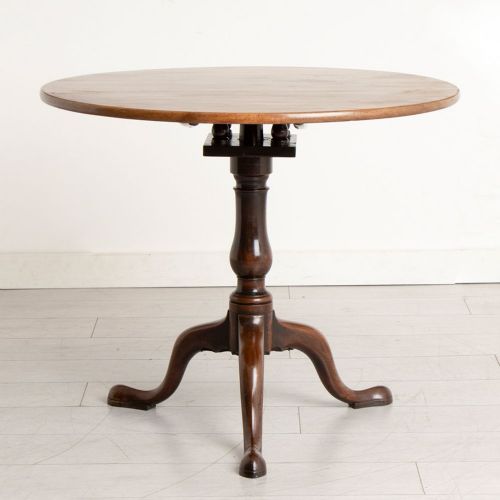
The birdcage mechanism incorporates small wooden turning blocks and rotating pivots, allowing the top to spin independently of the column. Metal elements such as iron and brass appear in hinges, catches, and fixings to secure the action.
Birdcage Action Tilt Table Retail Price Guide 2026
Typical asking prices for birdcage action tilt table among the pieces listed under this phrase on Sellingantiques today, from the lower quarter to the upper quarter. They describe what is for sale here now, not the wider market.
One past piece arrived with a later coat of paint, proving that even clever eighteenth-century birdcages occasionally suffered a colourful makeover.
What varies in quality
The refinement of the timber selection dictates much of the distinction, particularly where single-piece mahogany tops contrast with multi-board constructions. Finer specimens display superior figure in the grain and careful matching of components.
The complexity and smoothness of the birdcage turning separate standard examples from superior ones. Tighter tolerances in the pivoting mechanism ensure the table top rests level without excessive play when locked flat.
The Birdcage Action Tilt Table Glossary
- Birdcage action
- A rotating wooden frame beneath the table top that permits both rotation and tilting. This mechanism uses small columns and blocks to connect the top to the central pillar.
- Tilt top table
- A table with a hinged surface that folds into a vertical position when not in use. This design allowed furniture to stand flat against a wall to save floor space.
- Dish top
- A table surface featuring a raised, carved rim turned from the solid wood of the top. This profile prevented items from sliding off during use.
- Tripod base
- A support structure comprising three legs radiating from a central pillar. These legs frequently terminate in pad feet or similar traditional forms.
- Georgian
- The period spanning the reigns of the first four Georges, noted for proportion and classical restraint in furniture design. Many tables here date from this era.
Birdcage Action Tilt Table: Frequently Asked Questions
What is a birdcage action?
The birdcage action is a rotating wooden frame situated beneath the table top. It connects the surface to the central pillar using small vertical spindles.
This construction allows the table top to spin horizontally and tilt vertically. The arrangement provided practical versatility for eighteenth-century drawing rooms.
How were these tables used?
These pieces served as occasional tables for tea, reading, or card playing. Their portable nature allowed servants to move them easily around a room.
When not in use, the top tilted upright so the table could rest against the wall. This saved valuable floor space in period interiors.
Are all these tables mahogany?
Mahogany is the dominant material seen across these eighteenth-century and Georgian listings. Its strength made it suitable for slender tripod legs and detailed turning.
Oak also appears in country-made examples, offering a heavier and more rustic appearance. Brass and iron components support the internal pivoting mechanisms.