


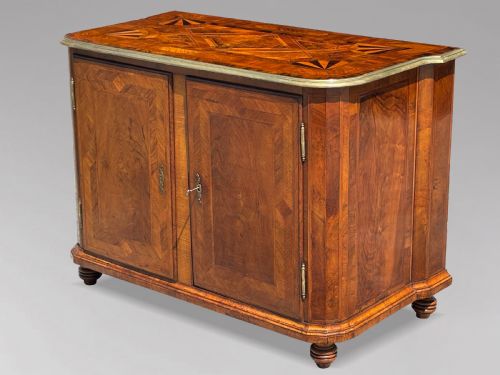
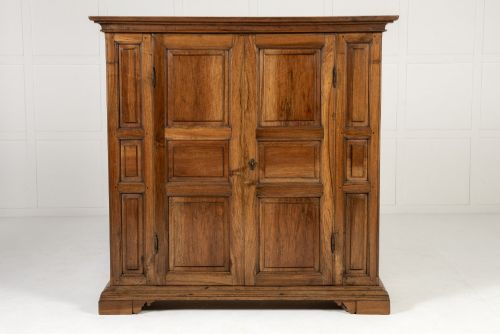


Georgian Period Walnut Cabinet
A georgian period walnut cabinet brings rich timber and domestic storage into a room, spanning bureau bookcases to chests on stands.
Georgian Period Walnut Cabinet
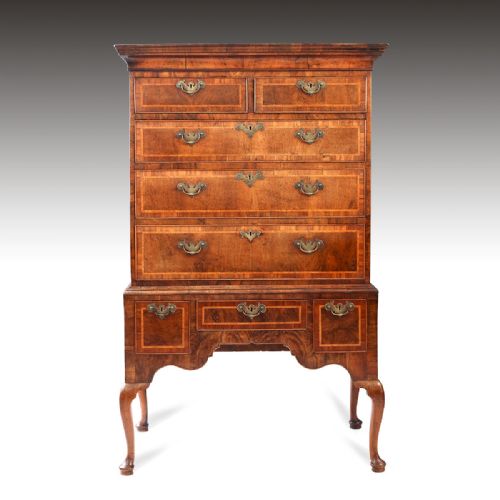
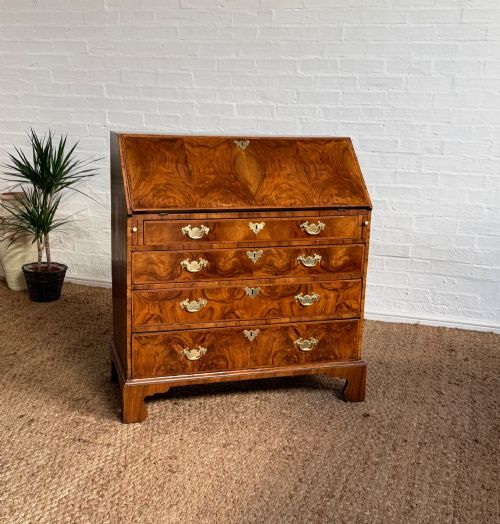
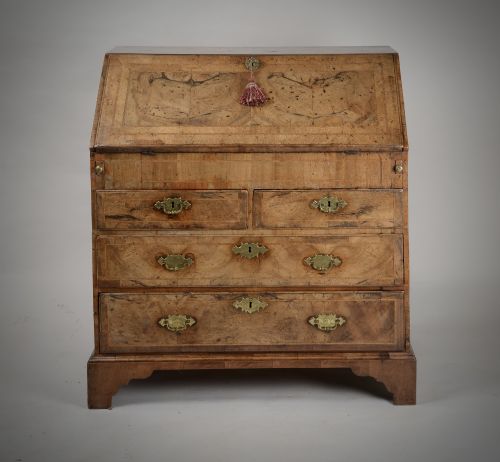
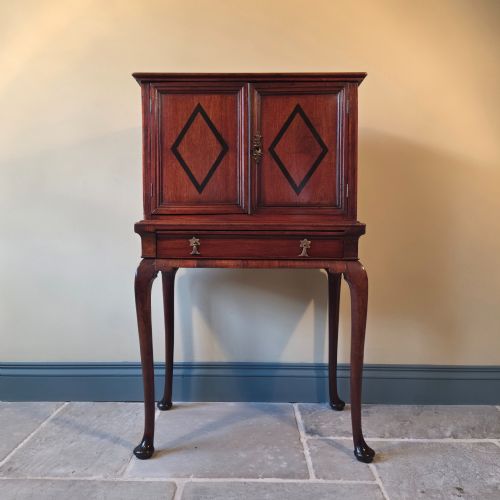
A georgian period walnut cabinet covers several domestic forms seen in the listings, including bureau bookcases, chests of drawers, corner cupboards, and chests on stands. These pieces date across the seventeenth and eighteenth centuries, incorporating stylistic phases from William and Mary through Queen Anne, George I, and George II.
The version most commonly met on this page is the walnut bureau or bureau bookcase, often arranged with fitted internal drawers and pigeonholes. Alongside these stand smaller cabinets on stands, corner cupboards, and tall chests of drawers designed for daily utility and display.
Origins span English workshops alongside regional examples such as Italian and Maltese pieces, showing distinct regional timbers and construction methods. Surviving examples frequently retain original brass hardware, mirrored doors, or leather writing surfaces.
Materials and construction
Cabinet makers utilised solid oak and pine for internal carcases and drawer linings, providing a stable structural frame. Upon this foundation, they applied figured walnut and burr walnut veneers to external surfaces to display varied grain patterns.
Brass handles, escutcheons, and hinges secured doors and drawers, while selected writing compartments incorporated leather writing surfaces. Construction methods relied on dovetailed drawer joints and panelled doors suited to walnut timber.
Georgian Period Walnut Cabinet Retail Price Guide 2026
Typical asking prices for georgian period walnut cabinet among the pieces listed under this phrase on Sellingantiques today, from the lower quarter to the upper quarter. They describe what is for sale here now, not the wider market.
A secret compartment hidden behind a sliding pigeonhole remains one of the small domestic surprises built into these walnut desks.
Distinctions in quality
Quality rests in the selection of timber veneers, where highly figured burr walnut or matched walnut veneer creates a unified visual surface. Finer pieces maintain balanced proportions, crisp moulding details, and well-executed internal desk fittings.
The survival of original surface patination, glass plates in mirrored doors, and matching brass hardware distinguishes superior examples. Construction integrity within the secondary timbers and drawer linings further separates workshop output.
The Georgian Period Walnut Cabinet Glossary
- Burr walnut
- Timber sliced from walnut tree growths, producing swirling and mottled grain patterns prized for cabinet facades.
- Bureau bookcase
- A writing desk fitted with drawers or a fall front, surmounted by an enclosed shelving section with doors.
- Chest on stand
- A drawer chest elevated on a separate support frame with legs, typical of earlier cabinet designs.
- Red walnut
- A descriptor applied to specific variants of walnut timber displaying warm reddish undertones.
- Patina
- The surface sheen and colour developed by wood through age, handling, and maintenance over centuries.
Georgian Period Walnut Cabinet: Frequently Asked Questions
What is a walnut bureau bookcase?
A bureau bookcase combines a lower desk section featuring a sloping writing flap with an upper shelved cabinet enclosed by doors. These dual-purpose pieces served for correspondence, record-keeping, and the display of books.
Internal fittings usually comprise small drawers, pigeonholes, and occasionally a sliding well for documents.
How do I care for antique walnut?
Antique walnut requires stable indoor humidity levels and protection from direct sunlight to prevent timber movement or veneer lifting. Regular dusting with a soft, dry cloth preserves the finish.
Avoid silicone-based polishes, utilising traditional beeswax sparingly when the wood appears dry.
What distinguishes George I furniture?
George I period pieces date from the early eighteenth century, bridging the transition between Queen Anne curves and later classical restraint. Furniture from this era often highlights walnut veneers, shaped drawer fronts, and bracket feet.
Proportions remain compact, prioritising domestic utility over monumental scale.
Are original mirrors common on these cabinets?
Original mirrored doors survive on selected bureau bookcases from the early eighteenth century, often featuring bevelled edges within panelled frames. These mirrors reflect light and add depth to the cabinet facade.
Replacements occur frequently due to silver degradation over centuries of use.
Where were these cabinets made?
The listings include pieces originating from English workshops alongside regional European examples, including Italian and Maltese cabinets. Each region utilised local construction methods and native timber variations.
English pieces frequently employ oak secondary timbers beneath walnut veneers.