

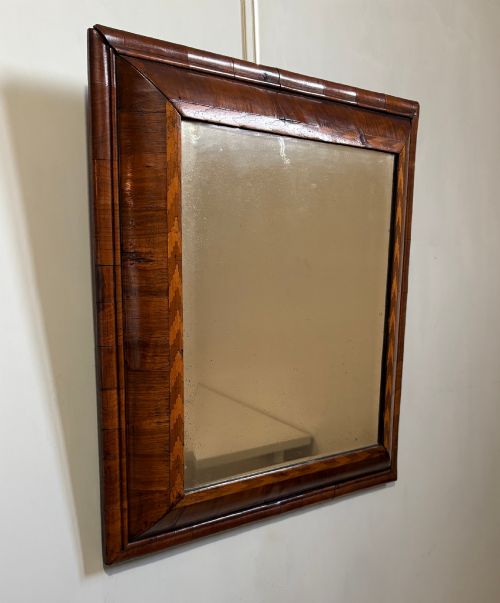
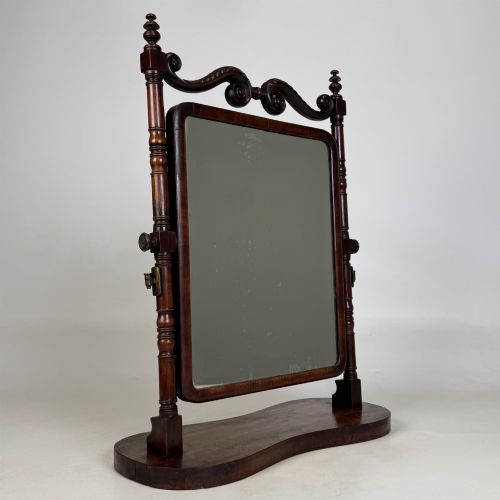
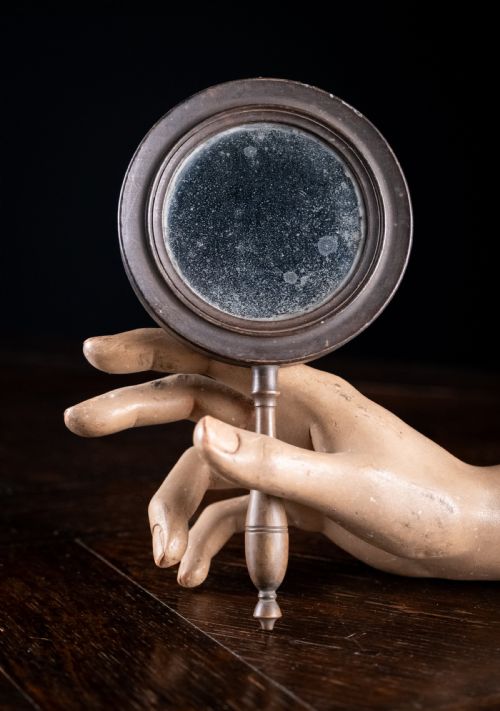

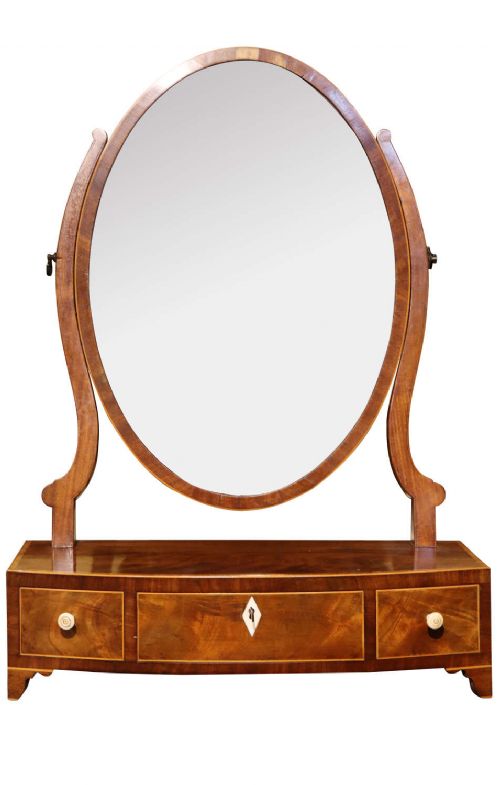


Georgian Period Vanity Mirror
These georgian period vanity mirror examples bring practical surface reflection and period timber warmth to a room.
Georgian Period Vanity Mirror
A georgian period vanity mirror sits on a tabletop, chest, or dressing table, offering a swivelling glass plate supported by upright arms above a box base or frame. You meet these most frequently as mahogany toilet mirrors or dressing mirrors dating from the eighteenth century into the regency era.
The form developed to serve personal grooming and the morning toilet, evolving from simple folding table glasses into substantial box-base toilet mirrors fitted with small drawers. Surviving examples encompass George II walnut pieces, George III crossbanded mahogany designs, and later regency variations.
How they were made
Cabinetmakers constructed these frames primarily in mahogany and walnut, frequently adding crossbanding, bone escutcheons, or ebonised details to enrich the timber surface. The glass plate rests within a pivoting frame supported by turned or shaped arms rising from the base.
Giltwood, gesso, and brass hardware appear regularly, adding metallic highlights to the wooden structures. Some wall mirrors and hand mirrors utilise similar framing techniques, employing carved wood and original glass plates.
Georgian Period Vanity Mirror Retail Price Guide 2026
Typical asking prices for georgian period vanity mirror among the pieces listed under this phrase on Sellingantiques today, from the lower quarter to the upper quarter. They describe what is for sale here now, not the wider market.
Some regency hand mirrors were made double-sided, ensuring you could check your wig from two angles simultaneously.
What varies in quality
Quality rests in the choice of timber figure, the crispness of any crossbanding, and the proportions of the box base relative to the mirror frame. Superior pieces display refined dovetailing on the drawers and well-turned support arms that bear the weight securely without sagging.
The presence of the original glass plate elevates a piece significantly, as later replacements often alter the visual depth and reflection. Finer examples maintain crisp mouldings and harmonious proportions that reflect the specific reign in which they were produced.
The Georgian Period Vanity Mirror Glossary
- Toilet mirror
- A small tabletop mirror designed for a dressing table or chest, usually featuring a pivoting glass plate mounted over a small drawer base. These pieces formed an essential part of Georgian bedroom furniture.
- Crossbanding
- A decorative border of veneer laid across the grain of the primary wood, frequently used on Georgian cabinet furniture. This technique frames the drawer fronts and edges of the mirror base.
- Gesso
- A plaster-based material applied to wood before gilding, allowing craftsmen to carve crisp decorative details. It provides the smooth base required for gold leaf application on giltwood frames.
- Ebonised
- Wood treated to imitate ebony, usually through staining or painting dark. This finish appears on regency frames and hand mirrors to create a sharp contrast.
Georgian Period Vanity Mirror: Frequently Asked Questions
What is a toilet mirror?
A toilet mirror is a small dressing glass designed to sit upon a table or chest, featuring a pivoting frame supported by upright arms. The base often incorporates small drawers for holding trinkets and personal items.
These pieces were standard bedroom furnishings during the eighteenth and early nineteenth centuries, serving daily grooming needs before fitted wardrobes became common.
How do I date a Georgian mirror?
Dating relies on observing the timber species, construction methods, and cabinet styles associated with specific reigns such as George II, George III, or the Regency era. Walnut predominates in earlier pieces, while mahogany and rosewood define later Georgian and Regency work.
Secondary woods, drawer dovetailing, and hardware styles also provide reliable clues for establishing the approximate period of manufacture.
Are these mirrors original?
Survival rates vary, and many pieces have undergone minor repairs, veneer touch-ups, or glass plate replacements over the centuries. Examining the backboards, silvering on the glass, and framing joints helps determine the extent of past restoration.
Original plates often show minor foxing and distortion, which collectors value as proof of age.
Where should I place one?
These mirrors suit placement on top of low chests of drawers, sideboards, or dedicated dressing tables where their height and proportions can be appreciated. They require a stable surface and adequate light to function as usable mirrors.
Keep them away from direct sunlight and damp environments to protect the antique wood and silvered glass.