


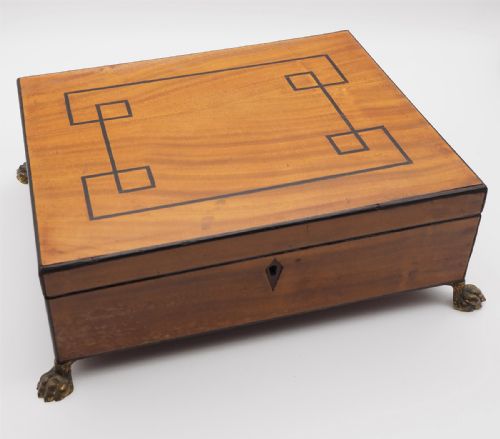

Georgian Period Tea Box
A georgian period tea box is a timber or tortoiseshell chest made to store precious leaves, offering rich grain and careful joinery.
Georgian Period Tea Box
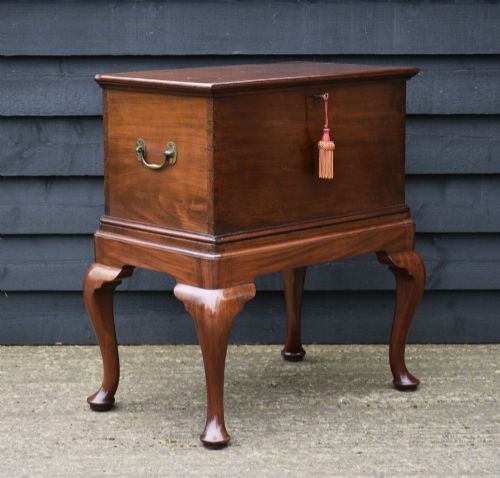
When you search for a georgian period tea box, you encounter containers that held dry leaves securely under lock during the eighteenth and early nineteenth centuries. These objects range from compact tea caddies to larger tea-poys and chests originating across the Georgian, Regency, and William IV eras.
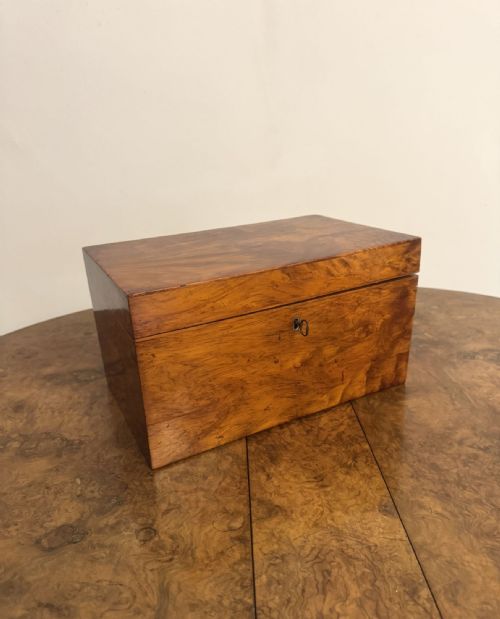
The versions most frequently met on this page are mahogany, rosewood, and satinwood caddies built with hinged lids and internal compartments. Many retain fitted interiors designed to divide different varieties of tea leaf before they were blended in porcelain sugar boxes or bowls.
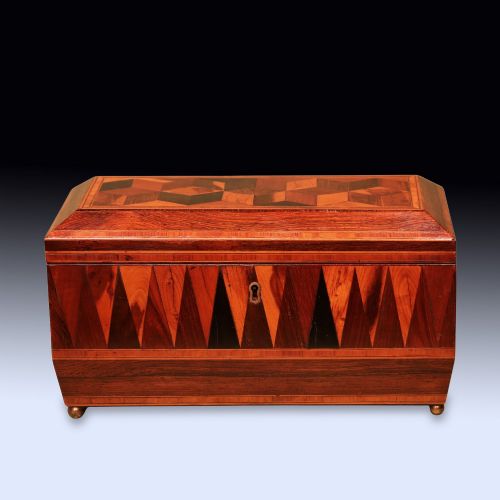
Makers shaped these boxes in octagonal, decagonal, and bow-fronted forms, often applying brass inlay or penwork decoration. The selection spans simpler eighteenth-century wood boxes up to grander nineteenth-century pieces embellished with tortoiseshell and mother of pearl.
How they were made
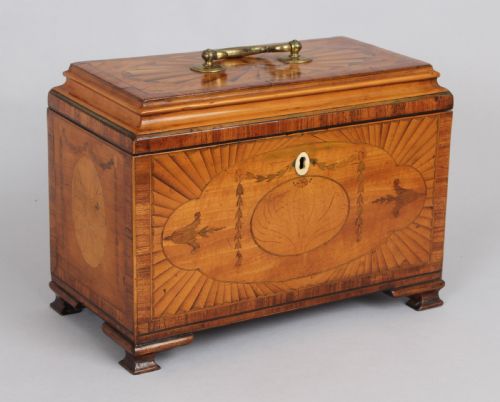
Cabinetmakers constructed these caddies using dense hardwoods such as mahogany, rosewood, satinwood, and walnut, frequently selecting burr thorn or birdseye maple for decorative effect. They applied veneers over solid timber bases and shaped surfaces into geometric parquetry, marquetry, and intricate penwork designs.
Many boxes incorporate contrasting stringing in ebony and bone alongside cast brass handles, escutcheons, and stringing lines. Tortoiseshell examples feature translucent panels laid over pale metal foils to catch the light, while others integrate mother of pearl inlays depicting foliage and birds.
Listings feature eighteenth and nineteenth-century pieces spanning the Georgian, Regency, and William IV periods.
What varies in quality
The standard of a georgian period tea box depends on the crispness of its joinery, the choice of timber figure, and the preservation of its interior fittings. Superior examples display perfectly aligned parquetry and delicate brass inlay that remains flush with the surrounding wood surface.
Workmanship shows in the complexity of the box silhouette, from simple rectangular chests to multifaceted octagonal and decagonal forms. Completeness dictates the standing of a piece, with surviving interior lids, mixing bowls, and functioning locks elevating the integrity of the whole object.
The Georgian Period Tea Box Glossary
- Tea caddy
- A small box or chest designed for storing dry tea leaves. The term evolved from catty, the Chinese unit of weight.
- Teapoy
- A pedestal table fitted with a tea box or chest attached to the upper column. These stands often incorporate internal caddies and mixing compartments.
- Penwork
- A decorative technique utilising ink drawn onto light woods like satinwood or maple to create pictorial or geometric designs. Artisans then varnished the surface to protect the fine linework.
- Marquetry
- The art of forming decorative patterns using thin veneers of various coloured timbers and shell. Craftsmen fitted these pieces together to cover box surfaces.
- Sucrier
- A small vessel or bowl intended for holding sugar, frequently accompanying tea wares. Porcelain examples from the eighteenth century often feature blue and white transfer printing.
- Escutcheon
- A protective plate surrounding a keyhole. On these boxes, they are typically cast in brass to prevent wear to the surrounding wood.
Georgian Period Tea Box: Frequently Asked Questions
How were tea caddies used?
Tea caddies were kept locked in the parlour or dining room to protect expensive black and green teas from theft or dampness. The mistress of the house typically held the key and dispensed the leaves for each sitting.
Inside, divided compartments separated different tea types, while central sections often held a glass or porcelain bowl for blending infusions.
How do I date a tea box?
Dating relies on observing the timber choices, construction methods, and decorative motifs characteristic of specific reigns and decades. Eighteenth-century examples often display simpler mahogany forms, whereas Regency boxes frequently feature brass inlay, penwork, or tortoiseshell.
Hardware styles, foot designs, and interior configurations also help narrow the period of manufacture.
Can I use an antique tea box daily?
These boxes function well for storing small keepsakes, jewellery, or modern dry goods if handled with care. The internal compartments and lined spaces accommodate small items while preserving the historic exterior.
Care should be taken to protect delicate materials like tortoiseshell, penwork, and mother of pearl from moisture and direct sunlight.